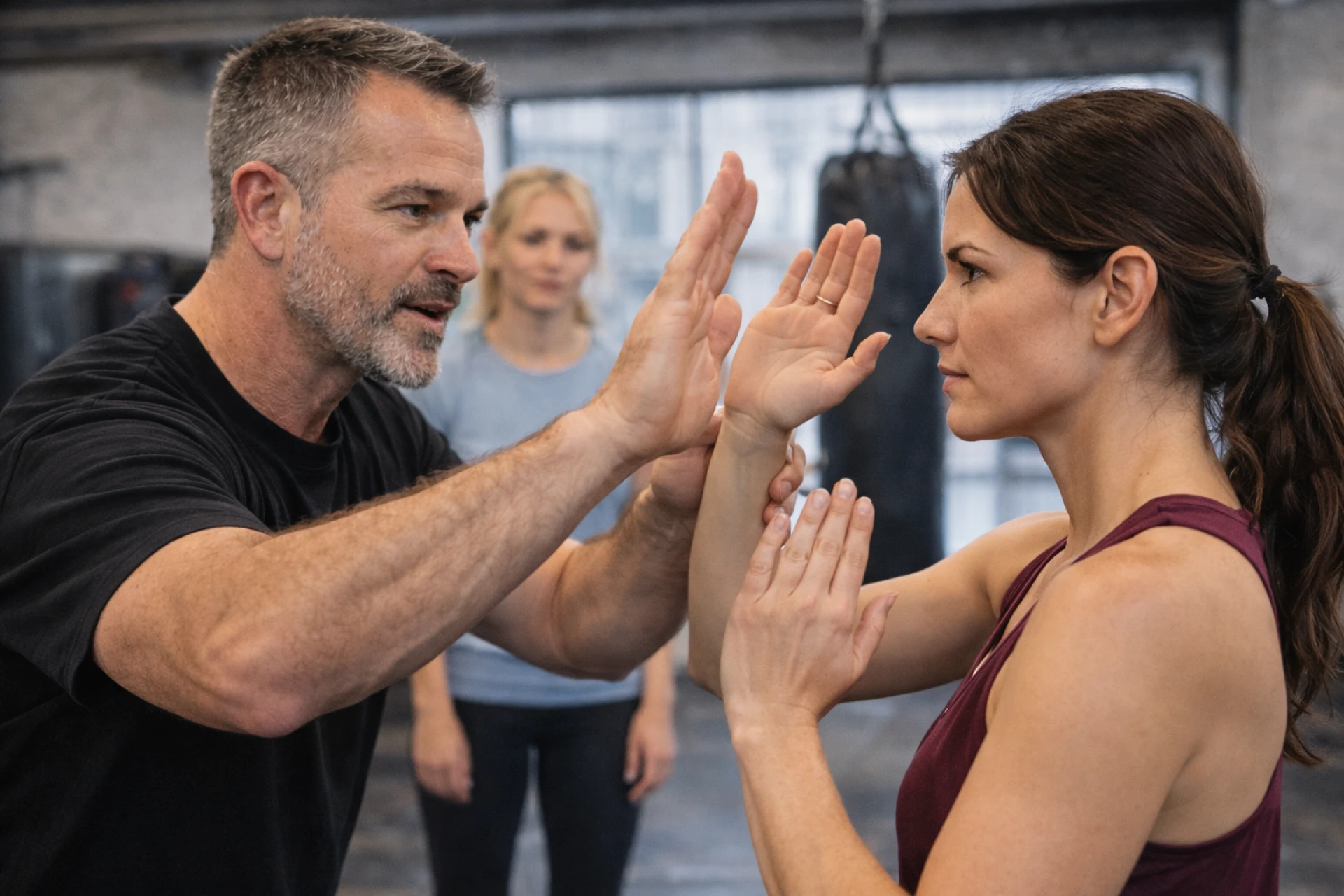

Adults do not move through life in controlled settings. They move through shared spaces while thinking about work, family, schedules, and responsibilities. Attention is divided. Energy is not always high. Any self-defense training that depends on perfect focus or open space will fail when those conditions disappear. Adult self-defense classes have to work inside ordinary distraction, not outside of it.
Why Training Cannot Depend on Ideal Conditions
Most people train when they are alert and prepared. Real situations rarely happen that way. They happen at the end of the day, in tight spaces, or while attention is elsewhere. If training only works when posture is perfect and instructions are fresh, it will not hold up under pressure.
Adults need preparation that reflects limited space, shared environments, and imperfect timing. That means learning how to respond while thinking, carrying items, or navigating crowded areas. Skills must survive distraction. If they depend on clean conditions, they are not reliable.
How Risk Develops in Everyday Adult Life
Most situations do not begin with obvious threat. They begin with small changes. A person stands closer than expected. A tone shifts. A request is repeated after a clear answer. These moments feel minor, which is why they are often ignored.
When discomfort is delayed, pressure builds. The longer it builds, the fewer options remain. By the time the situation feels clear, simple responses may no longer be enough. Adult self-defense classes focus on these early stages because this is where control is strongest.
Why Awareness Comes Before Physical Skill
Strength does not matter if the moment is recognized too late. Awareness creates time. Time creates options. When adults notice change early, they can adjust position, end an interaction, or create distance without escalation.
Awareness is not constant tension. It is staying oriented. It is noticing tone, distance, and behavior without overreacting. When that skill is present, responses are deliberate instead of rushed.
Timing and Boundary Setting in Adult Interactions
Timing shapes outcomes. Early responses are small and effective. A clear statement. A shift in position. A step that restores space. When these actions happen early, most situations resolve quietly.
Boundary setting is practical, not dramatic. It interrupts momentum before pressure grows. Many adults hesitate because they do not want to appear confrontational. Training addresses that hesitation directly. Acting sooner prevents the need for heavier response later.
How Stress Affects the Adult Body
Under stress, breathing changes. Coordination drops. Thinking narrows. These reactions are predictable. Complex movements are harder to access when pressure rises.
For that reason, adult self-defense classes keep physical responses simple. Movements are built to work when clarity is reduced. Physical action depends on earlier decisions. If awareness and timing are lost, technique alone cannot recover control.
What Makes Training Transfer Into Daily Life
Training must reflect ordinary environments. It should include limited space, mild pressure, and decision-making without constant instruction. Repetition builds familiarity. Familiarity reduces hesitation. Reduced hesitation improves timing.
Consistency matters more than intensity. Skills improve through steady practice, not occasional effort. When responses become familiar, they show up sooner.
How Preparation Changes Everyday Behavior
The first changes appear before anything physical happens. Adults begin noticing situations earlier. They speak sooner. They leave before pressure builds. These shifts are quiet but meaningful.
Adult self-defense classes support engagement with life rather than restriction. Safety becomes something carried into workplaces, public spaces, and social settings. It does not require shrinking movement. It relies on skill applied early, while options still exist.
FAQs
What do adult self-defense classes focus on first?
They begin with awareness, positioning, and early decision-making before physical techniques are introduced.
Are these classes about fighting?
No. Physical response is a final layer. Training prioritizes noticing change and acting early.
Do you need to be athletic to start?
No. Progress begins with perception and timing, not strength.
How often should adults train?
Regular practice builds familiarity, which reduces hesitation under pressure.
How does training affect daily life?
Most benefits appear as earlier exits, clearer boundaries, and steadier decisions rather than confrontation.






















Sign in to leave a comment.