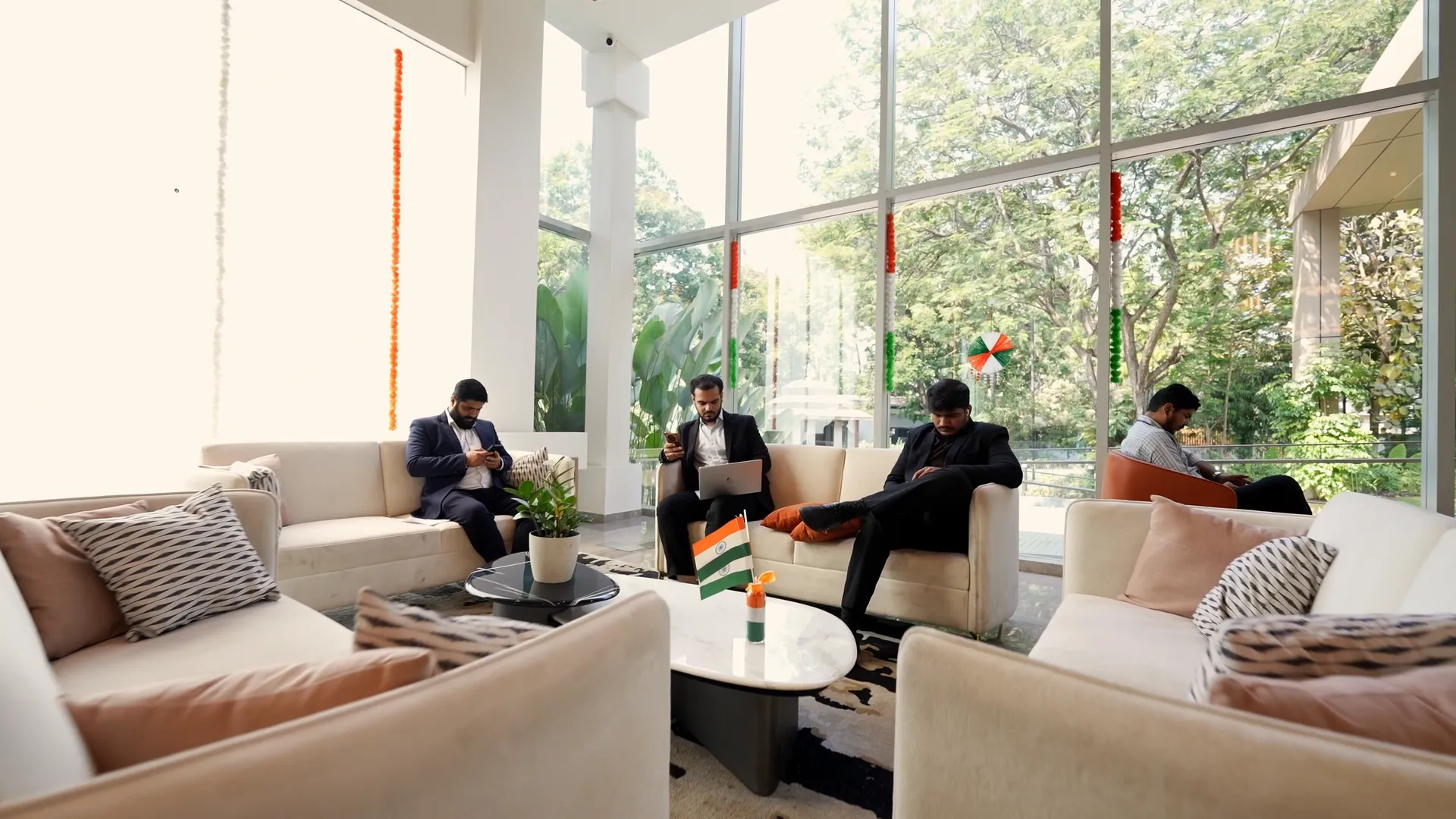


The Hardest Sale in Real Estate Is the One Where Nothing Exists Yet
Selling an under-construction property is, at its core, asking someone to spend a significant amount of money on a promise. You're saying: trust us. This will be what we say it will be. The apartment will look like this. The amenities will feel like this. The view will be this.
And buyers — who are more educated and more cautious than at any point in recent history — are asking a very reasonable question in return: can you show me?
For most developers, the honest answer has been: not really. A few renders, a scale model, a brochure. None of it is the same as actually experiencing what's being sold.
This is where interactive sales tools have quietly become one of the most powerful assets a developer can have.

Why Under-Construction Sales Are a Unique Challenge
The challenges specific to under-construction projects go beyond just not having a finished product to show.
- Buyers cannot visit the unit — so the entire sales conversation happens without the most important data point: the space itself
- Construction timelines create anxiety, especially post-RERA, where delivery credibility is closely scrutinised
- Premium pricing is harder to justify without a physical experience of the finish quality
- Competitors with ready-possession inventory have an inherent advantage in the buyer's mind
- Sales teams have to work harder to build conviction from scratch in every single meeting
The gap between what a developer knows about their project and what a buyer can experience is at its widest during the under-construction phase. And it's precisely in this gap that deals are lost.
L&T Crestoria: Selling a Premium Vision Before a Brick Was Laid
L&T Crestoria is a premium residential project where the vision was bold and the finishes were designed to set a new standard in its market. The challenge: communicating that premium quality to buyers when the physical evidence — the finished tower, the lobby, the amenities — simply didn't exist yet.
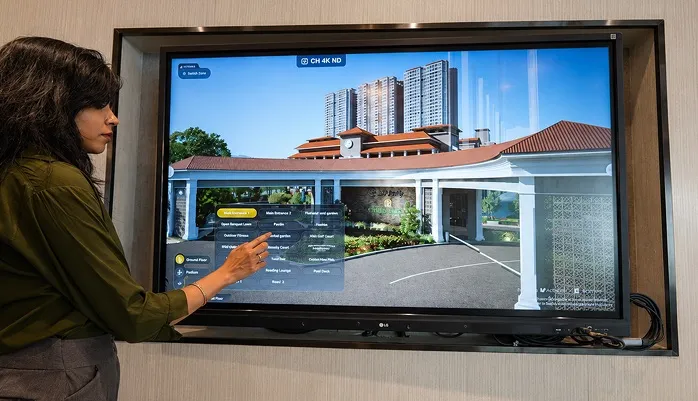
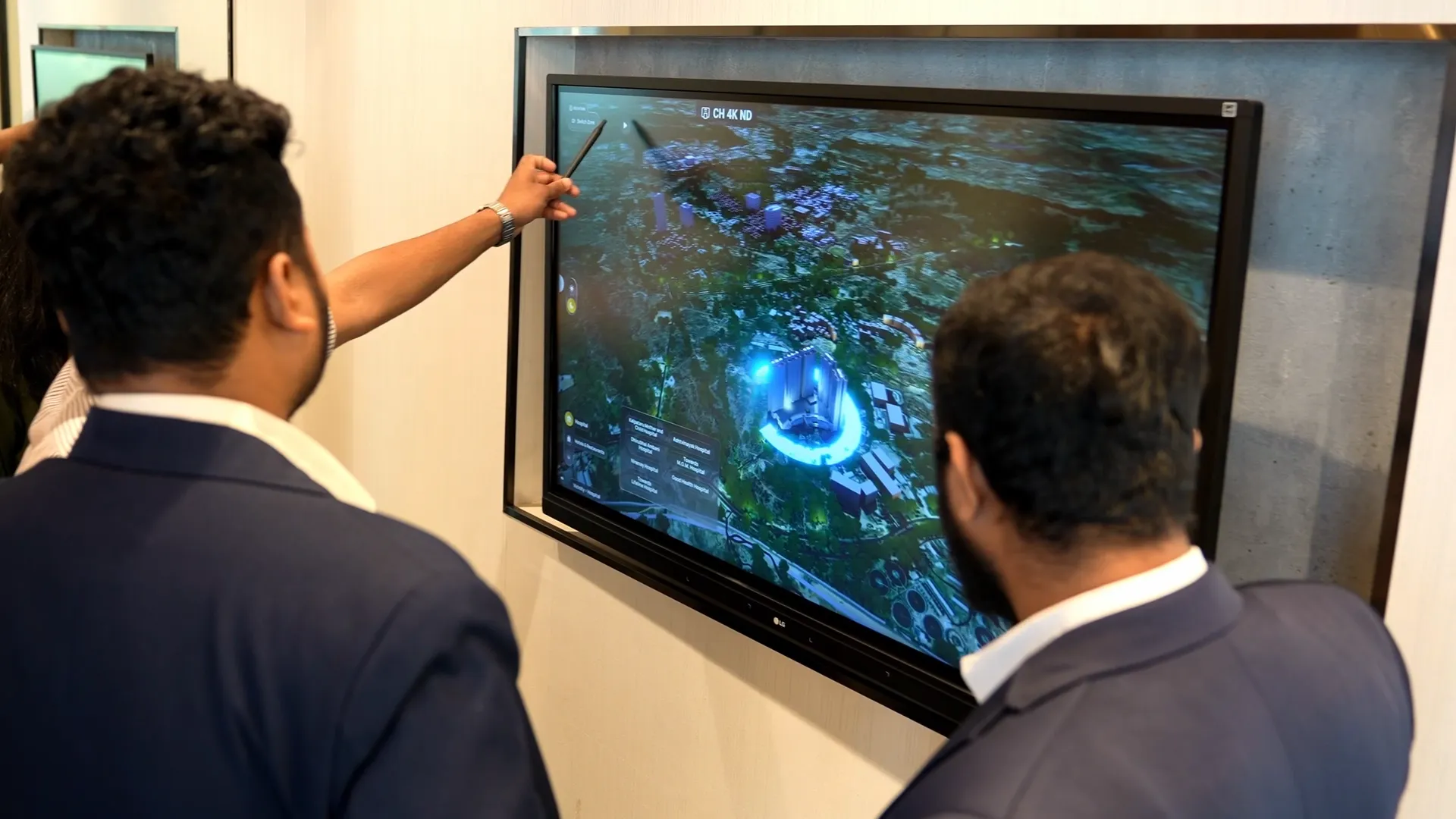
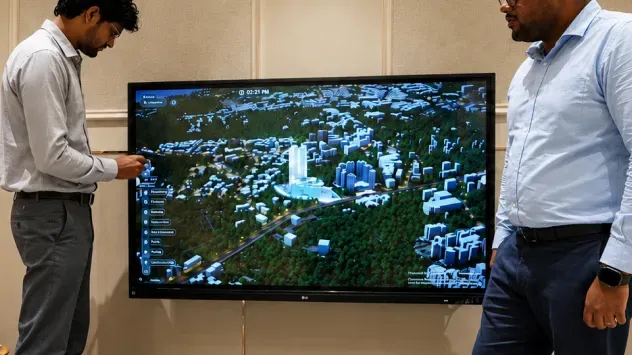
V-Estate built an immersive experience centre for L&T Crestoria that solved this challenge by making the completed vision fully tangible before completion.
What the immersive experience centre delivered:
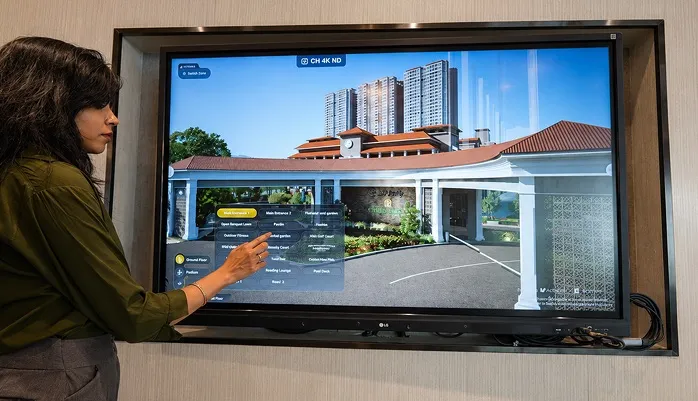
- Full 3D walkthroughs of every unit configuration — showing finishes, volumes, and spatial quality with the precision that buyers need to evaluate premium pricing
- Lobby and common area walkthroughs giving buyers a complete picture of the arrival experience — areas that matter deeply to premium buyers but are often underrepresented in traditional presentations
- Amenity presentations through 360-degree immersive visuals, from fitness facilities to landscaped podiums, making every lifestyle feature tangible
- View simulations from key floors, showing what residents would actually see from their units — a critical factor in premium pricing decisions
- Vicinity mapping contextualising the project within its broader urban setting
- Offline activation software ensuring consistent performance across the experience centre without dependency on internet connectivity
The result was that buyers evaluating L&T Crestoria weren't buying a promise. They were buying something they had, in a meaningful sense, already experienced.
The Premium Problem: How to Justify the Price When Nothing Exists
Premium under-construction pricing is one of the most difficult conversations in real estate sales. The developer knows the quality will justify the number. The buyer doesn't know that yet — and can't see the evidence.
This is where immersive interactive sales tools create a qualitative shift in the sales conversation.
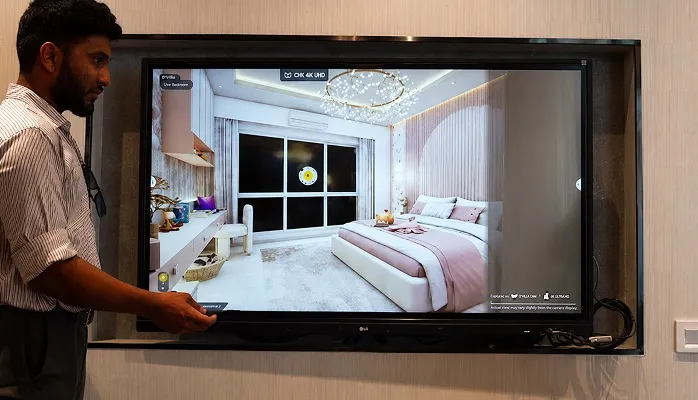
When a buyer can walk through a high-fidelity 3D rendering of a finished unit — see the height of the ceilings, the quality of the flooring, the light entering through floor-to-ceiling glass — the price conversation changes. They're no longer evaluating a number against an imagined product. They're evaluating a number against something they've experienced.
That shift in reference point is not cosmetic. It changes conversion rates.
Trust and Transparency in the Post-RERA Era
The introduction of RERA has permanently changed buyer-developer dynamics. Buyers are more aware of their rights, more sceptical of claims, and more likely to scrutinise every commitment a developer makes.
In this environment, the quality of your sales presentation is also a signal about how seriously you take transparency. A developer who shows a highly accurate 3D walkthrough rather than a vague impression render is communicating something important about their standards.
V-Estate's interactive sales tools are designed precisely around this principle — enabling buyers to explore projects from every angle, reducing the risk of misrepresentation, and building the kind of trust that converts cautious buyers into confident ones.
As covered in V-Estate's analysis of how PropTech is outperforming traditional sales methods, the developers winning market share right now are the ones whose digital sales infrastructure is as strong as their physical one.
Practical Considerations for Developers Launching Under-Construction Projects
Build the experience centre before you start selling. The experience centre isn't a finishing touch after launch. It's a core part of the pre-sales strategy. The buyers you need to move first — early adopters who take under-construction risk — are the ones who need the most conviction. Give them the tool to build it.
Match the experience to the product positioning. A premium project needs a premium experience centre. If your unit is priced at ₹3 crore and your sales environment looks like it cost ₹50,000 to set up, that misalignment registers with buyers.
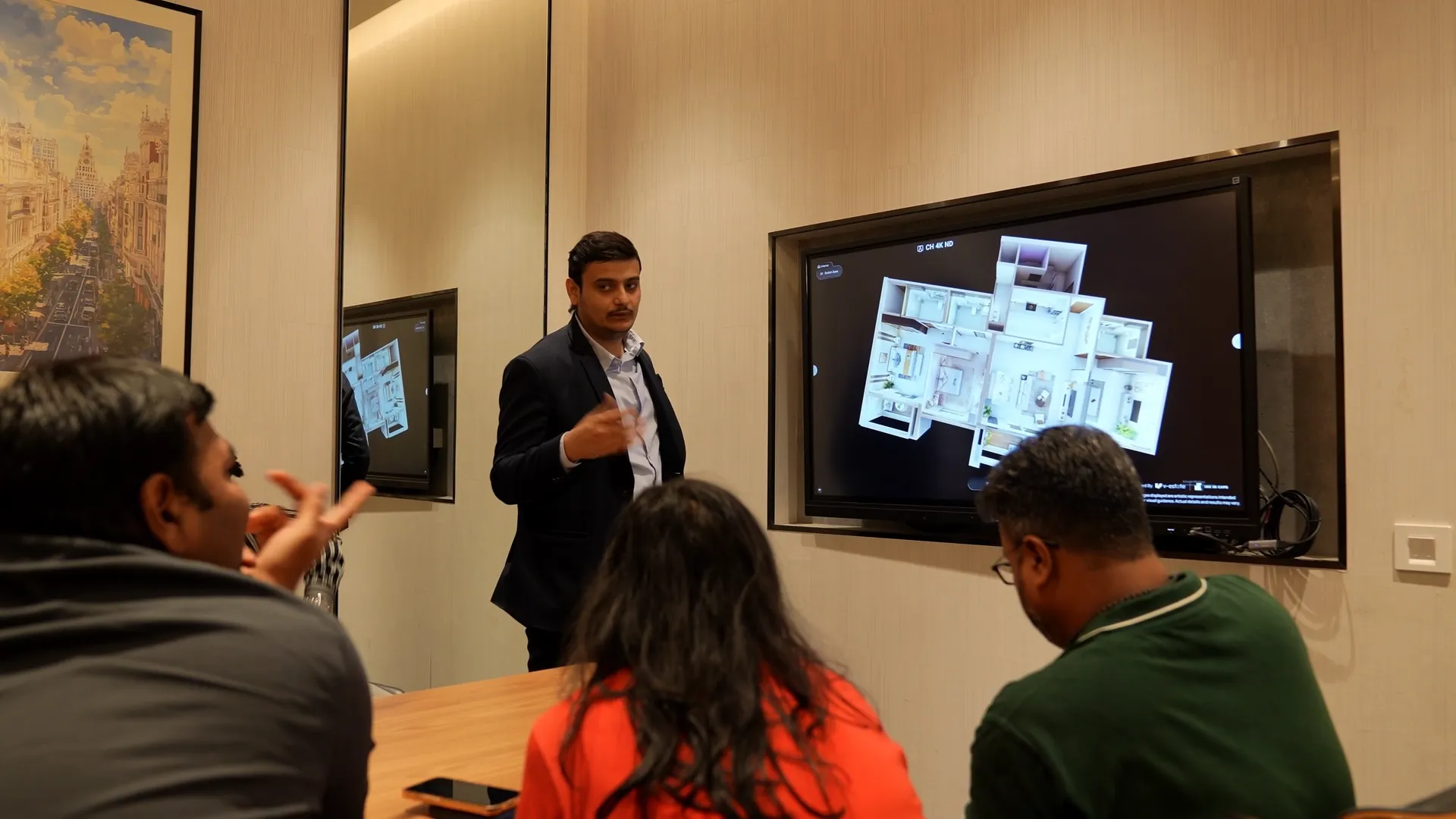
Think about the full buyer journey, not just the walkthrough. The strongest setups integrate project overview, vicinity mapping, amenity highlights, unit configurations, and view simulations into a coherent journey. A buyer who goes through all of that in one session is a buyer who has essentially made their decision during the visit.
Don't underestimate the NRI and HNI segment. For high-value under-construction projects, these buyers are often making decisions without being physically present. The quality of your remote-accessible interactive tool directly determines how much of this segment you can convert without requiring an in-person visit.
The Investment That Pays for Itself in Shortened Sales Cycles
One metric that developers with V-Estate's tools consistently report: the time between first visit and booking shortens meaningfully when buyers have an immersive experience during their first encounter with the project.
Every day shaved off the average sales cycle is inventory moving faster. For a project with 200 units and a typical 45-day decision cycle, compressing that to 25 days isn't just a marketing win — it's a cash flow win.
Selling under-construction? Give buyers something they can experience, not just imagine. L&T Crestoria built an immersive experience centre that made a premium vision feel real before it existed. If you're launching an under-construction project and your current interactive sales tools aren't doing the work they should, it's time to see what purpose-built visualisation looks like.



















Sign in to leave a comment.