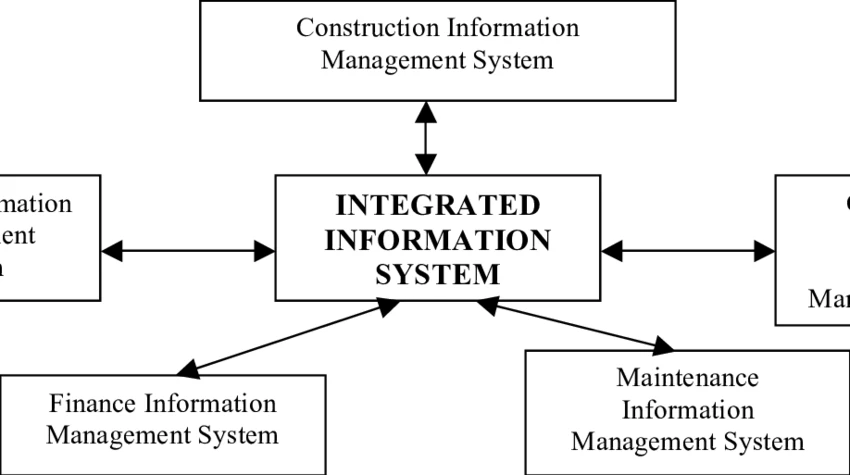

Modern facility management companies operate in a highly digital environment where multiple systems must work together to keep operations running smoothly. Maintenance teams use CMMS platforms, finance departments rely on ERP systems, and customer-facing teams manage relationships through CRM software. In addition, organizations may use IoT platforms, building management systems, inventory tools, and vendor management software.
The challenge is that these systems often do not communicate with each other effectively. Data becomes trapped in silos, operational processes require manual updates across systems, and reporting becomes slow and unreliable.
This is where facility management integration becomes essential. Integration platforms allow organizations to connect their operational systems and automate workflows between them.
However, many decision-makers ask an important question:
Is ConnectorHub designed only for large enterprises, or can mid-market facility management companies also benefit from it?
The answer is that ConnectorHub supports both mid-market organizations and large enterprises, thanks to its scalable architecture, no-code workflow capabilities, and flexible deployment model.
This article explores how ConnectorHub functions as an enterprise integration platform, and why it can be valuable for facility management companies of different sizes.
The Growing Need for Facility Management Integration
Facility management organizations manage complex operations that involve multiple stakeholders, systems, and service workflows. These companies often handle:
- Preventive maintenance programs
- Asset tracking
- Vendor coordination
- Work order management
- Billing and invoicing
- Compliance and reporting
Each of these functions typically runs on separate software systems. For example:
| Function | Common Software |
|---|---|
| Maintenance management | CMMS platforms |
| Financial management | ERP systems |
| Client relationship management | CRM tools |
| Asset monitoring | IoT platforms |
| Work order management | Field service tools |
Without proper integration, teams face several operational challenges.
1. Data Silos Across Systems
Maintenance data may live in a CMMS platform, while financial information sits in the ERP system. Customer information may be stored in the CRM platform.
Because these systems are disconnected, teams often struggle to create a single source of operational truth.
2. Manual Data Entry
When systems are not connected, staff must manually copy data between platforms.
Examples include:
- Entering work order data into accounting software
- Updating client systems with maintenance updates
- Exporting and importing reports across systems
This manual work increases operational overhead and introduces errors.
3. Delayed Reporting and Analytics
When operational data is spread across multiple platforms, generating reports becomes difficult.
Managers may need to consolidate information from multiple sources before analyzing:
- Maintenance performance
- Asset health
- Service costs
- Operational efficiency
4. Limited Operational Scalability
As facility management companies grow, they onboard new clients and adopt additional systems. Without integration infrastructure, scaling operations becomes increasingly difficult.
A facility management integration platform addresses these challenges by connecting systems and automating data flows.
What Is ConnectorHub?
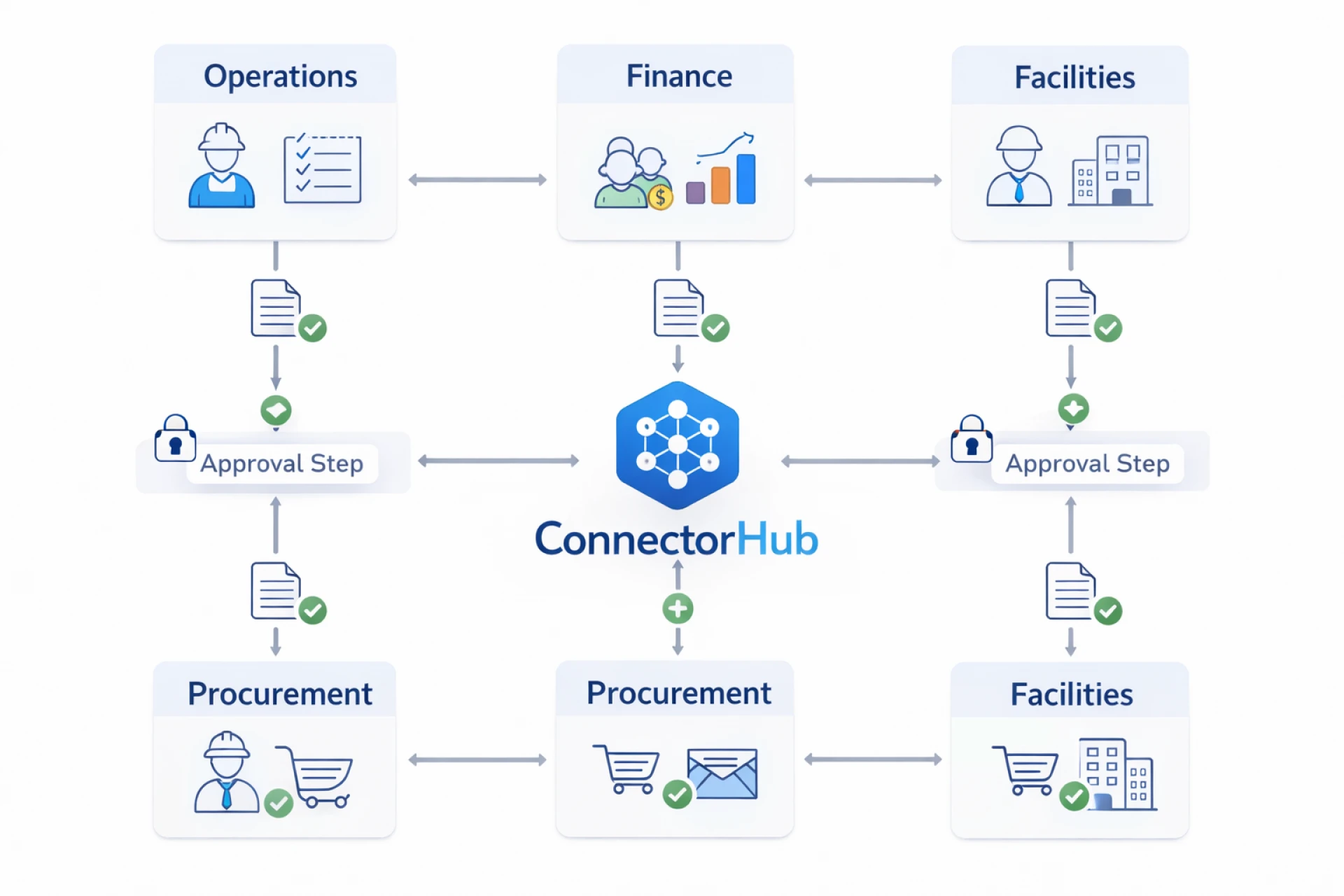
ConnectorHub is a modern enterprise integration platform designed to connect operational systems such as CMMS, ERP, CRM, and other business applications.
Instead of building custom integrations between systems, organizations can use ConnectorHub to create automated workflows that synchronize data across platforms.
ConnectorHub enables organizations to:
- Connect operational software systems
- Automates workflows between applications
- Synchronize data across platforms
- Reduce manual data entry
- Improve operational visibility
The platform uses a visual workflow builder, allowing teams to configure integrations without extensive development resources.
This approach is particularly useful for organizations that want to implement integrations quickly without building complex custom code.
Why ConnectorHub Works Well for Mid-Market Facility Management Companies
1. No-Code Integration Reduces Technical Complexity
Many mid-market facility management companies do not have large internal development teams.
Traditional integration projects often require:
- Custom coding
- API development
- Dedicated integration specialists
- Long implementation cycles
ConnectorHub addresses this challenge with no-code workflow automation.
Users can design integrations through a visual interface that allows them to:
- Map fields between systems
- Create automated workflows
- Configure triggers and actions
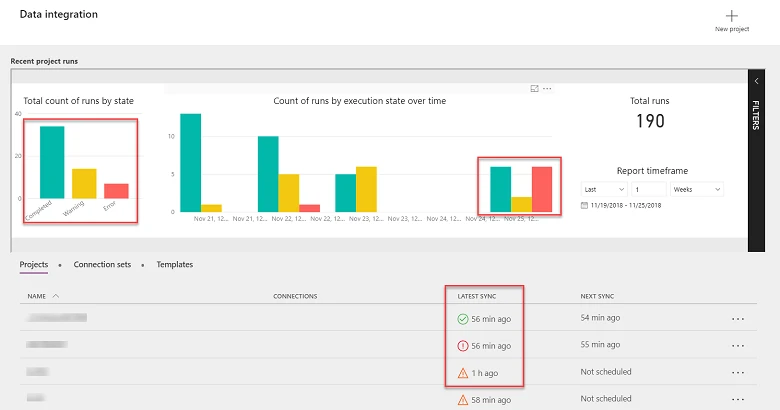
- Monitor integration performance
This dramatically reduces the technical barrier for implementing ERP CMMS CRM integration.
2. Faster Deployment Compared to Custom Integrations
Custom integrations between enterprise systems can take months to build and test.
ConnectorHub significantly accelerates deployment by providing:
- Pre-configured integration frameworks
- Workflow automation tools
- Data mapping utilities
As a result, many integration projects can be implemented within weeks instead of months.
For mid-market companies, faster deployment means:
- Lower implementation costs
- Faster return on investment
- Minimal operational disruption
3. Pre-Built Connectors for Common Business Systems
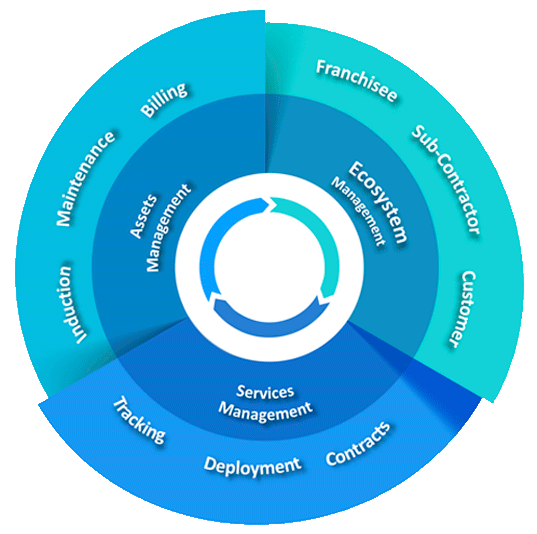
ConnectorHub provides pre-built connectors for many enterprise applications, reducing the effort required to integrate common operational systems.
Typical integrations include:
- CMMS ↔ ERP synchronization
- CRM ↔ work order platforms
- Asset management systems ↔ reporting platforms
- Field service software ↔ billing systems
These connectors help facility management organizations deploy integrations faster and avoid building complex integrations from scratch.
For mid-market companies, this is a significant advantage because it enables enterprise-grade integration capabilities without requiring large engineering investments.
4. Scalable Architecture for Growing Organizations
ConnectorHub uses a cloud-based architecture designed to support organizations as they grow.
This scalability allows companies to:
- Add new systems to the integration environment
- Support additional clients or facilities
- Expand operational workflows
- Increase data processing capacity
For example, a regional facility management company may start by integrating:
- CMMS
- ERP
- CRM
As the company grows, it may add:
- IoT platforms
- Vendor management systems
- Energy monitoring tools
- Compliance reporting systems
ConnectorHub can scale to support these additional integrations without requiring a complete rebuild of the integration architecture.
Why Large Enterprises Also Use ConnectorHub
While ConnectorHub is accessible to mid-market organizations, it also offers capabilities that appeal to large enterprises.
Large organizations often require:
Advanced Workflow Automation
Enterprise organizations operate complex workflows that involve multiple systems and teams.
ConnectorHub allows enterprises to design automated workflows that span multiple operational platforms.
Governance and Compliance
Enterprises require strong governance and security capabilities, including:
- Data encryption
- Access controls
- Audit logs
- Compliance frameworks
ConnectorHub supports enterprise-level security and operational governance.
Centralized Integration Management
Large organizations often operate dozens of enterprise systems.
ConnectorHub provides a centralized platform for managing integrations, which improves visibility and reduces operational complexity.
Typical ERP CMMS CRM Integration Use Case
A common facility management workflow involves integrating maintenance systems with financial and client management platforms.
Example workflow:
- A maintenance request is created in the CMMS system
- The request automatically syncs to the CRM platform, allowing the client to track service status
- Once the work order is completed, service data is sent to the ERP system
- The ERP platform automatically generates an invoice
- Billing and service records update across all connected systems
Without integration, this workflow may involve multiple manual steps.
With ConnectorHub, the entire process can run automatically, improving efficiency and data accuracy.
Key Benefits of ConnectorHub for Facility Management Companies
Organizations implementing ConnectorHub typically experience several operational improvements.
Reduced Manual Work
Automated workflows eliminate the need for repetitive manual data entry across systems.
Improved Data Accuracy
Integrated systems ensure that data remains synchronized across platforms.
Faster Operational Processes
Automation reduces delays in processes such as invoicing, reporting, and maintenance scheduling.
Better Operational Visibility
Real-time integration enables managers to view operational data across systems in one place.
Scalable Technology Infrastructure
Organizations can add new systems and workflows without redesigning their entire integration architecture.
When Should Facility Management Companies Consider ConnectorHub?
ConnectorHub is particularly valuable for organizations that:
- Use multiple operational systems
- Need ERP CMMS CRM integration
- Want to eliminate manual workflows
- Manage multiple clients or facilities
- Need real-time operational data
Companies experiencing rapid growth or expanding service portfolios often benefit the most from implementing an enterprise integration platform.
Conclusion
ConnectorHub is not limited to large enterprises. Its flexible architecture, no-code workflows, and scalable integration capabilities make it an excellent solution for mid-market facility management companies as well as enterprise organizations.
By enabling facility management integration across CMMS, ERP, and CRM systems, ConnectorHub helps organizations streamline operations, eliminate data silos, and automate complex workflows.
For facility management providers looking to modernize their technology infrastructure, ConnectorHub offers a powerful solution that supports both mid-market operational efficiency and enterprise-level scalability.






















Sign in to leave a comment.