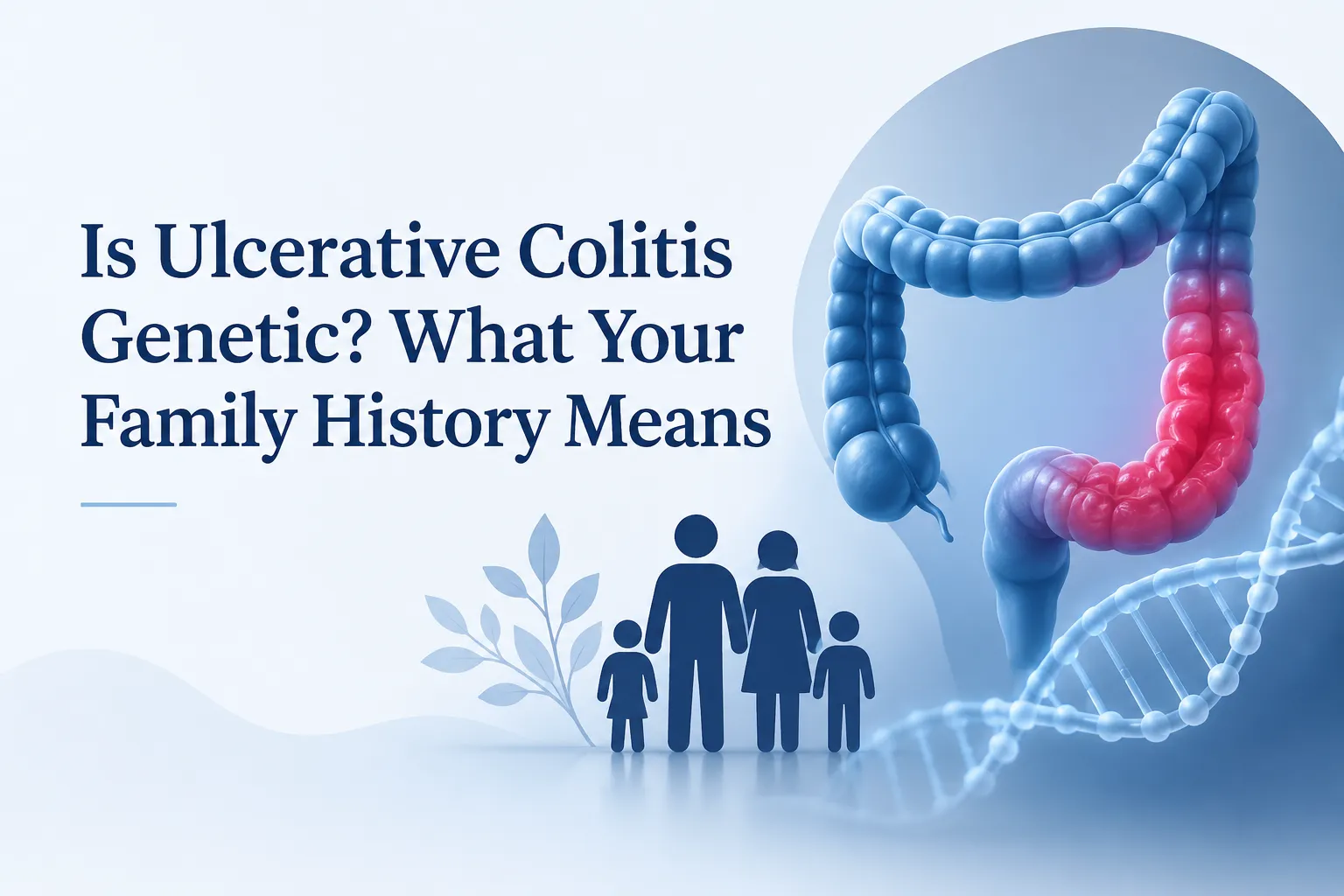

Ulcerative colitis (UC) is an inflammatory bowel disease (IBD) that can affect anyone, but its occurrence may be influenced by your family history. Many people wonder, "Is ulcerative colitis genetic?" Understanding the role genetics plays in UC, as well as how your family history impacts the likelihood of developing this condition, is essential for managing potential risks.
If you’re concerned about your family history, consulting an ulcerative colitis gastroenterologist can help you better understand your risks and create a proactive health plan.
What Is Ulcerative Colitis?
Ulcerative colitis is a chronic inflammatory bowel disease that causes long-lasting inflammation and ulcers in the lining of the large intestine (colon) and rectum. It primarily affects the inner lining of the colon, causing symptoms like:
- Abdominal pain and cramping
- Diarrhea, often with blood or pus
- Weight loss and fatigue
- Urgency to have a bowel movement
While the exact cause of UC remains unknown, researchers believe that both genetic and environmental factors play a role in its development.
Is Ulcerative Colitis Genetic?
Yes, genetic factors do influence the development of ulcerative colitis. While UC is not directly inherited like certain genetic disorders, family history plays a significant role in determining your risk. Certain genes may make some individuals more susceptible to UC, especially when combined with environmental triggers like infections or stress.
Scientists have identified several genes that appear to be associated with UC, such as the NOD2 gene, which helps regulate the immune system. Mutations in this gene can increase susceptibility to inflammatory bowel diseases like UC. However, it’s important to note that having these genetic markers doesn’t guarantee that a person will develop UC.
Does Ulcerative Colitis Run in Families?
Yes, ulcerative colitis can run in families. Studies have shown that individuals with a first-degree relative (parent or sibling) who has UC are at a higher risk of developing the disease themselves. In fact, people with a family history of UC are 2–3 times more likely to develop the condition than those without such a history.
In the United States, about 10–25% of people diagnosed with UC have a family member who also has the condition. However, family history alone isn’t the only factor at play—environmental factors also contribute significantly to the development of the disease.
Hereditary Risk of Ulcerative Colitis
The hereditary risk of ulcerative colitis is tied to the genetic mutations that affect the immune system. Researchers believe that an individual’s genetic makeup can make them more prone to the immune system’s abnormal response, which leads to inflammation in the colon. Inherited risk factors include:
- Family history: Having one or more relatives with UC increases your risk.
- Gene mutations: Specific genes, such as NOD2, play a role in the development of IBD. If these genes are inherited from both parents, the likelihood of developing UC increases.
- Immune system dysfunction: Some genetic mutations affect immune system functioning, which can lead to chronic inflammation and UC.
Environmental factors such as diet, stress, and infections can trigger UC in those genetically predisposed, making the disease appear after years of silent predisposition.
What Are the Chances of Inheriting Ulcerative Colitis?
While there is no single gene responsible for UC, the chances of inheriting the disease depend on several factors, including the family history and whether both parents are affected. The likelihood of inheriting UC is:
- One affected parent: If only one parent has UC, the child has a 2–6% chance of developing the disease.
- Both parents affected: If both parents have UC, the risk for their children increases to 30–50%.
- Siblings with UC: If you have a sibling with UC, your risk of developing the disease is higher than that of the general population, but it is still less than that of someone with affected parents.
Despite these hereditary risks, many people with a family history of UC never develop the disease, showing that environmental factors and lifestyle choices also play a significant role.
Can Ulcerative Colitis Skip a Generation?
It is possible, but not typical, for ulcerative colitis to skip a generation. UC is not passed down in a predictable Mendelian pattern, meaning that while a parent or sibling with UC increases the risk, it’s not guaranteed that the next generation will develop it. It’s also possible for someone to inherit genetic predispositions for UC but not show symptoms until later in life, or not at all.
The complex nature of genetic inheritance, combined with environmental triggers, makes predicting who will develop UC difficult. This randomness often leads to the perception that UC can "skip" a generation, even though the genetic risk is present in the family.
Should I Worry About Ulcerative Colitis If It Runs in My Family?
If ulcerative colitis runs in your family, it’s natural to be concerned. However, the presence of UC in your family doesn’t guarantee that you will develop the condition. While you may have an increased risk, several steps can help reduce your risk or catch the disease early if it does develop. Here are some important considerations:
- Consult an ulcerative colitis gastroenterologist: If UC runs in your family, consider consulting with a gastroenterologist. Early consultations may help you understand your risk and take proactive measures.
- Regular screenings: If you are at higher risk, regular colonoscopies and other tests can help detect UC early and manage it effectively.
- Lifestyle choices: Adopting a healthy diet, managing stress, and avoiding smoking can help reduce your risk of developing UC.
- Stay informed: Being educated about the condition and its symptoms allows you to make better decisions about your health.
Consult an Expert for Personalized Care in Managing Gastrointestinal Diseases!
While ulcerative colitis does have a genetic component, it is not guaranteed that it will affect everyone in a family. If UC or any other chronic gastrointestinal condition runs in your family, it's important to consult with a qualified healthcare professional, such as an ulcerative colitis gastroenterologist. Early detection and the right lifestyle changes can play a significant role in managing your condition. For the best approach, seek expert care in gastrointestinal disease treatment to ensure your health is in good hands.
FAQs
1. Can ulcerative colitis develop in someone with no family history?
Yes, while family history increases your risk, individuals with no family history can develop ulcerative colitis. Environmental factors such as infections, diet, and stress may trigger the condition.
2. Are there any environmental triggers for ulcerative colitis?
Yes, several environmental factors can trigger UC in genetically predisposed individuals. These include infections, a diet high in processed foods, smoking, and significant stress.
3. How can I manage my risk of developing ulcerative colitis if it runs in my family?
Maintaining a healthy lifestyle, managing stress, avoiding smoking, and getting regular screenings are all ways to reduce your risk of developing ulcerative colitis if it runs in your family.
4. What is the best way to screen for ulcerative colitis?
The best way to screen for ulcerative colitis is through a colonoscopy, where a doctor can look for signs of inflammation in the colon. For those with a family history, regular screenings are recommended.
5. Can diet play a role in managing ulcerative colitis?
While diet alone cannot cure UC, a healthy diet can help manage symptoms. Foods rich in fiber, low-fat diets, and staying hydrated can reduce inflammation and improve gut health. Consult a gastroenterologist for personalized dietary advice.































Sign in to leave a comment.