
If you have spent late nights grinding through core engineering textbooks, circuit derivations, or finite element analysis, there is a good chance you have pictured yourself walking through the gates of URSC, VSSC, or SAC. Working for the Indian Space Research Organisation is rarely just another government job pursuit; for most engineers, it is personal.
When the official ISRO SC 2026 notification hits the portal, the immediate reaction is almost always the same: you bypass the general instructions, jump straight to the vacancy table, and check what your discipline received.
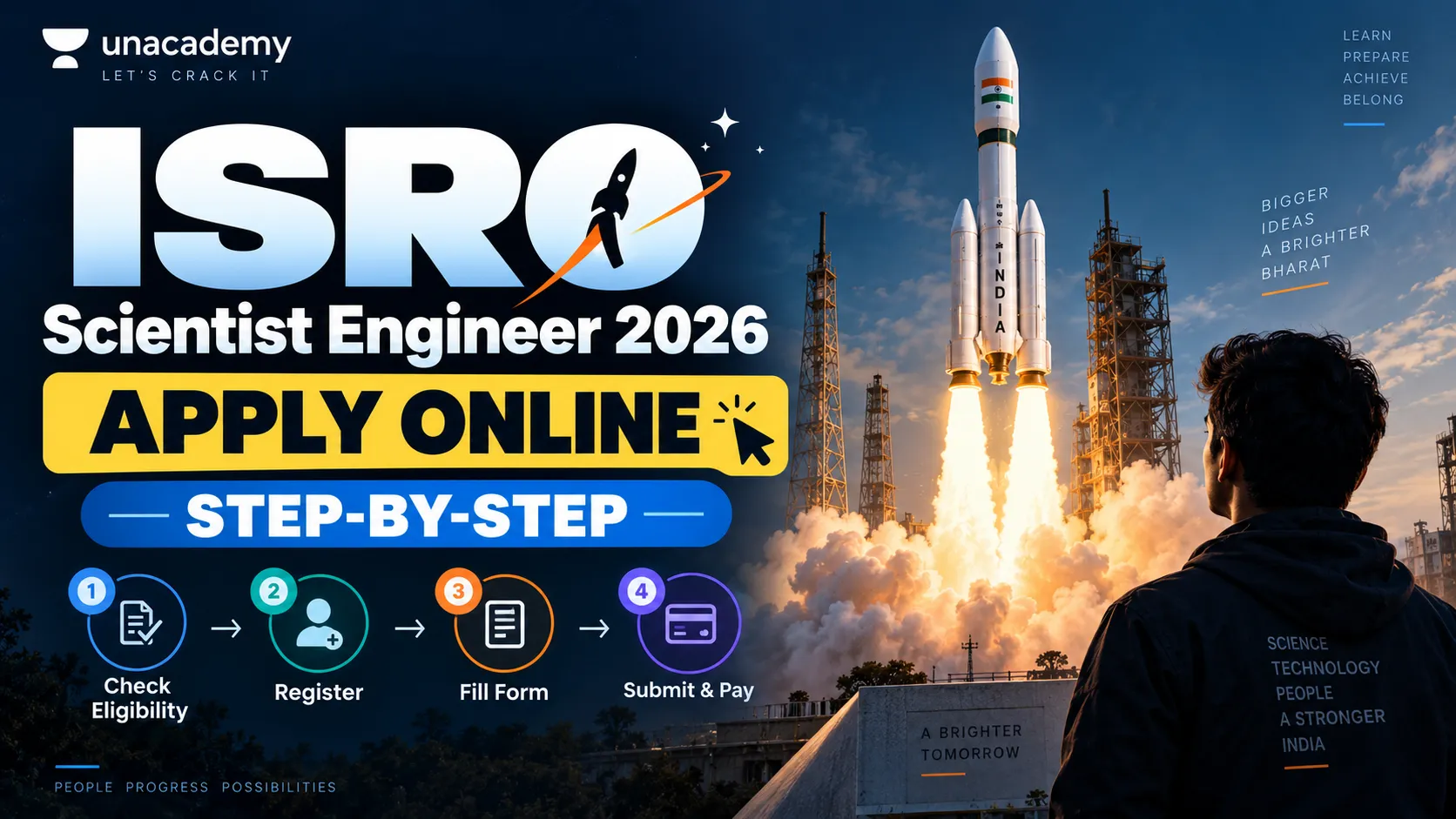
Whether you are preparing to complete your ISRO Scientist Engineer 2026 apply online form or assessing your odds before diving into past year papers, knowing where your branch stands is critical. Here is a clear, realistic breakdown of the ISRO recruitment 2026 vacancy distribution, eligibility parameters, and what the selection journey genuinely demands from you.

Understanding the ISRO Scientist Engineer Recruitment 2026: The Big Picture
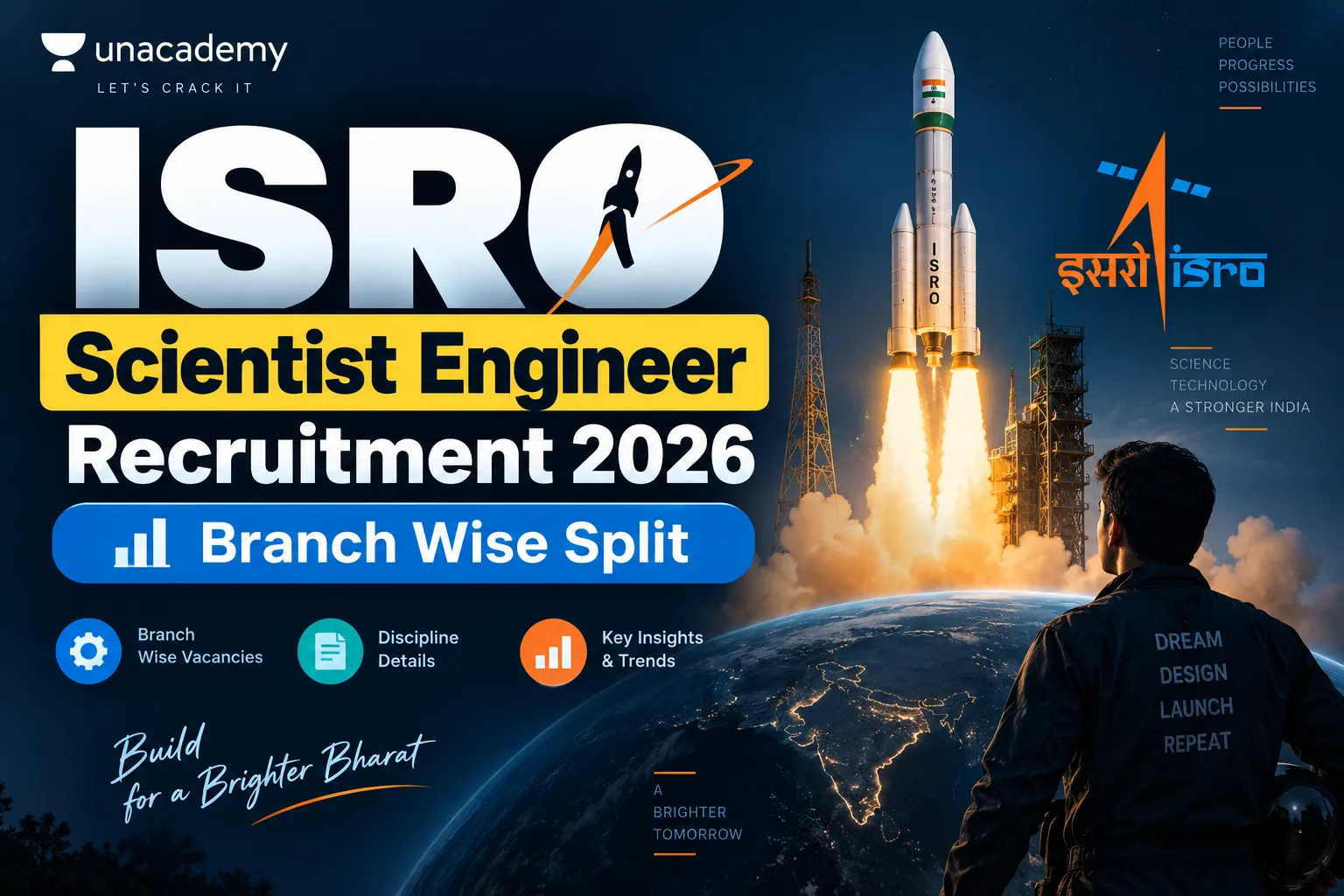
The Centralised Recruitment Board (ICRB) operates under a specific mandate: hire engineers who have rock-solid foundational concepts rather than superficial memorization. Under the active ISRO Scientist Engineer Recruitment 2026 drive (Advt No. ISRO:ICRB:03(EMC):2026), the organisation announced a total of 175 Scientist/Engineer 'SC' posts across ISRO centres and the Physical Research Laboratory (PRL).
At Pay Level 10 (starting basic pay of ₹56,100 plus applicable DA, HRA, and allowances), these positions are Group 'A' posts. But beyond the pay slip, the real appeal is the engineering ownership working on satellite subsystems, launch vehicle telemetry, payload design, and mission control architectures.
Official Branch-Wise Split: Where Do the Numbers Stand?
The ISRO recruitment 2026 vacancy count reflects the current hardware and mission lifecycles ISRO is pushing forward. Satellite constellations and communication infrastructure heavily tilt this cycle toward hardware and RF electronics.
Here is how the numbers break down across disciplines:
| Discipline / Branch | ISRO Centres Post Code & Seats | PRL Post Code & Seats | Total Seats |
|---|---|---|---|
| Electronics & Communication (ECE) | BE001: 99 posts | BE001A: 1 post | 100 |
| Mechanical Engineering (ME) | BE002: 52 posts | BE002A: 1 post | 53 |
| Computer Science & Engineering (CSE) | BE003: 21 posts | BE003A: 1 post | 22 |
| Total Available Openings | 172 posts | 3 posts | 175 posts |
Electronics & Communication Engineering (ECE)
Securing 100 out of the 175 seats, Electronics candidates have the largest window this cycle. The core demand stems from advanced communication payloads, radar imaging (like NISAR follow-ons), onboard telemetry, and ground tracking stations. If you are in ECE, expect heavy competition focusing on Analog Circuits, Signals & Systems, Electromagnetics, and Digital Communications.
Mechanical Engineering (ME)
With 53 total posts, Mechanical remains the backbone of launch vehicle structural engineering, cryogenic stage testing, and thermal control systems. The cutoffs for Mechanical in ICRB exams historically run razor-thin because the applicant pool is consistently well-prepared.
Computer Science Engineering (CSE)
At 22 seats, the Computer Science pool appears comparatively smaller, which can feel discouraging at first glance. However, ISRO's requirement for software engineers is surgical: mission software validation, ground data processing algorithms, orbital modeling, and high-performance computing clusters.
Eligibility Criteria: Non-Negotiable Benchmarks
Before you head to the portal for the ISRO Scientist Engineer 2026 apply online procedure, ensure you meet the qualifying criteria without any rounding off:
Educational Qualification: First-class B.E./B.Tech or equivalent degree in the respective engineering discipline.
Minimum Percentage / CGPA: You must have scored an aggregate minimum of 65% marks (average of all semesters) or a CGPA of 6.84 out of 10. ISRO does not round off 64.9% to 65%.
Age Limit: The upper age limit is 28 years as of the closing date of applications, with standard government relaxations applicable for SC/ST/OBC/PwD candidates.
The Two-Stage Selection Dynamic: Written Exam vs. Interview
The recruitment structure uses a two-tier filter:
1. The Written Test (Screening Layer)
The test spans 120 minutes and carries 100 marks:
- Part A (Core Discipline - 80 Marks): 80 objective questions reflecting your core engineering discipline. There is a negative marking of 0.33 (1/3) marks for every incorrect answer.
- Part B (Aptitude & Reasoning - 20 Marks): Numerical, diagrammatic, deductive, and logical reasoning. There is no negative marking in Part B.
2. The Technical Interview (The Deciding Factor)
Candidates are shortlisted for interviews at a ratio of approximately 1:5. The final merit list is driven significantly by your interview performance. ISRO interview panels are known for pulling up a whiteboard and asking you to sketch shear stress distributions, explain boundary layers, or design an antenna circuit from first principles rather than testing rote theoretical trivia.
Things You Should Know Before Submitting Your Form
Transcript Discrepancies: Ensure your final degree certificate or provisional certificate clearly displays first class. If your university awards CGPA without a specific conversion formula, ISRO relies strictly on its standard 6.84/10 threshold.
Application Finality: Once submitted, the ICRB portal rarely allows edits. Double-check branch codes, reservation category certificates, and photo/signature file dimensions before paying the processing fee.
- Refund Dynamics: The standard initial application fee is often structured with a partial or full refund for candidates who actually sit for the CBT written test. Do not apply casually if you do not plan to appear.
Reader Perspectives: Real Takeaways From Past Cycles
"I missed the ECE cutoff in my first attempt by three marks because I treated Part B as an afterthought. Part A tests your technical depth, but those 20 marks in aptitude are what quietly pull you into the 1:5 shortlist bracket."
— Karthik R., Systems Engineer (Applied in previous ICRB cycle)
"During my mechanical interview, not a single question came from current affairs. The entire 45 minutes revolved around fracture mechanics, my final year project choices, and drawing thermodynamic cycles under varied pressure ratios. If your fundamentals are clean, the board respects it."
— Ananya S., Aerospace Structures Researcher
Frequently Asked Questions
1. Can final-year engineering students apply under the ISRO SC 2026 notification?
Applicants must possess their qualifying degree certificate or provisional certificate with the minimum mandated 65% aggregate or 6.84 CGPA by the cutoff date specified in the notification. If your final results are awaiting publication beyond the application deadline, you are generally not eligible for that specific cycle.
2. Is a valid GATE score mandatory for the ISRO Scientist Engineer Recruitment 2026?
No. While ISRO occasionally releases separate notifications based on GATE scores, the standard ICRB Scientist/Engineer 'SC' recruitment conducts its own standalone centralized computer-based written test.
3. What is the syllabus level for the written exam?
The technical syllabus for Part A aligns very closely with the standard undergraduate curriculum and GATE core syllabus of the respective branch (ECE, ME, CSE). However, ISRO questions often emphasize practical circuit behavior, mechanics intuition, and calculation speed.
4. Can allied engineering branches (e.g., Instrumentation, Mechatronics) apply?
Eligibility depends strictly on the exact nomenclature approved in the formal ISRO SC 2026 notification. Generally, core degree titles (Electronics & Communication, Mechanical, Computer Science) are directly permitted, while allied degrees must strictly match the equivalence criteria outlined in the notification annexures.
5. How long does the recruitment cycle usually take from application to posting?
Historically, the ICRB process takes between 4 to 8 months. This timeline accounts for screening applications, scheduling CBT centres across India, publishing answer keys, conducting technical viva interviews, and completing character and medical verifications.
Grounded Takeaway
A recruitment notice like the ISRO Scientist Engineer Recruitment 2026 inevitably creates a rush of adrenaline. But after the initial excitement of viewing the branch-wise split wears off, your actual edge comes down to systematic discipline: solving past papers with negative marking in mind, clearing out ambiguities in core concepts, and approaching the application with practical focus. Verify your documents, submit your application before the server rush, and spend your energy where it actually counts on the drawing board and your core subjects.
























Sign in to leave a comment.