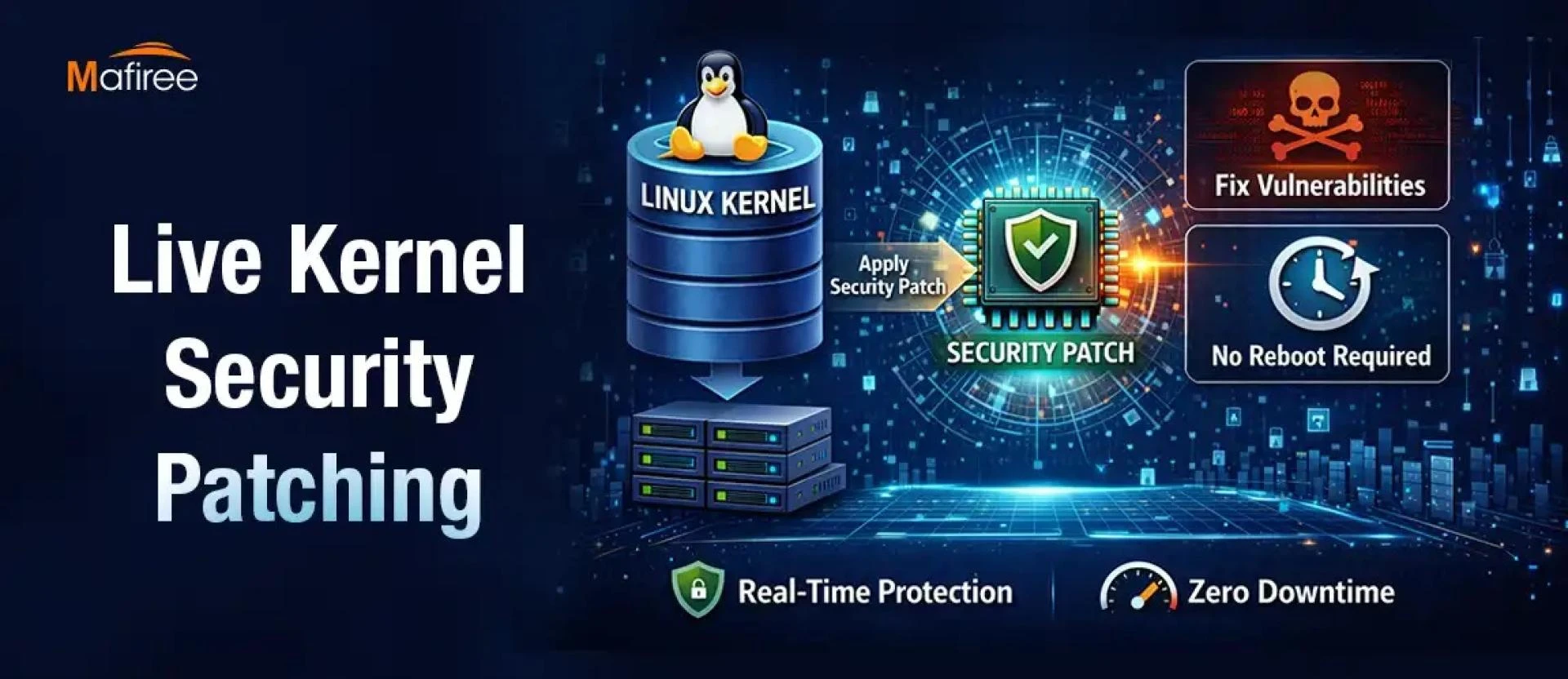

Linux kernel live patching is no longer optional—it’s becoming a foundational security strategy for modern infrastructure. As organizations move toward always-on systems, the ability to apply critical updates instantly—without downtime—has redefined how security and operations work together.
Security updates can’t wait for downtime anymore
Today’s enterprises operate in real time. Systems run 24/7, and threats emerge just as continuously. Waiting for scheduled maintenance windows is no longer practical when vulnerabilities need immediate attention.
Traditional patching introduces clear risks: downtime affects revenue, updates are often delayed, and security teams must compromise with operations. This delay leaves systems exposed longer than acceptable.
With increasing adoption of Linux for mission-critical workloads like databases, kernel-level security must evolve into a continuous process—not a periodic task. Live patching enables this shift by applying updates instantly, without interrupting services.
How Linux Kernel Live Patching Solves the Problem
Linux kernel live patching bridges the long-standing gap between uptime and security.
- Critical vulnerabilities are fixed immediately
- No system reboots are required
- Production environments continue running uninterrupted
- Maintenance windows become optional rather than urgent
- Security teams can respond as soon as new threats are disclosed
This approach transforms patching from a reactive activity into continuous protection, aligning security with business uptime requirements.
Where Linux Kernel Live Patching Matters Most
Live patching delivers the highest value in environments where downtime is unacceptable:
- Financial systems handling transactions in real time
- Healthcare platforms supporting critical services
- E-commerce applications with constant user activity
- Telecom and networking infrastructure
- Cloud and SaaS platforms
- Large-scale enterprise Linux deployments
In these sectors, even brief interruptions can lead to financial loss, compliance issues, or reputational damage. Live patching ensures systems remain both secure and available at all times.
How Mafiree Helps Organizations Stay Secure Without Downtime
Mafiree provides managed Linux kernel live patching services tailored for always-on environments, helping organizations maintain uninterrupted operations while staying protected.
Key capabilities include:
- Real-time deployment of critical kernel patches
- Continuous monitoring for newly disclosed vulnerabilities
- Zero-downtime patch management for production systems
- Rapid response to high-severity threats
- Compliance-ready reporting and patch visibility
- Strategic implementation of security-focused patching
This approach removes the traditional trade-off between uptime and security, enabling organizations to achieve both simultaneously. Contact Mafiree’s Linux experts to implement zero-downtime security in your environment.
The Business Outcome of Linux Kernel Live Patching
Live patching shifts security from reactive to proactive.
Organizations benefit from:
- Reduced exposure to critical exploits
- No disruption to customer-facing services
- Faster compliance with regulatory standards
- Lower operational stress around maintenance windows
- Improved resilience of Linux infrastructure
Instead of being a risky, scheduled activity, kernel patching becomes a seamless and continuous security layer.





























Sign in to leave a comment.