
Sydney has a habit of changing its mind. You’ll get a cracking blue-sky morning, then a wind shift, then a quick shower that looks small until it isn’t. If you’ve ever dragged cushions inside while someone yells “it’ll pass in five minutes”, you know the vibe.
That’s why more people are looking at louvre roof pergolas. Not because they’re trendy, but because they let you adjust the roof to suit what the weather is doing right now.
This article walks through what an adjustable louvre roof system is, what to watch for in Sydney and surrounding areas (Wollongong, Central Coast, Newcastle), and the choices that make the difference between “nice idea” and “we use this space all the time”.
What an adjustable louvre roof system is (in plain English)
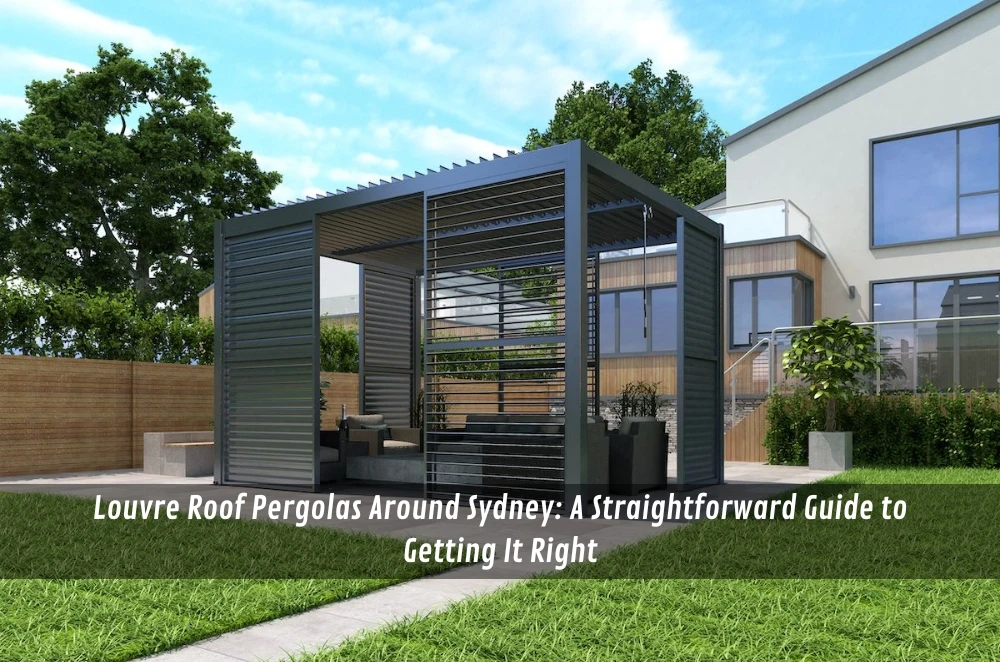
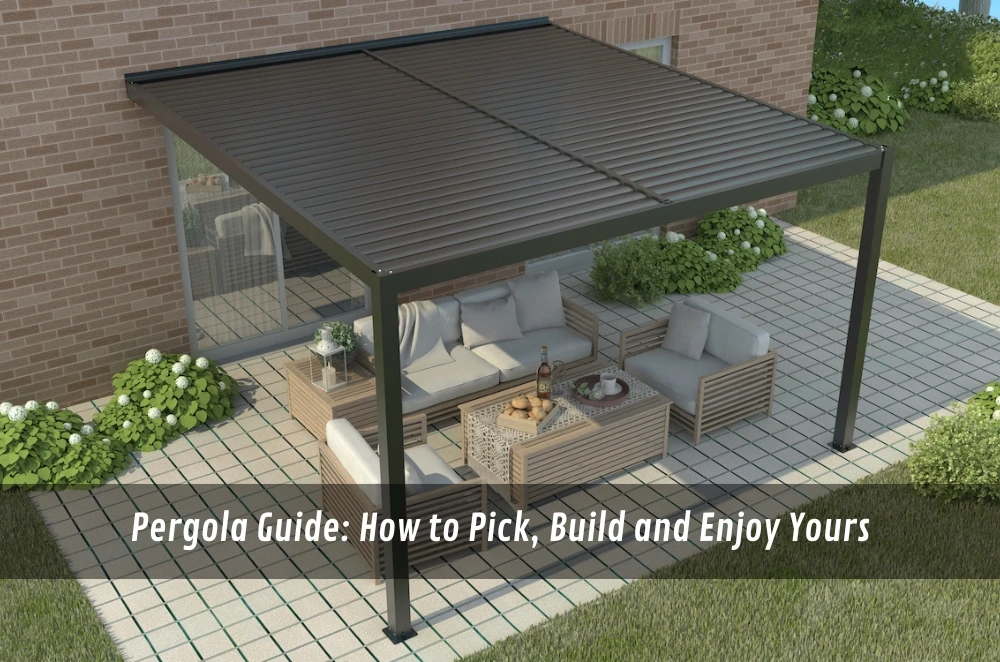
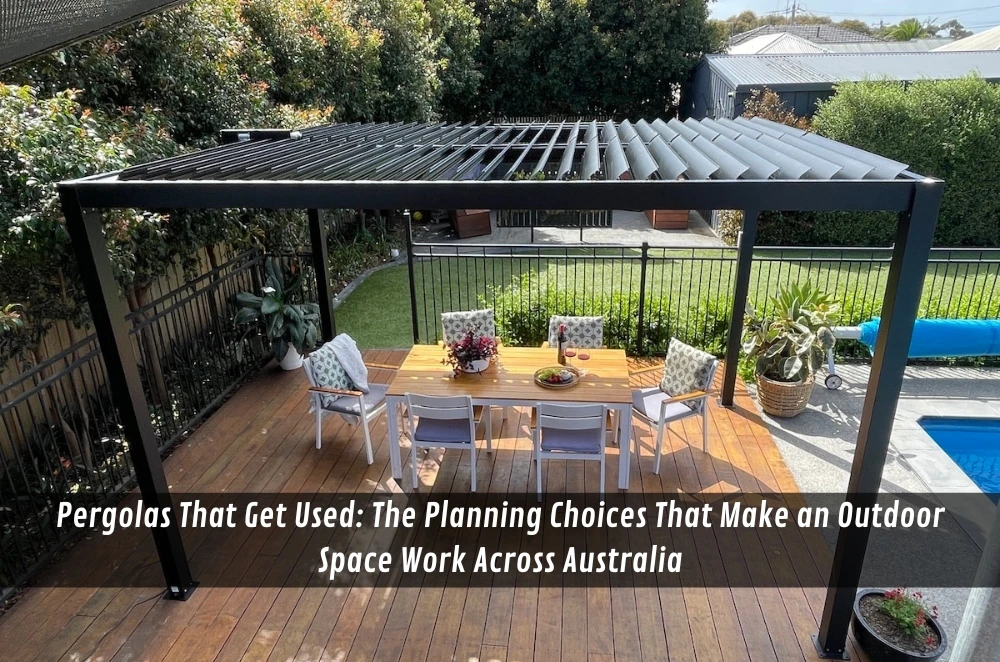
An adjustable louvre roof system is a pergola roof made of slats that rotate. Open them, and you get breeze and light. Close them, and you get far more protection from rain and harsh sun than you’d get with a standard open pergola.
Some are manual. Many are motorised, which basically means you tap a button instead of wrestling with a handle.
It’s a bit like having blinds for your outdoor area, except the “window” is your whole roof.
Why these roofs make sense in Sydney (and nearby)
A fixed roof is a set-and-forget decision. It gives you one level of light, one level of cover, one feel. That might be perfect… until summer hits, or the wind changes direction, or you realise the space feels dark for half the year.
An opening and closing roof pergola is more forgiving. It lets you:
- Cut glare on hot afternoons
- Let heat escape when the air goes still
- Close up quickly when rain rolls in
- Open the roof in winter when you want the sun on your back
You’re not trying to “beat” the weather. You’re just making it easier to live with.
One line that tends to be true: if the outdoor area is comfortable, people use it without making a big plan.
The bits that matter before you worry about colours
You can spend hours looking at photos. But the practical stuff is what decides whether the pergola feels good day-to-day.
Sun direction and timing
Sydney's sun can be brutal when it’s low in the sky. West-facing areas cop it in the afternoon. Courtyards can bounce heat around. Narrow side yards can turn into little ovens.
A simple move: stand where the pergola will be at the time you’d actually use it. Late afternoon is the big one for most households. Notice where the sun lands, and how long it stays there.
That tells you what your roof needs to do.
Rain control and where the water goes
People talk about “weatherproof” like it’s one switch you turn on. In reality, rain control is partly the louvers and partly the drainage.
A good setup usually includes:
- Gutters built into the frame
- Downpipes that move water away properly
- A plan for where that water ends up (not onto your pavers near the door)
If drainage is an afterthought, you’ll hear it first. Dripping. Overflow. Water is tracking back toward the house. Not fun.
Wind exposure
Sydney winds don’t always show up on a forecast in a way that matches your backyard. Coastal areas around Newcastle, the Northern Beaches, or parts of Wollongong can get sudden gusts. Even inland suburbs can have weird wind tunnels between houses.
Wind affects:
- How stable the structure feels
- Whether you need extra bracing
- Whether you’ll want a screen on one side
You don’t need to turn the pergola into a bunker. But you do want it to feel solid.
What they’re usually made from (and why aluminium is common)
Most modern louvre roof pergolas use aluminium. It suits Australian conditions, it’s strong for its weight, and it generally handles the elements well when finished properly.
Two practical points people often miss:
- The quality of the powder coating matters, especially near the coast
- The small parts (fixings, joints, seals) can make or break long-term smooth operation
You’re not buying “metal”. You’re buying a system with moving parts that should still feel easy in the years to come.
Motorised vs manual: the honest version
Manual systems can work. They can also end up being left in one position because adjusting them is a bit of a hassle.
A motorised louvre roof gets used properly because it’s effortless. You actually change the roof as the day changes, which is the whole point of having an adjustable roof in the first place.
Three practical opinions (not hype, just reality):
- Convenience usually beats good intentions.
- If you won’t adjust it, you won’t get the benefit.
- A roof you use daily is better than a “perfect” roof you barely touch.
Motorised doesn’t need to be complicated. It just needs to be reliable and easy.
Step 1: Decide how you want the space to feel
This is where people get it wrong: they design for photos instead of how they live.
Ask yourself:
- Do you want it bright and airy, or more shaded and calm?
- Is it mainly for meals, lounging, or kids running in and out?
- Is there a BBQ under it (ventilation matters)?
- Do you want to sit outside when it’s drizzling, or only when it’s fully dry?
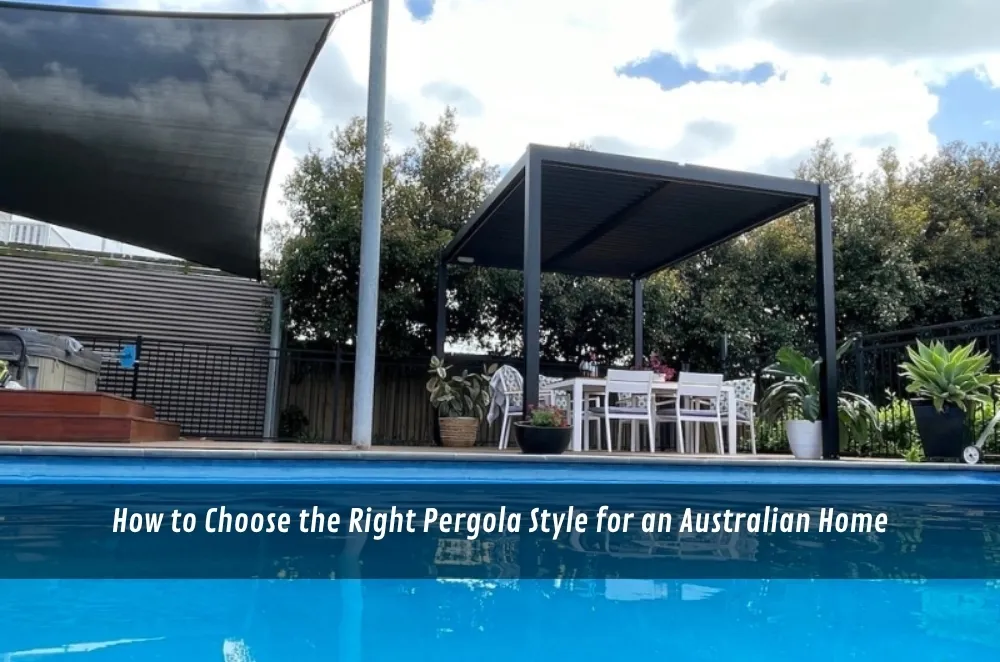
If it’s an outdoor entertaining area roof, think about where people naturally gather. Near the kitchen door? Around a table? Along the edge of the yard?
Design for the flow, not just the footprint.
One-line truth: the “best” layout is the one that doesn’t make you rearrange furniture every weekend.
Step 2: Add the extras that solve real problems (and skip the rest)
A louvre roof pergola can do a lot on its own. But sometimes one or two additions make it feel finished.
Depending on your space, you might add:
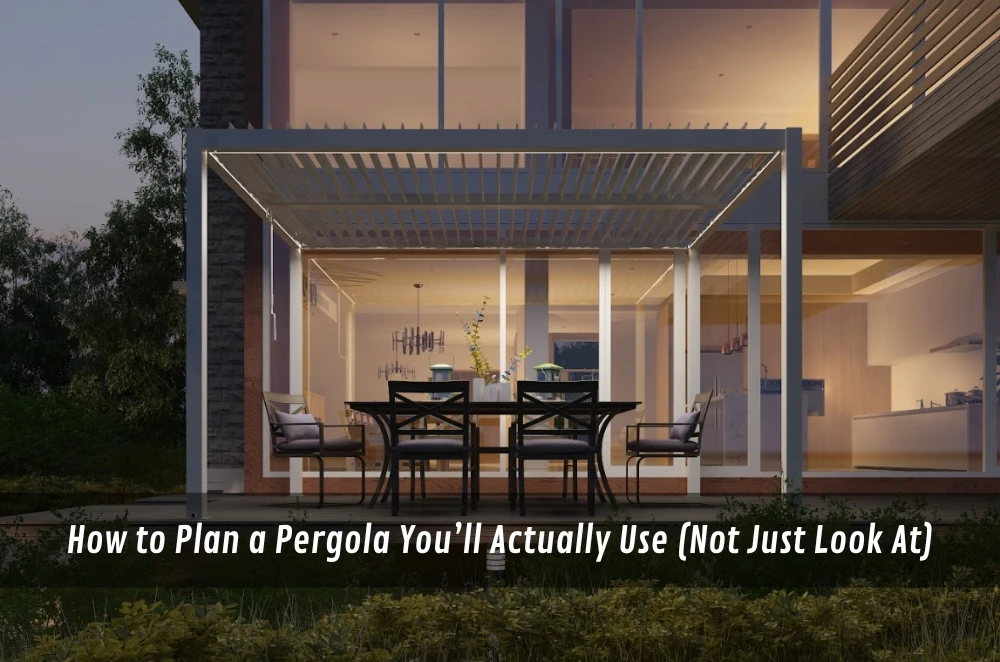
- Lighting (so you’re not relying on harsh indoor spill light)
- A screen on the wind side
- A heater if you genuinely want winter evenings outside
- A ceiling fan if summer nights get sticky
Try not to overbuild it. If you close in every side, you can lose the breezy feeling that makes outdoor spaces enjoyable.
If airflow is your biggest issue, don’t block it off.
Operator experience moment (the small thing that changes everything)
Most people assume they’ll use “open” or “closed”. In practice, they live in the middle setting. Half-open, slats angled just so. Enough shade to take the edge off, but still bright and breezy.
I’ve also noticed a funny shift once people have real control: they stop checking the sky so much. They’ll set up outside even when the weather looks a bit iffy, because the space feels dependable.
That’s the quiet win. Less fuss. More use.
Australian SMB mini-walkthrough: a small Sydney business making a courtyard usable
Picture a small accounting firm in the Inner West with a tight courtyard out the back. Staff want somewhere to eat lunch that isn’t at their desk, and the office wants it to feel tidy for client visits.
- Measure the space and mark clear walking paths to the back door.
- Check late-afternoon sun (courtyards can trap heat badly).
- Choose a louvre roof pergola to control glare and keep airflow.
- Add simple lighting so it works in winter afternoons.
- Put one screen on the side that cops wind and sideways rain.
- Sort drainage so water runs away from the doorway.
- Set a default: roof slightly open most days, fully closed when it rains.
It’s not fancy. It’s just a practical way to make the outdoor area usable more often.
Common mistakes that lead to regret
Expecting “closed” to mean “nothing gets in”
Even strong systems can be challenged by wind-driven rain, especially if the weather is coming in sideways. You can get excellent cover, but it’s smart to keep expectations realistic in storms.
Forgetting how the pergola meets the house
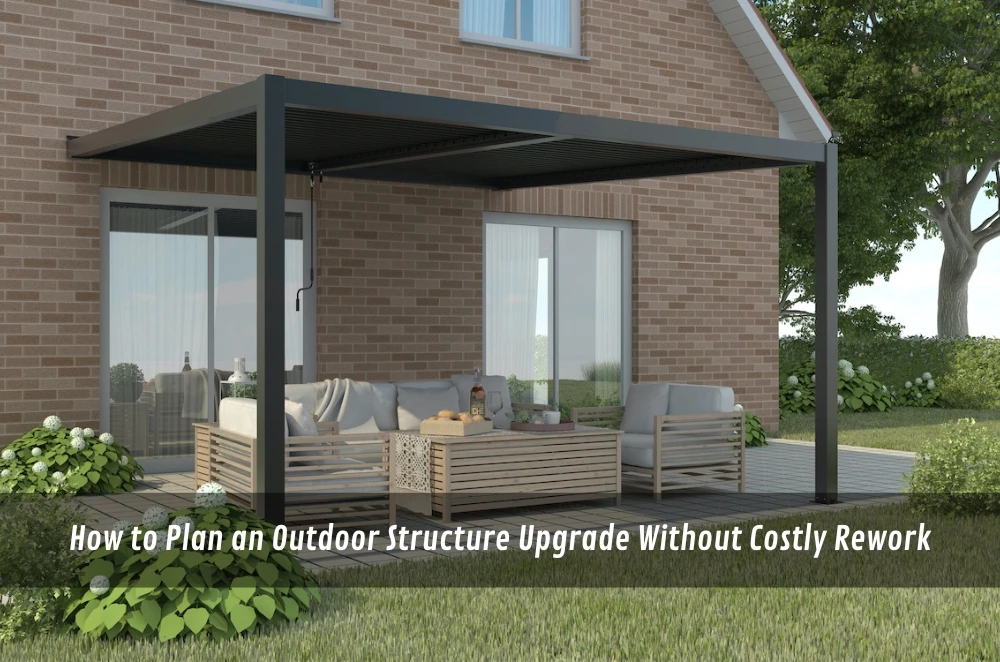
If the doorway is awkward or the edge detail is messy, you’ll notice it every single day. This is one of those “small now, big later” problems.
Leaving drainage and electrical to the last minute
If you’re going motorised or adding lighting, plan it early. Same with water run-off. These aren’t exciting choices, but they stop future headaches.
What to look for in a pergola installation in Sydney and surrounds
The product matters, but the install is what makes it feel solid and reliable.
A few sensible questions to ask during planning:
- How is it fixed to the slab or footings?
- Where do gutters and downpipes run, and where does water discharge?
- If it’s motorised, what’s the electrical plan and who’s doing it?
- What’s involved in keeping it clean and operating smoothly?
If you’re comparing styles and configurations, it can help to browse a range within an adjustable louvre roof system selection to understand what options exist (sizes, layouts, add-ons) before you lock anything in.
Keeping it running well (without making it a “project”)
Most people don’t want another thing to maintain. Fair.
The basics are usually enough:
- Clear leaves out of gutters and drainage paths
- Rinse dust and salt build-up if you’re near the coast
- Check that nothing is jamming the moving parts
- Follow any motor servicing guidance if your setup includes it
A little upkeep now and then keeps the roof easy to adjust — and that’s the whole reason you chose it.
Key Takeaways
- A louvre roof pergola lets you adjust shade, airflow, and rain cover as conditions change.
- In Sydney, orientation, drainage, and wind exposure are the make-or-break details.
- Motorised systems often get used more because adjusting them is effortless.
- Pair the roof with a few problem-solving extras (lighting, a screen) rather than boxing the space in.
- A great install plus basic upkeep keeps the system feeling smooth long-term.
Common questions we hear from Australian businesses
What should we prioritise first: the roof itself or screens and extras?
Usually, get the roof and drainage right first, then add extras based on how the space behaves. A practical next step is to live with the roof for a couple of weeks (even mentally, based on wind and sun direction) and identify the side that causes the most discomfort. In Sydney’s suburbs, it’s often low-angle afternoon sun or a wind corridor between homes.
Is a louvre roof pergola overkill for a smaller courtyard?
It depends on how often you want to use the space and how exposed it is. In most cases, a small courtyard benefits even more because you feel heat and glare more intensely in tight areas. A good next step is to check late-afternoon conditions on a warm day and decide if airflow control is a bigger need than full shade.
How do we handle coastal conditions around Newcastle or the Central Coast?
Usually, it’s about finishes, fixings, and sensible cleaning rather than doing anything extreme. A practical next step is to ask what coating system is used and whether the hardware suits coastal installs. If you’re close to salt air, regular rinsing can genuinely help keep everything looking and moving nicely.
What’s the simplest way to tell if we’re getting value from it?
In most cases, you’ll notice it in behaviour, not spreadsheets. A practical next step is to watch whether people use the outdoor area on “maybe” days — warm but windy, or bright but drizzly. Around Sydney, those are the days when adjustable roofs earn their keep because you can tweak the roof instead of abandoning the space.























Sign in to leave a comment.