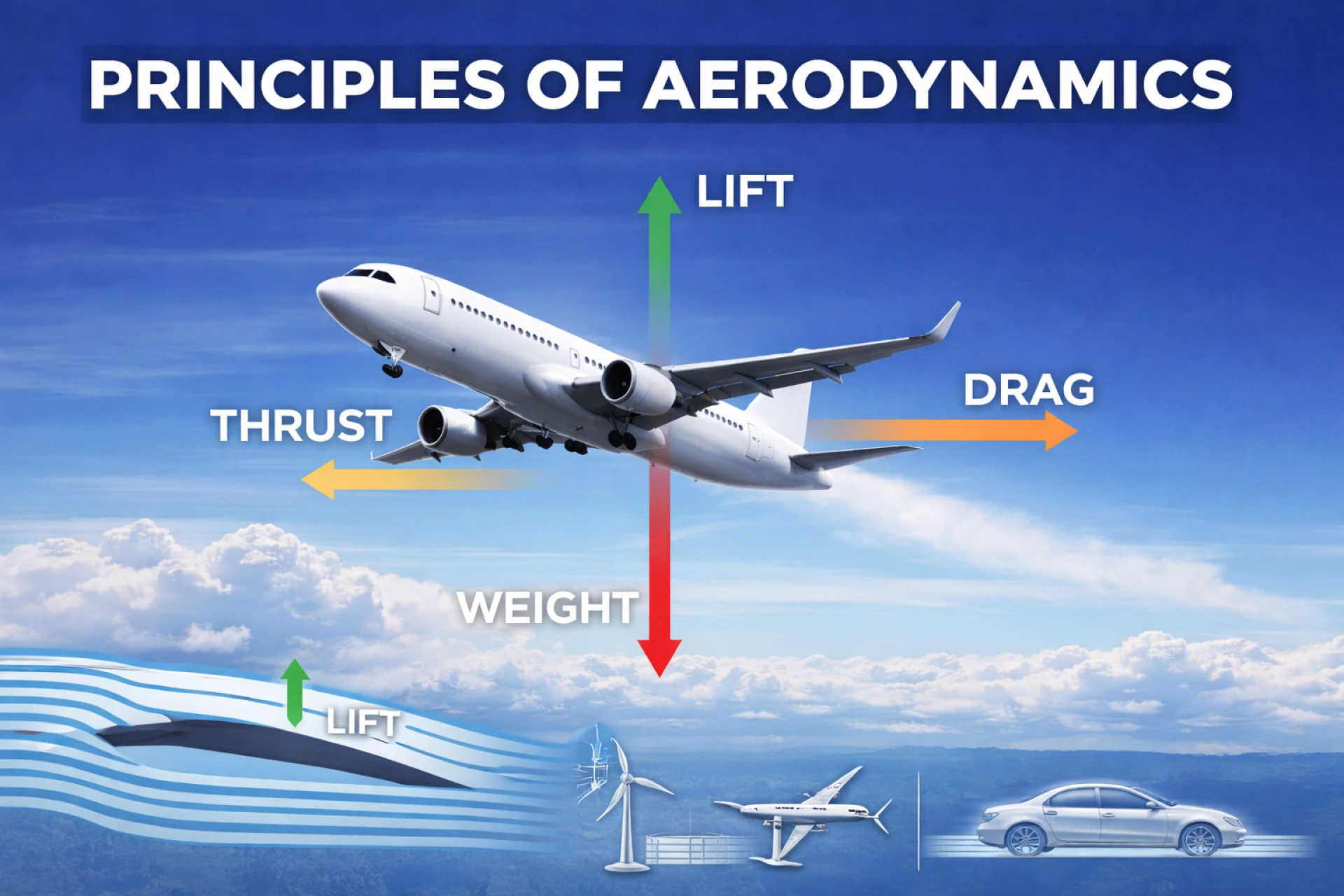

Aircraft are carefully engineered machines designed to handle extreme forces while remaining lightweight and efficient. At the core of every aircraft is its structure, which provides the strength, shape, and stability needed for safe operation. These structural elements work together to support loads during takeoff, flight, and landing.
Understanding the main structural elements found in every aircraft helps explain how engineers create airframes that are both strong and reliable.
The Fuselage Structure
The fuselage is the central body of the aircraft and serves as the main structural framework. It connects all major components, including the wings, tail, and landing gear.
Inside the fuselage are key structural elements such as frames, bulkheads, and stringers. Frames provide the basic shape, bulkheads add strength and divide sections, and stringers run along the length to reinforce the structure.
The fuselage must also withstand internal pressurization at high altitudes, making it one of the most critical structural parts of an aircraft.
Wing Structure
The wings are essential structural elements responsible for generating lift. They must be strong enough to support the weight of the aircraft while withstanding aerodynamic forces during flight.
Key internal components of wings include spars, ribs, and skin panels. Spars are the main load bearing elements, running along the length of the wing. Ribs give the wing its shape and help distribute loads.
Wing structures are carefully designed to balance strength, flexibility, and weight.
Tail Section or Empennage
The tail section, also known as the empennage, provides stability and control to the aircraft. It ensures that the aircraft remains balanced during flight.
The empennage includes the horizontal stabilizer and vertical stabilizer. The horizontal stabilizer controls pitch, while the vertical stabilizer maintains directional stability.
These structural elements are essential for maintaining controlled and steady flight.
Landing Gear Support Structure
The landing gear is supported by a strong structural framework designed to handle the impact of landing and the weight of the aircraft on the ground.
This structure includes mounting points, support beams, and reinforced sections within the fuselage or wings. These elements ensure that landing forces are properly absorbed and distributed.
The landing gear structure must be highly durable to withstand repeated takeoff and landing cycles.
Internal Reinforcement Elements
In addition to the main structures, aircraft rely on internal reinforcement elements to maintain strength and durability.
Stringers, frames, and stiffeners help distribute stress across the airframe and prevent deformation. These components strengthen the outer skin and support the overall structure.
Without these reinforcements, the aircraft would not be able to handle the stresses of flight.
Aircraft Skin
The outer skin of the aircraft is more than just a covering. In modern aircraft, especially those using semi monocoque construction, the skin carries a significant portion of the structural load.
The skin helps maintain the aerodynamic shape of the aircraft and contributes to overall strength. It must be smooth, lightweight, and resistant to environmental factors such as temperature changes and corrosion.
Materials Used in Structural Elements
Aircraft structural elements are made from materials that provide high strength while minimizing weight.
Aluminum alloys have been widely used due to their balance of strength and lightness. Modern aircraft increasingly use composite materials such as carbon fiber, which offer improved durability and fuel efficiency.
The choice of materials plays a key role in the performance and lifespan of the aircraft.
Importance of Structural Integrity
Structural integrity is critical for aircraft safety. Engineers design every structural element to handle various types of stress, including tension, compression, bending, and torsion.
Regular inspections and maintenance ensure that structural components remain in good condition throughout the aircraft’s service life.
Maintaining strong structural integrity helps prevent failures and ensures safe operation under all conditions.
Conclusion
The main structural elements found in every aircraft form the backbone of its design. Components such as the fuselage, wings, tail section, landing gear supports, and internal reinforcements all work together to create a strong and stable airframe.
These elements allow aircraft to withstand extreme forces while maintaining efficiency and safety. As aerospace technology continues to evolve, advancements in structural design and materials will further improve aircraft performance and reliability.

























Sign in to leave a comment.