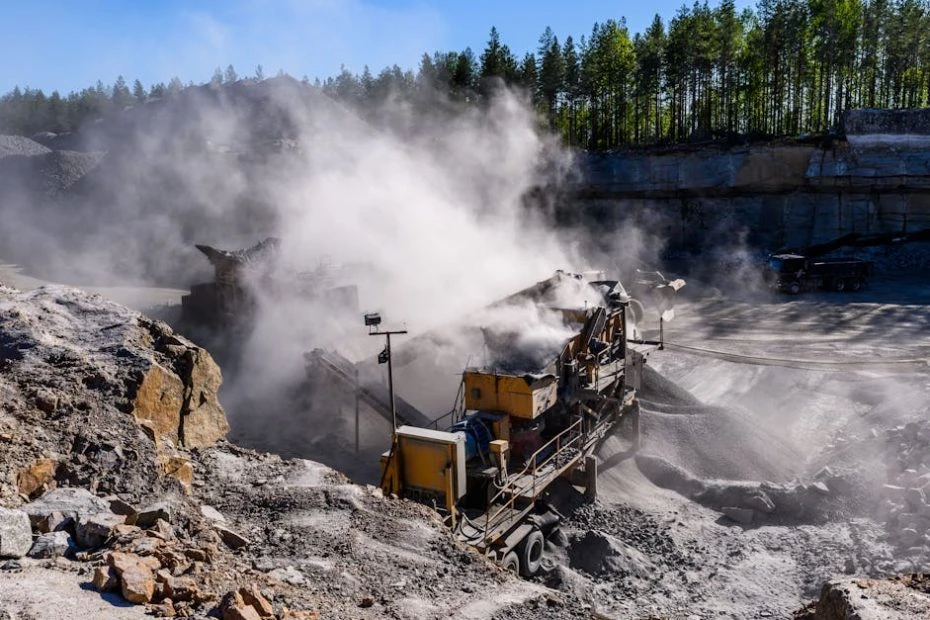

Mining operations, construction zones, and material handling facilities kick up massive amounts of airborne dust every single day. When left unchecked, that dust becomes a threat to worker health, environmental compliance, and the longevity of expensive equipment. Getting a handle on airborne particles is not optional — it is a basic requirement for running a safe and productive site.
The Real Cost of Ignoring Dust
Airborne particles do not stay in one place. They drift across facility boundaries, settle on nearby homes and vehicles, and find their way into the lungs of every person on site. Workers exposed to contaminated air over months and years face serious respiratory conditions, from chronic coughing to long-term lung disease.
Regulatory agencies take air quality seriously. Violations lead to hefty fines, forced shutdowns, and lasting damage to a company’s reputation. Staying ahead of the rules is always cheaper than scrambling to fix problems after an enforcement notice arrives.
Then there is the equipment side of things. Dust works its way into bearings, clogs filters faster than expected, and causes electrical systems to fail when particles sneak past protective casings. The maintenance bills stack up quickly when dust control is not part of the daily routine.
Getting the Basics Right
Controlling dust starts with understanding how it behaves. Prevention is the best first step — stopping dust from forming in the first place saves time, money, and effort. When prevention is not possible, capturing particles at the source limits how far they spread. And for whatever escapes, suppression methods knock airborne particles back down before they cause trouble.
No single method works perfectly for every situation. The most effective programs layer multiple approaches together so the weaknesses of one technique get covered by the strengths of another. Think of it like a safety net with several layers — if dust slips through the first barrier, the next one catches it.
Site conditions play a big role too. The type of material being handled, local weather patterns, wind speeds, and specific regulatory thresholds all shape which combination of methods delivers the best outcome.
How Water-Based Methods Work
Adding water to materials is one of the oldest and most reliable ways to keep particles grounded. Wet particles cling to each other instead of floating into the air. The trick is applying just enough water to do the job without turning the site into a muddy mess or wasting resources.
Dust suppression through water application is effective across a wide range of industries. Road surfaces, material stockpiles, belt transfer points, and loading zones all benefit from consistent water treatment.
The difference between good and poor results often comes down to the system itself. Manual watering with a truck or hose wastes water and leaves gaps in coverage. A properly designed dust suppression system applies water at the right rate, in the right places, with minimal human intervention. Automated setups deliver precise amounts exactly where needed, cutting waste and improving consistency.
Engineered Approaches for Tough Sites
Some dust challenges go beyond what a simple water truck can handle. Large open areas, constantly moving sources, and extreme weather conditions call for something more sophisticated.
Engineered dust suppression solutions take all of these factors into account during the design phase. Coverage area, available water supply, and the level of control required all feed into system specifications. Some applications need equipment running around the clock, while others work better with activation triggered by sensors or production schedules.
When suppression systems tie into facility operations — activating during material handling, pausing during downtime — they hit peak efficiency. This kind of coordination means dust gets treated at the exact moment it forms, not before or after.
Choosing the Right Spray Technology
Not all sprays are created equal. Standard sprinklers handle fixed-area coverage well enough, but they are not always the best fit. Different applications call for different droplet sizes, force levels, and flow rates.
A water spray system for dust control relies on carefully engineered nozzles to produce droplets that match the size of the particles being targeted. Droplets that are too large fall to the ground before reaching the dust cloud. Droplets that are too small evaporate mid-air and never make contact. Getting the balance right is what separates effective systems from expensive water features.
Nozzle design, operating force, and flow rate all need to match the specific application. A system designed for a crushing plant transfer point looks very different from one built for an open stockpile area.
The Power of Fog and Mist
Fine water droplets behave differently from conventional sprays. They stay suspended longer, travel farther, and are far more effective at capturing tiny airborne particles. This is where fog and mist technology really shines.
Fog cannons shoot dense clouds of micro-fine droplets across large open areas. These units are built for situations where dust escapes from multiple sources spread across a wide zone. The tiny droplets collide with airborne particles, merge together, and form heavier clumps that drop out of the air naturally.
Misting Cannons offer similar particle-capture performance with design variations that suit particular setups. Some units mount on vehicles for flexible deployment across a site, while fixed installations provide continuous coverage at specific problem spots like crusher discharge points or loading bays.
Coverage and Flexibility
A single fog cannon covers a remarkable amount of ground. Throw distances exceeding one hundred meters mean one unit can handle an area that would otherwise need dozens of conventional sprinklers. That translates directly to lower installation costs and simpler maintenance schedules.
Mist cannons also oscillate automatically, sweeping back and forth to cover their assigned zone evenly. This steady movement prevents the common problem of over-treating one spot while leaving the rest exposed.
Most modern units come with adjustable settings for throw distance, oscillation angle, and droplet output. Operators can tune performance based on current wind speed, humidity, and dust intensity rather than relying on a fixed configuration that only works under ideal conditions.
Where These Systems Make the Biggest Difference
Crushing and screening operations generate dust non-stop during production hours. Positioning suppression equipment at discharge points and belt transfers tackles the problem right at the source, before particles have a chance to spread.
Stockpile management is another major dust producer. Loading, reclaiming, and wind erosion all release particles from these large surface areas. Perimeter-mounted systems combined with direct pile treatment keep emissions within acceptable limits.
Haul roads are a constant challenge — dust output rises with traffic volume and vehicle speed. Regular water application or chemical treatment locks surface material in place and prevents it from becoming airborne under tire contact.
Demolition work creates intense but short-lived dust events. Mobile suppression units are ideal here because they can be repositioned as work moves through the site, providing targeted coverage exactly where it is needed at any given moment.
Keeping Systems Running Well
A suppression system is only as good as its supporting infrastructure. Water supply, pumping capacity, filtration, and control systems all need proper attention during both design and ongoing operation.
Water quality matters more than most people realize. Particles in the water supply clog nozzles and wear out pump components. Proper filtration and treatment address these issues and extend equipment life significantly.
Control systems range from basic timers to sensor-driven automation. The smartest setups activate suppression only when dust levels exceed a threshold, saving water during clean periods and reducing operating costs without sacrificing air quality.
Tracking Performance Over Time
Air quality monitoring confirms whether a suppression system is doing its job. Particle counters and opacity monitors deliver objective readings that visual inspections simply cannot match.
Compliance reporting depends on accurate data. Monitoring equipment captures the information needed for regulatory submissions and internal performance reviews, creating a clear record that holds up under scrutiny.
Watching performance trends over weeks and months reveals gradual changes that might otherwise go unnoticed. A slow decline in effectiveness signals that maintenance is overdue or that site conditions have shifted enough to require system adjustments.
Facilities that commit to proper particle management protect their people, their neighbours, and their operating permits. The investment in effective suppression equipment pays for itself many times over when weighed against the cost of uncontrolled dust.




























Sign in to leave a comment.