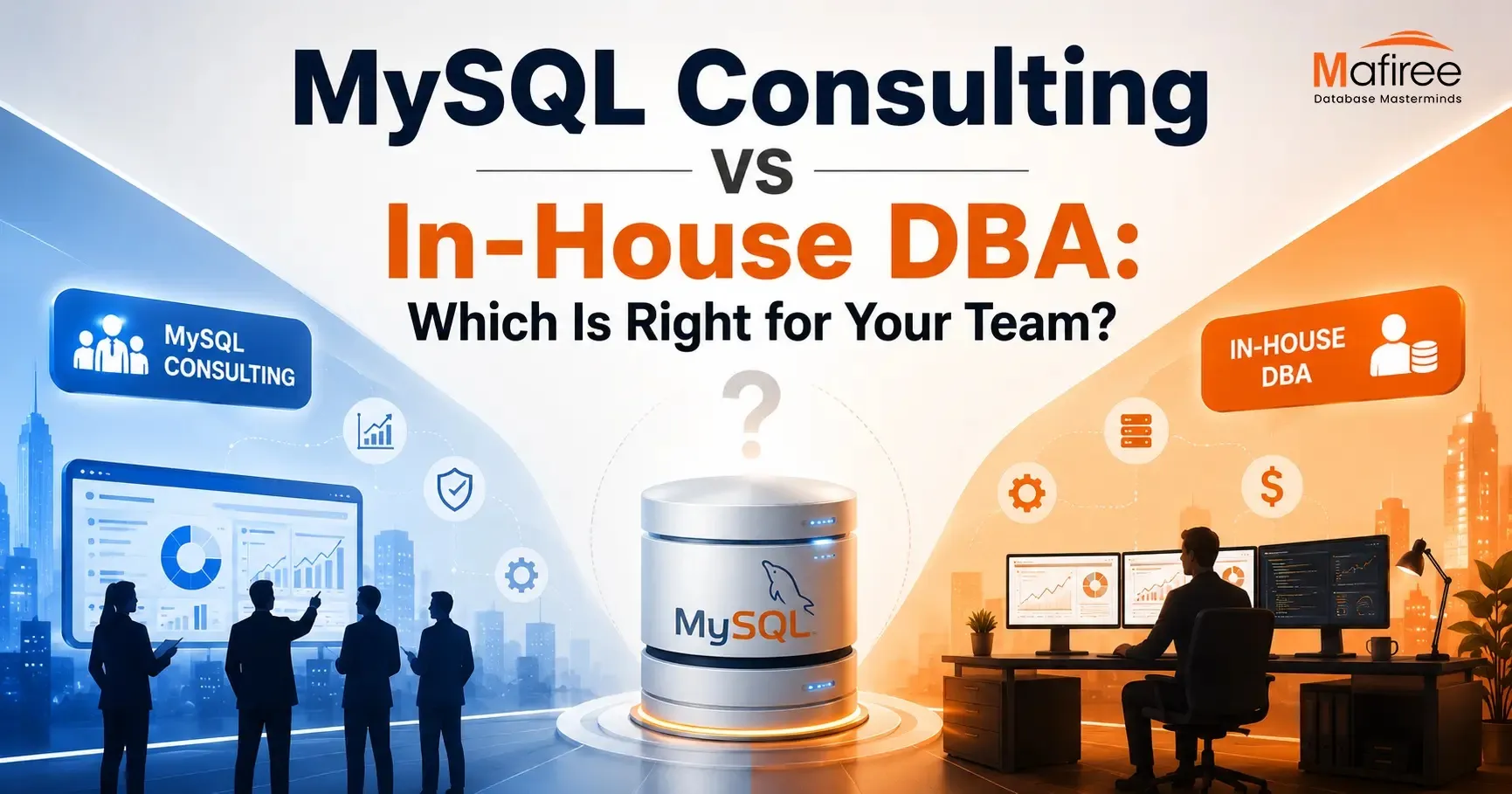

Deciding between hiring an in-house database administrator or working with MySQL consulting services isn't about finding one universally correct answer. In the MySQL Consulting vs In-House DBA decision, the right choice hinges on your organization's ongoing database workload, how specialized that work is, and the level of coverage you need. Many companies land on a hybrid model, where internal staff manage day-to-day tasks while MySQL consulting experts step in for more complex projects.
The Case for In-House DBAs
An in-house DBA works directly within your organization, developing deep familiarity with your systems, workflows, and business priorities. This closeness brings real advantages: they can make changes with minimal disruption because they know the infrastructure inside out, they're available immediately without the lag of external communication, and their long-term presence creates stability.
That said, in-house teams have real limitations. They may have less exposure to newer tools and techniques compared to consultants who work across many environments. They also come with higher fixed costs — salaries, benefits, training, and equipment — and there's a risk that their skills fall behind as technology evolves faster than they can adapt.
The Case for Consulting Services
Consulting firms, such as Mafiree, offer specialized expertise drawn from work across many different industries and environments, without requiring you to fund a full-time specialist team. Key benefits include broad, cross-industry knowledge, cost efficiency since you're only paying for actual time used, and quicker access to current tools and best practices, since consultants tend to adopt new methods early.
The trade-offs include a ramp-up period while consultants learn your specific setup, possible friction from working remotely, and the risk of becoming overly dependent on an outside relationship.
Comparing Costs
The cost structures of each option look quite different. In-house DBAs come with salary and benefits, recruitment and onboarding expenses, ongoing training investment, on-call coverage costs, project work that's simply absorbed into their salary, and tooling that must be purchased separately.
Consulting arrangements, by contrast, typically involve hourly, monthly, or annual maintenance contract fees, no onboarding costs, provider-managed skill development, emergency coverage, separately billed project fees, and tooling that's often bundled into the service. These figures vary depending on region, experience level, and workload, so they should be treated as general guidance rather than fixed numbers.
Factors That Should Drive Your Decision
Four considerations matter most when making this call:
- Budget and resources — weighing a larger upfront investment against more predictable, per-project spending
- Technical complexity — niche expertise needs may exceed what an internal team can realistically provide
- Scalability — consulting allows you to flex capacity up or down during growth phases or peak demand without committing to permanent hires
- Risk tolerance — organizations that value control and familiarity tend to prefer in-house staff, while those prioritizing agility lean toward consulting
Based on these factors, certain scenarios tend to favor certain approaches: early-stage startups, migration projects, and performance emergencies are typically well-suited to consulting. SaaS companies running 24/7 operations and enterprises that already have DBA teams tend to benefit from combining in-house staff with consulting support. Organizations with stable, low-complexity workloads often do fine with an in-house or generalist setup.
A Simple Decision Framework
As a general guide: if you have a stable workload requiring continuous ownership, go in-house. If you're facing a specialized or temporary problem, consulting makes more sense. If your workload is stable but you occasionally need specialist input, a hybrid model works well. And if you need high availability but have limited internal coverage, managed database services are worth considering.
The Bottom Line
Ultimately, this decision should be driven by your actual workload and where your capability gaps lie - not by a blanket rule. Continuous, tightly integrated database operations are best served by an in-house DBA. Specialized expertise, extra capacity, or support for complex projects points toward consulting. Organizations that need both can build a hybrid model, and those seeking ongoing coverage alongside specialist knowledge might consider managed database services rather than growing their internal team further.
Mafiree offers managed database services that blend in-house-style expertise with external consulting support, including round-the-clock monitoring, performance tuning, disaster recovery planning, migration support for legacy systems, and security audits paired with compliance management. There's no single right answer here — the best choice depends on your budget, technical needs, growth trajectory, and long-term strategy, but the goal is always an informed decision that supports both database performance and business outcomes.




























Sign in to leave a comment.