

In the labyrinth of modern data management, a network-attached storage (NAS) solution serves as a trusty torchbearer, illuminating a path of cost-effective yet robust data storage. Essentially a file-level computer data storage server that provides data access to a heterogeneous network of clients, NAS is not only a cost-saving alternative to traditional storage systems but also a beacon of efficiency, scalability, and data protection.
For businesses in need of centralized and easy-to-access data repositories, NAS offers a host of advantages, outshining its competitors with its versatility and manageability. This deep-dive exploration of NAS will showcase why this storage solution deserves a place in the IT strategies of small start-ups all the way up to the tech giants of the world.
What is NAS Storage?
Let's understand what is NAS storage? NAS, or Network-Attached Storage, is a specialized device connected to a network that provides data storage and retrieval to various network users and client devices. Unlike traditional storage solutions that rely on dedicated servers, NAS systems are standalone units with their own operating systems and file systems. They offer centralized storage accessible to multiple users simultaneously, making them ideal for storing and sharing files, documents, media, and other data across a network. With NAS storage, organizations can achieve efficient data management, backup, and access, enhancing productivity and collaboration among users.
Benefits of NAS Storage
- Cost-effectiveness Compared to Traditional Storage Solutions
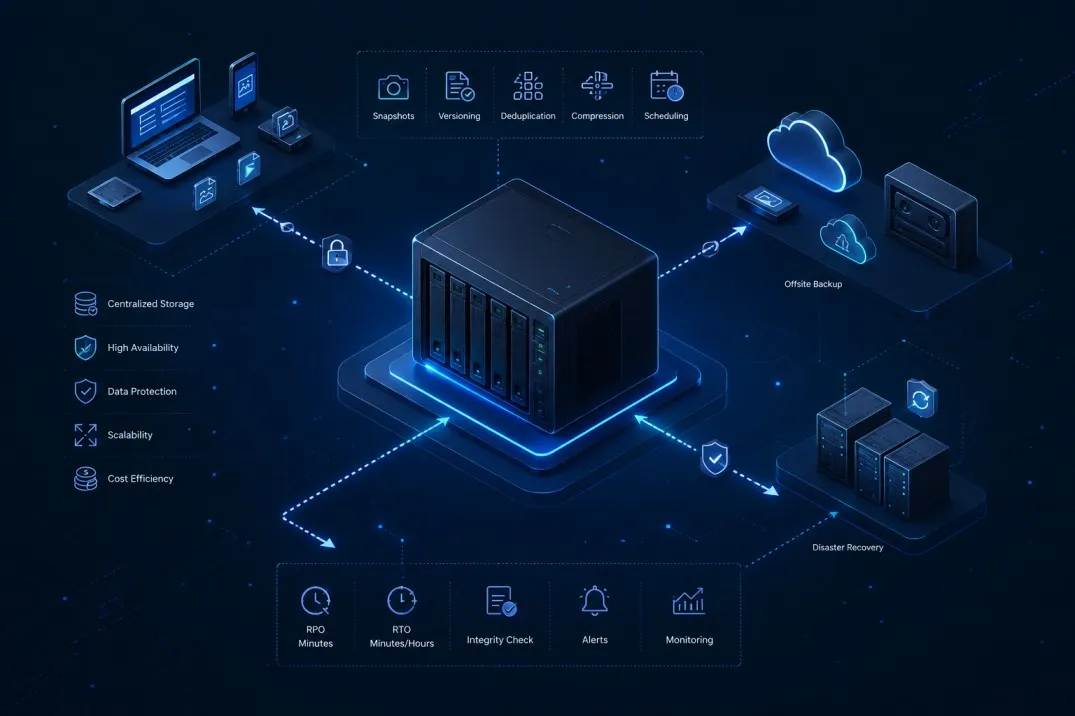
NAS storage has often been the choice of organizations looking to economize their IT infrastructure costs. Unlike direct-attached storage (DAS), where each device or server typically has its storage disks, NAS uses a dedicated storage network that enables multiple users to store and access data from a centralized location. The financial advantage here is evident — with reduced hardware costs and simplified cabling, NAS becomes the wallet-aware superhero of storage solutions.
- Scalability and Flexibility for Growing Storage Needs
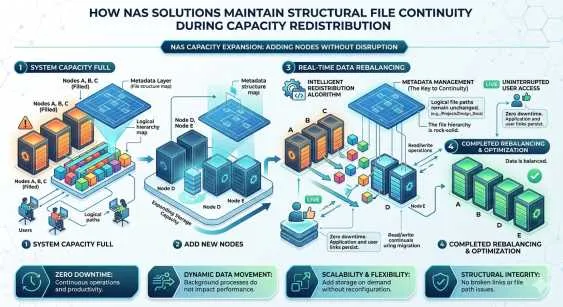
The elastic nature of NAS storage is another feather in its cap. As businesses evolve, so does their data footprint. NAS systems are inherently designed to scale up or out, meaning you can increase your storage capacity vertically within the system or horizontally by adding more NAS devices as needed. This 'buy-as-you-grow' model not only keeps initial investment low but also caters to future storage demands with unparalleled nimbleness.
- Centralized Data Access and Management
Effortless access to data lies at the core of NAS benefits. A centralized storage repository means all your important files, documents, and media are available under one digital roof. This single point of access simplifies management tasks, streamlines workflow, and ensures universal access to the right data at the right time, fostering a collaborative and efficient working environment.
- Data Protection and Backup Features
In the age of cyber threats and data vulnerabilities, protecting your digital assets is non-negotiable. NAS's built-in features for data backup, redundancy, and recovery come as a boon. These systems support various backup protocols, often include RAID configurations, and can be supplemented with disaster recovery strategies, rendering data loss a distant possibility.
Use Cases
- Small Businesses Leveraging NAS Storage
For small and medium-sized enterprises (SMEs), NAS is a perfect fit. With a relatively low investment, SMEs can set up a NAS server to handle their storage needs, catering to the storing and sharing of files across a network. Additionally, the ability to seamlessly integrate with existing IT infrastructure makes the deployment of NAS a plug-and-play affair, further appealing to the resource-strapped start-ups.
- Scale-Out NAS Applications in Enterprise Environments
In contrast, large enterprises with colossal data volumes turn to scale-out NAS, which distributes data across multiple nodes or servers. This approach not only handles the vast storage requirements but also optimizes performance by allowing storage to grow in unison with the number of nodes. The enterprises can thus scale their NAS solution as their user base expands without compromising on speed or data integrity.
- Remote Work and Collaboration Benefits
The rise of remote work and the accompanying need for seamless collaboration has put NAS in the spotlight for all the right reasons. Its cloud-like accessibility means that remote workers can securely access the same data as their in-office counterparts, promoting unified productivity regardless of geographical boundaries.
Implementation Considerations
- NAS Setup and Configuration Tips
The success of NAS depends on its initial setup and configuration. Careful planning of the network topology, selection of the right NAS hardware, and consideration of the RAID setup and security protocols are critical steps. It is advisable to engage with experienced IT professionals or consultants to ensure the NAS setup aligns with your organization's specific needs and goals.
- Data Transfer and Synchronization Methods
Being efficient with data transfers is key to getting the most out of NAS. Utilizing high-speed data transfer protocols like SFTP or implementing a robust synchronization utility can significantly enhance your NAS experience, especially when managing multiple locations or remote teams.
- Integration with Existing IT Infrastructure
Integrating a NAS system with your current IT infrastructure shouldn't be a Herculean task. The use of standard network communication protocols, such as NFS or SMB, facilitates smooth integration with various operating systems. Collaboration across different departments and functionalities can be achieved by ensuring that the NAS storage is seamlessly accessible to all authorized users.
Future Trends in NAS Storage
- Advancements in NAS Technology
The NAS landscape is not static. With each passing year, advancements in hardware and software are pushing the boundaries of what NAS can offer. Faster processors, larger memory capacities, and innovative storage technologies, such as SSD caching, are just a few examples. This continuous evolution ensures that NAS remains a relevant and robust solution for years to come.
- Cloud Integration and Hybrid Storage Solutions
The line between local and cloud storage is blurring, and NAS is poised to be at the forefront of this convergence. The advent of hybrid cloud storage solutions that interweave the benefits of both worlds is becoming increasingly popular. NAS systems are adapting to offer native integrations with cloud services, opening doors for a hybrid storage environment that is both efficient and secure.
- Impact of Emerging Technologies on NAS Evolution
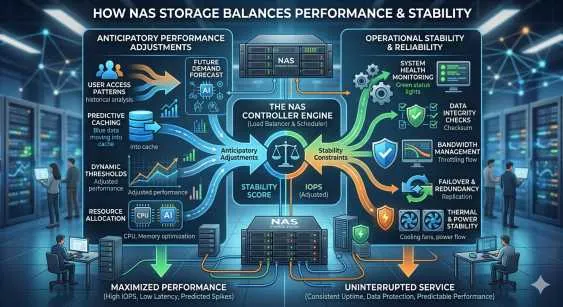
Emerging technologies like AI and machine learning are not just buzzwords but catalysts for change. For scale out NAS storage, these technologies present new opportunities for predictive analytics, data categorization, and intelligent storage management. The promise of smart NAS systems that can learn and adapt to user behavior and data patterns is an exciting glimpse into the future.
Conclusion
In the quest for efficient, cost-effective storage solutions, NAS stands out as a versatile ally for businesses of all sizes. Its remarkable benefits — from being budget-friendly to offering top-notch data protection — make it a compelling choice for modern data management needs. Whether it's the collaborative spirit it fosters in a remote work setting or the scalability it provides enterprise giants, NAS storage is proving itself to be an invaluable fixture in the IT arsenal.
As we peer into the future, the role of NAS is not one of a fading star, but of a luminary that continues to illuminate the way forward in the complex realm of data storage and management. It is a cost-effective engine driving innovation, collaboration, and data-centric success for businesses worldwide.





























Sign in to leave a comment.