

Network Attached Storage (NAS) systems have become essential infrastructure for businesses seeking efficient, cost-effective data management solutions. Whether you're running a small business or managing enterprise-level operations, understanding the financial and operational advantages of NAS technology can transform how you handle data storage, backup, and collaboration.
A NAS system functions as a dedicated file storage device connected to your network, allowing multiple users and devices to access centralized data simultaneously. Unlike traditional external hard drives or cloud-only solutions, NAS systems offer a hybrid approach that combines local control with remote accessibility. For organizations evaluating storage options, the return on investment from implementing an enterprise NAS solution often becomes apparent within the first year of deployment.
Let's explore ten compelling benefits that demonstrate how NAS systems deliver measurable savings while streamlining your business operations.
Centralized Data Management Reduces IT Overhead
Managing scattered files across multiple devices creates administrative nightmares and security vulnerabilities. A NAS system consolidates all company data into one secure location, dramatically reducing the time IT teams spend tracking down files, managing permissions, and troubleshooting storage issues.
This centralization eliminates the need for multiple storage solutions, reducing licensing costs and maintenance requirements. Instead of managing separate backup systems for each department, your IT team can focus on maintaining one robust enterprise NAS infrastructure.
Significant Cost Savings Over Cloud Storage
While cloud storage appears affordable initially, monthly subscription fees compound quickly as data volumes grow. Enterprise NAS systems require higher upfront investment but deliver substantial long-term savings by eliminating recurring cloud storage costs.
For businesses storing several terabytes of data, the break-even point typically occurs within 18-24 months. After this period, organizations enjoy essentially free storage expansion by simply adding drives to their existing NAS infrastructure.
Enhanced File Sharing and Collaboration
Traditional file sharing methods often involve emailing attachments or using USB drives, creating version control problems and security risks. NAS systems enable seamless file sharing across your network, allowing team members to collaborate on documents in real-time without the confusion of multiple file versions.
Remote workers can access company files as easily as local employees, eliminating the productivity bottlenecks that occur when critical documents remain trapped on individual workstations. This improved collaboration translates directly into faster project completion times and reduced communication overhead.
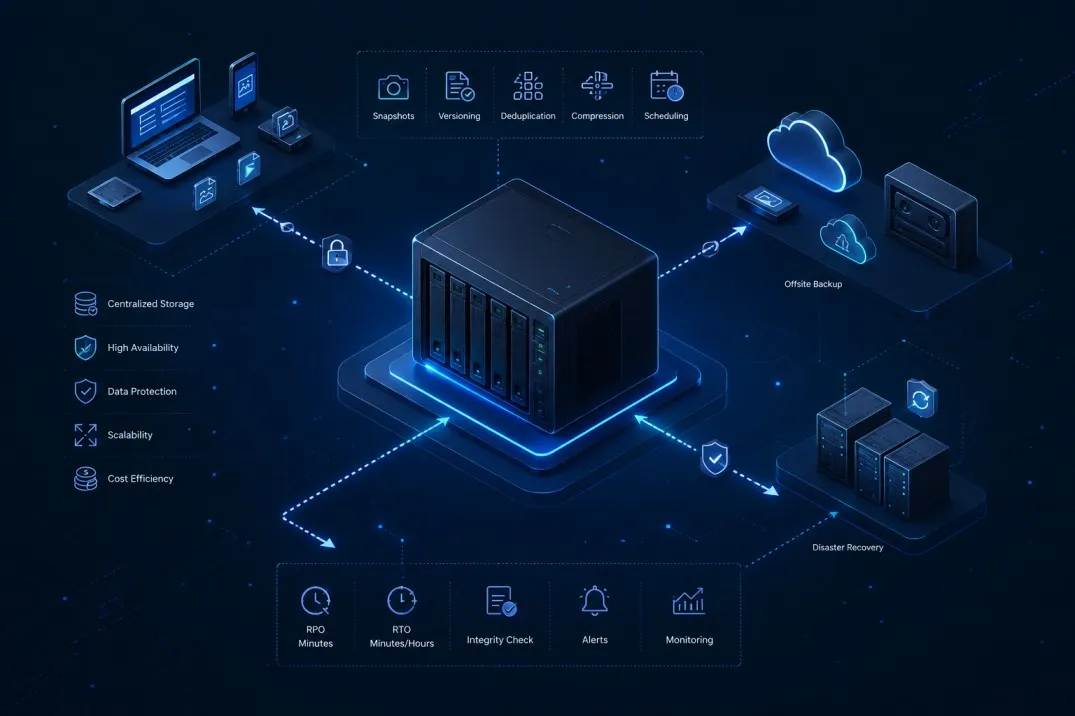
Automated Backup Protection
Data loss costs businesses an average of $3.86 million per breach, according to IBM research. NAS systems provide automated backup capabilities that protect against hardware failures, human errors, and cyber attacks without requiring manual intervention.
These automated processes eliminate the labor costs associated with manual backup procedures while ensuring consistent data protection. Many enterprise NAS solutions also support offsite replication, providing additional disaster recovery capabilities without expensive third-party backup services.
Reduced Hardware Dependencies
Traditional server-based storage systems require expensive, proprietary hardware that locks businesses into specific vendors. NAS systems often support standard hard drives and components, reducing replacement costs and providing flexibility in hardware selection.
This vendor independence prevents the price premiums associated with proprietary storage solutions while ensuring long-term supportability. Organizations can upgrade storage capacity using standard SATA or SAS drives rather than expensive proprietary modules.
Energy Efficiency Compared to Multiple Servers
Running multiple servers or desktop computers for storage purposes consumes significantly more power than a dedicated NAS system. Modern enterprise NAS devices use energy-efficient processors and can spin down unused drives, reducing electricity costs by up to 40% compared to traditional storage approaches.
The environmental benefits also align with corporate sustainability goals while delivering measurable cost savings on utility bills. Many NAS systems include power management features that automatically optimize energy consumption based on usage patterns.
Scalable Storage Without Major Infrastructure Changes
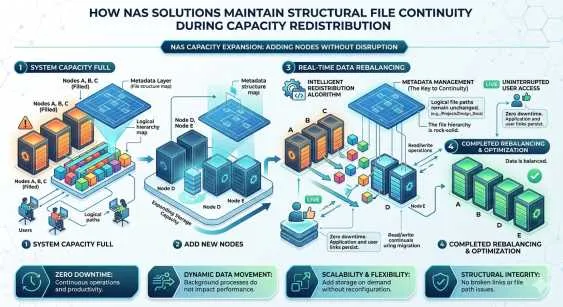
Business growth often requires expensive infrastructure overhauls when using traditional storage methods. NAS systems provide scalable storage that grows with your organization without requiring server room expansions or network architecture changes.
Adding storage capacity typically involves installing additional drives or connecting expansion units, processes that take minutes rather than days. This scalability prevents the productivity disruptions and consulting costs associated with major storage migrations.
Remote Access Capabilities
Enterprise NAS systems enable secure remote access to company data without expensive VPN solutions or remote desktop licenses. Employees can access files from anywhere with internet connectivity, supporting flexible work arrangements without compromising security.
This remote accessibility eliminates the costs associated with shipping files to remote workers or maintaining separate storage systems for different office locations. Mobile apps and web interfaces provide user-friendly access across various devices and platforms.
Improved Data Security Controls
NAS systems offer granular permission controls that surpass typical shared folder security. Administrators can define exactly which users access specific files and folders, creating audit trails that support compliance requirements.
These built-in security features eliminate the need for additional access control software while providing enterprise-grade protection. Many NAS systems also include encryption capabilities that protect data both at rest and in transit.
Reduced Downtime Through Redundancy
RAID configurations available in enterprise NAS systems provide fault tolerance that prevents data loss and minimizes downtime when drives fail. Unlike single-drive solutions, NAS systems can continue operating even when individual components fail.
This redundancy eliminates the productivity losses and recovery costs associated with storage failures. Hot-swappable drives allow administrators to replace failed components without shutting down the system, maintaining business continuity during hardware maintenance.
Maximizing Your NAS Investment
NAS systems represent more than storage solutions—they're strategic investments that deliver compounding returns through improved efficiency, reduced overhead, and enhanced collaboration capabilities. The combination of upfront hardware costs and long-term operational savings makes enterprise NAS technology particularly attractive for growing organizations.
Success with NAS implementation requires careful planning around capacity requirements, network infrastructure, and user training. Organizations that align their NAS deployment with broader IT strategies typically see the fastest returns on their investment while building foundations for future growth.
Consider conducting a total cost of ownership analysis comparing your current storage approach with potential NAS solutions. Factor in productivity improvements, reduced IT overhead, and eliminated cloud storage fees to understand the complete financial impact of upgrading to enterprise NAS technology.

























Sign in to leave a comment.