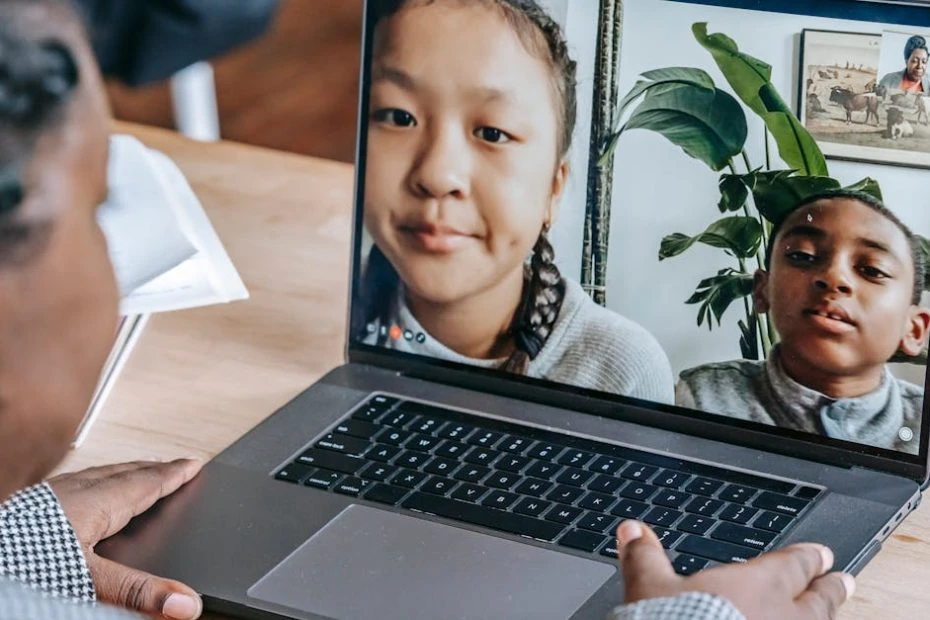

The way children learn is changing fast. Across South Africa, thousands of families are moving away from the traditional classroom model and choosing digital learning instead. Whether it’s a family living on a remote farm in the Free State or a young athlete training full-time in Cape Town, online school has become a real, practical option for getting a quality education without sitting behind a desk from 7am to 2pm every day.
What Exactly Is Online Schooling?
Online schooling is a structured form of education delivered through the internet. Students log in to a learning platform, access their lessons, complete assignments, and interact with teachers — all from a computer or tablet. It follows a set curriculum (usually CAPS or Cambridge in South Africa) and leads to the same qualifications as a brick-and-mortar school.
Think of it like this: the school comes to the student, not the other way around. The building, the bell, the uniform — none of that is needed. What remains is the actual learning, stripped down to what matters most.
How Does a Typical Day Look?
One of the biggest questions parents ask is what a normal school day looks like when there’s no physical school to go to. The answer depends on the provider, but most online schools in South Africa follow a similar pattern.
Students typically have a timetable. Mornings might be dedicated to core subjects like mathematics, English, and science. Afternoons could be reserved for creative subjects, reading, or independent study. Some platforms offer live lessons at set times, while others provide pre-recorded video lessons that students can watch at their own pace.
The key difference from traditional schooling is flexibility. A student who grasps a concept quickly can move on. A student who needs more time can replay a lesson or ask for extra help without holding up an entire class.
Who Benefits Most From Learning at Home?
Online learning is not just for one type of student. It serves a wide range of learners, each with different reasons for stepping outside the traditional system.
Families in rural or remote areas — South Africa is a big country, and not every town has a well-resourced school nearby. For families living far from urban centres, home schooling South Africa removes the need for long commutes or boarding school fees.
Young athletes and performers — Students involved in competitive sport, music, or acting often need schedules that a regular school can’t accommodate. Online learning lets them train or rehearse during peak hours and study when it suits them.
Students who struggle in large classrooms — Some children don’t thrive in a room with 30 or 40 other kids. Whether it’s due to anxiety, bullying, learning differences, or simply a preference for quieter settings, online schooling gives them space to focus.
Families who travel or relocate frequently — Diplomatic families, parents who work across provinces, or those who travel internationally can keep their children’s education consistent no matter where they are.
The Benefits of Online Schooling
Flexibility That Fits Real Life
Traditional schools operate on a fixed schedule. Online schooling bends around the student’s life rather than forcing the student to bend around the school. This is a big deal for families managing complex schedules, health conditions, or non-traditional lifestyles.
Self-Paced Learning
Not every child learns at the same speed. In a classroom, the teacher has to keep moving through the syllabus regardless of whether every student is keeping up. With online school South Africa platforms, students can spend more time on difficult topics and breeze through material they already understand.
Reduced Social Strain
School can be a tough social environment. While socialisation is important, the reality is that many children experience significant stress from peer interactions. Online schooling removes that daily strain and allows students to build social connections through sports clubs, community groups, and other activities on their own terms.
Access to Quality Teaching
Geography no longer limits the quality of education a child receives. A student in Limpopo can access the same lessons and the same teachers as a student in Johannesburg. This levels the playing field in a country where educational inequality has been a persistent challenge.
Common Concerns — and Honest Answers
“Will a child miss out on socialisation?”
This is the number one worry most parents raise. The truth is that socialisation doesn’t only happen in a classroom. Children who learn from home can join local sports teams, attend community events, join group projects online, and spend time with friends after school hours. Many online schools also organise meetups, camps, and group activities throughout the year.
“Is the qualification recognised?”
Yes. Accredited online schools in South Africa follow the same CAPS or Cambridge curriculum as traditional schools. Students write the same matric exams and receive the same National Senior Certificate. Universities and colleges accept these qualifications without distinction.
“Can younger children handle online learning?”
For younger students, parental involvement is higher. A Grade 1 learner will need a parent or caregiver nearby to help with logging in, reading instructions, and staying on task. By the time students reach Grade 4 or 5, most can manage their daily schedule with minimal supervision. By high school, the expectation is that students work independently.
“What about internet access?”
This is a valid concern in South Africa, where connectivity can be unreliable in certain areas. Many platforms allow students to download lessons and work offline. Some providers also offer USB drives or printed materials as backup. It’s worth checking what options a specific school offers before enrolling.
How to Choose the Right Online School
Not all online schools are created equal. When comparing options, look at these factors:
– Accreditation — Is the school registered with Umalusi or another recognised body? — Curriculum — Does it offer CAPS, Cambridge, or IEB? Which one matches the student’s goals? — Support — Are teachers available for one-on-one help? Is there a tutor system? — Technology — Is the platform easy to use? Does it work on mobile devices? — Track record — What do matric results look like? What do current families say about their experience?
Taking time to research and compare makes a real difference. A school that works well for one family might not be the right fit for another.
The Bigger View
South Africa’s education system faces well-documented challenges — overcrowded classrooms, teacher shortages, and uneven resource distribution across provinces. Online schooling doesn’t fix all of these problems, but it offers families a viable alternative that puts the student at the centre.
The growth of digital learning in this country is not a passing trend. It reflects a shift in how families think about education — less about where learning happens and more about whether it actually works. For thousands of South African students, learning from home through an online school platform is already working well.
































Sign in to leave a comment.