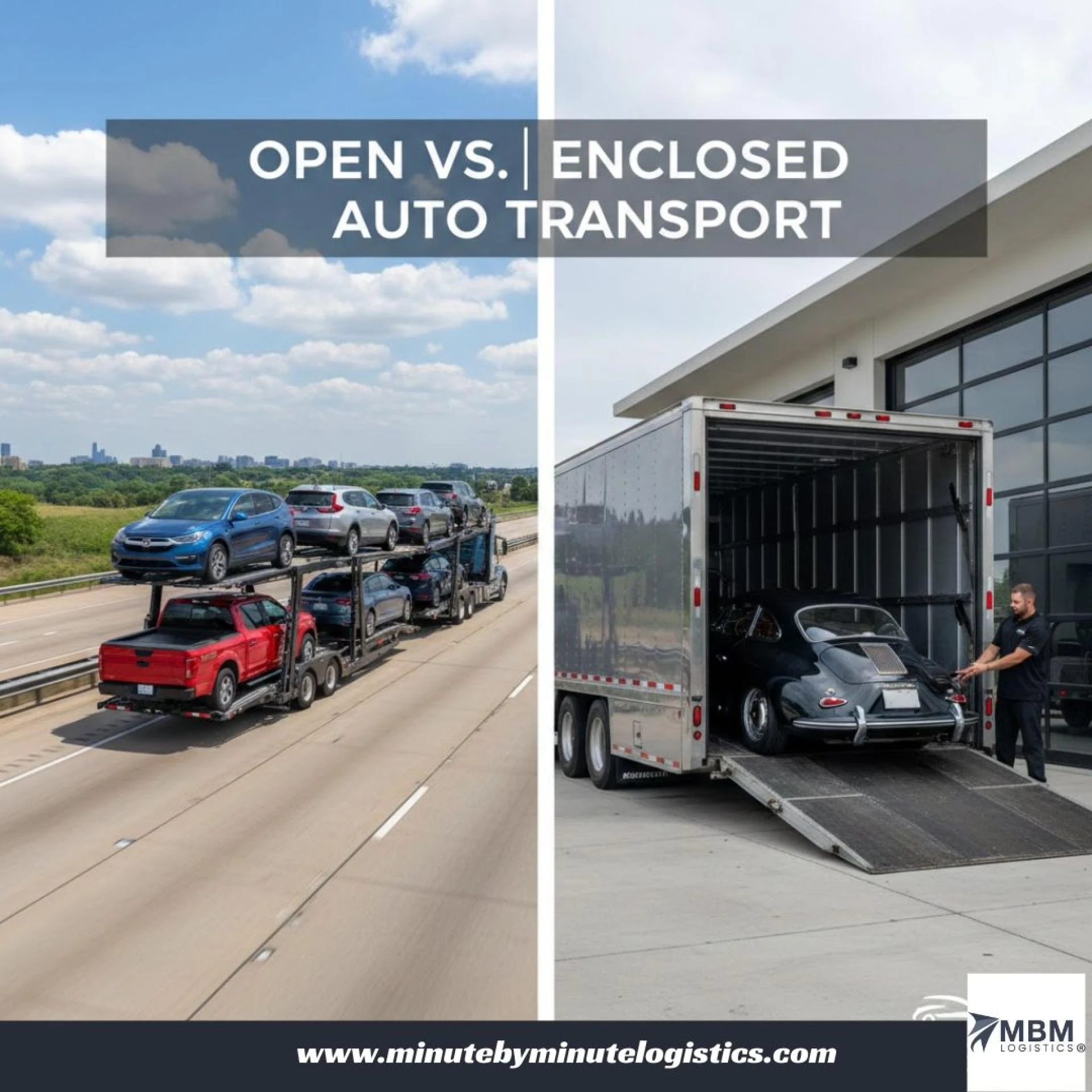

Choosing how to ship your vehicle across the country—whether you're moving from the humid coast of Florida to the rugged terrain of Colorado—usually boils down to one question: Is the extra protection worth the extra price?
At Minute by Minute Logistics, we believe transparency is the foundation of a stress-free move. Below, we break down the technical differences, cost implications, and logistical realities of open and enclosed car hauler services to help you decide which best fits your specific situation.
1. Open Car Hauler: The Industry Standard
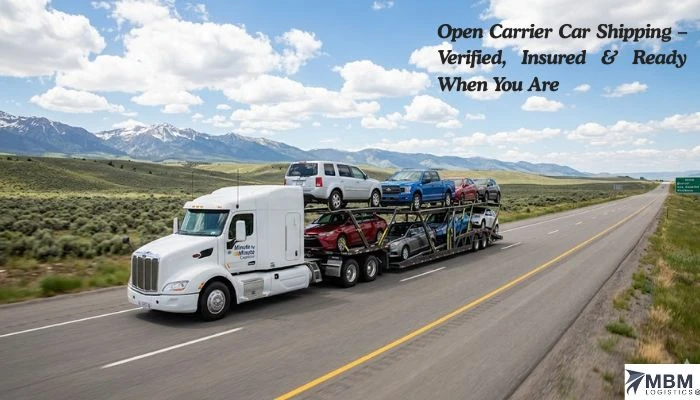
If you’ve ever seen a double-decker trailer carrying 7–10 cars on the interstate, you’ve seen an open carrier. This is the most popular method for cross-country transport because it is efficient and readily available.
Why it works:
- Budget-Friendly: Because the carrier can haul more vehicles at once, the cost per vehicle is significantly lower. For a standard move from Texas to California, this is almost always the most economical choice.
- Availability: There are thousands of open trailers on the road daily. This means your expedited shipping requests are much easier to fulfill with an open carrier than a specialized enclosed one.
- Visibility: Drivers can inspect vehicles easily during transit to ensure straps are tight and everything is secure.
The Trade-off:
Your vehicle is exposed to the elements. While professional drivers do their best to avoid gravel-heavy routes, your car will encounter rain, sun, and road dust. If you are shipping a daily driver like a Honda Civic or a Ford F-150, open auto transport is standard and perfectly safe.
2. Enclosed Car Hauler: The "White Glove" Experience
For high-value assets, an enclosed car hauler provides a mobile garage. These trailers are completely sealed, protecting the cargo from weather, road salt, and prying eyes.
Why it works:
- Complete Protection: Ideal for luxury brands like Tesla, Porsche, or classic vintage cars. If you're moving a show car to Arizona, you don't want the desert sun or road debris touching the paint.
- Low-Clearance Loading: Many enclosed trailers use hydraulic lift gates rather than ramps. This is essential for low-clearance sports cars that might "bottom out" on a standard open ramp.
- Security: For high-profile individuals or rare vehicles, the anonymity of an enclosed trailer adds an extra layer of theft protection.
Note: If you use an open carrier transport during the winter, your vehicle will likely arrive with a layer of road salt. We recommend a “Protect-from-Freeze” wash immediately upon delivery in cities like Amarillo or Las Vegas.
The Trade-off:
The cost is typically 30% to 50% higher. Because these trailers carry fewer cars, the logistics are more complex, and wait times for a "spot" on a trailer might be slightly longer.
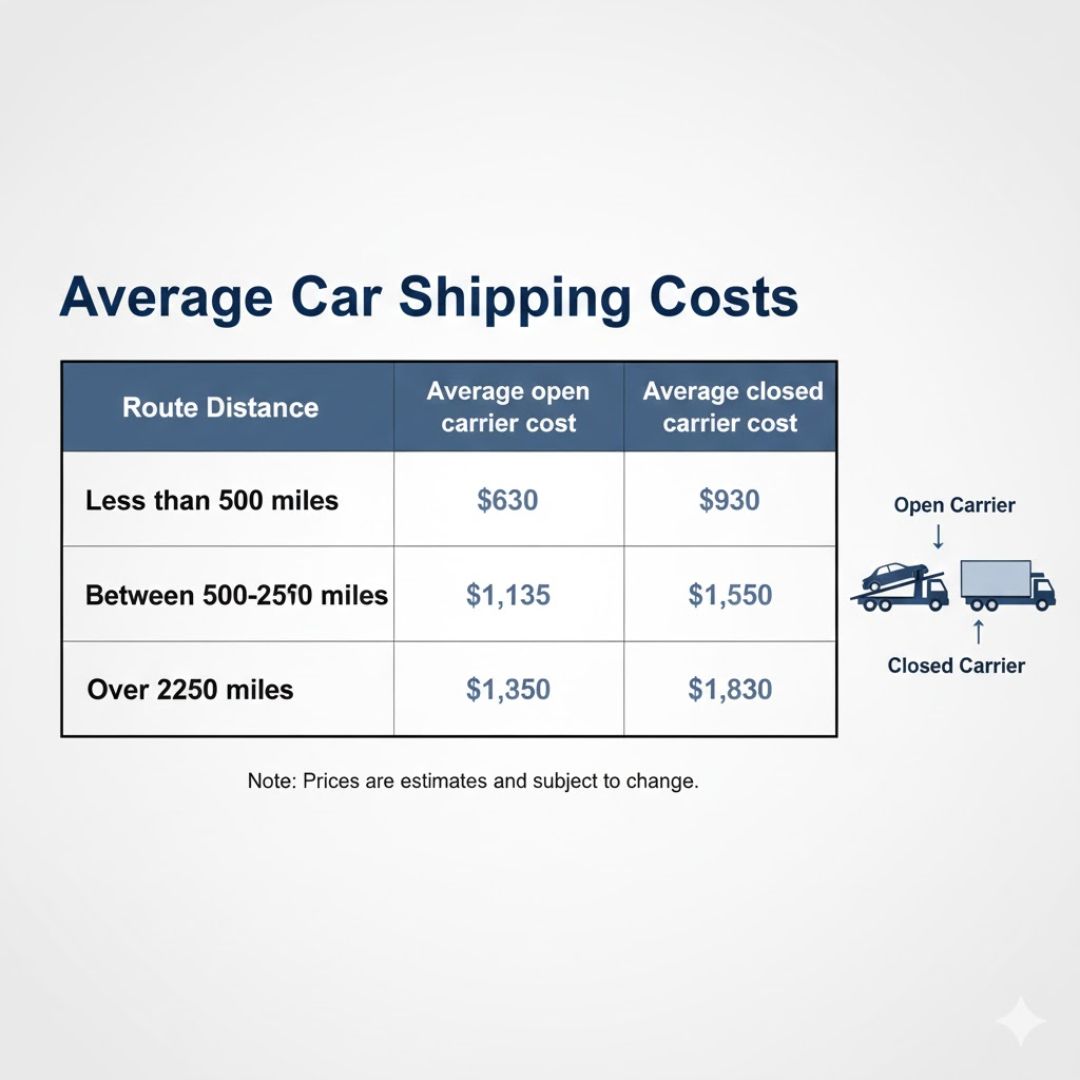
How to Choose: The "Decision Matrix"
To help you decide, ask yourself these three questions:
- What is the replacement value of the paint? If you have a custom $10,000 paint job, the $400 extra for enclosed transport is a "no-brainer."
- Is the car low-clearance? If your car sits less than 5 inches off the ground, an enclosed carrier with a lift gate is safer.
- What is the destination? If you are shipping to Chicago in the dead of winter, road salt is a factor. Enclosed auto transport keeps that corrosive salt off your undercarriage.
For standard moves, such as a college student heading to New York or a family relocating to Georgia, our ship car to another state service via open carrier is the most recommended path.
⭐ Trusted by Real Customers Nationwide
Minute by Minute Logistics is proudly reviewed on TransportReviews.com — one of the most trusted auto transport review platforms in the USA. Our customers consistently recognize us for our reliability, communication, and on-time delivery. We don’t just promise great service — our clients confirm it.
Frequently Asked Questions (FAQ)
1. Is my car insured during the move?
Yes. Whether you choose open or enclosed, the carrier’s insurance covers your vehicle during transit. We recommend taking photos of your car in California (or wherever you start) before it’s loaded onto the trailer for your records.
2. Can I ship a car that doesn't run?
Yes, but it requires a winch. This is common for classic car restorations. Be sure to mention this when booking so we can send a carrier with the right equipment.
3. How much notice do I need to give for shipping?
We recommend booking at least 1–2 weeks in advance. However, if you're in a rush, we offer expedited shipping options to get a driver to your door within 24–48 hours.
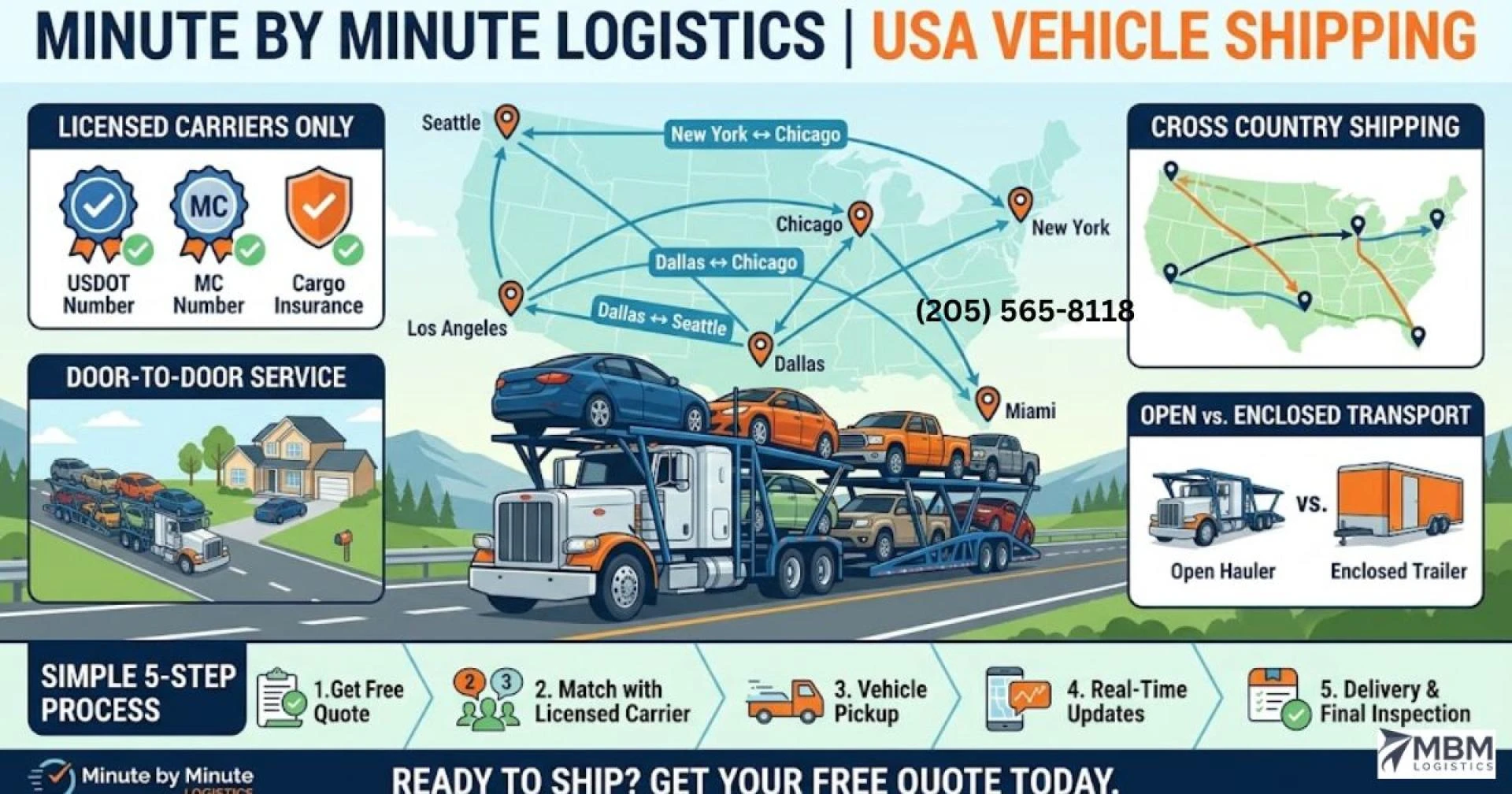
4. Does "Door-to-Door" mean the truck comes to my driveway?
Our door-to-door transport service aims for your front door. However, if you live on a narrow street in San Francisco or a cul-de-sac with low-hanging trees, the driver may ask to meet in a nearby large parking lot for safety.
5. How do I prepare my car for transport?
Clean the car (for a better inspection), leave the gas tank at about 1/4 full to save weight, and remove all personal toll tags or loose items from the interior.
Ready to see the price difference for your specific route? At Minute by Minute Logistics, we provide the expertise, the transparency, and the dedicated service — all the tools you need to feel confident.
Contact Us
Email: [email protected]
Phone: +1 (205) 565–8118
Follow Us: Facebook | Instagram | LinkedIn
Ready to Book?























Sign in to leave a comment.