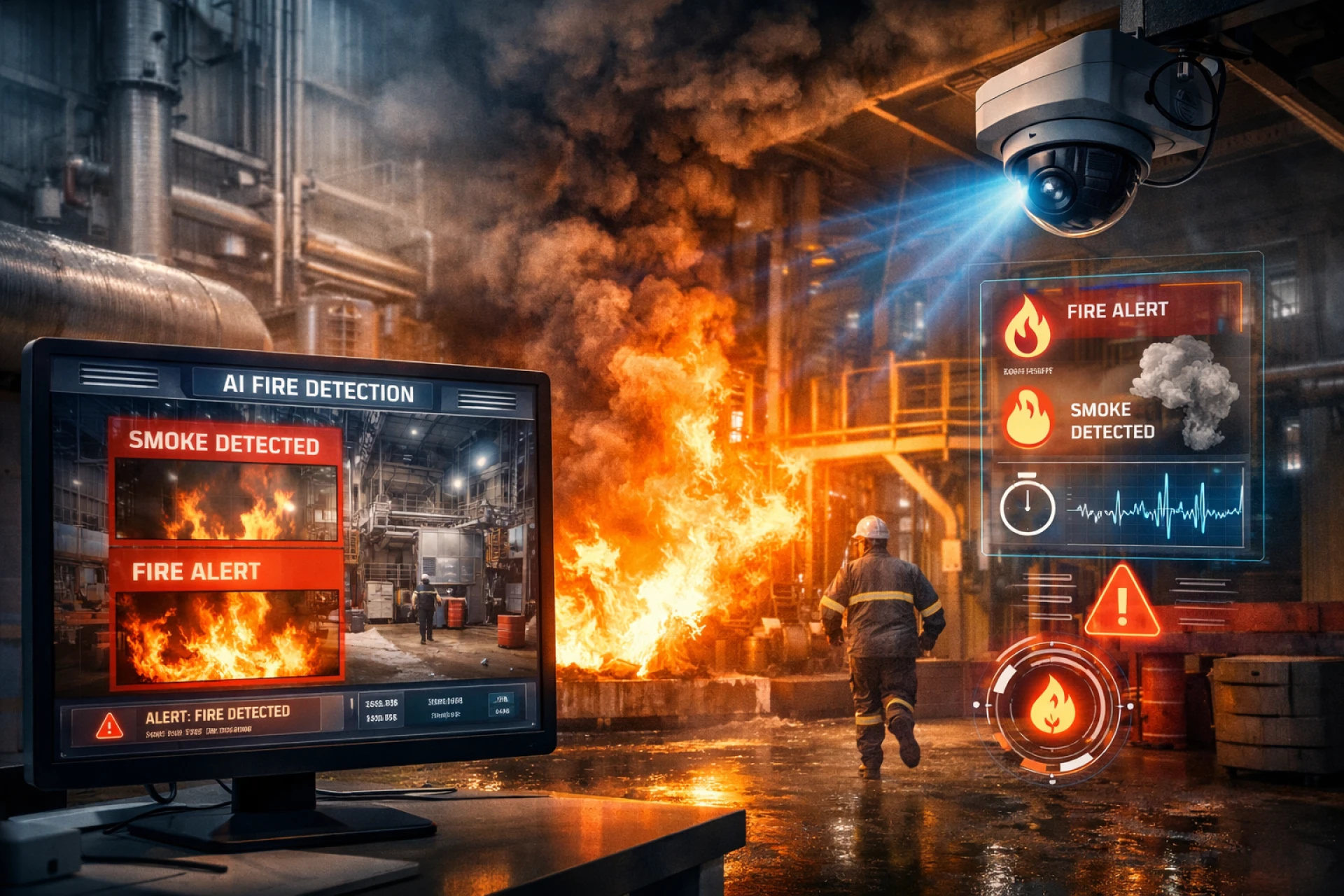

Industrial facilities such as manufacturing plants, warehouses, oil refineries, and power stations operate in high-risk environments where fire hazards are a constant concern. Flammable materials, heavy machinery, electrical systems, and human activity all contribute to the potential for fire accidents. Even a small delay in detection can result in catastrophic losses, endangering lives, disrupting operations, and causing significant financial damage.
To combat these risks, industries are increasingly adopting AI Fire and Smoke Detection Software. By combining artificial intelligence with computer vision, this technology enables faster, more accurate fire detection and proactive safety management. Unlike traditional fire alarm systems, AI-powered solutions analyze visual data in real time, identifying early signs of fire and smoke before they escalate into major incidents.
The Growing Fire Risk in Industrial Environments
Industrial fire accidents are often caused by overheating equipment, electrical faults, chemical reactions, or improper handling of combustible materials. Traditional fire detection systems—such as smoke sensors or heat detectors—have limitations. They may trigger alerts only after smoke has spread significantly or temperatures have risen beyond safe thresholds.
In large industrial facilities, this delay can be costly. False alarms are another challenge, frequently disrupting operations and reducing trust in safety systems. This is where AI Fire and Smoke Detection Software offers a smarter, faster, and more reliable alternative.
What Is AI Fire and Smoke Detection Software?
AI Fire and Smoke Detection Software uses advanced computer vision algorithms to analyze live video feeds from existing surveillance cameras. Instead of waiting for physical smoke or heat sensors to activate, the AI system visually detects early signs of fire—such as smoke patterns, flames, or abnormal visual changes—in real time.
The software continuously learns from data, improving detection accuracy while minimizing false alerts. When a potential fire hazard is detected, instant alerts are sent to safety teams, enabling rapid intervention.
How AI Fire and Smoke Detection Prevents Industrial Fire Accidents
1. Early Detection Before Fire Escalation
One of the biggest advantages of AI-powered fire detection is its ability to identify smoke and flames at an early stage. Even minor smoke emissions or small sparks can be detected visually before traditional alarms react.
This early warning allows safety teams to respond immediately—often preventing a minor issue from turning into a full-scale fire accident.
2. Real-Time Alerts and Faster Emergency Response
AI Fire and Smoke Detection Software operates continuously, monitoring every corner of an industrial facility. When a risk is identified, the system sends real-time alerts to control rooms, safety officers, or mobile devices.
Faster alerts lead to faster response times, which is critical in industrial environments where seconds can make the difference between containment and disaster.
3. Reduced False Alarms
Traditional fire detection systems are prone to false alarms caused by dust, steam, or temporary heat fluctuations—common occurrences in industrial settings. AI-based systems analyze visual patterns intelligently, distinguishing between real fire hazards and harmless environmental changes.
This reduces unnecessary shutdowns, improves trust in safety systems, and ensures that alerts are taken seriously when they occur.
4. Continuous Monitoring of High-Risk Zones
Certain areas in industrial facilities—such as boiler rooms, chemical storage zones, electrical panels, and machinery areas—are more prone to fire risks. AI fire detection systems can prioritize and continuously monitor these high-risk zones.
By providing constant visibility into critical areas, AI enhances preventive safety and minimizes blind spots.
5. Integration with Existing Safety Infrastructure
AI Fire and Smoke Detection Software can seamlessly integrate with existing CCTV systems, fire alarms, and industrial safety platforms. This makes implementation cost-effective and scalable, allowing industries to upgrade fire safety without replacing existing infrastructure.
Integrated systems ensure coordinated responses across departments, improving overall emergency preparedness.
Key Benefits of AI Fire and Smoke Detection in Industrial Facilities
Enhanced Worker Safety
By detecting fire hazards early, AI-powered systems protect workers from injury and exposure to dangerous conditions.
Reduced Downtime and Financial Loss
Early detection minimizes equipment damage, production downtime, and insurance claims—saving significant operational costs.
Compliance with Safety Regulations
AI fire detection supports compliance with industrial safety standards and regulatory requirements by providing accurate incident data and audit trails.
Improved Operational Continuity
Fewer false alarms and faster responses ensure smoother industrial operations without unnecessary interruptions.
Scalable and Future-Ready Safety Solution
AI-based systems can scale across multiple facilities and adapt to evolving industrial safety needs.
Visionfacts: Advanced AI Fire and Smoke Detection Software for Industrial Safety
Visionfacts is a trusted provider of cutting-edge AI Fire and Smoke Detection Software, designed specifically to address the complex safety challenges of industrial environments. Their AI-driven solutions enable real-time fire detection, intelligent alerting, and continuous monitoring across large-scale facilities.
Visionfacts’ software leverages advanced computer vision models to accurately identify smoke and fire patterns in diverse industrial conditions. The system integrates seamlessly with existing CCTV infrastructure, making deployment efficient and cost-effective.
By combining high detection accuracy with low false alarm rates, Visionfacts helps industries transition from reactive fire response to proactive fire prevention—ensuring safer workplaces, protected assets, and uninterrupted operations.
Challenges and Ethical Considerations
While AI fire detection offers powerful benefits, industries must ensure responsible implementation. Video data should be securely stored, access should be limited to authorized personnel, and systems should comply with safety and data protection regulations.
Clear communication with employees about AI-based monitoring helps build trust and ensures ethical deployment of the technology.
The Future of AI Fire and Smoke Detection in Industry
As AI continues to evolve, fire detection systems will become even more predictive and autonomous. Future solutions will integrate with IoT sensors, industrial automation systems, and predictive maintenance platforms.
These advancements will enable industries to identify fire risks before visible signs appear—ushering in a new era of intelligent industrial safety management.
Conclusion
Preventing industrial fire accidents using AI Fire and Smoke Detection Software is a critical step toward safer, smarter, and more resilient industrial operations. By enabling early detection, reducing false alarms, and supporting rapid emergency response, AI-powered fire detection systems significantly lower the risk of catastrophic incidents.
As industries continue to modernize their safety infrastructure, AI-based fire and smoke detection is no longer optional—it is essential.
Contact Visionfacts today to learn how advanced AI Fire and Smoke Detection Software can strengthen your industrial fire safety strategy and protect your people, assets, and operations.
FAQs
1. What is AI Fire and Smoke Detection Software?
It is an AI-powered system that uses computer vision to detect fire and smoke in real time through video feeds, enabling early alerts and faster response.
2. How does AI fire detection differ from traditional fire alarms?
AI fire detection visually identifies early signs of fire and smoke, while traditional alarms rely on heat or smoke sensors that may trigger later.
3. Is AI Fire and Smoke Detection suitable for industrial environments?
Yes, it is highly suitable for factories, warehouses, refineries, and other high-risk industrial facilities.
4. Can AI fire detection integrate with existing CCTV systems?
Yes, most AI fire detection software integrates seamlessly with existing surveillance infrastructure.
5. How does AI fire detection reduce false alarms?
AI algorithms intelligently differentiate between actual fire hazards and non-threatening visual changes like steam or dust.


























Sign in to leave a comment.