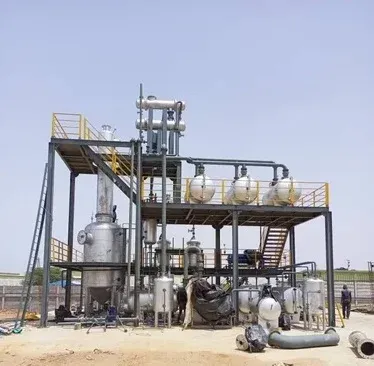


Roughly 23% of feedstock batches entering poorly configured hydroprocessing units fail viscosity thresholds before the first reaction stage completes. Inadequate pre-treatment causes triglyceride chains to polymerize under pressure rather than crack cleanly, choking catalyst beds with coked residue. The operational result is unplanned downtime averaging 14 hours per incident, with product yield losses exceeding 18% per affected run. Diversifying feedstock sources while tightening pre-treatment controls changes that equation entirely.
Why Feedstock Diversity Defines Viable Sustainable Fuel Production
Counterintuitively, the greatest strength of the renewable energy industry and biofuel manufacturing sector isn't the technology at the reactor — it's what enters before it. Vegetable oils, animal fats, waste cooking greases, and algae-derived lipids each carry different free fatty acid profiles, moisture levels, and contaminant loads that determine how aggressively the hydrotreater must operate. A plant calibrated for a single feedstock surrenders the procurement flexibility that protects margin when commodity prices shift.
In Kenya's coffee processing belt, producers generate significant volumes of coffee pulp oil and spent grounds with recoverable lipid content. A waste-to-energy industry operator running a 1,200 kg/hr pre-treatment unit reduced raw feedstock cost by 31% by blending coffee-derived oils with imported palm olein at a 40:60 ratio. That blend consistency held stable hydrotreating inlet temperatures at 310°C across a 72-hour continuous run.
Feedstock blending carries a real limitation worth stating plainly: phosphorus and potassium from bio-waste streams accelerate catalyst deactivation if degumming stages are skipped to reduce cycle time. Plants that cut degumming to gain 8% throughput typically face catalyst replacement 40% sooner than the manufacturer's rated interval.
What Hydroprocessing Chemistry Actually Does to Raw Bio-Oils
The core problem with untreated vegetable or animal-fat feedstocks is oxygen content, typically 10–12% by weight, which must be stripped before the product achieves petroleum-equivalent energy density. Hydrodeoxygenation reactions at temperatures between 280°C and 380°C under 40–90 bar hydrogen pressure convert that oxygenated mass into straight-chain paraffins, water, and CO₂. The resulting renewable diesel carries a cetane number above 70, compared to 40–55 for conventional petroleum diesel.
In Vietnam's seafood export region, a processing facility generating 8,000 litres per week of spent fish oil integrated a 650 kg/hr hydroprocessing skid directly into its waste stream. Operating at 320°C and 55 bar, the unit converted fish oil, a notoriously high-FFA feedstock, into on-spec renewable diesel with a cloud point of −12°C. Yield efficiency reached 94.2% over a 30-day pilot period tracked against ASTM D975 benchmarks.
Scale Economics in the Biofuel Manufacturing Industry
Capacity sizing exposes a tension that mid-scale investors consistently underestimate. Plants below 300 kg/hr struggle to absorb hydrogen compression costs, which can represent 18–22% of total operating expenditure at small scale. Stepping capacity to 1,000 kg/hr drops that compression cost share to approximately 11%, fundamentally altering the project's internal rate of return. This arithmetic drives consolidation in the sustainable fuel production industry toward regional hub models rather than distributed micro-plants.
Bangladesh's textile mills produce substantial quantities of spent lubricating oil and heat-transfer fluid waste categorized as industrial bio-residue. A waste-to-energy industry project deployed a 900 kg/hr dual-feedstock unit processing both textile waste oil and municipal cooking grease at a 55:45 split. Over 180 operating days, the facility achieved a carbon intensity score 76% below baseline petroleum diesel under national emissions tracking protocols.
Refining and Product Quality in the Renewable Energy Industry
A data point that reframes how operators think about downstream refining: every 10 ppm of residual sulfur above the EN 15940 limit of 10 mg/kg triggers a certification hold that averages 3.2 days to resolve. Fractionation columns operating between 180°C and 260°C strip those final sulfur and nitrogen fractions after hydroprocessing, producing fuel that meets or exceeds Euro-VI standards. Quality control at this stage is not optional, it is the margin between saleable product and a tankage liability.
In Indonesia's palm-oil processing zone, a biofuel manufacturing industry operator managing 2,400 kg/hr of palm fatty acid distillate upgraded its fractionation system to a three-stage configuration. Residual nitrogen fell from 28 ppm to under 4 ppm, and sulfur dropped to 6 mg/kg, 40% inside EN 15940 compliance. That single upgrade increased first-pass certification rates from 71% to 96% over one quarter.
From Waste Stream to Fleet Tank - Closing the Loop
The sustainable fuel production industry reaches its full circular potential only when off-spec and waste streams reintegrate rather than discharge. Glycerol and water co-products from hydrodeoxygenation can feed on-site biogas digesters, recovering energy equivalent to 6–9% of primary fuel output. That recovered energy reduces external power draw, cutting the plant's own carbon footprint by a measurable 7–11% annually.





















Sign in to leave a comment.