

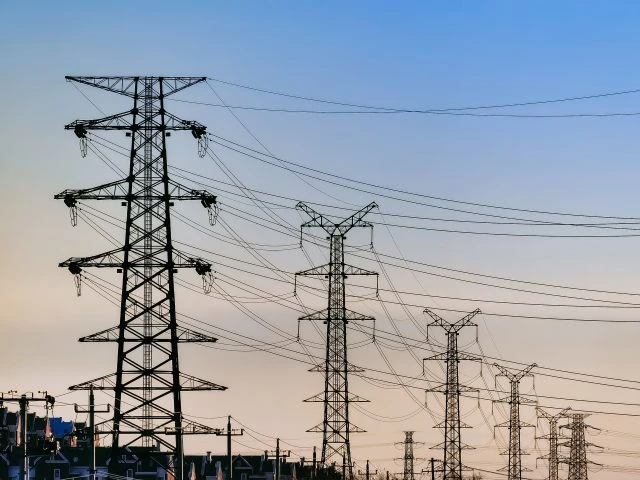
If you have driven through any city recently, you may have noticed something subtle changing along highways, metro corridors and even dense residential area. The bulky lattice towers are slowly disappearing. In their place stand slim, single-pole structures that barely demand attention. These are monopole transmission towers, and their rise across India’s power and telecom infrastructure didn’t happen by chance.
Why India Is Moving Away from Lattice Towers
A few years ago, during site visit in Ahmedabad, I watched a transmission structure being installed in a space that barely allowed two trucks to park. Traffic kept flowing. Shops stayed open. Within days, the tower was standing. That wouldn’t have been possible with a traditional lattice tower.
India struggles with limited land availability, especially in cities. Lattice towers need wide foundations and clear right-of-way. Monopole towers don’t. Their compact footprint makes them ideal for urban transmission lines, railway corridors, and industrial zones. This shift is a big reason monopole transmission tower manufacturers in India are seeing steady demand.
Engineering Behind a “Simple” Structure
Monopole towers may look simple, but they aren’t. Each one is carefully engineered. I once spoke with a design engineer working on a coastal power project who explained how wind zones alone can change wall thickness, steel grade, and base design. Same height. Same voltage. Very different structure.
Quality monopole tower manufacturers in India follow strict Indian standards and test every section before dispatch. Galvanization thickness, welding accuracy, and straightness tolerances matter more than most people realize especially when the tower has to stand for decades with minimal maintenance.
Telecom Expansion and Urban Aesthetics
Telecom has pushed monopole adoption even faster. During a visit to a metro station in Delhi, I noticed what looked like a streetlight carrying multiple antennas. Most commuters walked past without noticing it was a telecom tower. That’s the advantage monopoles bring function without visual clutter.
With 4G densification and 5G rollout underway, telecom operators prefer structures that blend into the environment. Monopole towers meet that need better than anything else.
Role of Indian Manufacturers in This Transition
The manufacturing ecosystem has matured alongside this demand. Companies like KP Green Engineering focus on precision fabrication and project-specific designs rather than one-size-fits-all solutions. That approach becomes critical when projects vary across wind zones, seismic regions, and terrain types.
I’ve also seen renewable energy evacuation projects switch to monopole transmission towers after landowners raised concerns. Smaller foundations meant fewer objections. Approvals moved faster. Sometimes, design choices decide whether a project moves forward or stalls.
What Lies Ahead for Monopole Transmission Towers
Urban growth isn’t slowing down. Power demand keeps rising. Telecom networks are becoming denser, not wider. All signs point toward continued reliance on monopole solutions.
For developers, utilities, and planners, working with reliable monopole transmission tower manufacturers in India is no longer optional it’s part of building infrastructure that fits modern India.






























Sign in to leave a comment.