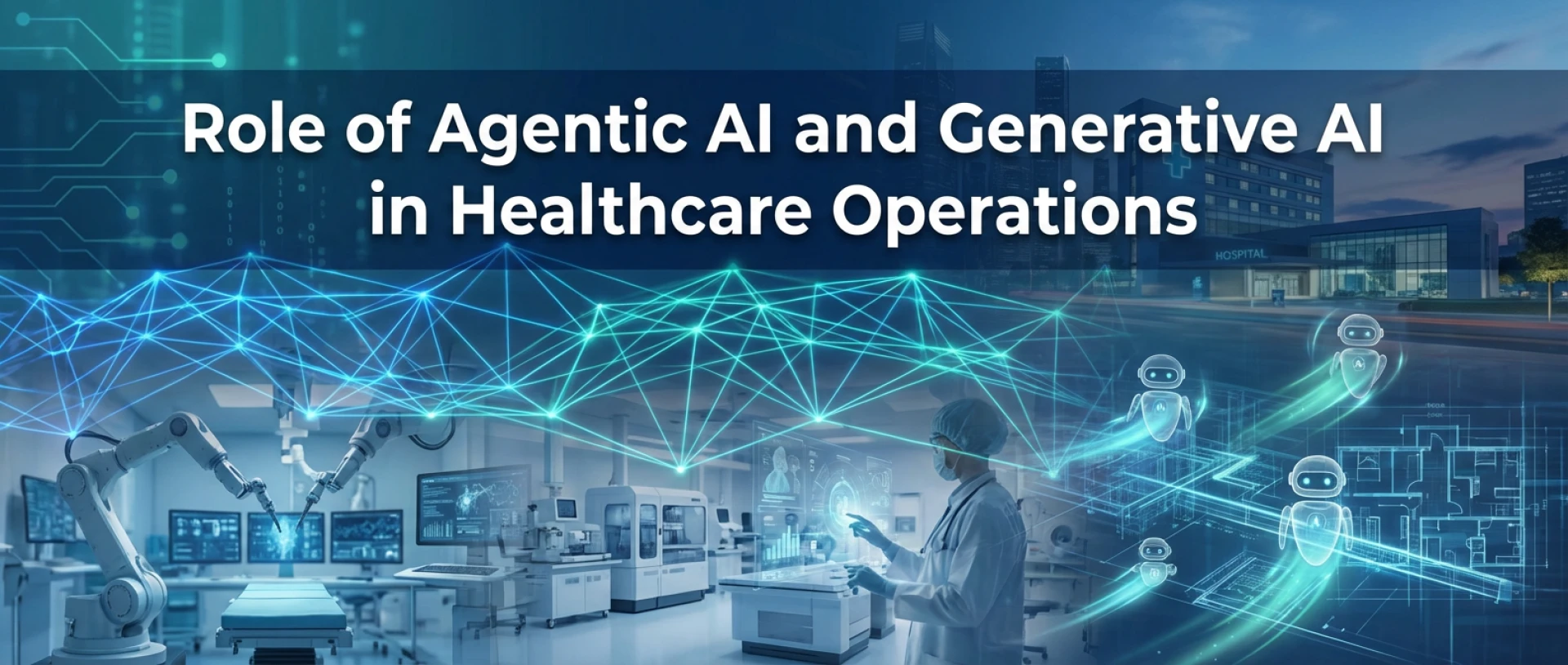

Healthcare operations are under pressure to do more with less fewer staff, tighter margins, and rising patient expectations. This is where Agentic AI and Generative AI move from experimentation to operational necessity. Together, they automate decisions, orchestrate workflows, and augment human teams across clinical, administrative, and financial functions.
Most organizations adopt these capabilities through specialized ai agent development services that tailor autonomous and generative systems to healthcare-grade requirements.
1. What Is Agentic AI in Healthcare Operations?
Agentic AI refers to autonomous AI systems that can plan, act, monitor outcomes, and adapt without constant human intervention.
In healthcare operations, Agentic AI functions as a digital operator rather than a passive tool.
Core operational capabilities include:
- Automatically routing tasks across departments
- Coordinating multi-step workflows (e.g., intake → coding → billing)
- Monitoring KPIs and triggering corrective actions
- Interacting with other systems, APIs, and AI models
According to Andrew Ng’s perspective on AI agents, agentic systems represent the shift from single-task automation to goal-oriented AI that executes end-to-end processes.
2. Role of Generative AI in Healthcare Operations
Generative AI focuses on creating, summarizing, and interpreting content using large language and multimodal models.
In operations, its value lies in reducing cognitive and documentation burden.
Common operational use cases include:
- Automating clinical and administrative documentation
- Summarizing patient records and operational reports
- Generating responses for patient communication and support
- Assisting staff with policy, compliance, and coding guidance
Healthcare organizations increasingly deploy tailored Generative AI Solutions to ensure outputs are compliant, auditable, and context-aware.
3. How Agentic AI and Generative AI Work Together
The real transformation happens when Agentic AI orchestrates workflows and Generative AI handles intelligence-heavy tasks.
Example operational flow:
- Generative AI summarizes a patient encounter
- Agentic AI validates completeness and routes it for coding
- Generative AI assists with code suggestions
- Agentic AI submits claims, tracks responses, and escalates denials
This combination creates self-managing operational loops, reducing delays and manual intervention.
4. Impact on Core Healthcare Operations
a) Revenue Cycle Management
- Automated eligibility checks and claim submission
- AI-driven denial prediction and follow-ups
- Reduced turnaround time and revenue leakage
b) Clinical Operations
- AI-assisted care coordination
- Automated task handoffs between care teams
- Reduced clinician administrative workload
c) Administrative Operations
- Autonomous scheduling and capacity optimization
- AI-powered patient inquiries and support
- Intelligent document handling and compliance checks
5. Why Agentic AI Is Critical for Scalability
Traditional automation breaks when workflows change. Agentic AI adapts.
Operational advantages include:
- Dynamic decision-making based on real-time data
- Reduced dependency on rigid rule-based automation
- Faster scaling across departments and locations
- Continuous learning from outcomes and feedback loops
Healthcare providers looking to operationalize autonomy often partner with firms like AI Agent Development Company in USA to build secure, compliant, and explainable agentic systems.
6. Risks and Governance Considerations
While powerful, these technologies must be deployed responsibly.
Key considerations include:
- Human-in-the-loop controls for clinical decisions
- Auditability and explain ability of AI actions
- Data privacy and HIPAA-aligned architecture
- Bias monitoring and model governance
As highlighted in Google DeepMind’s blog on responsible AI systems, autonomy without guardrails introduces risk governance must scale with capability.
Key Takeaways
- Agentic AI executes and manages healthcare workflows autonomously
- Generative AI reduces documentation and cognitive workload
- Together, they create adaptive, self-managing operations
- Revenue cycle, clinical, and admin functions benefit most
- Governance and human oversight remain essential


























Sign in to leave a comment.