

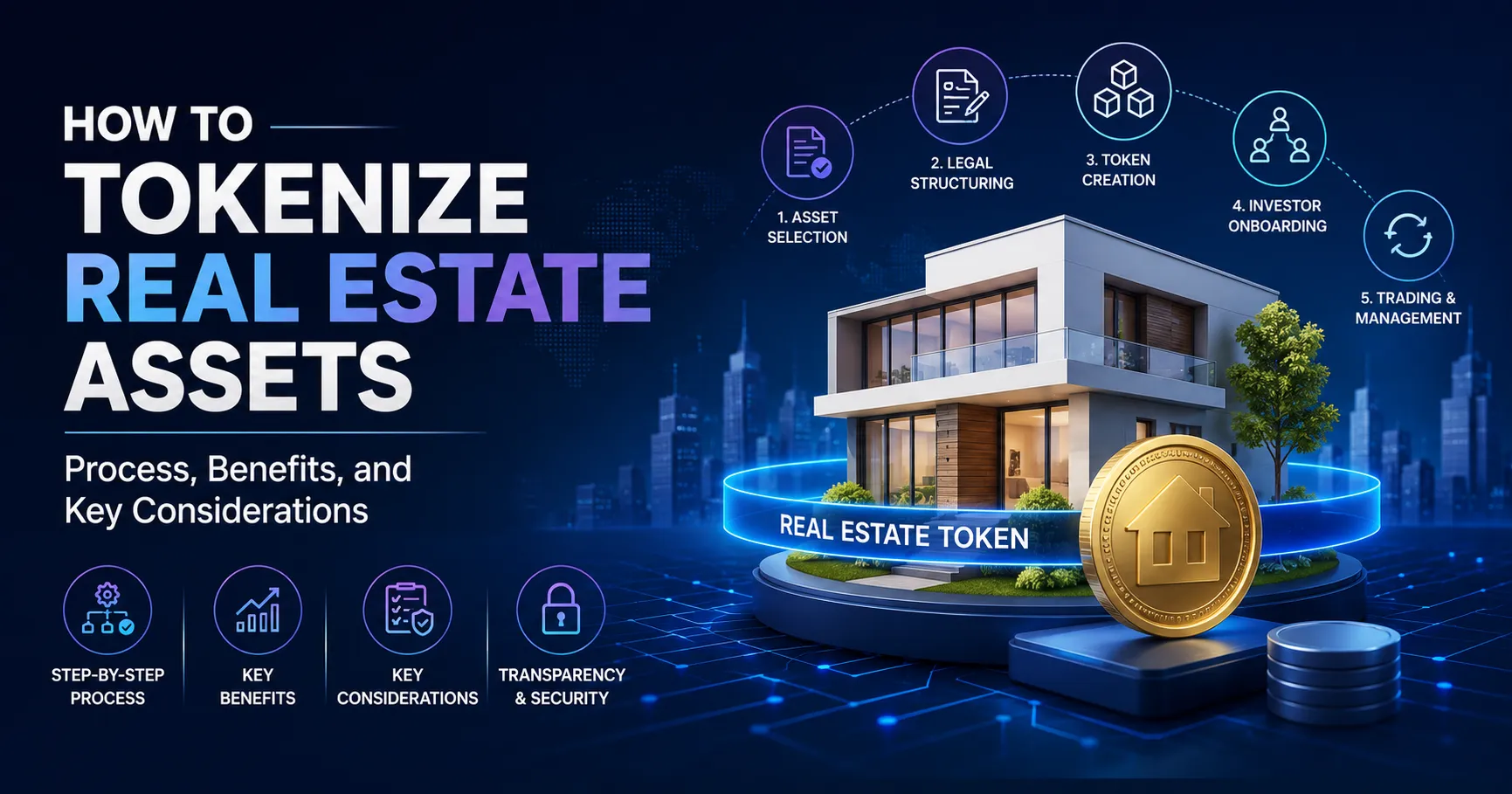
RWA Tokenization is becoming a practical way for businesses to represent ownership or economic rights connected to physical and financial assets through blockchain-based tokens. Real estate, private credit, commodities, funds, artwork, infrastructure, and other asset classes can be represented digitally under suitable legal and regulatory structures. For businesses planning a tokenization venture in 2026, development cost is only one part of the budget. Legal work, asset verification, smart contracts, investor onboarding, compliance, custody, marketplace functions, blockchain infrastructure, security testing, and ongoing maintenance can all affect the final investment.
The cost of developing an RWA platform can vary widely because every project has different asset types, jurisdictions, user groups, blockchain requirements, and trading models. A basic token issuance platform may require a considerably smaller budget than a full marketplace supporting asset issuers, institutional investors, retail users, secondary trading, compliance checks, and multiple token standards. This guide explains the major cost areas businesses should consider before planning an RWA tokenization project in 2026.
What Is RWA Tokenization Development?
RWA tokenization development involves creating the technical and business infrastructure required to represent real-world assets as blockchain-based tokens. The process usually includes asset onboarding, ownership or rights verification, token creation, smart contract development, investor management, compliance workflows, wallet connectivity, transaction processing, and reporting.
The project may be developed as a private platform for a single organization or as a public marketplace where different asset issuers can list tokenized assets. A company may also work with an RWA Tokenization Company to obtain RWA Tokenization Services covering product planning, blockchain development, smart contracts, compliance-related integrations, front-end development, testing, and post-launch support.
Estimated RWA Tokenization Development Cost in 2026
A reasonable development budget depends on the platform's functions and business model. For planning purposes, businesses can consider the following broad ranges:
| Platform Type | Approximate Development Budget |
|---|---|
| Basic RWA token issuance platform | $25,000 to $50,000 |
| Mid-level tokenization platform | $50,000 to $100,000 |
| Full RWA marketplace | $100,000 to $200,000+ |
| Institutional-grade multi-asset platform | $200,000 to $400,000+ |
These figures are indicative rather than fixed quotations. A platform operating across several jurisdictions may require a much larger budget because legal review, compliance procedures, identity verification, custody arrangements, reporting, and integrations can add substantial expenses.
Businesses should therefore calculate the expected cost according to their planned features rather than selecting a development package based only on the initial software price.
Main Factors That Affect RWA Tokenization Development Cost
Asset Type and Tokenization Model
The asset selected for tokenization has a direct effect on development requirements. A real estate platform may need property documentation, valuation records, ownership verification, rental income records, and investor distribution functions. A private credit platform may require loan records, repayment schedules, borrower information, and yield calculations.
The tokenization model also matters. Businesses can issue tokens representing ownership interests, revenue rights, debt claims, fund interests, or other legally defined rights. Each structure can require different smart contract logic and administrative workflows. Real World Asset Tokenization therefore needs to be planned around the asset's legal and financial structure before technical development begins.
Blockchain Network Selection
Blockchain infrastructure can influence both initial and recurring expenses. Businesses may choose networks such as Ethereum, Polygon, BNB Chain, Avalanche, Arbitrum, or a private or permissioned blockchain depending on their requirements.
The selection should consider transaction fees, ecosystem support, wallet compatibility, token standards, transaction speed, developer availability, and regulatory requirements. Supporting multiple networks can increase development and testing work because contracts, wallet connections, transaction monitoring, and user interfaces may need additional configuration.
Smart Contract Development
Smart contracts manage many functions associated with tokenized assets. Depending on the platform, contracts may handle token issuance, ownership records, transfers, distributions, redemption, voting, whitelisting, and other rules.
Development costs can increase when contracts contain complex restrictions or financial calculations. Businesses should also allocate money for independent smart contract audits. An audit may identify coding issues before deployment and can be particularly important when substantial investor funds may interact with the contracts.
Compliance and Investor Verification
Compliance can represent a major part of an RWA project budget. A platform dealing with investment-related assets may require KYC and AML procedures, investor eligibility checks, sanctions screening, transaction monitoring, jurisdiction restrictions, and document collection.
Businesses may integrate third-party identity verification and compliance providers instead of developing every function internally. The cost can include integration fees, subscription charges, transaction-based pricing, legal consultations, and periodic compliance reviews.
Cost of Essential Platform Features
Asset Issuance Module
An issuance module allows authorized asset issuers to create and manage tokenized offerings. Typical functions include asset information, documentation, token supply, pricing, investor limits, offering periods, and issuance records.
A basic issuance module may be relatively affordable, while a multi-asset system with approval workflows and detailed reporting can require considerably more development time.
Investor Dashboard
The investor interface can include portfolio information, token balances, transaction history, investment documents, distributions, asset details, and account settings. Institutional investors may also need reporting tools, permission controls, downloadable records, and organization-level account management.
The number of user roles and dashboard functions can affect development cost. A simple investor interface requires less work than a platform supporting issuers, investors, administrators, compliance teams, custodians, and auditors.
Marketplace and Secondary Trading
Businesses planning to create a marketplace should budget separately for listing, order management, trading rules, settlement, pricing information, transaction history, and asset availability controls.
Secondary trading can also introduce additional regulatory and technical considerations. If the platform permits peer-to-peer transfers, the system may need eligibility checks before a token can move from one wallet to another. This makes marketplace development more complex than a basic token issuance application.
Wallet and Custody Integration
Users need a secure method for holding and transferring tokens. A platform may support external wallets, embedded wallets, custodial wallets, or a combination of these approaches.
Institutional platforms may require additional custody integrations and approval workflows. The development budget should include wallet APIs, transaction monitoring, recovery procedures, permission management, and testing.
Cost of Legal, Compliance, and Asset Verification
Technical development does not establish legal ownership by itself. Businesses need suitable legal structures that connect blockchain tokens with rights associated with the underlying asset.
Legal expenses can include company structure, token classification, offering documents, investor agreements, asset ownership arrangements, jurisdictional analysis, regulatory consultation, and compliance policies. Asset verification may also involve valuation reports, title checks, financial records, third-party attestations, and documentation reviews.
For this reason, Real World Asset Tokenization Services commonly involve coordination between technology teams, legal advisors, financial professionals, asset owners, and compliance specialists. Businesses should keep a separate legal and regulatory budget rather than treating these expenses as part of software development.
Security and Testing Expenses
Security testing should receive a dedicated budget. RWA platforms can contain smart contracts, wallets, payment functions, APIs, databases, identity information, and administrative controls. Each component can introduce different security concerns.
A development team may conduct functional testing, integration testing, smart contract testing, penetration testing, access-control testing, API testing, and performance testing. Independent audits can add another expense, but they can be useful before a platform handles real assets or investor transactions.
Post-Launch Maintenance Costs
The budget should not end when the platform goes live. Businesses should plan for server infrastructure, blockchain node services, monitoring, security updates, bug fixes, third-party API subscriptions, compliance updates, technical support, and feature additions.
Annual maintenance may commonly fall around 15% to 25% of the initial software development cost, although the actual amount depends on the platform's size and operating model. A multi-marketplace system with several integrations will usually require more ongoing technical attention than a basic issuance platform.
How Businesses Can Control RWA Development Costs
Start With a Defined MVP
A minimum viable product can help businesses test their concept before committing to a large platform. The initial version may include asset onboarding, token issuance, investor registration, wallet integration, compliance checks, an administrator dashboard, and basic reporting.
After receiving market feedback, additional marketplace functions, asset categories, trading features, and integrations can be added. This approach can help avoid spending heavily on features that may not be needed during the first market phase.
Select Features According to the Business Model
Not every RWA platform needs every available function. A company focused on tokenized real estate may require property management and income distribution features, while a private credit platform may need repayment tracking and borrower data.
Businesses should first define how assets enter the platform, how investors participate, how tokens are held, how income is distributed, and how tokens can be transferred or redeemed. The software requirements can then be mapped to these activities.
Compare Development Approaches
Businesses can choose among custom development, ready-made solutions, white-label platforms, or a hybrid approach. Custom development provides greater control but generally requires more time and resources. White-label solutions can reduce initial development work, while hybrid models combine existing components with project-specific functions.
An RWA tokenization development company can help compare these options based on the required functions, target market, asset category, and available budget.
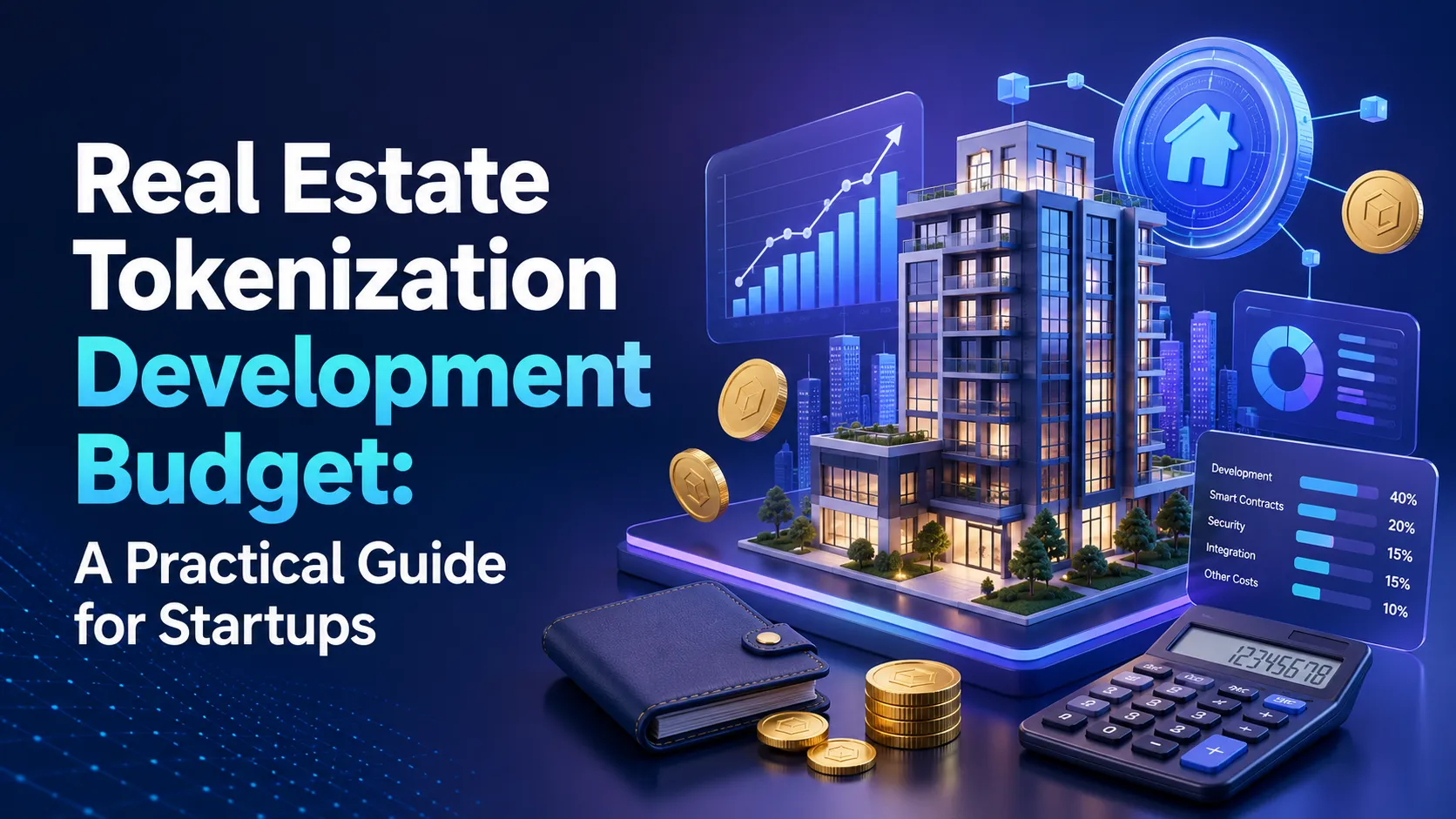
Typical Budget Breakdown for an RWA Platform
For a mid-level project with a development budget of around $75,000 to $150,000, a possible allocation could look like this:
| Cost Area | Approximate Share |
| UI/UX and frontend | 10% to 15% |
| Backend development | 15% to 20% |
| Smart contracts | 10% to 15% |
| Blockchain integration | 8% to 12% |
| Wallet and payment integrations | 5% to 10% |
| KYC/AML and compliance integrations | 5% to 10% |
| Security testing and audits | 8% to 12% |
| Admin and reporting functions | 5% to 10% |
| Deployment and infrastructure | 3% to 7% |
| Maintenance and support | Separate annual budget |
These percentages are planning estimates. The actual allocation can change depending on whether the project uses third-party services, multiple blockchains, institutional custody, secondary trading, or complex asset structures.
Why Businesses Should Plan Beyond Development
The initial software invoice does not represent the complete cost of operating an RWA business. Marketing, customer acquisition, legal services, compliance staff, asset sourcing, insurance, custody, banking relationships, licensing, audits, and customer support can all require separate budgets.
Businesses should also consider transaction fees and third-party service charges. KYC providers, blockchain infrastructure providers, payment processors, custody platforms, analytics systems, cloud services, and communication tools may charge recurring fees based on usage.
Choosing an RWA Tokenization Development Partner
When selecting an RWA tokenization development company, businesses should assess technical experience, smart contract capabilities, blockchain knowledge, security practices, integration experience, and understanding of tokenized asset workflows. It is also useful to review previous projects and determine whether the provider can support the platform after launch.
An RWA Tokenization Company may offer a combination of product consulting, token design, smart contract creation, platform development, wallet integration, compliance integrations, testing, deployment, and maintenance. Businesses should compare the actual scope of RWA tokenization development services rather than comparing providers only by their quoted development price.
Conclusion
RWA Tokenization development costs in 2026 can range from tens of thousands of dollars for a basic issuance platform to several hundred thousand dollars for a marketplace serving institutional and retail participants. The final budget depends on asset type, token model, blockchain network, smart contracts, compliance requirements, investor functions, custody, marketplace features, security testing, integrations, and ongoing maintenance. Businesses should define the first release carefully, separate technical expenses from legal and operational costs, and reserve funds for post-launch support. Working with an experienced provider can also help organize the project around practical business requirements and avoid unnecessary development work. Blockchain App Factory provides RWA tokenization development services covering platform development, token creation, smart contract development, blockchain integration, marketplace functions, and related technical requirements for businesses planning tokenized asset platforms.
FAQs
1. How much does RWA Tokenization development cost in 2026?
A basic RWA platform may cost around $25,000 to $50,000, while a mid-level platform may range from $50,000 to $100,000. Larger marketplaces and institutional systems can exceed $200,000 depending on their features and compliance requirements.
2. What factors have the biggest effect on RWA platform development cost?
Asset type, blockchain selection, smart contract complexity, compliance requirements, investor features, custody, marketplace functions, integrations, and security testing can have a major effect on the total budget.
3. Does RWA development include legal and compliance expenses?
Not always. Software development quotations may cover technical work only. Legal structuring, regulatory consultation, licensing, KYC and AML services, asset verification, and related professional services may require separate budgets.
4. How much does smart contract development cost for an RWA project?
The price depends on contract complexity and the number of contracts required. Basic token contracts may cost less, while contracts handling transfers, restrictions, distributions, redemption, voting, or other financial rules require additional development and testing.
5. Can businesses launch an RWA platform with a smaller initial budget?
Yes. Businesses can begin with an MVP containing only the functions required for the first market phase. Additional asset types, investor features, trading functions, and integrations can be added later based on business requirements.
6. What are RWA Tokenization Services?
RWA Tokenization Services can include asset token design, smart contract development, blockchain integration, platform development, wallet connectivity, investor dashboards, compliance integrations, testing, deployment, and maintenance.
7. Is RWA Tokenization suitable for real estate assets?
Real estate is one possible use case because properties can be represented through suitable legal and financial structures. However, the token must have a legally defined relationship with ownership, revenue, debt, or another asset-related right.
8. What is included in RWA token development?
RWA token development can include token standards, smart contracts, issuance logic, transfer restrictions, wallet compatibility, distribution rules, administrative controls, and integration with the broader tokenization platform.
9. Should businesses choose custom development or a ready-made platform?
The choice depends on budget, timeline, business model, and required functions. Custom development may suit businesses needing specific workflows, while ready-made or white-label options may reduce initial development requirements.
10. Why is security testing important for RWA platforms?
RWA platforms can handle valuable assets, investor records, wallets, and financial transactions. Security testing can help identify weaknesses in smart contracts, APIs, authentication systems, access controls, and other platform components before wider use.






















Sign in to leave a comment.