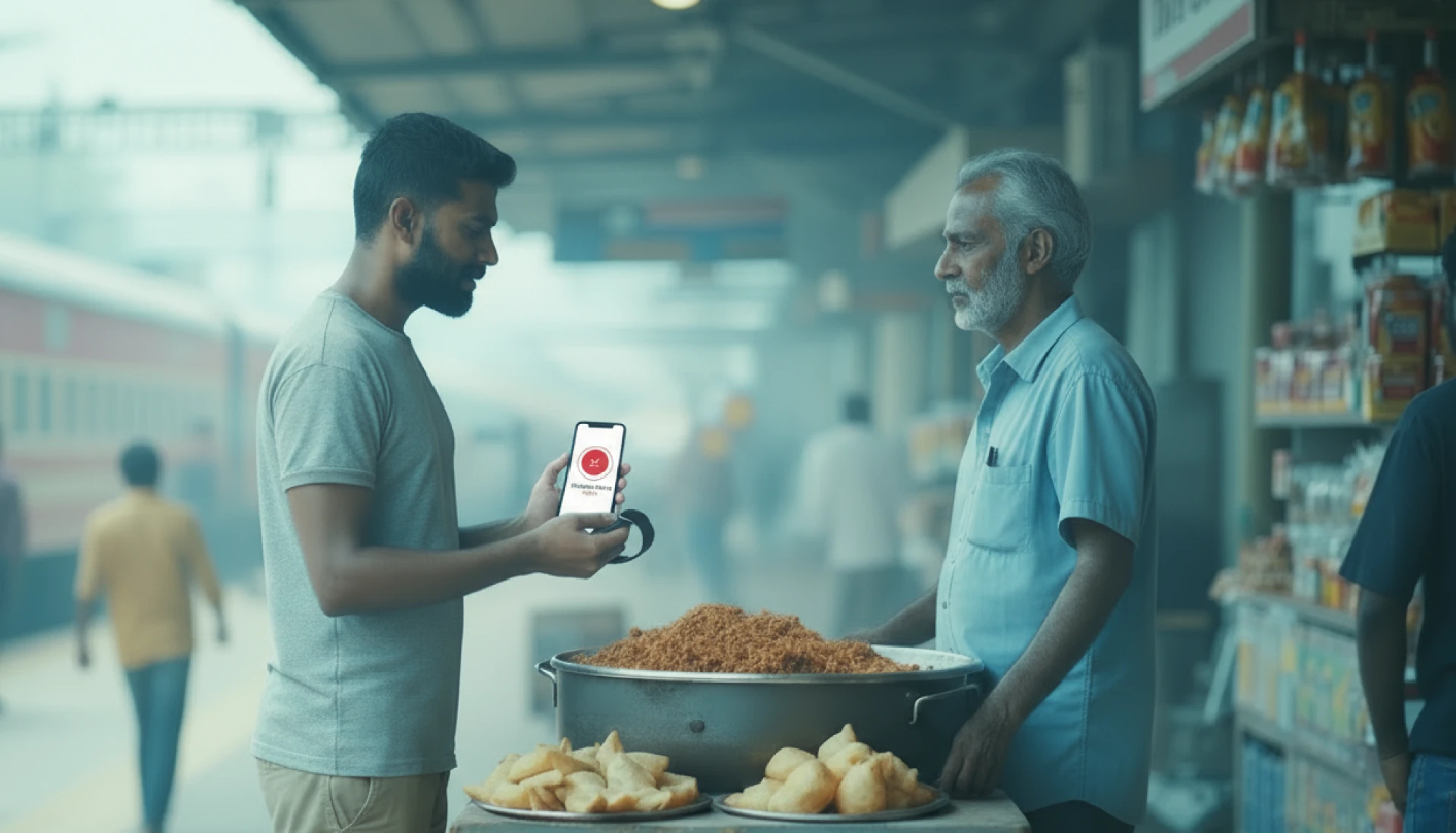

Sometimes, the simplest human moments become the most unforgettable stories. The Samosa UPI payment incident at Jabalpur railway station is one such real-life drama — where a ₹10 snack, a rushed moment, and a failed UPI transaction collided to create a viral headline no one saw coming.
On October 17, a passenger craving a quick samosa before catching his train ended up surrendering his wristwatch after his UPI payment failed. What should have been a casual bite turned into a public conflict, a trending video, and a national talking point on digital payments, human behavior, and chaos in crowded public spaces.
What Really Happened?
The passenger bought a samosa from a vendor at Jabalpur station and attempted to pay through UPI. But just then, his train began to move. Panicked, he rushed toward the coach, only to be grabbed by the collar by the vendor, who insisted on immediate payment.
The Samosa UPI payment incident escalated when the transaction failed again. With seconds ticking and the train pulling away, the passenger handed over his watch as “payment” and jumped aboard.
Within hours, a bystander’s video went viral — shared, memed, debated, and dissected across social platforms.
The Internet Reacts: Memes, Outrage & Mixed Emotions
The Samosa UPI payment incident quickly split the internet into two loud camps:
- Team Vendor argued:
- “Payment is payment. Why should a vendor lose money because of someone else’s glitch?”
- Team Passenger countered:
- “Grabbing a collar for ₹10 is unacceptable. This could’ve been resolved calmly.”
In between the outrage, humor thrived — as it always does online. From “Samosa worth ₹10, Watch worth ₹10,000” memes to “From snack to swag upgrade,” social media did what social media does best — turn chaos into content.
But beyond the jokes, the Samosa UPI payment incident opened up deeper conversations:
How should we behave when technology fails us in public spaces? How quickly should anger replace logic? And why do small moments spiral so fast in the age of instant virality?
What This Incident Teaches Us
The story may be unusual, even absurd — but it offers very real lessons:
1. Always Keep a Backup Plan (and Maybe Some Cash!)
We love digital convenience, but a failed UPI payment at the wrong moment can turn messy. The Samosa UPI payment incident is a reminder that carrying small change doesn’t make you outdated — just prepared.
2. Panic Makes Everything Worse
Hunger + Hurry + Glitch = Disaster. If the passenger had paused instead of sprinting, this moment may never have gone viral.
3. Communication Could Have Solved This in 10 Seconds
A calm one-line assurance might have prevented a collar-grab, a watch exchange, and an internet debate. Sometimes we forget that words are faster than reactions.
4. Not Every Fight Is Worth Becoming Viral Content
Both men are now internet characters in a story they probably wish would disappear.
5. People Matter More Than Payment
The samosa cost ₹10. The fallout cost dignity, stress, legal trouble, and nationwide attention. The Samosa UPI payment incident is a reminder that empathy is still the highest-value currency we have.
So, What Now?
The Samosa UPI payment incident will fade from headlines, but its lesson will remain:
Digital life is convenient, but human behavior decides how chaos unfolds.
Staying calm. Staying aware. Communicating before reacting. Carrying backup options.
Small habits can prevent big scenes.
Because in the end, no snack — no matter how delicious — is worth losing your peace, your dignity, or your watch.
























Sign in to leave a comment.