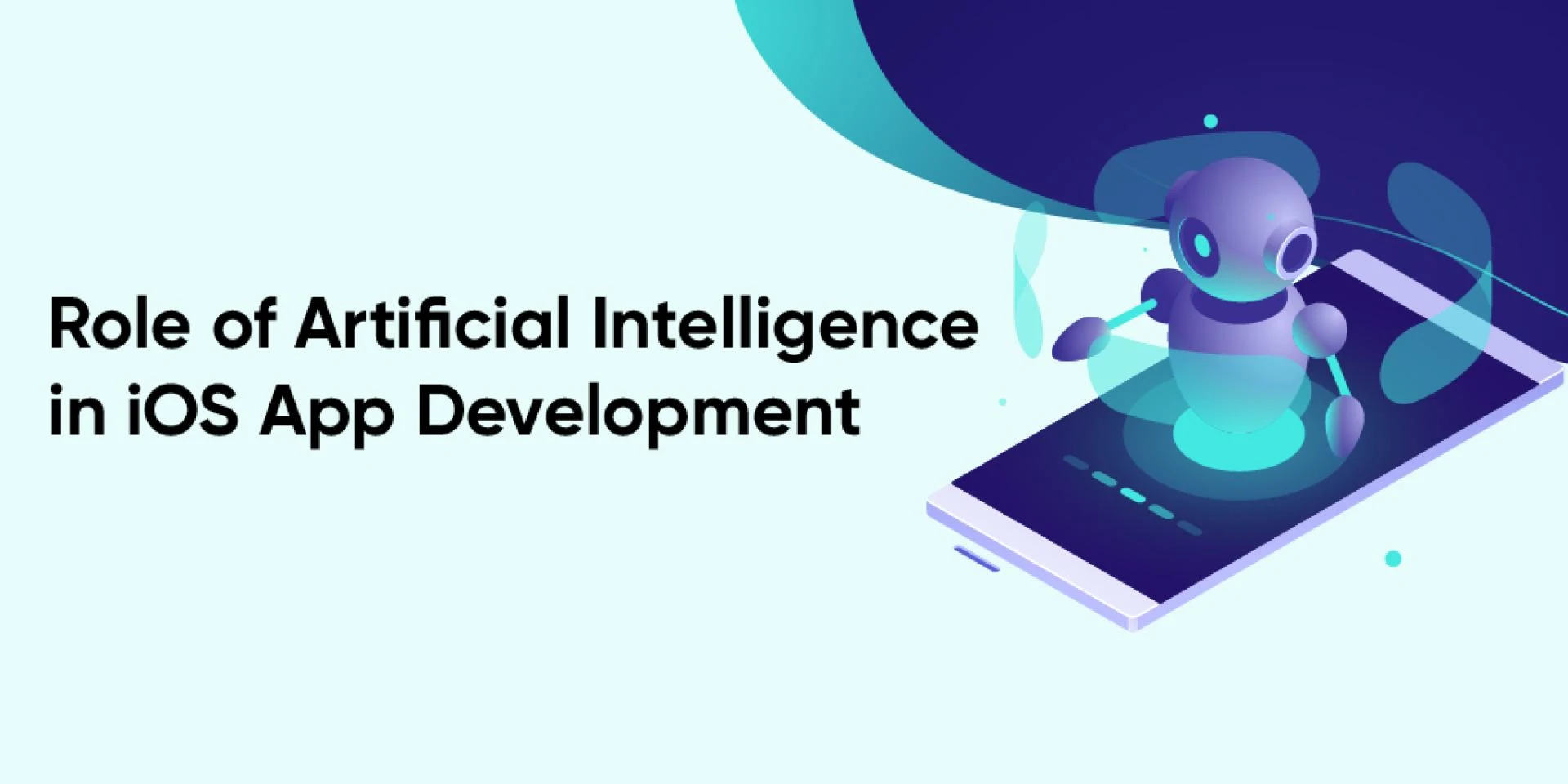

In recent years, we've witnessed the remarkable rise of artificial intelligence (AI), a transformative force that's reshaping numerous industries, even making its mark on the world of mobile app development.
Developers increasingly integrate AI features into iOS apps, yielding impressive enhancements that elevate user experiences.
This write-up shows AI's pivotal role in iOS app development, exploring its myriad benefits and drawbacks, real-world applications, and the potential ripple effects it may have on the app development landscape.
Artificial Intelligence (AI)
At its essence, AI revolves around machines emulating human intelligence. It enables them to tackle tasks that traditionally demand human cognitive capabilities.
These tasks encompass acquiring knowledge from experience, solving complex problems, identifying patterns, comprehending natural language, and making informed decisions based on data.
Explore- Benefits of Integrating AI into iOS Mobile Applications
Incorporating AI, or Artificial Intelligence, into iOS applications brings forth a multitude of advantages for both developers and users alike.
Let's discuss some of the key benefits that arise from integrating AI into iOS apps:
AI in iOS Development- Enhanced User Experience
Personalization: AI can analyze user behavior and preferences to deliver personalized content and recommendations. It makes the app more engaging and user-friendly. Improved User Interfaces: AI can adapt app interfaces based on user habits. This makes navigation smoother and more intuitive.AI in iOS Development- Improved App Performance and Efficiency
Optimized Resource Usage: It can manage resources efficiently, reduce battery consumption, and improve app performance. Faster Response Times: AI can optimize app functions by predicting user actions. It results in faster response times and reduced latency.AI in iOS App Development- Data-driven Insights and Decision-Making
Advanced Analytics: Analyze large datasets quickly. It helps businesses and users make data-driven decisions. Predictive Analytics: Predict trends and user behavior. Thus allowing businesses to plan and adapt more effectively.Artificial Intelligence in iOS Development- Competitive Advantage in the App Market
Innovative Features: Apps with AI-powered features stand out in the crowded app market. It attracts more users and retains them for extended periods. Differentiation: Artificial Intelligence can provide unique features and functionalities while integrating into iOS development.AI in iOS Development- Efficient Search and Discovery
Content Recommendations: AI can recommend products, services, or content that users will likely be interested in. It is beneficial in improving user engagement and revenue generation. Advanced Search: AI-powered search algorithms can provide more relevant search results. Therefore, it enhances user satisfaction.AI in iOS Development- Automation and Efficiency
Task Automation: Artificial intelligence can automate repetitive tasks, which reduces user workload and improves app efficiency. Error Reduction: AI can help prevent user errors and streamline complex processes, enhancing user satisfaction.AI in iOS Development- Customer Support and Engagement:
Chatbots: AI-powered chatbots can provide 24/7 customer support. Also, answer user inquiries and assist with troubleshooting. Proactive Engagement: Personalized notifications and user alerts enhance engagement and retention.However, Integrating AI into iOS apps can lead to a more user-centric, efficient, and competitive app ecosystem. It allows for greater personalization, automation, and data-driven decision-making. In sum, it enhances the user experience.
The Evolution of AI in iOS App Development?
Core AI/ML Advancements
Core ML, Apple's platform for including machine learning models in iOS apps, would have experienced considerable performance and efficiency improvements.
Every time Apple releases a new version of iOS, Core ML is improved to accommodate more sophisticated models and give developers a better machine-learning experience overall.
More Pre-trained Models
As machine learning develops, more pre-trained models tailored to different tasks and domains will be available for iOS developers to use in their apps. These models enable the implementation of AI capabilities without the need for considerable data gathering and training.
On-Device AI
As machine learning advances, more pre-trained models specific to various tasks and domains will be accessible for iOS developers to use in their apps.
These models make it possible to use AI capabilities without much training and data collection.
Natural Language Processing (NLP) Improvements
In iOS apps, NLP capabilities would have advanced, allowing for better language comprehension, sentiment analysis, and conversational interactions with apps.
Computer Vision Enhancements
With computer vision algorithms built into iOS apps, augmented reality (AR) applications, object detection, and real-time image processing would have all been possible.
Siri Integration
Apple's voice-activated digital assistant, Siri, would keep getting better and be more smoothly incorporated into other apps. More SiriKit features would be available to developers, enhancing user interactions with their apps.
AI-driven App Personalization
iOS apps would leverage AI to offer tailored experiences based on user behavior and preferences, enhancing the apps' appeal and relevance to particular users.
AI-powered Security Features
If AI had recognized patterns and abnormalities, iOS apps would have included more sophisticated security measures, such as fraud detection and behavioral biometrics, to improve user safety.
AI for Accessibility
AI would play a big part in creating features to help users with disabilities, such as enhanced voice commands and gesture detection, as Apple has long been committed to accessibility.
AI in App Development Tools
More AI-focused frameworks and tools would have been made accessible to iOS developers, making it easier to integrate AI into apps and giving more accurate performance data.
Organizations Leveraging Artificial Intelligence and Machine Learning
The following organizations have incorporated machine learning and artificial intelligence into their product and services.
Fyle
Available on PC, Android, and iOS, Fyle is an expense-tracking tool with AI capability. It merged with Microsoft Office 365 and Google G Suite and delivered sophisticated expense accounting.
Businesses like Communicorp and Royal Enfield use Fyle for real-time data extraction, expenditure reporting, tracking of business cards, compliance business procedures, and interaction with different management and ERP software.
Amazon Web Services (AWS)
AWS provides AI services that interact with workloads and apps to help enterprises with customer engagement, security, and modernizing their contact centers. The platform allows enterprises without prior ML or AI understanding to obtain high-quality ML services.
Microsoft Azure
Microsoft provides AI services for individuals and companies through its Azure cloud services, such as bots, machine learning, and cognitive services.
Microsoft's collaboration with OpenAI aims to create new AI technologies that take advantage of Azure's architecture for AI training and inference workloads.
Alibaba Cloud
Alibaba offers a robust AI machine-learning platform with a user-friendly visual user interface. Businesses can employ pre-built solutions by dragging and dropping components to construct AI capability and use different algorithm components for varied jobs.
Neurala
Neurala manages the Neurala Brain and employs AI to enhance visual inspection tasks. This deep-learning neural network software improves devices like cameras, phones, and drones, making them more creative and effective.
These organizations have successfully integrated AI and ML into their products and services, improving efficiency, personalization, and better user experiences.
Tools and Framework For AI Development in iOS Apps
Several tools and frameworks are available for AI development in iOS apps. It enables developers to integrate artificial intelligence and machine learning capabilities into their applications.
Core ML
Core ML, a framework created by Apple, enables programmers to include machine learning models in iOS apps. It supports a range of machine learning applications, such as text and picture analysis.
Advantages: Offers privacy protections, improved performance, and easy integration with iOS. Popular machine learning packages like PyTorch and TensorFlow are supported.TensorFlow Lite
TensorFlow Lite is a simplified version of the well-known TensorFlow framework created for mobile and embedded devices. It facilitates the deployment of machine learning models on iOS devices by developers.
Advantages: It supports a broad range of pre-trained models, is mobile device optimized, and provides flexibility for deploying custom models.Apple's Natural Language Framework
Tools for text analysis are available through Apple's Natural Language framework, including tokenization, language recognition, and named entity recognition.
Advantages: Text-based AI functions, such as sentiment analysis and language translation, are easy to integrate with iOS apps.IBM Watson
IBM Watson is a comprehensive AI platform that provides various services for AI development, including speech-to-text, image recognition, and natural language processing.
Advantages: Offers various cloud-based services, pre-trained models, and AI capabilities that can be included in iOS apps using APIs.Core Data
Data management and storage may be done effectively using Apple's Core Data framework. For the storage and retrieval of data, machine learning models are frequently utilized with it.
Advantages: Provides a reliable and effective method of managing app data, which may be applied to AI applications for inference and training.By utilizing the capabilities of artificial intelligence and machine learning in their applications, these tools and frameworks enable iOS developers to improve user experiences and include cutting-edge features in their iOS apps.
The development team's expertise and the project's specific requirements will determine the tool or framework.
Bottom Line
Information on how AI/ML will affect iOS app development in 2023 and beyond is provided above. Each year, new use cases for technology are introduced, raising the bar for enterprises worldwide.
iOS app development has been considerably impacted by AI and ML, which has shifted the emphasis from search mechanisms to user personalization and customization.
Working with trustworthy iOS app development businesses is crucial if you're considering developing an AI-driven app for your upcoming project. To assure top-notch product development, assess their capabilities based on their team's size, portfolio, prior experience, pricing, and location.

























Sign in to leave a comment.