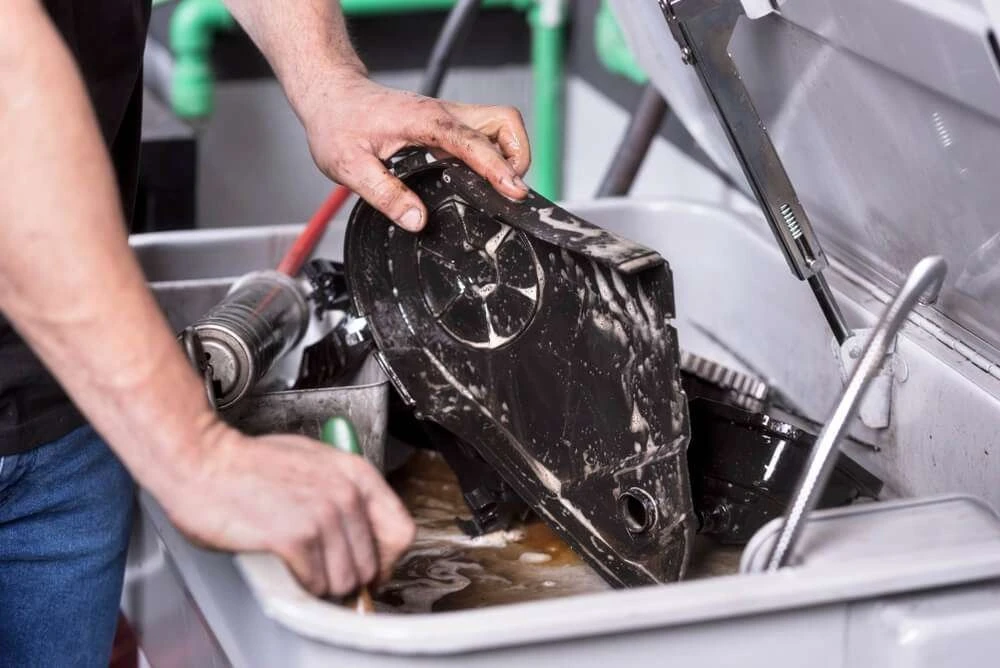

Water cleaners are a go-to solution in industrial settings for cleaning tough grime and grease. These systems harness the chemical and physical properties of water, combined with carefully formulated cleaning agents, to tackle contaminants. But what makes aqueous clean methods so effective? This article discusses the fascinating science behind how water cleaners work, breaking down the chemistry, physics, and specialized additives that make them indispensable.
The Chemistry of Water Cleaners
- Water as a Universal Solvent
Water’s reputation as a universal solvent is rooted in its molecular structure. Each water molecule has a polar arrangement, with a slightly positive charge on the hydrogen atoms and a slightly negative charge on the oxygen atom. This polarity allows water to interact with and dissolve many substances, including dirt and grime.
When cleaning with water, hydrogen bonds are important. These bonds form between water molecules and the surfaces they encounter, helping to lift contaminants away. While water alone can dissolve some dirt, grease, and oil, nonpolar substances repel water. This is where the science of aqueous clean solutions comes into play.
- Surfactants
Surfactants are the backbone of water cleaners. They act as surface-active agents that reduce water’s surface tension. This reduction allows water to spread and penetrate more easily, reaching even the most embedded grime.
A surfactant molecule has two key parts: a hydrophilic (water-attracting) head and a hydrophobic (oil-attracting) tail. When applied to grease, the hydrophobic tails latch onto the grease molecules while the hydrophilic heads remain in the water. This dual nature forms structures called micelles, which trap grease and suspend it in water for easy removal.
- Emulsification of Grease
Surfactants are so effective because of the process of emulsification. As micelles form, they break apart grease into tiny droplets. These droplets are stabilized within the water, preventing them from reattaching to the cleaned surface. This mechanism ensures that grease and grime are thoroughly removed, leaving surfaces spotless. The science of emulsification is a cornerstone of aqueous cleaning, demonstrating how chemistry transforms water into a powerful cleaning agent.
The Physics of Cleaning Action
- Mechanical Agitation
The physical cleaning process is equally important to the chemistry process of aqueous cleaning. Mechanical agitation, such as scrubbing, spraying, or ultrasonic vibrations, helps dislodge grime from surfaces. Water’s adhesion properties enhance this process, allowing it to stick to and carry away contaminants.
For example, ultrasonic water cleaners use high-frequency sound waves to create tiny bubbles in the water. These bubbles collapse with enough force to dislodge dirt and grease from hard-to-reach areas, making them ideal for delicate or intricate components.
- Thermal Energy’s Impact
Temperature affects the performance of water cleaners. Heated water increases the solubility of oils and greases, making them easier to remove. Additionally, higher temperatures speed up chemical reactions between cleaning agents and contaminants, enhancing efficiency.
For instance, hot water systems are often used in industrial settings to clean engine parts or heavy machinery coated in grease. The combination of heat and surfactants ensures a thorough cleaning process.
- Pressure Dynamics in Cleaning
High-pressure water jets are another powerful tool in aqueous cleaning. These jets physically break apart stubborn deposits like hardened grease or mineral buildup by delivering water at high speeds. The pressure also drives cleaning agents deeper into surfaces, amplifying their effectiveness. This dynamic combination of force and chemistry makes high-pressure systems particularly effective for industrial and commercial applications.
Specialized Additives in Water Cleaners
- Alkaline Agents
Many water cleaners include alkaline compounds, such as sodium hydroxide, to target grease and oil. Alkaline agents saponify fats, a chemical process that converts grease into soap. This soap is water-soluble, making it easy to wash away.
- Enzymes in Biodegradable Cleaners
Enzyme-based solutions are becoming more popular for eco-conscious cleaning. Enzymes are biological molecules that target specific organic compounds, breaking them down at a molecular level. For example, lipase enzymes break down fats, while proteases target proteins. These cleaners are effective and environmentally friendly, making them an excellent choice for sustainable cleaning practices.
- Chelating Agents
Hard water, which contains high levels of calcium and magnesium, can reduce the competence of cleaning agents by causing scale buildup. Chelating agents, such as EDTA, are added to water-cleaning solutions to bind with metal ions, preventing them from interfering with the cleaning process. This ensures consistent performance and protects equipment from scale-related damage.































Sign in to leave a comment.