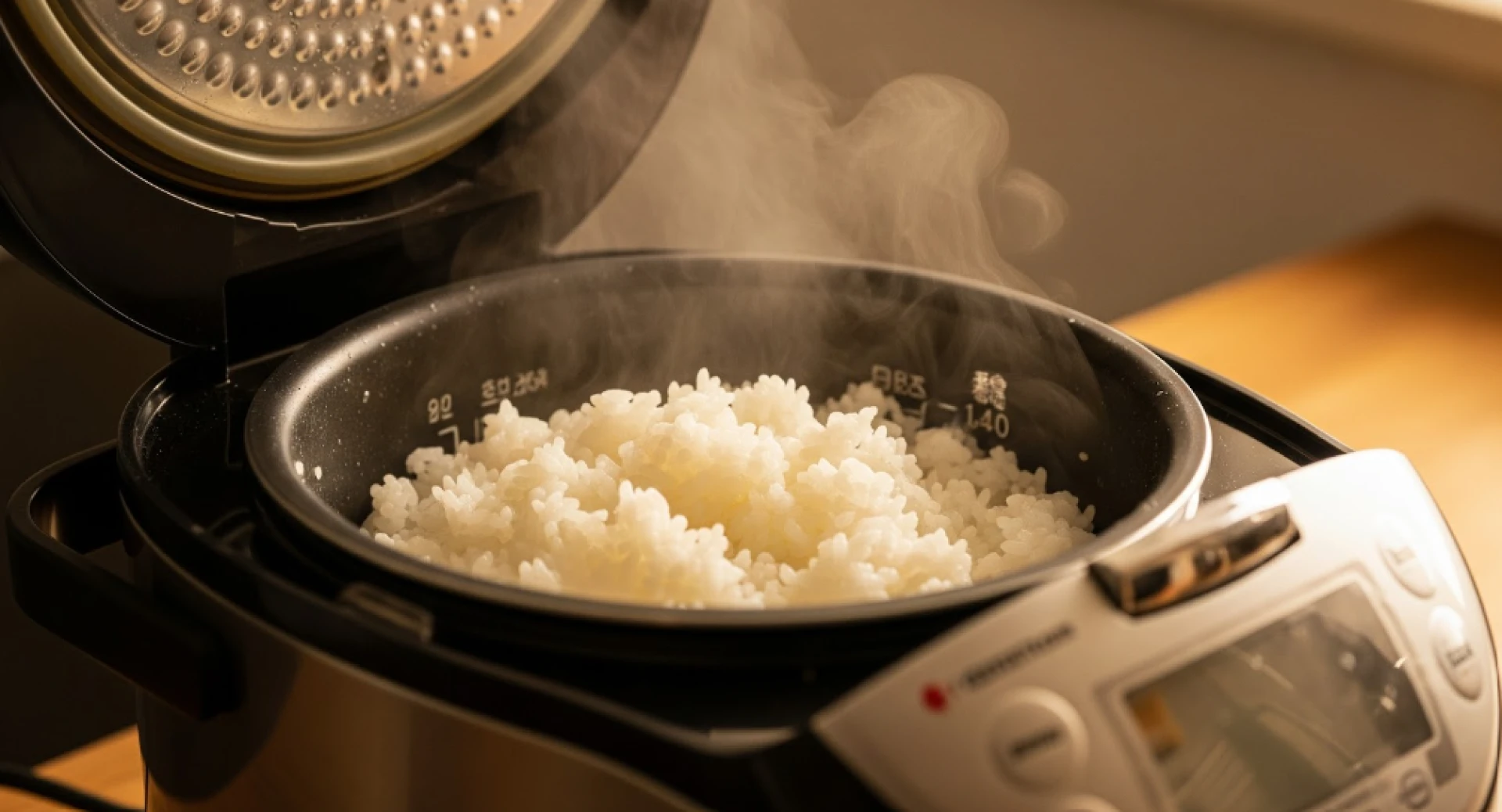

There’s a quiet kind of disrespect that rice suffers in too many kitchens. It’s steamed, dumped, plated, and forgotten.
This shouldn’t be so. Namely, rice is so versatile that, when done with real care, it can become a full-blown meal. Rice isn’t just a base. It isn’t meant to be hidden under sauce or cut with gravy. Real rice, well-seasoned rice, is a rewarding dish. And with so many convenient ways to actually prepare rice, there are tasty rice cooker recipes galore, too!
Don’t Treat Rice Like Garnish
Chef Nina Compton at Compère Lapin in New Orleans doesn’t think of rice as garnish.
“If the rice doesn’t taste like anything on its own, you’ve already lost,” she says. “People think you just boil it and you’re done. But you’ve got to give it something to hold onto.”
She is working through a batch of calas — fried rice fritters that start with richly seasoned leftover rice. “We cook the rice in stock, finish it with fat, and layer it in stages. By the time we’re done, it tastes like it’s already been around the world.”
That’s the entry point to understanding how to flavor rice: start with the assumption that rice is just as capable of being a main dish as anything else on the plate. If you’ve got heat, fat, aromatics, and time, rice doesn’t need rescuing.
The Broth Is the First Decision You Make
Water makes rice soft. Broth gives it a purpose. That doesn’t mean you need to simmer bones for 12 hours or pull stock from a pressure cooker, though. If you want your rice to be good, give it something to absorb. Chicken stock, seafood broth, vegetable infusions — there are many options out there.
At Crawfish & Noodles in Houston, Chef Trong Nguyen makes seasoned jasmine rice that underpins nearly everything on the menu. It doesn’t start with seasoning, mind you; it starts with the stock. Chef Nguyen’s stock is made from shrimp heads and shells simmered with lemongrass and white pepper.
“If the liquid is boring, the rice is dead,” he says flatly. “We treat the rice like a sponge that only gets one shot to drink.”
He’s right. One mistake home cooks keep making is pouring water over rice and then wondering why it tastes like cardboard.
Scented Fat Is a Hidden Ingredient
The best rice dishes almost always begin with something sizzling in fat. That might be onions, garlic, ginger, or crushed spices. The goal is to perfume the oil; that’s what the rice will carry. It’s also where the cook gains control. You can build depth in minutes if you let those aromatics brown enough.
At Maydan in Washington, D.C., rice is treated like a ceremony. It starts with clarified butter warmed with whole cumin seeds and slivered garlic, which darken and crackle before basmati hits the pan.
“Our rice isn’t just filler,” says Chef Gerald Addison. “It carries the smoke, the spice, everything we want the diner to remember.” Maydan cooks over an open flame, so that heat carries into the rice.
This is the part of learning how to flavor rice that most people don’t talk about. It’s not about how much garlic you use. It’s how you use it.
Memorable Dishes That Are Easy to Make
Some of the most flavorful rice dishes aren’t fancy. They’re born of need, habit, and repetition. In the Haitian kitchen, diri kole ak pwa (rice with beans) starts by frying epis — a green seasoning made of herbs, garlic, and shallots — in oil until it clings to the pan.
In South India, tamarind rice is tempered with curry leaves, mustard seeds, and dried chilies in hot ghee. These are dishes built on memory. Someone showed someone else how to do it and kept doing it over the years.
Chef Melissa Miranda at Musang in Seattle sees rice as the heart of the table.
“I watched my mom brown garlic for rice like it was a ritual,” she says. “She didn’t measure anything, but you always knew when it was right by the smell. It’s not just seasoning — it’s voice. It tastes like her.”
Musang’s garlic rice uses toasted bits of garlic cooked slowly, then lifted out and added back in at the end for texture.”
Don’t Let Rice Be Passive
At Burma Love in San Francisco, the coconut rice doesn’t hide in the background. Chef Win Aye starts by making lemongrass oil in-house. Stalks are bruised, simmered gently in neutral oil, and strained. That oil becomes the base for toasting jasmine rice, which is then cooked in a blend of coconut milk and water.
“We want it to feel round, creamy, but still fresh,” says Aye. “The rice tells you what kind of meal this is going to be.”
There’s a similar story in Los Angeles, at Badmaash, where Chef Arjun Mahendro refuses to let rice be passive. He builds cumin-scented basmati rice with whole spices: cinnamon stick, black cardamom, bay leaf, and clove.
“Too many people cook rice like they’re scared of it,” he says. “I want mine to taste like it’s got something to say.”
In Houston, Chris Shepherd, formerly of Underbelly, shares a trick.
“Rice in chicken stock is already better than rice in water,” he says. “But toast it first — dry. Before any liquid. Get a little color on it.”
He calls this method “giving the rice a head start.”
Treat Your Rice Royally and It Will Reward You
There’s a world of difference between food that fills and food that tells a story. Rice can be a bland side dish, or it can be transformed into a magnificent main dish that will amaze you.
The trick?
Give it some love! A handful of bay leaves, a teaspoon of infused oil, a ladle of good broth… none of these is hard to make!
Try it out, and the rice will reward you.































Sign in to leave a comment.