

Data is the fuel driving modern business, yet managing and storing it has become one of the greatest challenges enterprises face. With growing data volumes and the increasing need for secure, efficient storage solutions, one tool is transforming the way businesses store, access, and share their data: the NAS system.
Whether you're a small business owner or managing IT for a larger enterprise, network-attached storage (NAS) can be a game-changer. But what exactly is a NAS system, and how can it enhance your operations? This post will break down the essentials, benefits, and key factors of investing in an enterprise NAS storage solution.
What is a NAS System?
At its core, a NAS system is a dedicated device connected to your network that stores and organizes data. Unlike traditional storage systems, it's designed with accessibility and scalability in mind. Instead of storing your data on individual computers or external hard drives, NAS system allows streamlined access to data from centralized storage, no matter where you're located (as long as you're connected to the network).
Think of NAS as your personal data vault, but one that businesses (and even families) can share and access with ease. It provides a fast, reliable way to retrieve and back up files while offering built-in data redundancy.
How Does a NAS System Work?
A NAS system consists of a hardware device (the NAS enclosure) and data storage drives inside it, connected to your business network. Here's how it functions in simple terms:
- Storage Drives: The NAS enclosure contains one or more hard drives or SSDs where your data is stored. Many advanced NAS systems support RAID for added redundancy, which protects your data in the event of hardware failures.
- Network Access: Connected to your office or enterprise network, users can access the NAS using specific credentials, enabling secure file sharing across devices and locations.
- Management Software: High-quality NAS devices are equipped with intuitive software interfaces, making it easy to categorize, retrieve, or share files seamlessly.
Now, why should businesses opt for an enterprise NAS system compared to other storage methods?
Why Do Businesses Choose Enterprise NAS Solutions?
1. Centralized Storage
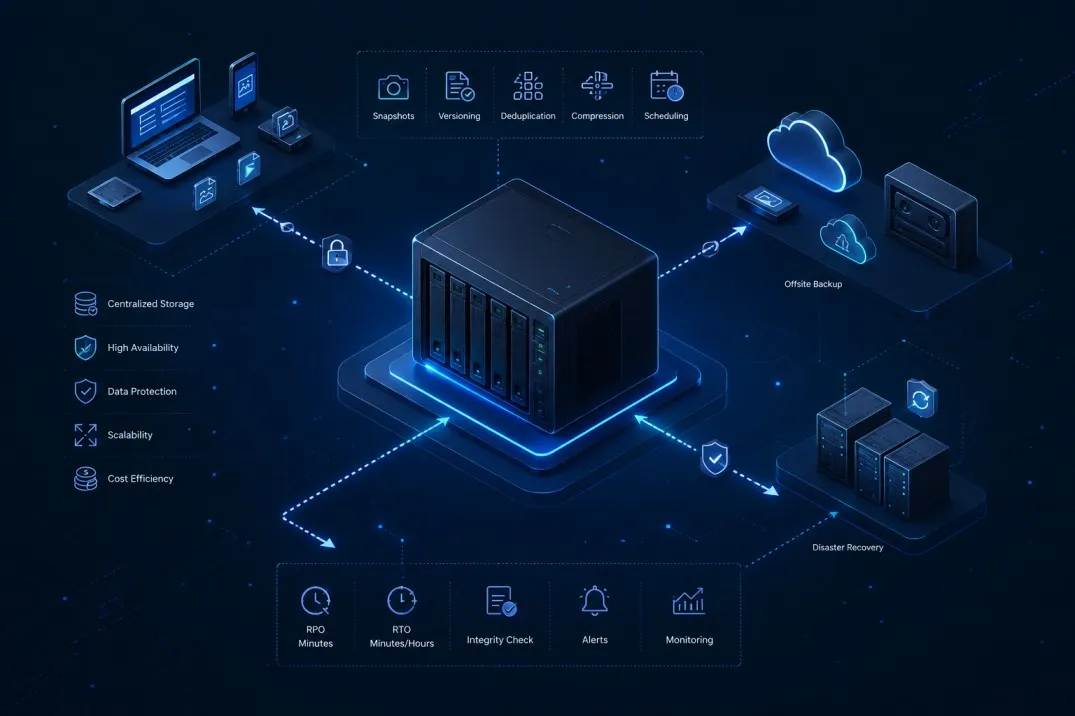
One of the biggest challenges businesses face is scattered data—files stored across laptops, desktops, and external drives make it difficult to maintain organization. NAS systems solve this issue by centralizing storage, ensuring all key data is stored in one, easy-to-access location.
By reducing data fragmentation, NAS systems empower teams to collaborate effortlessly, work with the latest files, and easily find what they need.
2. Scalable and Future-Proof
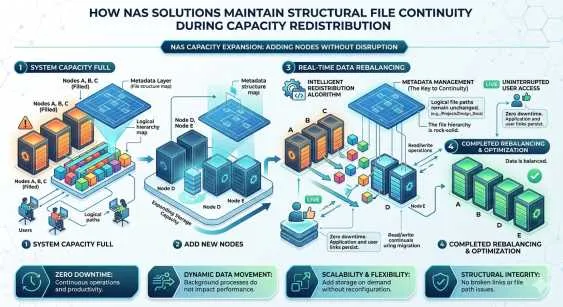
Your storage needs aren't static—they evolve as your business grows. An enterprise NAS storage solution is built to scale with your needs. By simply adding more drives or swapping out smaller ones for larger capacities, you can expand your storage without the need to invest in a completely new system.
For businesses eyeing long-term growth, this level of scalability is invaluable.
3. Data Backup and Recovery
Unexpected events, from hardware failures to cyberattacks, can threaten your files. NAS systems not only store your data but also act as backup solutions. Many enterprise-grade systems offer automatic data backup schedules or integration with cloud systems for hybrid storage solutions.
Additionally, their redundancy technologies (such as RAID configurations) ensure that if one drive fails, your data is still safe.
4. Enhanced Security
We live in an era of heightened cybersecurity risks. Storing data without protective measures can leave businesses vulnerable. Enterprise NAS storage offers robust security features, including encrypted file sharing, restricted access protocols, and multi-factor authentication.
Some advanced NAS devices even have built-in AI detection to flag suspicious activities.
5. Cost-Effective Solution
Compared to subscribing to cloud storage platforms that charge based on usage or data capacity, NAS systems provide a predictable and comparatively cost-effective alternative. And while there’s an upfront investment, the long-term payoff in terms of reduced operational costs and increased efficiency makes it worthwhile.
Use Cases for NAS in Enterprises
NAS systems are versatile and suitable for various industries and functions. Here are some key applications where NAS shines in business operations:
- Marketing Departments: Store large volumes of creative assets, videos, and images with ease.
- Data-Driven Decision-Making: Analyze files, spreadsheets, and big data seamlessly from centralized databases.
- Collaboration for Remote Work: Teams across the globe can share and access files instantly.
- IT Management: Simplify backup strategies and reduce time spent coordinating storage infrastructure.
- Surveillance Systems: NAS systems with massive storage can archive high-resolution security footage for extended time periods.
How to Choose the Right NAS System for Your Business?
Purchasing a NAS system isn't a one-size-fits-all approach. Here are essential factors to consider when investing in enterprise NAS storage solutions:
1. Storage Capacity
How much data does your business currently handle, and how much do you anticipate in the future? Assess your short- and long-term storage requirements to avoid over- or under-investing.
2. Performance Requirements
Consider the demands of your workload. For high-performance needs (e.g., streaming HD video), SSD-based NAS solutions or high-speed Ethernet connectivity could be optimal.
3. Backup Options
Does your business need hybrid backup options combining local storage with cloud integration? Look for NAS systems that offer the flexibility of both.
4. Security Features
Opt for NAS solutions with strong encryption, user-level access controls, and real-time monitoring systems.
5. Ease of Management
Look for options with a user-friendly management interface. This makes it easier for your IT team (and non-tech-savvy staff) to configure settings, manage users, and monitor performance.
6. Brand and Support
Choose a reputable NAS provider to ensure regular updates, technical support, and a reliable warranty policy.
NAS Systems vs. Cloud Storage
It’s worth mentioning that NAS systems are often pitted against cloud storage solutions. While cloud storage offers accessibility anytime, from anywhere, enterprise NAS provides complete ownership and control of data—without recurring fees.
Hybrid models combining NAS for sensitive data and cloud for scalability can offer the best of both worlds, proving especially popular among enterprise users.
Make the Smart Move with a NAS System
Enterprise NAS systems have transformed the way businesses manage data. From providing centralized storage to offering next-level data security and scalability, investing in a NAS system positions businesses to adapt and thrive in an increasingly data-driven economy.
Whether you’re new to the world of NAS or are looking to upgrade your current infrastructure, the right NAS solution awaits you. Don’t leave your data to chance—invest smartly.
To better understand how a NAS system can revolutionize the way you store, share, and secure your files, connect with our team today!

























Sign in to leave a comment.