

Modern businesses rely on their data infrastructure not just for operations, but for survival. When disruptions occur—whether due to cyberattacks, hardware failures, or natural disasters—organizations face the potential for lost revenue, reputational damage, and prolonged downtime. Enter Network Attached Storage (NAS), a reliable solution that not only helps businesses safeguard their data but also ensures continuity in the face of unexpected challenges.
This blog explores how NAS systems, including advanced scale-out NAS, play a critical role in driving business continuity and bolstering data protection, keeping operations resilient even under pressure.
What is Network Attached Storage (NAS)?
At its core, Network attached storage is a file-based storage solution connected to a network, allowing data to be accessible from multiple devices. Unlike Direct Attached Storage (DAS), NAS functions as a centralized hub for businesses, offering more scalability and easier resource sharing.
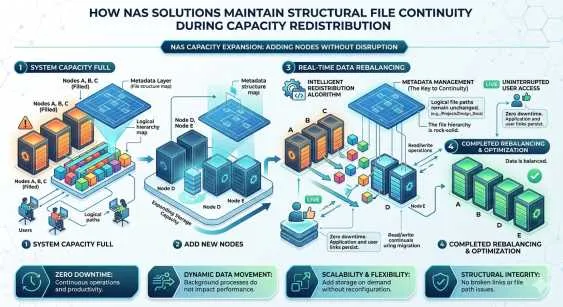
A key variant is the scale out NAS, which differs from traditional NAS solutions by enabling businesses to seamlessly expand storage capacities without disrupting existing workflows. This scale-as-you-grow capability makes it particularly valuable for enterprises handling large volumes of data.
Key Features of NAS for Business Use:
- Centralized Data Access: NAS acts as a unified platform for storing and retrieving critical files.
- Easy Scalability (with scale-out NAS): Add more nodes to increase capacity and performance as your needs expand.
- Enhanced Security: Built-in measures such as access controls, encryption, and snapshots.
- 24/7 Availability: Designed to support always-on operations critical to business continuity.
With the foundation of what NAS is, let's dig deeper into its organizational value.
Boosting Business Continuity with Network Attached Storage
Business continuity revolves around an organization’s ability to maintain essential operations during and after a disruption. NAS systems are pivotal in two key areas—availability and recovery.
1. High Availability for Mission-Critical Applications
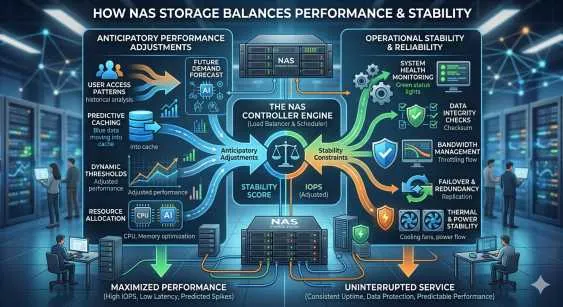
NAS solutions are built for 24/7 uptime, supporting seamless data accessibility at all times. Many systems come with fault-tolerant hardware, such as redundant power supplies, dual controllers, and automated failover mechanisms. These features ensure that even if part of the system goes offline, operations continue without interruption.
For example:
- A retail company relying on NAS to run its online storefront can prevent costly website downtime due to infrastructure issues.
- Hospitals and healthcare organizations leverage NAS to ensure critical patient records can always be accessed by medical staff.
Scale-out NAS takes this availability to the next level. By distributing data across multiple storage nodes, these systems avoid single points of failure, vastly improving uptime reliability.
2. Snapshot Technology for Rapid Recovery
Snapshots within NAS systems allow organizations to capture point-in-time copies of their data. This feature is invaluable during a ransomware attack or accidental data deletion, where it’s crucial to restore operations swiftly.
How does it work?
- Snapshots create incremental images of your system, consuming minimal additional storage.
- Businesses can instantly roll back to a previous state—minimizing downtime and limiting productivity losses.
The integration of snapshots with scale-out NAS ensures granular recovery, even for large data workloads, without bottlenecking system performance.
Elevating Data Protection with NAS
Data breaches and losses represent significant threats to modern enterprises. NAS systems incorporate a suite of features designed to enhance data protection.
1. Built-In Redundancy for Data Safety
Redundancy in NAS—often achieved through technologies like RAID (Redundant Array of Independent Drives)—ensures that data remains safe even if a drive within the system fails. RAID levels such as RAID 6 or RAID 10 are commonly used, providing robust fault tolerance tailored to enterprise needs.
For businesses reliant on high-volume databases, ensuring redundancy is critical. A media production studio, for instance, storing terabytes of video footage, benefits from scale-out NAS by eliminating risks tied to hardware failures.
2. Advanced Encryption and Access Controls
Many NAS systems feature advanced data encryption protocols to protect sensitive information against unauthorized access. Coupled with role-based access controls (RBAC), businesses can ensure that only authorized personnel interact with classified data.
For industries governed by compliance regulations, such as banking or healthcare, encryption features help meet stringent data governance and regulatory requirements (e.g., HIPAA, GDPR).
3. Data Replication Across Geolocations
NAS goes beyond simple local storage by enabling data replication across remote nodes. This capability ensures that even if one site goes down (due to fire, power outage, or hardware failure), secondary sites maintain operational continuity.
Replication is particularly potent when paired with cloud NAS, allowing organizations to pair physical and cloud-based storage to create a hybrid infrastructure.
Why Do Businesses Choose Scale-Out NAS for Future-Proofing?
While traditional NAS systems offer broad utility, scale-out NAS is quickly becoming the standard for businesses anticipating significant growth. Key benefits include:
Seamless Expansion:
Unlike monolithic NAS units, where adding capacity often requires significant downtime, scale-out NAS lets businesses add more storage nodes effortlessly, accommodating rising data demands.
Handling Big Data:
For enterprises working with unstructured data—think IoT analytics, video surveillance, or genomic research—the architecture of scale out NAS ensures smooth handling without sacrificing speed or reliability.
Lower Total Cost of Ownership (TCO):
Dynamic scaling means businesses don’t have to over-invest in capacity upfront. Instead, they can align storage investments with actual demand.
Real-World Applications of NAS in Business Settings
To better appreciate its capabilities, consider the following real-world NAS use cases:
E-commerce Platforms:
Rely on NAS for continuous operations, from tracking inventory in real-time to processing customer transactions globally.
Media and Entertainment:
Creative professionals store, edit, and distribute high-definition multimedia files collaboratively using NAS.
Healthcare:
Hospitals employ NAS for managing digital imaging and electronic health records (EHR).
Education:
Universities use NAS to centralize faculty and student data across multiple campuses.
Key Considerations When Implementing NAS
While NAS offers significant advantages, businesses must carefully evaluate their use case to select the right solution.
Factors to Consider:
Scalability Needs:
How much data growth do you anticipate over the next 3 to 5 years? If high, scale-out NAS is a better option.
Performance Requirements:
Consider whether your workload involves latency-sensitive processes, in which case SSD-based NAS may offer better results.
Budget & TCO:
Beyond initial investment, factor in maintenance, upgrades, and licensing costs.
Working with trusted solution providers ensures these factors are meticulously assessed, delivering a NAS infrastructure tailored to individual business needs.
Invest in NAS for Resilient Operations
Adopting a Network Attached Storage solution isn’t just about storage; it’s about safeguarding the future of your business. By using NAS systems—especially scale out storage —to fortify business continuity and enhance data protection, organizations unlock opportunities for efficiency, scalability, and operational resilience.
Organizations ready to take the next step toward robust IT infrastructure can explore enterprise-grade NAS options tailored to their needs. Secure your data, maintain seamless operations, and empower your teams with accessible, resilient, and scalable storage solutions.


























Sign in to leave a comment.