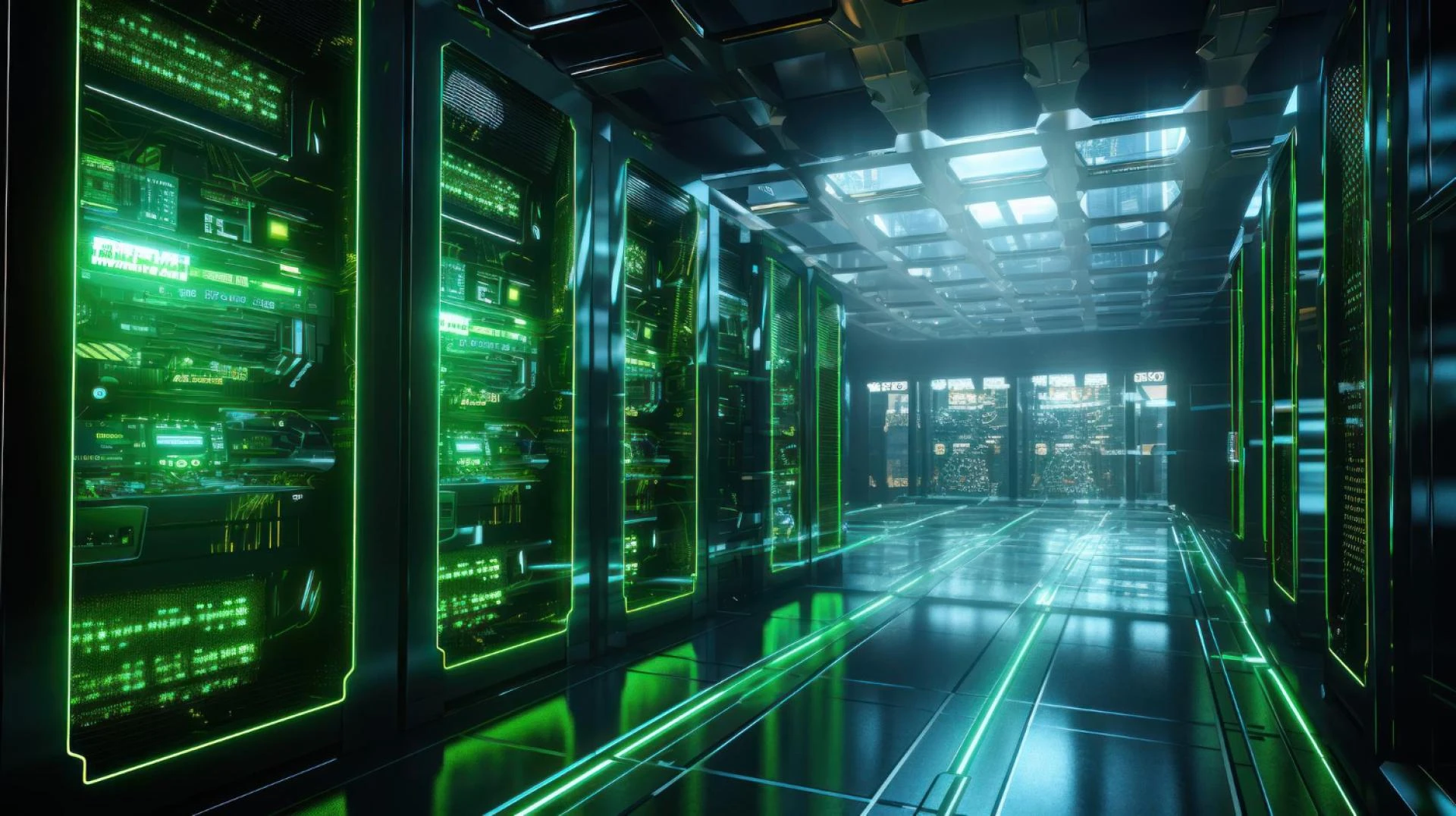

In the digital age, data storage is a critical concern for individuals and businesses alike. With the exponential growth of data, companies are looking for scalable, secure, and efficient network storage solutions to manage and store their information. The evolution of network storage solutions is driven by emerging technologies, including artificial intelligence, cloud computing, and edge computing.
This blog explores the future trends and innovations shaping the network storage landscape, with a focus on NAS storage solutions and their impact on businesses and consumers.
The Evolution of Network Storage Solutions
Network storage has come a long way from traditional storage devices to highly sophisticated solutions that offer remote access, scalability, and data security. Some of the key developments in network storage solutions include:
- Direct Attached Storage (DAS) – Initial storage systems where storage devices were directly attached to a single computer.
- Network Attached Storage (NAS) – A shared storage solution that allows multiple users to access files over a network.
- Storage Area Networks (SAN) – High-speed, block-level storage solutions used primarily by enterprises.
- Cloud Storage – Remote storage solutions provided by cloud service providers, offering flexibility and scalability.
As businesses demand more from their storage systems, innovations continue to emerge, improving security, performance, and efficiency.
Key Trends Shaping the Future of Network Storage Solutions
1. AI-Driven Storage Management
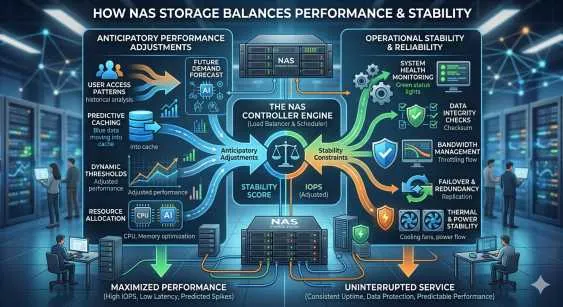
Artificial intelligence (AI) is revolutionizing network storage solutions by automating data management, improving security, and optimizing storage performance. AI-powered storage solutions can:
- Predict and prevent hardware failures.
- Automate backup and recovery processes.
- Optimize storage allocation based on usage patterns.
- Enhance data security through real-time anomaly detection.
2. Edge Computing and Decentralized Storage
With the rise of IoT (Internet of Things) and the need for real-time data processing, edge computing is gaining momentum. Instead of relying solely on centralized cloud storage, organizations are adopting NAS storage solutions at the edge to:
- Reduce latency and improve data access speed.
- Enhance security by processing sensitive data locally.
- Minimize bandwidth usage and cloud dependency.
3. Hybrid Cloud Storage Solutions
Hybrid storage models combine on-premises storage with cloud-based solutions to provide:
- Greater flexibility and scalability.
- Cost efficiency by optimizing storage resources.
- Seamless disaster recovery and data redundancy.
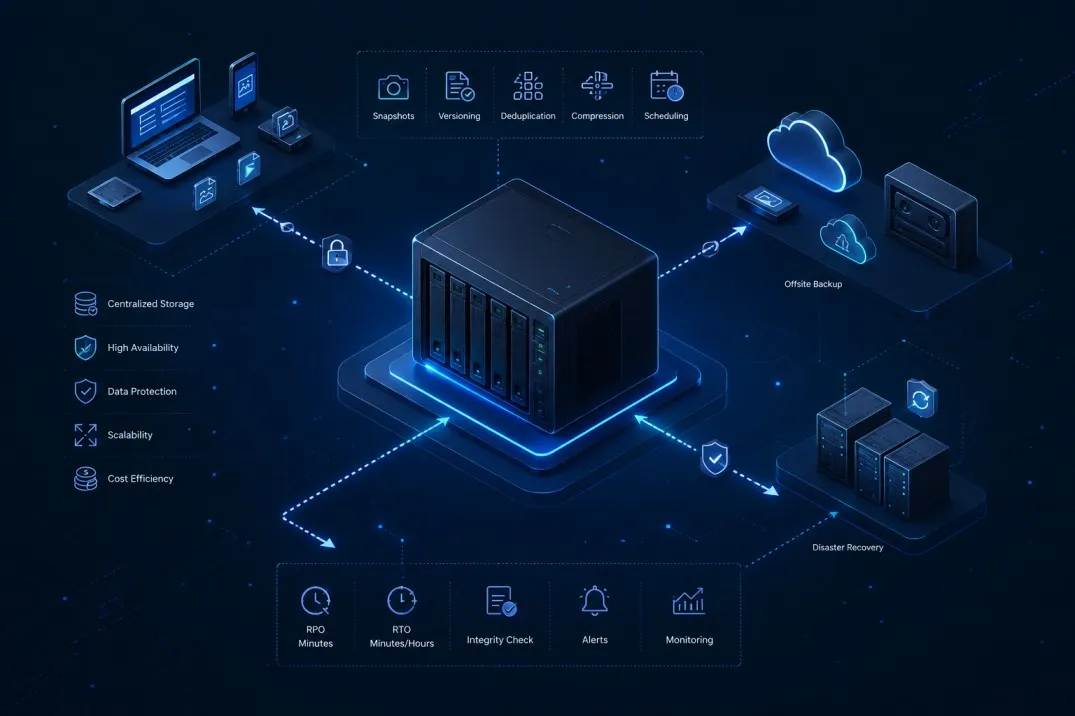
Companies are increasingly leveraging NAS storage solutions with cloud integration to achieve the best of both worlds.
4. Software-Defined Storage (SDS)
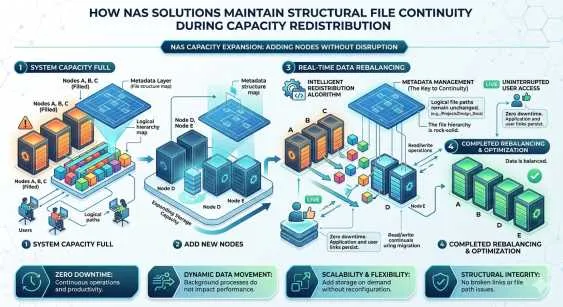
Software-defined storage (SDS) separates storage hardware from the management software, allowing businesses to manage storage more efficiently. SDS enables:
- Scalability without hardware limitations.
- Centralized management of diverse storage environments.
- Enhanced automation and orchestration of storage resources.
5. NVMe and Faster Storage Technologies
With the demand for high-speed data access, NVMe (Non-Volatile Memory Express) is becoming the preferred choice over traditional HDDs and SATA SSDs. Benefits include:
- Faster data transfer rates.
- Reduced latency and improved application performance.
- Greater efficiency in handling large data sets.
Innovations in NAS Storage Solutions
1. AI-Powered NAS Systems
Advanced NAS storage solutions now incorporate AI to:
- Monitor system performance and predict failures.
- Automate storage optimization and data organization.
- Enhance security through AI-driven threat detection.
2. Multi-Cloud NAS Solutions
Modern NAS solutions offer integration with multiple cloud providers, allowing businesses to distribute their data across different cloud platforms for:
- Better redundancy and disaster recovery.
- Improved cost management through intelligent workload distribution.
- Seamless data synchronization across multiple locations.
3. Blockchain for Enhanced Data Security
Blockchain technology is being integrated into network storage solutions to ensure data integrity and prevent unauthorized modifications. Blockchain-powered storage solutions offer:
- Immutable records of data transactions.
- Enhanced security against cyber threats.
- Decentralized data management.
4. 5G and High-Speed Data Access
The rollout of 5G technology is set to improve the efficiency of NAS storage solutions, enabling:
- Faster data transfer between connected devices.
- Improved remote access capabilities for businesses and individuals.
- Enhanced support for high-bandwidth applications such as video streaming and virtual reality.
The Future of Network Storage Solutions
1. Self-Healing Storage Systems
In the future, storage systems will be capable of detecting and resolving issues without human intervention. These self-healing systems will:
- Identify corrupted data and repair it automatically.
- Optimize performance dynamically based on real-time analysis.
- Reduce downtime and maintenance costs.
2. Quantum Storage Technologies
Quantum storage is an emerging field that aims to leverage quantum computing principles to store and retrieve data with unparalleled efficiency. Though still in its early stages, potential benefits include:
- Unbreakable encryption for data security.
- Ultra-fast data retrieval speeds.
- Massive storage capacity beyond current limits.
3. Energy-Efficient Storage Solutions
With a focus on sustainability, future network storage solutions will integrate:
- Low-power SSDs and energy-efficient storage architectures.
- AI-driven power management to minimize energy consumption.
- Eco-friendly materials for hardware components.
Conclusion
The future of network storage solutions is promising, with innovations that focus on performance, security, and scalability. NAS storage solutions are evolving to meet the demands of modern businesses, integrating AI, blockchain, and high-speed connectivity to enhance data management.
As technology advances, companies must stay updated on these trends to make informed decisions about their storage infrastructure. Whether through hybrid cloud models, AI-driven storage management, or the integration of quantum computing, the next generation of storage solutions will redefine how we store and access data in the digital era.
By embracing these advancements, businesses can ensure efficient, secure, and cost-effective data management for years to come.



















Sign in to leave a comment.