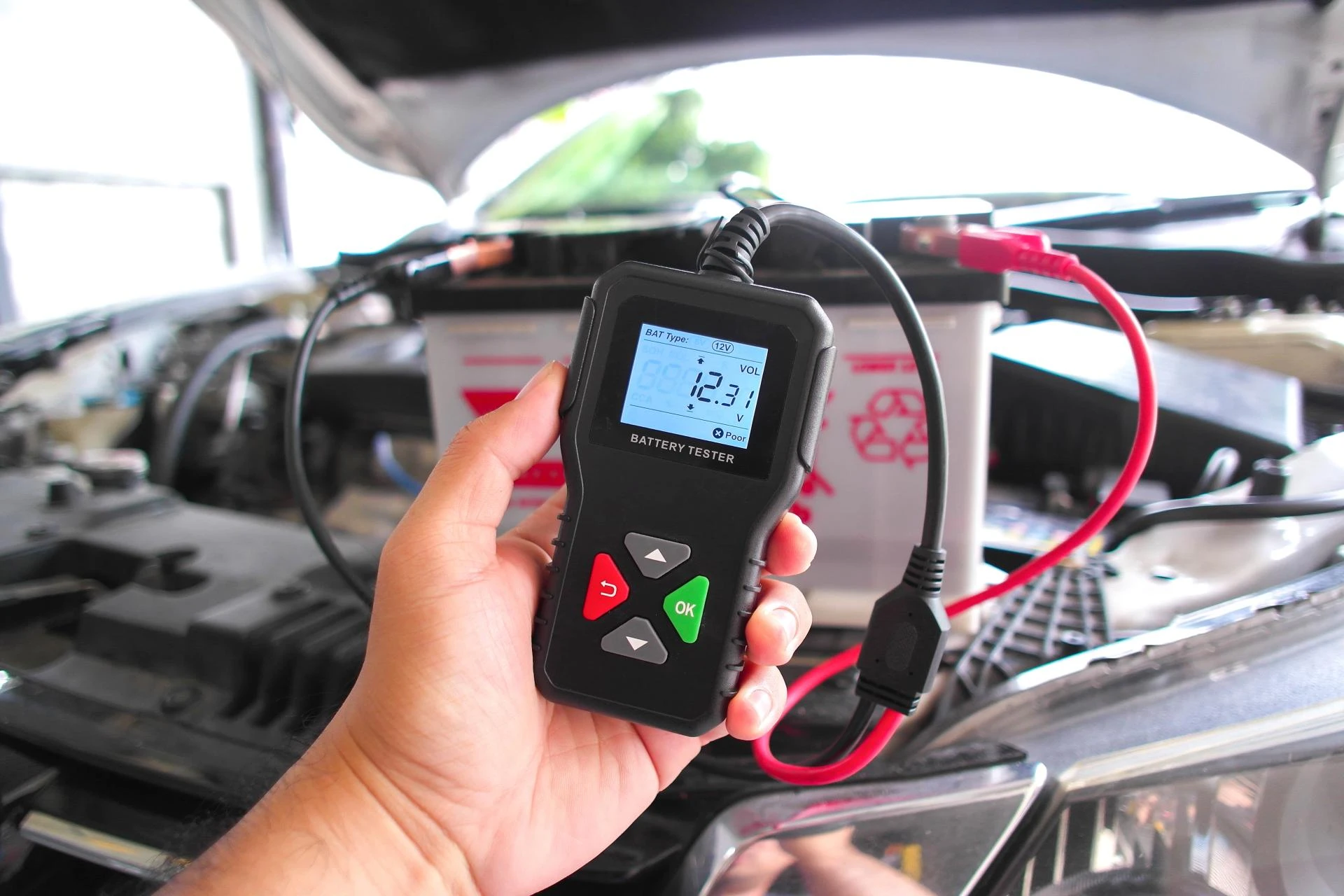

In today’s competitive automotive landscape, vehicles are expected to perform reliably across diverse environments — from rough terrain and high-speed highways to extreme temperatures and weather conditions. Ensuring that each component can withstand these challenges is essential for safety, performance, and customer satisfaction. That’s where automotive vibration testing comes in.
Vibration testing plays a critical role in predicting how parts and assemblies will behave under real-world conditions. By subjecting components to controlled vibration and shock profiles, engineers can identify weaknesses, prevent premature failures, and improve overall durability.
In this article, we’ll explore the top 5 vibration testing methods used in the automotive industry and explain how each one contributes to safer and more reliable vehicles. We’ll also discuss how analytical testing services and a well-equipped analytical testing laboratory ensure that these methods meet industry standards.
1. Sinusoidal (Sine) Vibration Testing
One of the most common and foundational methods of automotive vibration testing is sinusoidal vibration testing, often referred to as sine testing. This method uses a single frequency at a time to apply a smooth, repetitive vibration to the test item.
Purpose and Application
Sine testing is primarily used for:
- Determining resonant frequencies of components and assemblies
- Studying vibration fatigue over time
- Evaluating vibration isolation performance
- Conducting qualification tests for standards such as ISO and SAE
How It Works
In this process, a shaker system vibrates the test object at different frequencies (usually 5 Hz to 2,000 Hz). Engineers monitor how the part responds, identifying frequencies where vibration amplitudes spike — indicating resonance.
For example, during vehicle development, engineers may use sine vibration testing to find resonance in components like exhaust systems, dashboards, or suspension brackets. Once identified, designs can be modified to shift or dampen these frequencies, reducing noise, vibration, and harshness (NVH).
Benefits
- Simple, controlled frequency input
- Ideal for identifying structural weaknesses
- Helps in optimizing component design before production
Sine vibration testing is typically performed in an analytical testing laboratory equipped with advanced shakers and control systems capable of producing precise frequency sweeps.
2. Random Vibration Testing
While sine testing provides valuable insights, real-world driving conditions are far more complex. Vehicles are exposed to vibrations from multiple sources at different frequencies and amplitudes — all occurring simultaneously. To simulate this, engineers rely on random vibration testing.
Purpose and Application
Random vibration testing replicates the unpredictable nature of actual road conditions, such as:
- Rough terrain
- Engine and drivetrain vibration
- Wind and tire noise
It’s used extensively in shock and vibration testing programs to validate the performance of critical components like electronic control units (ECUs), sensors, lighting systems, and battery packs in electric vehicles.
How It Works
In this test, a random signal — representing a spectrum of frequencies and amplitudes — is applied to the component. The Power Spectral Density (PSD) curve defines the vibration energy across frequencies, ensuring that the test accurately reflects real-world conditions.
Benefits
- Simulates realistic road vibrations
- Identifies fatigue issues and potential failures
- Validates component durability under multi-frequency conditions
Random vibration testing is a cornerstone of modern automotive vibration testing, particularly for validating the integrity of electronics and mechanical assemblies under dynamic loads.
3. Shock and Bump Testing
When vehicles experience sudden jolts — such as hitting a pothole, curb, or speed bump — components undergo shock vibration testing to ensure they can withstand high-impact events.
Purpose and Application
Shock and bump testing evaluates how well automotive parts handle short, high-magnitude forces. It’s especially relevant for:
- Suspension systems
- Mounting brackets
- Battery enclosures
- Safety-critical electronics
How It Works
In shock and vibration testing, the specimen is subjected to controlled impact pulses that mimic real-world shocks. Engineers measure acceleration, displacement, and strain to determine how much energy the part can absorb without deforming or failing.
Typical test profiles include:
- Half-sine shock pulses (for general structural testing)
- Trapezoidal shocks (for cargo and packaging validation)
- Sawtooth pulses (for high-velocity impacts)
These tests are often performed in a certified analytical testing laboratory equipped with drop towers or electrodynamic shakers capable of delivering precise impact profiles.
Benefits
- Ensures mechanical integrity under sudden loads
- Prevents fatigue cracks and fastener loosening
- Improves long-term reliability of structural and electronic systems
In electric vehicles (EVs), shock vibration testing is crucial for battery modules and enclosures, which must remain safe even after severe impacts.
4. Resonance Search and Dwell Testing
After identifying resonant frequencies through sine or random testing, engineers often conduct resonance dwell testing to evaluate how long components can survive at those critical frequencies.
Purpose and Application
The goal of resonance search and dwell testing is to:
- Validate fatigue life under resonance conditions
- Assess structural durability
- Verify NVH characteristics over extended operation
It’s commonly applied to engine mounts, exhaust hangers, and interior panels, where resonant vibrations can cause noise, loosen fasteners, or lead to premature wear.
How It Works
Once the resonant frequency is located, the test system “dwells” at that frequency — sometimes for hours — maintaining constant amplitude until the component reaches failure or a specified time limit.
The results help engineers fine-tune materials, joint designs, or damping mechanisms.
Benefits
- Predicts fatigue failure points
- Improves NVH performance
- Enhances vehicle comfort and longevity
An analytical testing laboratory offering advanced analytical testing services can conduct resonance dwell tests according to ISO 10816 or other industry-specific standards.
5. Multi-Axis (3-Axis) Vibration Testing
Real-world vehicle vibrations occur simultaneously in all three axes — X (lateral), Y (vertical), and Z (longitudinal). To accurately replicate these complex forces, engineers use multi-axis vibration testing, also known as 3-axis vibration testing.
Purpose and Application
This advanced testing method is ideal for:
- Full-vehicle subassembly testing (e.g., seats, dashboards, battery packs)
- Component-level durability testing under realistic vibration profiles
- Simulating combined loading from road, engine, and aerodynamic inputs
How It Works
A multi-axis shaker system applies vibration in multiple directions simultaneously. The test can also integrate temperature and humidity controls to create combined environmental stresses, providing a comprehensive understanding of component behavior.
Benefits
- Closest simulation to real-world driving conditions
- Detects failure modes not visible in single-axis tests
- Reduces test time and development cycles
Automotive manufacturers often collaborate with analytical testing laboratories that specialize in multi-axis shock and vibration testing. These labs use sophisticated control systems to synchronize motion across all axes, ensuring accurate, repeatable results.
Why Analytical Testing Services Matter
Choosing the right analytical testing services partner is crucial for achieving reliable results. A qualified analytical testing laboratory not only provides state-of-the-art equipment but also offers expert analysis, data interpretation, and compliance with industry standards like ISO 16750, SAE J1455, and MIL-STD-810.
These labs support:
- Component validation for OEMs and Tier 1 suppliers
- Failure root cause analysis
- Custom test program development
- Regulatory and quality certification
By combining advanced shock and vibration testing with expert analytical evaluation, manufacturers can shorten development cycles, enhance product reliability, and reduce warranty claims.
Conclusion
Automotive vibration testing is a critical part of modern vehicle design and validation. From simple sine sweeps to complex multi-axis simulations, each testing method serves a specific purpose in ensuring that components can endure the real-world forces they’ll face over years of operation.
The top 5 vibration testing methods — sine, random, shock and bump, resonance dwell, and multi-axis vibration testing — together form a comprehensive toolkit for engineers striving to build safer, more durable, and more comfortable vehicles.
Partnering with an experienced analytical testing laboratory that offers complete analytical testing services ensures that every test delivers meaningful insights. Whether it’s verifying a new EV battery pack or improving the NVH performance of an SUV, robust shock vibration testing and vibration analysis remain indispensable to automotive innovation.






























Sign in to leave a comment.