

As manufacturing industries strive for greater efficiency, precision, and reliability, the choice of power transmission components becomes more consequential than ever. While drive chains and rubber timing belts have long been manufacturing mainstays, the Polyurethane Timing Belt is rapidly emerging as a superior solution for modern factories. This advancement is opening up new possibilities not just for speed and accuracy, but also for durability, clean operation, and versatile design.
At Shanghai Puteken Transmission System Co., Ltd., we witness every day how a well-designed Polyurethane Timing Belt can dramatically influence machine uptime, throughput, and even maintenance costs. In today’s lean, automated, and digitally managed production facilities, conventional materials are often outmatched by the demands of high cycles, corrosive environments, and increasingly compact machinery. Transitioning to polyurethane belts is no longer just an upgrade; for many, it’s become a strategic necessity—one that can help you stay ahead in a global, quality-driven marketplace.
Moreover, as modern manufacturing expands into sectors like food processing, electronics assembly, medical devices, and precision robotics, the flexibility and cleanliness of a Polyurethane Timing Belt offer not only technical advantages but also compliance with industry-specific standards. These belts withstand stretching, abrasion, chemicals, and temperature swings—delivering accurate, consistent timing with every rotation.
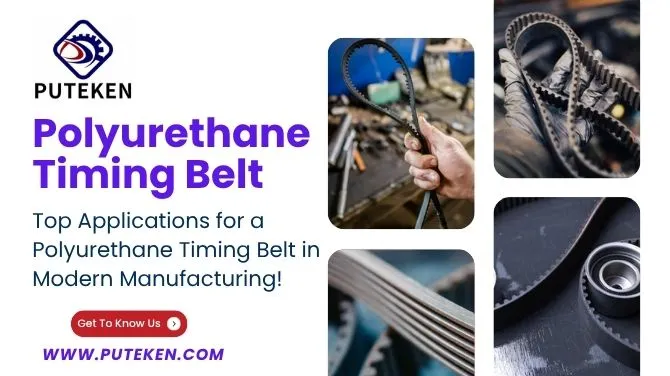
Top Applications for a Polyurethane Timing Belt in Modern Manufacturing
Understanding the Polyurethane Timing Belt
A Polyurethane Timing Belt is an advanced power transmission component engineered for applications requiring precise synchronization between machinery elements. Unlike traditional rubber belts, these belts leverage the physical properties of polyurethane—offering enhanced durability, resilience, and design flexibility. Embedded with steel, aramid, or Kevlar cords, they deliver remarkably low stretch and high load-carrying capacity, even during demanding and repetitive motion.
Key Properties
- High Wear and Abrasion Resistance: Polyurethane’s molecular structure makes it tough yet flexible, so belts retain their profile—even with constant running or exposure to harsh materials.
- Chemical Resistance: These belts resist oils, fats, greases, and many cleaning agents, making them ideal for environments where contamination or deterioration is a risk.
- Temperature Tolerance: With outstanding performance in -30°C to +80°C as standard—and higher with special formulations—these belts outperform most rubber alternatives.
- Precision Molding: Polyurethane can be extruded and molded into nearly any shape or profile, including custom pitches, teeth, and reinforced backings.
- Customization: It’s easy to add coatings, cleats, special colors, or perforations to suit specific machine requirements.
Why Polyurethane Timing Belt? Key Benefits for Modern Manufacturers?
1. Precise, Repeatable Motion Control
For drives where timing is everything, such as robotic assembly or pick-and-place systems, any belt stretch, flex, or tooth wear can cause critical errors. Polyurethane Timing Belts hold their shape and engagement much longer, minimizing the risk of skipped teeth or timing errors.
2. Maintenance Reduction and Extended Belt Life
Conventional rubber belts often require frequent tensioning, lubrication, and scheduled replacement. Polyurethane belts, with stronger tension cords, resist creep and stretching, demanding less intervention and offering longer service intervals.
3. Clean and Contaminant-Free Operation
Food, pharma, and electronics manufacturers appreciate that PU does not shed rubber dust or absorb oils. Urethane’s closed-cell structure also inhibits bacteria and can be cleaned with aggressive sanitizers, meeting regulatory requirements for cleanliness.
4. Design Flexibility: Compact and Customizable
Polyurethane can be precision-molded in endless lengths or joined into custom continuous belts, with practically any tooth profile, additional surface features (like vacuum holes or drive lugs), and specialty reinforcements. This supports miniaturization and maximizes available floor space in modern factories.
5. High-Torque Transmission with Low Noise
Reinforced Polyurethane Timing Belts are capable of transmitting high torques, operate at high speeds, and generate less noise due to fine-toothed engagement. These advantages are especially important for sensitive environments or operator comfort.
Top Applications of Polyurethane Timing Belts in Today’s Industry
1. Food and Beverage Processing
Sanitation, non-toxicity, and repetitive high-speed cycles make food processing lines a natural fit for Polyurethane Timing Belts. Examples include:
- Automated bread slicers
- Candy and chocolate molding/conveying
- Portioning and packaging machines
- Dairy bottling lines
Polyurethane belts can even be supplied in colors for HACCP compliance or with antistatic coatings for powder applications.
2. Packaging Machinery
Modern packaging—cartoning, case packing, wrapping, labeling—relies on synchronized motion. Polyurethane Timing Belts ensure reliable registration, clean transport of packages, and compatibility with glue, film, or tape lines.
Case Study:
A pharmaceutical packaging facility upgraded from nitrile belts to Polyurethane Timing Belts and doubled their mean time between failures, despite 24/7 operation and daily sanitizer washdown.
3. Robotics and Automation
Lightweight, minimal-stretch belts mean that robotic arms, axis drives, and high-speed gantries can move with maximum speed and precision—crucial in electronics manufacturing, 3D printers, or medical device assembly.
4. Print, Paper, and Textile
Printing presses, collators, and textile screen printers rely on Polyurethane Timing Belts for synchronizing movement, avoiding slippage, and resisting ink, chemicals, or adhesives.
5. Electronics Manufacturing
Low static, dust-free, and precision performance are must-haves on PCB placement lines, pick-and-place units, and intricate test/inspection stations.
6. Medical and Pharmaceutical Automation
Clean-room compatibility, inertness to chemicals, and non-shedding design mean Polyurethane Timing Belts are used for pill bottling, test sample processing, and even in imaging device assembly.
7. Logistics and Sorting Automation
Automated warehouses, baggage handling, and parcel sorters use Polyurethane Timing Belts for dimensionally stable, high-speed transfer—reducing downtime and improving traceability.
8. Glass and Ceramics
Non-marking and cut-resistant, these belts are used to move fragile glass sheets or ceramic tiles without surface damage or breakage.
Industry Case Studies
A. Food Packaging Line Boosts Throughput
A multinational snack food maker installed Shanghai Puteken Polyurethane Timing Belts on their weighing and packaging machines. They experienced:
- 30% fewer unplanned belt changes
- Faster washdown (no belt removal needed)
- Tailored blue color for allergen segregation
B. Robotics Manufacturer Gains Accuracy
A robotics company replaced traditional neoprene timing belts with high-tension PU belts (Kevlar-reinforced). Accuracy in high-speed pick-and-place increased by over 15%, while maintenance costs dropped due to reduced re-tensioning.
C. Medical Device Assembly: Improved Cleanliness
A medtech firm switched to FDA-approved Polyurethane Timing Belts for syringe, filter, and device lines. They passed third-party clean room validation without any contamination from belt wear.
Selecting the Right Polyurethane Timing Belt for Your Application
1. Assess Belt Dimensions and Load
Consider:
- Required pitch and tooth profile (T, AT, HTD, etc.)
- Needed breaking strength/load capacity
- Pulley diameter and width constraints
2. Choose the Right Reinforcement
Shanghai Puteken offers belts with:
- Steel cords (for heavy loads, long runs)
- Aramid/Kevlar cords (for weight savings, flexibility)
- Fiberglass cords (for static/dielectric needs)
3. Select Special Surface Modifications
- Profiles (cleats, lugs)
- Backings (foamed, sticky, fabric overlays)
- Perforations (for vacuum applications)
- Coating choices for high friction, chemical resistance, or wear needs
4. Environmental Adaptation
Identify temperature, humidity, chemicals, and cleaning protocols in your process. Speak with an expert at Shanghai Puteken Transmission System Co., Ltd. for a tailored belt recommendation.
Installation, Maintenance, and Best Practices
1. Professional Installation
A correctly installed belt will have uniform tension and run true on its pulleys. Do not over-tension; precision tensioners or torqued take-ups are ideal.
2. Regular Inspection
Inspect belts for:
- Frayed edges
- Tooth wear or deformation
- Contamination/oil/chemical deposits
Replace at the first sign of significant wear to avoid sudden failures.
3. Cleaning
- Use mild, non-abrasive detergents.
- Avoid sharp implements and strong acids/bases.
- For hygienic lines, ensure cleaning agents are compatible with polyurethane and cord types.
4. Spare Parts Inventory
For critical production, keep spare Polyurethane Timing Belts on-site to reduce downtime in case of unexpected belt breakage.
The Polyurethane Timing Belt is reshaping the standards of manufacturing power transmission—bringing a potent mix of precision, hygiene, and rugged durability to the world’s most demanding applications. With solutions engineered by Shanghai Puteken Transmission System Co., Ltd., your factory can maximize uptime, improve accuracy, and adapt to changing demands with confidence.
Frequently Asked Questions (FAQ):
Q1: How is a Polyurethane Timing Belt better than a rubber (neoprene) timing belt?
A: Polyurethane offers higher wear and chemical resistance, lower stretch, broader customization, and better hygiene, especially for food/pharma/electronics.
Q2: Can you join Polyurethane Timing Belts endless on-site?
A: Yes, Shanghai Puteken Transmission System Co., Ltd. offers both truly endless (molded) and welded endless belts, the latter of which can often be joined on-site using specialized hot tools.
Q3: How do I know which cord reinforcement to use?
A: Steel for max strength and minimal stretch; Kevlar/aramid for flexibility and weight reduction; fiberglass for static-sensitive/insulating environments.
Q4: Are there temperature limits for Polyurethane Timing Belts?
A: Standard belts: -30°C to +80°C. Special materials can exceed this, depending on formulation. Please specify your requirements when ordering.
Q5: Are PU belts suitable for high-speed or heavy-duty applications?
A: Yes—thanks to their high strength, low stretch, and accurate tooth engagement. Wide belts and special reinforcements are available for very heavy loads or high speeds.
Q6: Will oils or cleaning agents damage my belt?
A: Polyurethane resists most oils and sanitizers, but strong acids/bases or oxidizers can shorten lifespan. Always consult with Shanghai Puteken to confirm compatibility.
Q7: How often should I replace my Polyurethane Timing Belt?
A: It depends on load, speed, and operating conditions, but they often outlast rubber belts by 2–5 times in similar environments.
Q8: Can I get a custom color or profile?
A: Absolutely! Custom profiles, colors, perforations, and lengths are routine for us at Shanghai Puteken Transmission System Co., Ltd.

























Sign in to leave a comment.