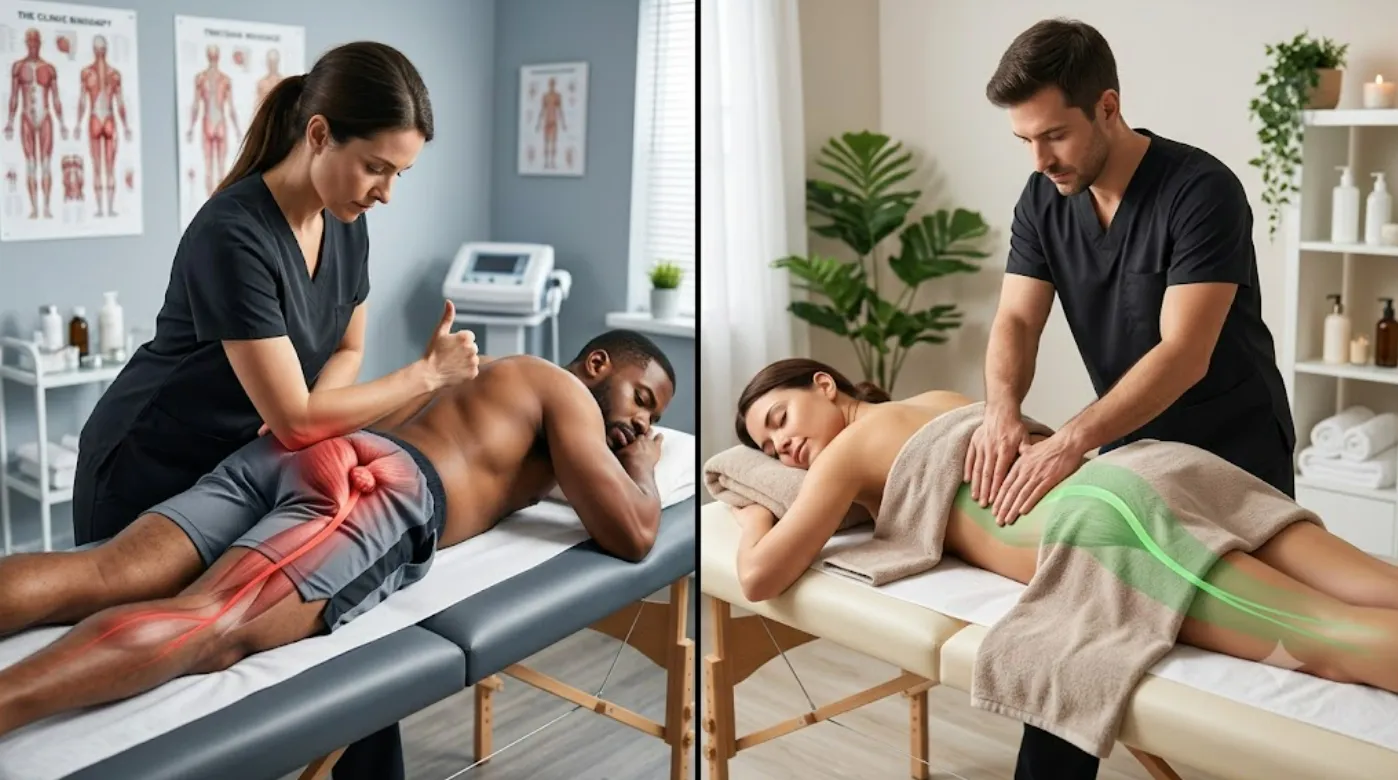

Sciatica can make everyday activities such as sitting, walking, bending, or sleeping surprisingly uncomfortable. The pain may begin in the lower back or buttock and travel down the leg, sometimes accompanied by tingling, numbness, or weakness. Because sciatica involves irritation or compression of nerves in the lower back, the right approach depends on what is contributing to the symptoms.
Massage therapy can sometimes be useful as part of a broader approach to managing discomfort. Two options people commonly consider are trigger point therapy and traditional Swedish massage. While both use hands-on techniques, they have different goals and treatment styles.
Understanding these differences can help you decide which approach may be more appropriate for your symptoms.
What Is Trigger Point Therapy?
Trigger point therapy focuses on areas of muscle that are particularly tight, tender, or sensitive. These areas, commonly called trigger points, may contribute to pain in the surrounding region or sometimes cause referred pain elsewhere in the body.
During treatment, a therapist may identify tight muscle bands and apply controlled pressure to specific areas. The goal is generally to reduce muscle tension, improve movement, and decrease discomfort associated with muscular restrictions.
For someone experiencing sciatica-like symptoms, tight muscles around the hips, buttocks, lower back, or legs may be contributing to overall discomfort. Addressing these muscles may provide relief when muscular tension is part of the problem.
However, trigger point therapy does not directly remove a herniated disc, bone spur, or other structural cause that may be irritating a spinal nerve. Sciatica is often associated with nerve-root irritation in the lower back, so massage should be viewed as one possible component of care rather than a complete treatment for every cause of sciatica.
What Is Traditional Swedish Massage?
Swedish massage is generally known for its flowing, rhythmic movements and lighter-to-moderate pressure. Techniques can include long strokes, kneading, circular movements, and other methods designed to relax muscles and promote overall comfort.
Unlike trigger point work, Swedish massage does not usually focus on one specific painful muscle knot. Instead, a session may cover larger areas of the body.
Massage therapy can help loosen tight muscles and reduce muscle-related discomfort. Mayo Clinic notes that massage may help relax larger muscles in the back and hips that are tight or experiencing spasms.
For someone with sciatica, this broader approach may be appealing when muscle tension, stress, or general stiffness is making symptoms feel worse.
Trigger Point Therapy vs. Swedish Massage for Sciatica
The biggest difference is specificity.
Trigger point therapy is more targeted. The therapist looks for areas of muscular tension and works directly on those areas. Swedish massage is generally broader and places greater emphasis on relaxation, circulation, and overall muscle comfort.
Someone with noticeable muscular tightness around the glutes or hips may find targeted work more useful than a full-body relaxation massage. On the other hand, someone whose symptoms are accompanied by widespread muscle tension or stress may prefer the gentler, more relaxing nature of Swedish massage.
Neither approach should automatically be considered the “better” option. The appropriate technique depends on the person's symptoms, tolerance, underlying condition, and treatment goals.
Which Massage Is Better for Muscle-Related Sciatica Symptoms?
If muscular tension appears to be an important part of the discomfort, trigger point therapy may provide a more focused approach.
For example, prolonged sitting, repetitive activities, altered movement patterns, or physical strain can leave the muscles around the lower back and hips tense. A therapist may work on these areas instead of simply performing a general massage.
Trigger point work can sometimes feel more intense than Swedish massage. Pressure that is too aggressive, however, is not necessarily better. Treatment should be adjusted according to the person's symptoms and response.
A qualified therapist should also distinguish muscular soreness from symptoms that may indicate nerve irritation or another condition requiring medical assessment.
When Swedish Massage May Be a Better Choice
Swedish massage may be preferable when relaxation and general muscle relief are the primary goals.
People dealing with back and hip tension may appreciate its slower, more flowing style. Reducing general muscle tightness can make movement feel easier and may complement other forms of care.
It can also be a reasonable option for someone who finds aggressive pressure uncomfortable. Massage does not need to be painful to be useful, and treatment intensity should always be appropriate for the individual.
Mayo Clinic notes that massage can help lessen muscle tightness and pain, although massage should not be viewed as a replacement for medical evaluation when symptoms suggest a more significant problem.
Can Massage Treat the Cause of Sciatica?
This is an important distinction.
Massage primarily works with soft tissues such as muscles and connective tissues. Sciatica, however, often results from irritation or compression of a nerve root in the lower spine. Common causes include a herniated disc or bone overgrowth.
That means massage may help manage muscle tightness and discomfort without necessarily correcting the underlying cause of nerve irritation.
For persistent or significant sciatica, a healthcare professional may recommend a broader treatment plan. Depending on the condition, this can include physical therapy, exercises, medication, injections, or other treatments. Physical therapy programs may focus on improving flexibility, strength, movement, and support for the spine.
Massage can potentially complement these strategies when it is appropriate.
What Should You Expect During a Session?
A good massage session should begin with a discussion about your symptoms.
Tell the therapist where the pain starts, where it travels, what activities make it worse, and whether you experience tingling, numbness, or weakness. This information can help determine whether massage is appropriate and how the session should be approached.
For trigger point therapy, the therapist may spend more time assessing individual muscles and tender areas. Swedish massage generally involves broader strokes and a more relaxing treatment pattern.
The pressure should remain tolerable. If a technique increases shooting pain, numbness, tingling, or other nerve-related symptoms, tell the therapist immediately.
For Burnaby residents considering hands-on care for muscle tension or accident-related discomfort, Nova Restore Wellness offers Registered Massage Therapy that can be incorporated into an appropriately assessed recovery plan.
When You Should Seek Medical Attention
Not every case of pain running down the leg should simply be treated with massage.
Seek medical attention if symptoms are severe, worsening, persistent, or accompanied by significant weakness. Sudden leg weakness, loss of bowel or bladder control, or severe symptoms following a major injury require prompt medical evaluation.
These symptoms may indicate significant nerve involvement and should not be managed solely through massage.
Choosing the Right Approach
The choice between trigger point therapy and Swedish massage ultimately comes down to your symptoms and treatment goals.
Trigger point therapy may be worth considering when localized muscular tightness or tender areas appear to be contributing to discomfort. It provides a more focused approach.
Swedish massage may be better suited to people seeking broader muscle relaxation, reduced tension, and a gentler massage experience.
For many people, the decision does not have to be strictly one or the other. A qualified therapist can adjust pressure and techniques according to how the body responds.
Most importantly, massage should complement—not replace—appropriate assessment and treatment of the underlying cause of sciatica. Because sciatica can involve nerve irritation, persistent or serious symptoms deserve professional evaluation before relying on massage alone.
When used appropriately, hands-on therapy may be one useful part of a larger plan focused on reducing discomfort, improving movement, and helping you return to normal daily activities.




















Sign in to leave a comment.