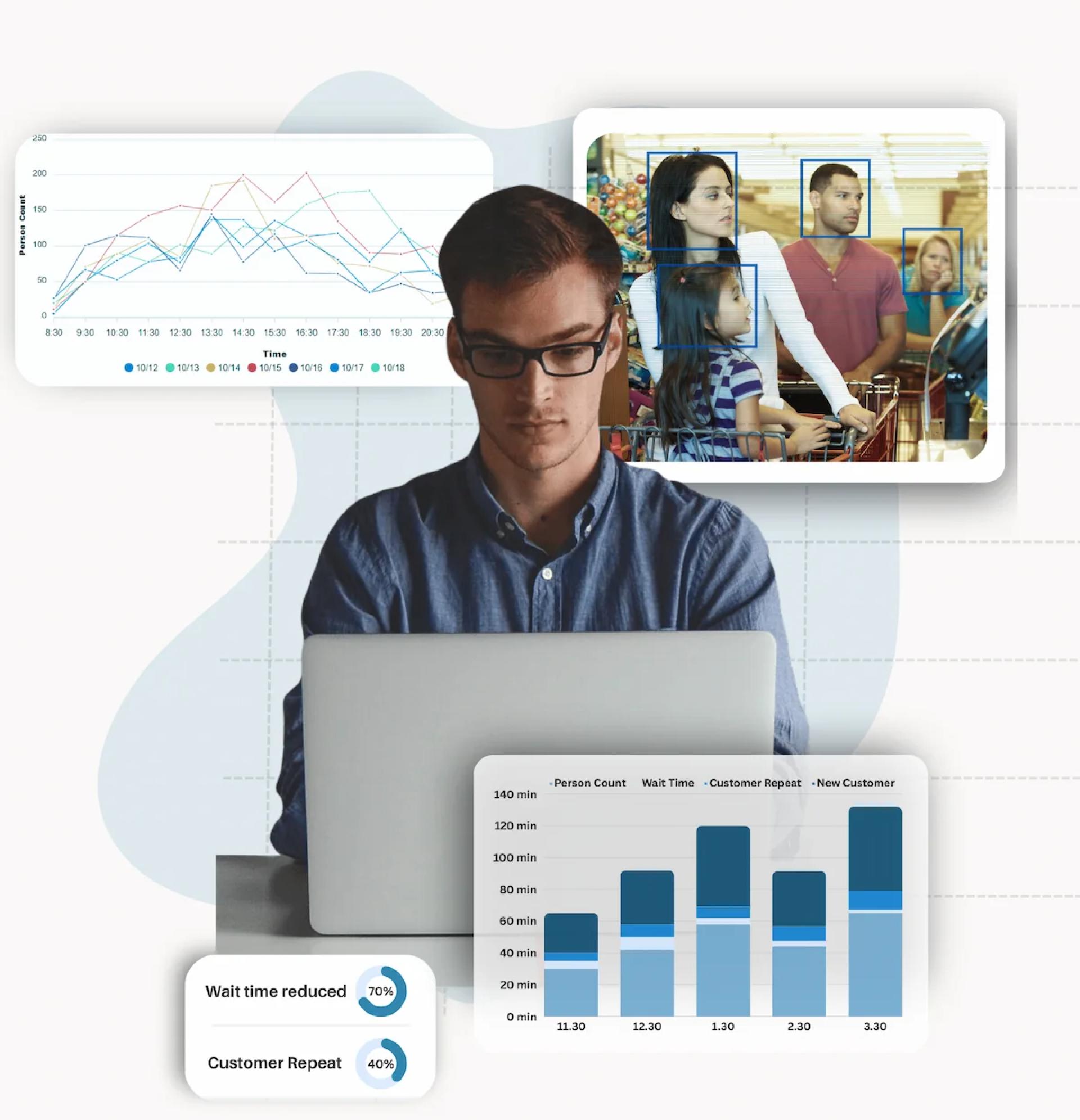

In today’s fast-paced digital landscape, the ability of machines to interpret and understand visual information has become one of the most transformative developments in technology. At the heart of this revolution lies the computer vision system, a field of artificial intelligence (AI) that enables computers to see, analyze, and act upon visual data just like humans do — and sometimes even better.
What Is a Computer Vision System?
A computer vision system is a combination of hardware and software designed to capture, process, and interpret images or videos. It uses algorithms, deep learning models, and neural networks to identify objects, detect patterns, and make data-driven decisions based on visual input. Essentially, it’s what allows machines to “see” and make sense of the world around them.
The process typically involves three main stages:
- Image Acquisition: Collecting images or video frames through cameras or sensors.
- Image Processing: Enhancing and converting raw data into usable formats.
- Analysis and Interpretation: Applying algorithms to extract meaning — such as identifying a face, detecting movement, or recognizing defects.
Real-World Applications
The applications of computer vision systems are vast, cutting across nearly every industry.
- Healthcare: Medical imaging powered by computer vision helps doctors detect diseases earlier and with greater accuracy. Systems can analyze X-rays, MRIs, and CT scans to flag anomalies such as tumors or fractures.
- Automotive: Autonomous vehicles rely on computer vision to recognize road signs, pedestrians, and lane markings. These systems are crucial for enabling safe navigation without human intervention.
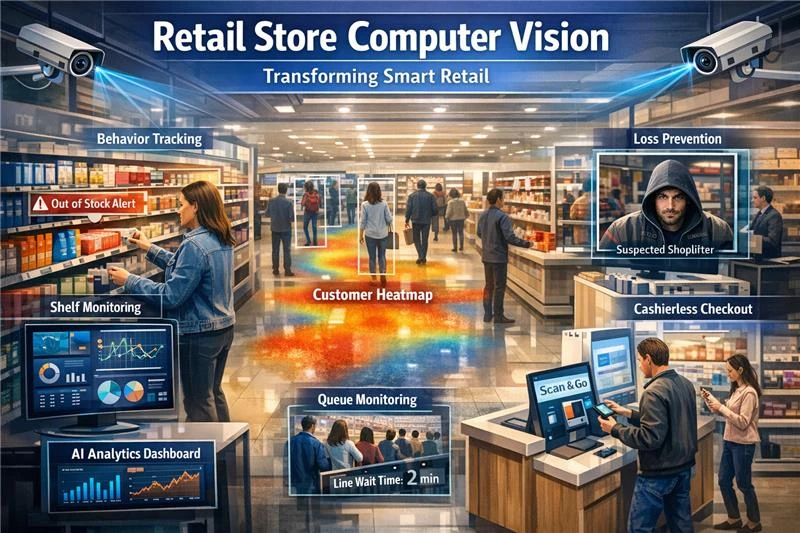
- Retail: Computer vision technology is transforming shopping experiences through automated checkouts, inventory management, and customer behavior analysis.
- Manufacturing: In production lines, computer vision systems detect defects in products at speeds no human could match, ensuring quality control and reducing waste.
- Security and Surveillance: Intelligent video analytics can identify suspicious activities, recognize faces, and alert security personnel in real time.
The Technology Behind the Vision
The success of a computer vision system lies in its ability to mimic human perception. To achieve this, it leverages deep learning — a subset of machine learning that trains neural networks on vast datasets of images. The more data the system processes, the better it becomes at identifying patterns and making accurate predictions.
For instance, convolutional neural networks (CNNs) are widely used because they excel at detecting edges, textures, and shapes. These features are then combined to recognize complex objects within an image. With advancements in GPUs and cloud computing, training such models has become faster and more efficient than ever before.
Additionally, integration with other AI technologies — such as natural language processing and predictive analytics — allows a computer vision system to provide more context to its findings. For example, a surveillance system can not only detect a person but also analyze their behavior and predict potential risks.
Challenges and Future Trends
Despite its immense potential, the development of computer vision systems still faces challenges. Variations in lighting, angles, or image quality can affect accuracy. Privacy concerns also arise when implementing vision technologies in public spaces. To address these issues, researchers are working on more robust models that perform well under diverse conditions and comply with ethical standards.
The future of computer vision looks promising. Emerging trends include edge AI, where vision processing happens directly on devices rather than in the cloud, reducing latency and improving security. Another trend is 3D vision, enabling machines to understand depth and spatial relationships — a game-changer for robotics and augmented reality.
Conclusion
From healthcare diagnostics to self-driving cars, the computer vision system is revolutionizing how we interact with technology and the world around us. As innovation continues, these systems will become more intelligent, efficient, and accessible — bridging the gap between human perception and machine intelligence. The future will not just be about computers that can see, but about computers that can understand, decide, and act with vision.























Sign in to leave a comment.