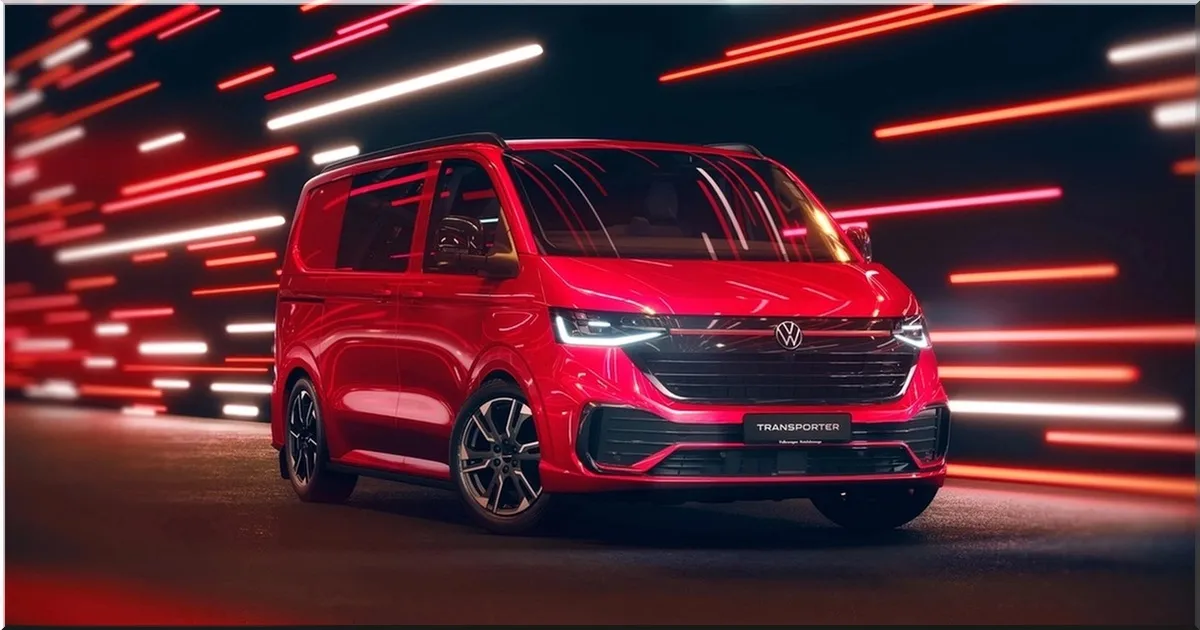

VW has pushed the Volkswagen Transporter range in two clear directions at once. At the top, the new Transporter Sportline adds visual drama, cabin polish, and stronger curb appeal for buyers who treat their van as both a work tool and a rolling business card. Lower down, the new Commerce Pro S gives the lineup a sharper mid-to-upper trim that adds style and tech without pushing all the way into Sportline money.
That split makes sense. It gives VW a van for image-led owner-operators, and another for fleets that want a more polished spec without taking the full jump to the halo model. Looking at the data, that trim logic may do more for the new Transporter's sales mix than any single styling tweak.
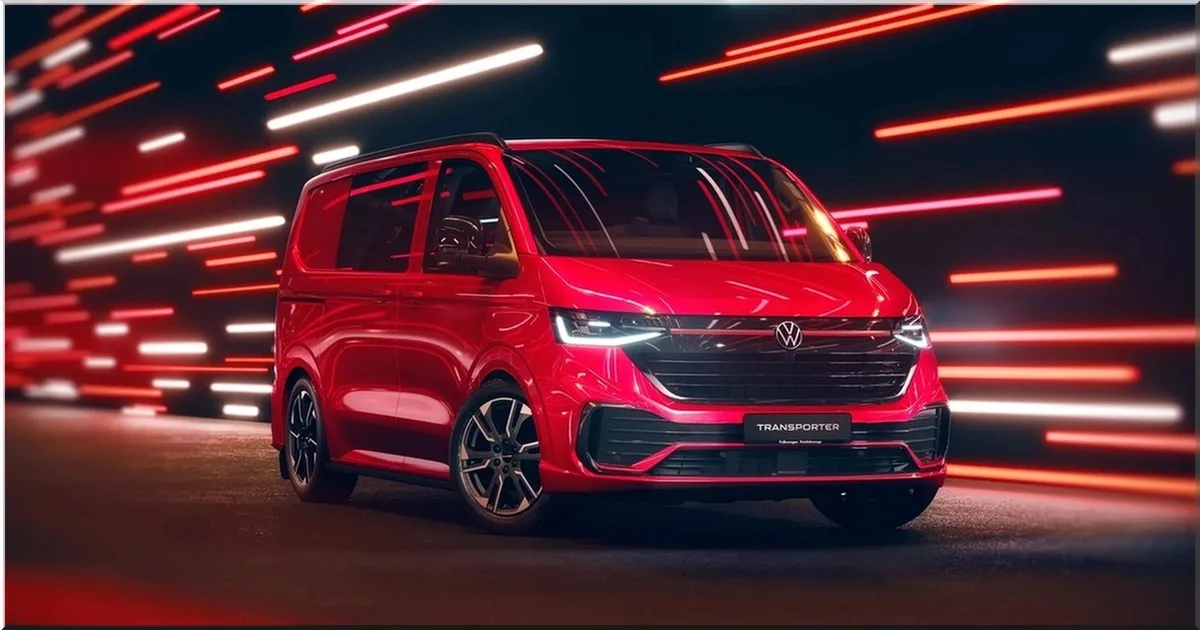
Why Volkswagen Added Sportline and Commerce Pro S Now
The new Volkswagen Transporter range already had the right bones: diesel, electric, and future plug-in hybrid powertrains, useful load figures, a digital cockpit, and dimensions that stay compact enough for daily city work. But bones alone do not win the upper end of the one-tonne van market.
Ford has long sold image-heavy Transit Custom trims. Mercedes has kept the Vito in play with a more premium badge and strong towing credentials. Renault still pulls buyers with practical numbers and keen pricing. Consequently, Volkswagen needed a cleaner value staircase.
Here is the logic:
- Volkswagen Transporter Commerce Pro S targets buyers who want added visual presence and extra kit without the cost or scarcity of Sportline
- Volkswagen Transporter Sportline targets high-visibility trades, directors, small business owners, and buyers who want showroom appeal with real loadspace
- The wider range now gives VW stronger spacing between pure work trims and aspirational trims
- That spacing helps dealers upsell on appearance, lighting, wheel upgrades, and higher-spec cabins
From an expert perspective, that matters because vans rarely compete on one stat alone. Buyers compare payment, payload, image, and day-to-day usability in one mental spreadsheet. VW has now filled more of those boxes.
What the 2026 Volkswagen Transporter Sportline Adds
The new 2026 Volkswagen Transporter Sportline sits at the top of the standard range, with a separate Sportline 75 special edition above it in limited numbers. Sportline comes as both a panel van and a Kombi, which broadens its appeal for work crews and dual-purpose users.
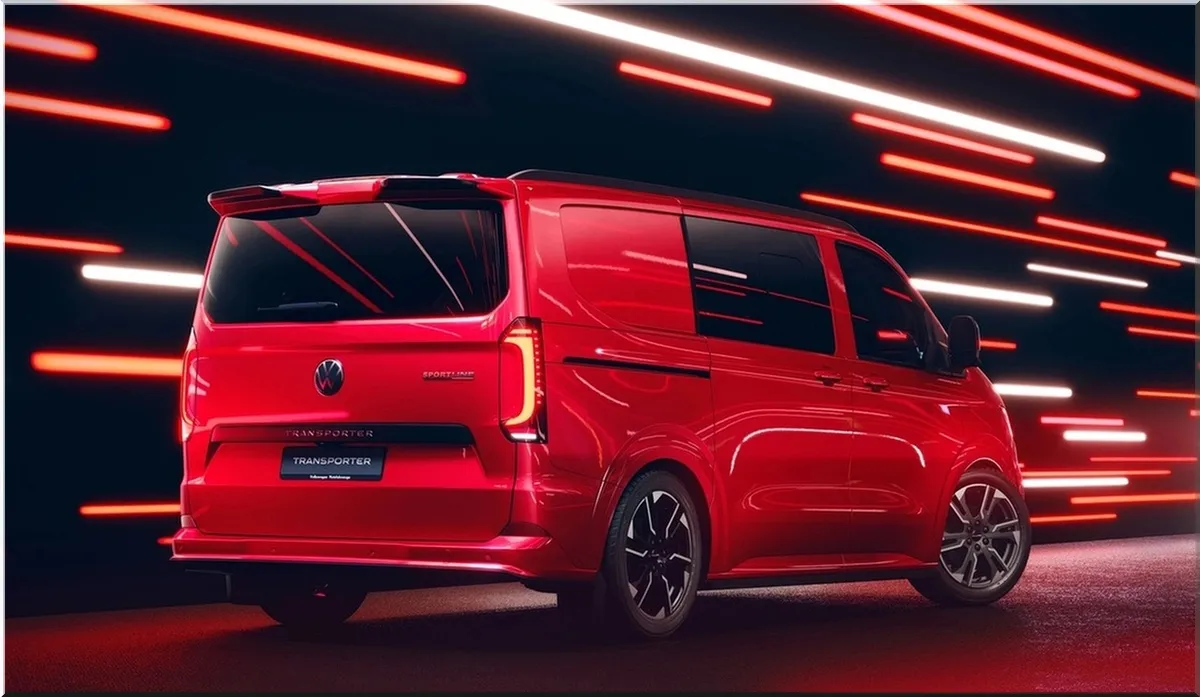
Volkswagen loads the trim with the right visual hardware. Specifically, Sportline gets 19-inch diamond-cut alloy wheels, IQ.Light LED Matrix headlights, gloss-black exterior detailing, Sportline badging, roof rails, side skirts, a more aggressive front bumper treatment, and a rear spoiler. Diesel versions also gain a 70-litre fuel tank, which gives the trim a real-use advantage instead of a spec-sheet vanity item.
Inside, Volkswagen adds:
- Eco-leather seats with contrast stitching
- Heated leatherette steering wheel
- Branded floor mats
- Upmarket trim treatment
- A more premium cabin tone than the work-first grades
That equipment choice tells you what VW wanted here. This trim does not chase extra payload. It chases margin, curb appeal, and cabin time. For trades that spend long hours behind the wheel and park in front of clients, that equation works.
Commerce Pro S Fits the Real Sweet Spot
The Volkswagen Transporter Commerce Pro S may prove more important than Sportline in raw volume. It slots above Commerce Pro and gives buyers a more design-led spec without stepping into halo pricing.
Order books opened with diesel and electric variants, and plug-in hybrid power arrives later in 2026. That spread matters because trim-led vans only work when buyers can pair the look they want with the drivetrain they need.
Why Commerce Pro S matters
- It gives fleets and SMEs a more premium-looking van without Sportline's heavier price jump
- It keeps both panel van and Kombi buyers in the same upgrade path
- It strengthens resale appeal by avoiding the stripped-out feel that hurts used values
- It supports VW's margin strategy without forcing every customer into a range-topper
By comparison, this is the trim many buyers will circle after five minutes with a brochure and ten minutes with a finance quote.
Key Dimensions, Payload, and Work Numbers
The new Volkswagen Transporter still has to function as a van first. On that front, the platform gives Sportline and Commerce Pro S a solid foundation.
For the panel van, short-wheelbase models use a 3,100 mm wheelbase and a 5,050 mm overall length, while long-wheelbase versions move to a 3,500 mm wheelbase and 5,450 mm length. Load width reaches 1,777 mm, with 1,392 mm between the wheelarches. Load length measures 2,602 mm in SWB form and 3,002 mm in LWB form, stretching to 3,050 mm and 3,450 mm with the load-through bulkhead.
In imperial terms, that translates to roughly:
- Wheelbase: 122.0 in SWB / 137.8 in LWB
- Overall length: 198.8 in SWB / 214.6 in LWB
- Load length: 102.4 in SWB / 118.2 in LWB
- Load width: 70.0 in
- Width between arches: 54.8 in
Volkswagen Transporter core work specs
- Short-wheelbase panel van
- Wheelbase: 3,100 mm / 122.0 in
- Overall length: 5,050 mm / 198.8 in
- Load length: 2,602 mm / 102.4 in
- Load length with load-through bulkhead: 3,050 mm / 120.1 in
- Load width: 1,777 mm / 70.0 in
- Width between wheelarches: 1,392 mm / 54.8 in
- Load volume: 5.8 m3
- Turning circle, wall-to-wall: 11.8 m
- Long-wheelbase panel van
- Wheelbase: 3,500 mm / 137.8 in
- Overall length: 5,450 mm / 214.6 in
- Load length: 3,002 mm / 118.2 in
- Load length with load-through bulkhead: 3,450 mm / 135.8 in
- Load width: 1,777 mm / 70.0 in
- Width between wheelarches: 1,392 mm / 54.8 in
- Load volume: 6.8 m3
- Turning circle, wall-to-wall: 13.0 m
Those are useful numbers. They put the Transporter squarely in the meat of the one-tonne van class while keeping the body under two metres tall in standard form. That helps with urban parking, low barriers, and daily route work.
Powertrains: What Buyers Actually Get
Volkswagen backs the new trims with a broad drivetrain menu. Diesel power comes from a 2.0-litre TDI with 110 PS, 150 PS, and 170 PS outputs. Electric versions offer 136 PS, 218 PS, and 286 PS. A 232 PS plug-in hybrid joins later in 2026.
That spread matters because trim buyers do not all want the same van. A courier may want the electric setup. A contractor towing equipment may stay diesel. A mixed-use buyer may wait for the plug-in hybrid.
Powertrain overview
- 2.0 TDI, 110 PS
- Transmission and drive notes: Manual, front-wheel drive
- Best fit: Entry work use
- 2.0 TDI, 150 PS
- Transmission and drive notes: Manual or automatic, front-wheel drive, 4MOTION option
- Best fit: Best all-round diesel
- 2.0 TDI, 170 PS
- Transmission and drive notes: 8-speed automatic
- Best fit: Higher-spec road use
- Electric, 136 PS
- Transmission and drive notes: 1-speed automatic
- Best fit: Urban and fleet duty
- Electric, 218 PS
- Transmission and drive notes: 1-speed automatic
- Best fit: Strong EV middle ground
- Electric, 286 PS
- Transmission and drive notes: 1-speed automatic
- Best fit: Fastest EV option
- Plug-in hybrid, 232 PS
- Transmission and drive notes: Coming later in 2026
- Best fit: Mixed-use and urban access zones
Looking at the data, the 150 PS diesel still looks like the rational pick for many buyers. It gives enough muscle for motorway use, load carrying, and towing without pushing cost as far as the 170 PS auto. The electric 218 PS version, meanwhile, looks like the EV sweet spot for operators who want more urgency than the base motor.
Pricing in Euro: Where the New Trims Land
Volkswagen launched Commerce Pro S from about EUR 49,387 for the panel van and EUR 50,971 for the Kombi, based on the UK starting prices converted to euro. The later order-book opening for Sportline places that trim from about EUR 60,086 for the panel van and EUR 62,357 for the Kombi.
That creates a meaningful spread. Sportline does not nibble at Commerce Pro S. It sits clearly above it.
Starting price position
- Commerce Pro S
- Panel Van: EUR 49,387
- Kombi: EUR 50,971
- Sportline
- Panel Van: EUR 60,086
- Kombi: EUR 62,357
Consequently, the buyer question becomes simple: do you want stronger value per euro, or do you want the range-topper look and cabin?
Competitive Read: Where the Transporter Sits
VW does not fight in an empty segment. It fights in one of Europe's toughest van classes.
2026 mid-size van comparison
- Volkswagen Transporter Sportline
- Key strengths: 19-inch wheels, Matrix headlights, premium cabin trim, diesel and electric mix, up to 6.8 m3 load volume
- Clear edge: Strongest image-led spec in the VW range
- Clear drawback: Price rises quickly
- Ford Transit Custom Sport
- Key strengths: Established sporty trim path, diesel up to 170 PS, plug-in hybrid and EV options, 3 m load-through feature on key variants
- Clear edge: Strong drivetrain spread and tech-led work features
- Clear drawback: Less premium cabin flair than Sportline
- Mercedes-Benz Vito
- Key strengths: Up to 6.6 m3 load space, up to 2.5-tonne towing, premium badge, automatic availability
- Clear edge: Strong towing and brand pull
- Clear drawback: Less fresh in cockpit feel
- Renault Trafic
- Key strengths: Up to 1,266 kg payload, up to 8.6 m3 usable volume in larger forms, 2,500 kg towing, lower entry pricing
- Clear edge: Work-first value and strong packaging
- Clear drawback: Less aspirational trim story
From an SEO and market angle, Volkswagen now has a better answer to Ford's Sport trim strategy. By comparison, Mercedes still has badge cachet, while Renault keeps punching on value and packaging. VW's win sits in the middle: stronger image than Renault, fresher van architecture than Vito, and a cleaner premium feel than many Ford work trims.
Should Buyers Pick Sportline or Commerce Pro S?
This is the real buying question.
Pick Commerce Pro S if you want:
- Better value retention than lower trims without a halo-model premium
- Enough styling and equipment to avoid the fleet-van look
- Diesel or EV choice with lower entry cost
- A van that still makes sense on a hard-nosed finance sheet
Pick Sportline if you want:
- Maximum visual impact
- Stronger showroom and client-site presence
- More premium cabin trim
- A van that doubles as brand advertising every time it parks
The gap between the two trims looks large on paper, but the logic stays clean. Commerce Pro S serves the operator. Sportline serves the operator who also sells with image.
Pro-Tips for Fleet and SME Buyers
Pro-Tip: If your van works in city centres and spends nights parked on the street, prioritize wheel, lighting, and camera packages only when the vehicle also carries your brand. Fancy spec earns its keep faster when clients see it.
Pro-Tip: The 70-litre tank on diesel Sportline matters more than the spoiler. Higher range cuts fuel-stop frequency, which helps motorway users and field-service businesses.
Pro-Tip: If you carry awkward lengths, focus on load-through bulkhead figures before trim. A good-looking van that does not swallow the job costs more than it saves.
What Now for Buyers?
If you buy with your calculator first, Commerce Pro S looks like the sharpest move in the new Volkswagen Transporter family. It gives the range a more premium center and should appeal to fleets, SMEs, and owner-operators who want stronger spec discipline.
If you buy with your eyes and your invoice book, Transporter Sportline makes a real case. It adds the right visible hardware, keeps the real van numbers underneath, and turns the Transporter into a higher-margin image tool without gutting its working credentials.
That is the smart part. Volkswagen did not build a costume van. It built a better trim ladder.





















Sign in to leave a comment.