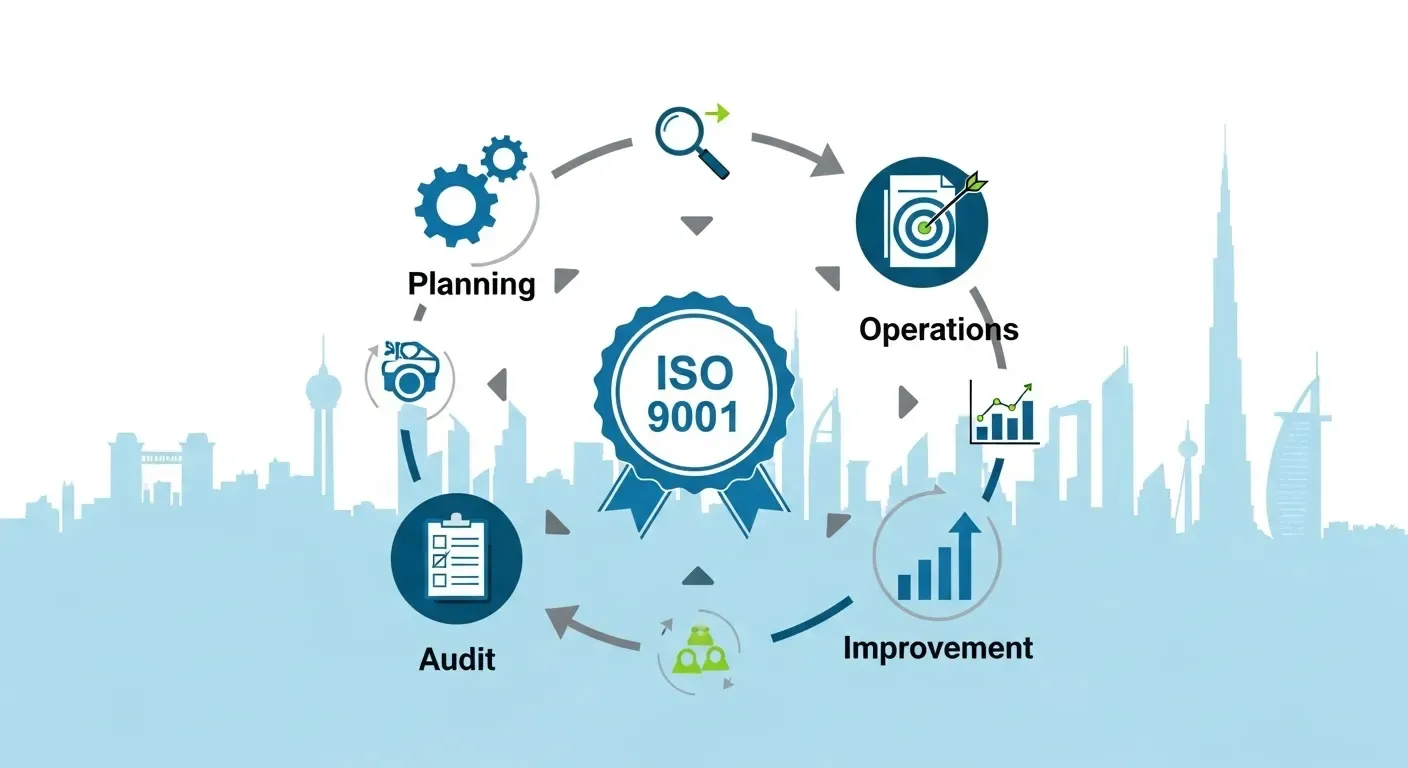

The ISO 9001 standard runs to dozens of pages of technical language. For most business owners and operations managers, reading the source document directly is more confusing than helpful. This guide translates each requirement into plain, actionable terms.
What Are ISO 9001 Requirements?
ISO 9001 requirements are the specific rules and conditions an organisation must satisfy to receive and maintain ISO 9001 certification. They are organised into ten numbered sections called clauses. Clauses 1 through 3 cover definitions and scope. The practical requirements your business must meet are found in Clauses 4 through 10.
Clause 4 — Context of the Organisation
You must understand the environment your business operates in — both internally and externally. This includes knowing which factors could affect your ability to deliver quality, who your key stakeholders are (clients, regulators, suppliers, employees), and what their expectations are. The outcome of this analysis defines the scope of your QMS.
Clause 5 — Leadership
Senior management must take direct ownership of quality. This is not a delegation to a quality manager. The top of your organisation must sign the quality policy, assign roles and responsibilities, and demonstrate through their actions that quality is a genuine business priority.
Clause 6 — Planning
Identify risks and opportunities that could affect your ability to achieve quality objectives. Set specific, measurable quality goals. Establish plans to address risks before they materialise rather than reacting after the fact. This risk-based thinking runs throughout the entire standard.
Clause 7 — Support
Provide people with the tools, training, information, and resources they need to do their jobs to the required standard. This clause covers competence (are people qualified and trained?), awareness (do they understand how their work affects quality?), and communication (do the right people know the right things?).
Clause 8 — Operation
This is where the standard addresses the actual work of producing your products or delivering your services. Requirements include verifying customer needs before starting work, controlling outsourced processes and suppliers, managing change, and ensuring delivery meets the agreed specification.
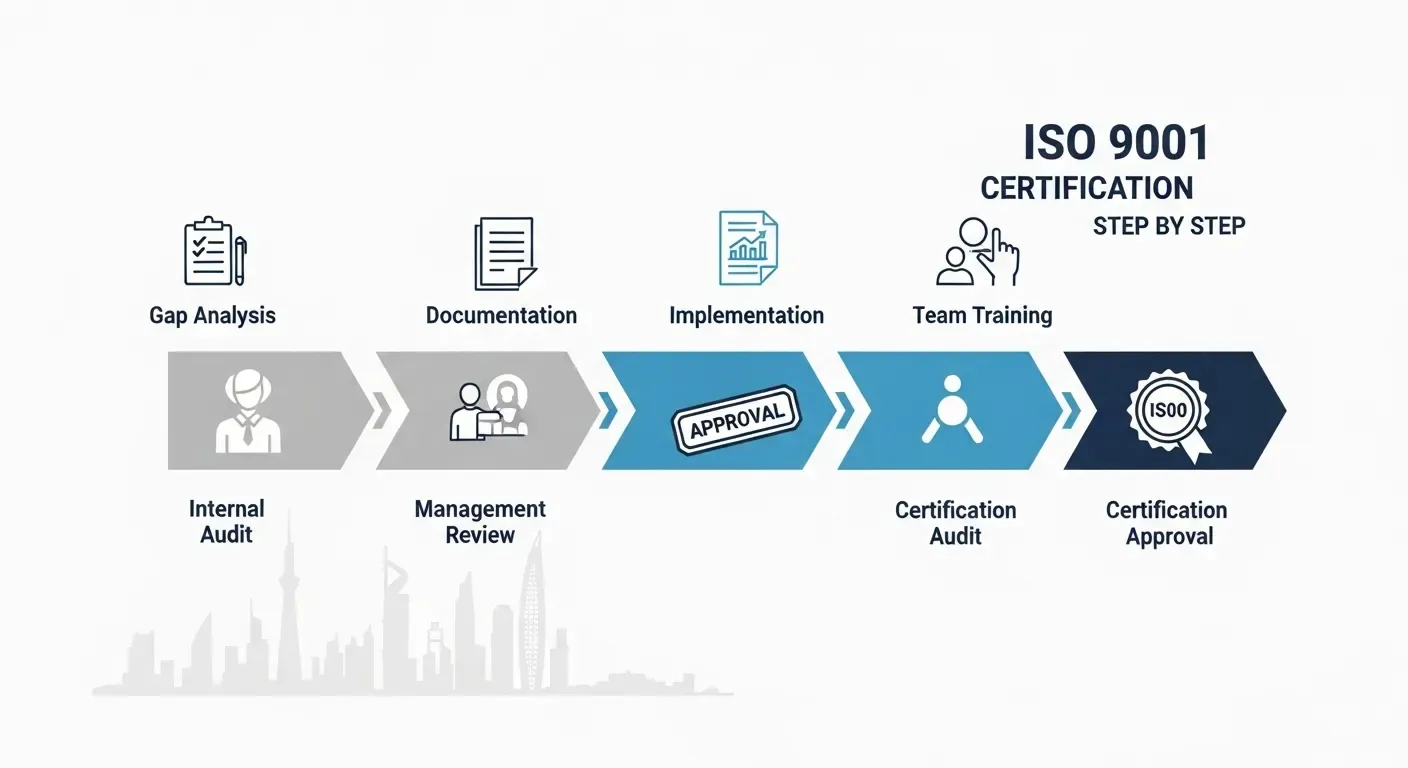
Different industries apply Clause 8 differently. Construction companies focus on site quality controls and subcontractor management. Logistics businesses focus on delivery accuracy and vehicle maintenance. The ISO 9001 certification process covers how implementation works in practice across industries.
Clause 9 — Performance Evaluation
You cannot improve what you do not measure. Clause 9 requires regular internal audits, customer satisfaction monitoring, and a formal management review. The purpose is to give leadership an accurate picture of how the QMS is performing and where resources are needed.
Clause 10 — Improvement
When problems arise — and they will — you must record them, investigate the root cause, take corrective action, and verify that the problem does not recur. Continual improvement is not a vague concept in ISO 9001; it is a specific, documented obligation.
Mandatory Documents Under ISO 9001:2015
The standard requires the following documented information: quality policy, quality objectives, QMS scope, evidence of process controls, training and competence records, internal audit results, management review minutes, and records of nonconformance and corrective actions.
For a full breakdown of which documents are mandatory and which are optional, see our dedicated guide on ISO 9001 documentation requirements.
Why UAE and Saudi Arabia Businesses Prioritise These Requirements
In the UAE, government procurement rules for tenders above a certain value require ISO 9001 certification from suppliers. In Saudi Arabia, Vision 2030 infrastructure projects have raised the bar for supplier qualification. Understanding the requirements is not just a compliance exercise — it is a direct commercial advantage.
Small and medium enterprises in the UAE should also review our practical guide on ISO 9001 certification requirements for SMEs in UAE to understand what is proportionate for their size.
Need expert ISO support? Contact Global ISO Certificates: https://globalisocertificates.com/contact-us/



























Sign in to leave a comment.