

Network-Attached Storage (NAS) has become indispensable for professionals and enterprises needing a robust data storage and management solution. With a plethora of NAS options on the market, it's increasingly challenging to find the right fit for your specific tech requirements. From storage capacity to data security, there are numerous factors to weigh. This detailed guide will walk you through the primary considerations you should have in mind when selecting NAS storage, ensuring you make an informed decision that aligns with your current and future needs.
What is NAS Storage, and Why Does It Matter?
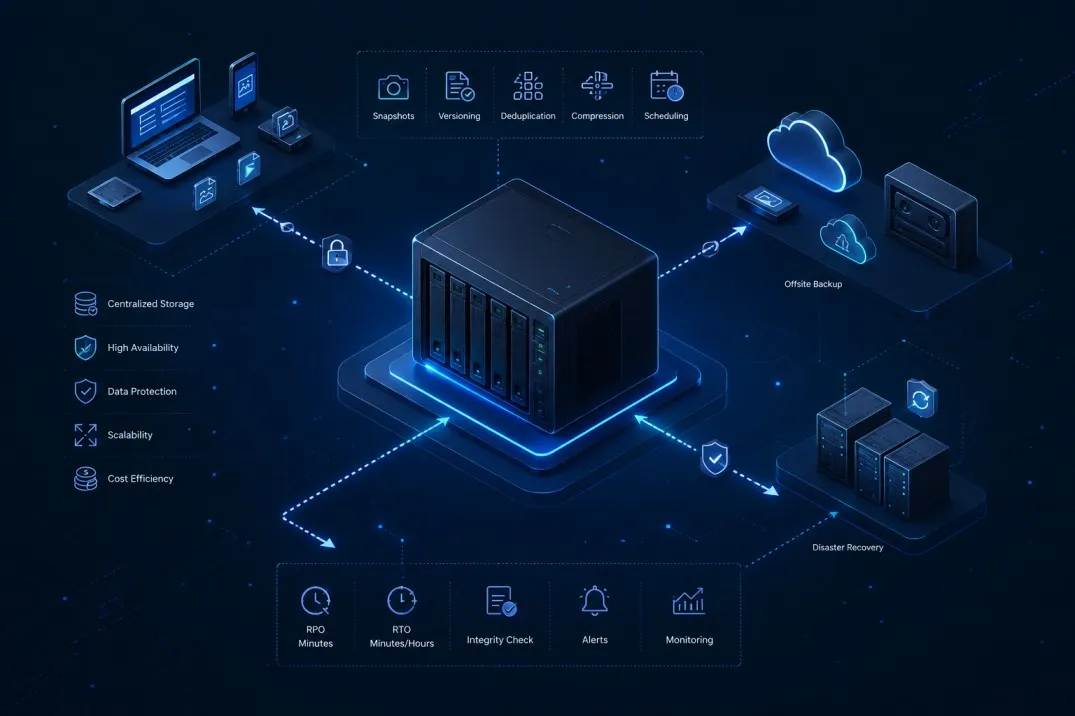
At its core, NAS is a dedicated device, often connected to a network, designed to store and share data across multiple clients. It's a centralized storage hub that offers flexibility, accessibility, and data redundancy – a holy grail for tech environments that demand high performance and reliability.
The importance of NAS lies in its ability to:
Centralize data storage, streamlining the management of files and resources.Facilitate data sharing and collaboration among multiple users.Provide a platform for efficient data backups and recovery procedures.Support various applications, such as multimedia streaming and virtualization.Adopting NAS enhances data workflows and ensures that crucial business elements like security, scalability, and performance are adequately addressed. However, embracing NAS storage is not a one-size-fits-all endeavor. Each organization's needs are unique, and a tailored approach is key to reaping the full benefits of NAS.
Key Considerations for Choosing NAS Storage
1. Technical Specifications That Match Your Demands
The technical specs of a NAS device will heavily influence its functionality and performance in your setup. When evaluating potential NAS options, consider:
Storage Capacity: Start by estimating your immediate storage needs and growth projection. Choose a NAS device that offers enough bays and can handle the right mix of drives to accommodate your data growth.Speed and Connectivity: NAS devices support various protocols (e.g., Ethernet, Wi-Fi). The choice here will depend on your speed requirements and the network infrastructure in place. Faster interfaces like 10-Gigabit Ethernet or Link Aggregation can be a game-changer for data-intensive tasks.RAID Configurations: Redundant Array of Independent Disks (RAID) is crucial for ensuring data integrity and availability. Assess different RAID levels supported by the NAS to find the best balance between storage efficiency and fault tolerance.2. Scalability and Flexibility for Future-Proofing
It's not only about what you need today but also what you’ll need in the future. The chosen NAS should:
Allow for Expansion: Look for a NAS that supports adding more drives or additional devices as your storage needs grow.Be Forward-Compatible: Technology evolves rapidly. Ensure that your NAS can integrate with new standards or technologies that may become mainstream in the future.3. Data Protection and Security Features
Data is often a company's most valuable asset, making protection and security non-negotiable. A reliable NAS should offer:
Backup and Recovery Solutions: Whether through built-in software or third-party integration, the NAS should make it simple to create and manage backups, and recovery should be swift and reliable.Encryption: Sensitive data should be encrypted at rest to protect it from unauthorized access. Look for NAS that supports current encryption standards, such as AES.4. Management and User Interface
The usability of a NAS can make or break your experience, especially when it comes to everyday management tasks. An ideal NAS should:
Be Easy to Set Up: Manufacturers are making strides to simplify the initial configuration of NAS setups. Look for options that make the setup process intuitive and quick.Offer an Intuitive Interface: The admin UI should be clear and user-friendly, even for those without extensive IT backgrounds.5. Support and Warranty to Keep You Running
Lastly, after-sales support can provide peace of mind and is a critical component of the NAS solution:
Vendor Reputation: Look at user reviews and ratings from independent sources to gauge the level of customer satisfaction with the support provided by the NAS vendor.Warranty and Service Agreements: An extended warranty or a robust service agreement can be a strong indicator of the manufacturer's confidence in their product. It also gives you a safety net in case of unforeseen issues.Conclusion
Selecting NAS storage represents a significant step for any professional or enterprise. By carefully considering the factors mentioned above, you can ensure that your NAS solutions not only meets but exceeds your current and future data management needs.
In conclusion, the NAS you choose should be seen as a long-term investment, one that will grow and evolve with your business. It should integrate seamlessly into your existing tech ecosystem while providing the necessary support to scale. Before making a decision, it's advisable to test different NAS devices if possible or consult with professionals who can provide valuable insights tailored to your unique environment and requirements.


























Sign in to leave a comment.