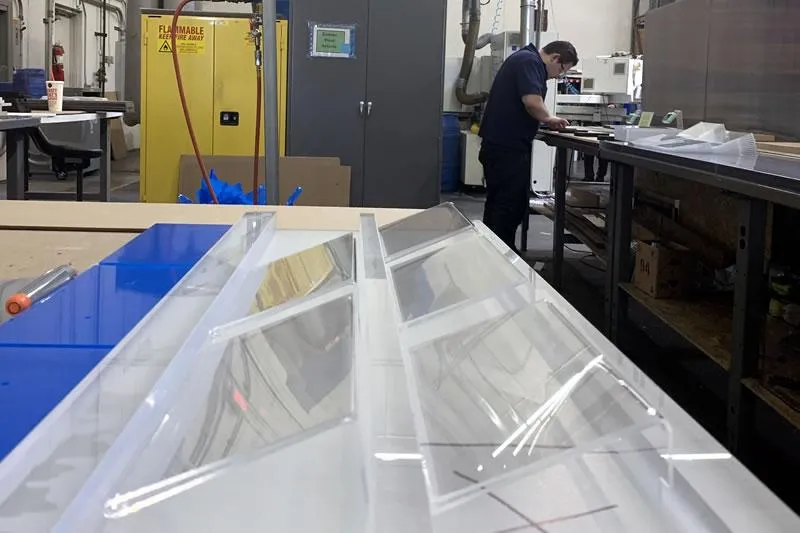


Custom plastic fabrication is the process of designing, shaping, and assembling plastic materials into unique parts or products tailored to specific requirements. Unlike mass-produced items, custom fabrication focuses on precision, flexibility, and functionality—making it ideal for businesses that need specialized components, prototypes, or one-of-a-kind designs.
From retail displays and medical devices to industrial components and architectural features, custom plastic fabrication plays a critical role across multiple industries. If you’ve ever wondered how businesses turn raw plastic sheets into highly functional products, this guide breaks it all down.
What Is Custom Plastic Fabrication?
Custom plastic fabrication refers to a range of manufacturing techniques used to transform plastic materials into finished products based on unique designs and specifications. These projects often involve cutting, bending, molding, machining, and assembling plastic materials such as:
- Acrylic (PMMA)
- Polycarbonate
- PVC
- HDPE
- ABS
- PETG
Unlike standard plastic manufacturing, which produces identical items in bulk, custom fabrication focuses on creating parts that meet exact dimensions, performance needs, and aesthetic requirements.
How the Custom Plastic Fabrication Process Works


While each project varies, most custom plastic fabrication jobs follow a structured process:
1. Design & Engineering
The process begins with concept development and CAD (computer-aided design). Engineers and designers collaborate to create precise blueprints that define dimensions, tolerances, and materials.
2. Material Selection
Choosing the right plastic is crucial. Factors like strength, flexibility, transparency, heat resistance, and cost all influence the decision.
3. Fabrication Techniques
Depending on the design, different fabrication methods are used:
- CNC Machining – Precision cutting and shaping using computer-controlled machines
- Laser Cutting & Engraving – Ideal for intricate designs and clean edges
- Thermoforming – Heating plastic sheets and forming them over molds
- Injection Molding – Used for higher-volume production runs
- 3D Printing – Perfect for rapid prototyping and complex geometries
4. Assembly & Finishing
After shaping, components are assembled using adhesives, welding, or fasteners. Finishing touches such as polishing, painting, or texturing enhance both appearance and durability.
Types of Custom Plastic Fabrication Services
Businesses can choose from a variety of services depending on their needs:
CNC Plastic Machining
Delivers high precision and tight tolerances, ideal for industrial and mechanical parts.
Plastic Thermoforming
Commonly used for packaging, trays, and enclosures, thermoforming is cost-effective for medium-volume production.
Laser Cutting & Engraving
Best for signage, branding elements, and detailed designs.
Plastic Bending & Forming
Used to create angles, curves, and structural components.
Acrylic Fabrication
Popular for displays, barriers, and architectural applications due to its clarity and strength.
Benefits of Custom Plastic Fabrication
Custom plastic fabrication offers several advantages over traditional manufacturing:
1. Tailored Solutions
Every product is designed to meet specific requirements, ensuring optimal performance.
2. Cost Efficiency for Small Runs
Unlike injection molding, custom fabrication doesn’t require expensive tooling, making it ideal for low to medium production volumes.
3. Design Flexibility
Complex shapes, unique dimensions, and creative designs are easier to achieve.
4. Faster Turnaround
With fewer setup requirements, projects can be completed more quickly.
5. Material Versatility
A wide range of plastics allows for customization based on strength, transparency, and durability.
Industries That Use Custom Plastic Fabrication


Custom plastic fabrication is used across many industries, including:
- Retail – Display cases, signage, and product holders
- Healthcare – Medical device components and protective barriers
- Automotive – Interior panels, housings, and custom parts
- Construction & Architecture – Panels, fixtures, and decorative elements
- Hospitality – Menu holders, partitions, and branded installations
Custom Plastic Fabrication vs. Injection Molding
Understanding the difference between these two methods is essential:
| Feature | Custom Fabrication | Injection Molding |
|---|---|---|
| Production Volume | Low to medium | High volume |
| Tooling Cost | Low | High |
| Design Flexibility | High | Limited after tooling |
| Lead Time | Short | Longer setup time |
| Best For | Prototypes & custom parts | Mass production |
In many cases, businesses start with custom fabrication for prototyping and transition to injection molding for large-scale production.
How to Choose the Right Plastic Fabrication Partner
Selecting the right manufacturer can make or break your project. Look for:
- Experience & Expertise – Proven track record in your industry
- Full-Service Capabilities – Design, prototyping, and production under one roof
- Material Knowledge – Ability to recommend the best plastics
- Quality Control – Consistent standards and testing
- Scalability – Ability to grow with your business
A reliable partner will not only fabricate your product but also help optimize design and reduce costs.
Common Applications of Custom Plastic Fabrication
Custom plastic fabrication is used to create:
- Retail displays and fixtures
- Machine guards and safety barriers
- Enclosures and housings
- Signage and branding elements
- Prototypes and product models
- Protective shields and partitions
Its versatility makes it a go-to solution for both functional and aesthetic applications.
Final Thoughts
Custom plastic fabrication is a powerful manufacturing solution that allows businesses to create tailored, high-quality plastic products without the limitations of mass production. Whether you need a prototype, a small production run, or a fully customized component, this process offers the flexibility, precision, and efficiency required in today’s competitive market.
By understanding how custom plastic fabrication works—and choosing the right partner—you can bring your ideas to life faster, reduce costs, and achieve superior results.
























Sign in to leave a comment.