
In the world of medicine and surgery, one of the most essential tools for wound closure is the suture. But many people still ask, what is suture and why is it so important in healthcare?
A suture is a sterile medical thread used to close wounds, surgical incisions, or deep injuries. It helps bring tissues together so the body can heal naturally and effectively. Whether used during major surgery or for a small cut, sutures play a critical role in preventing infection, controlling bleeding, and improving cosmetic results.
In this guide, we will explain the meaning of suture, its types, materials, techniques, and how it supports proper wound healing.
What Is Suture?
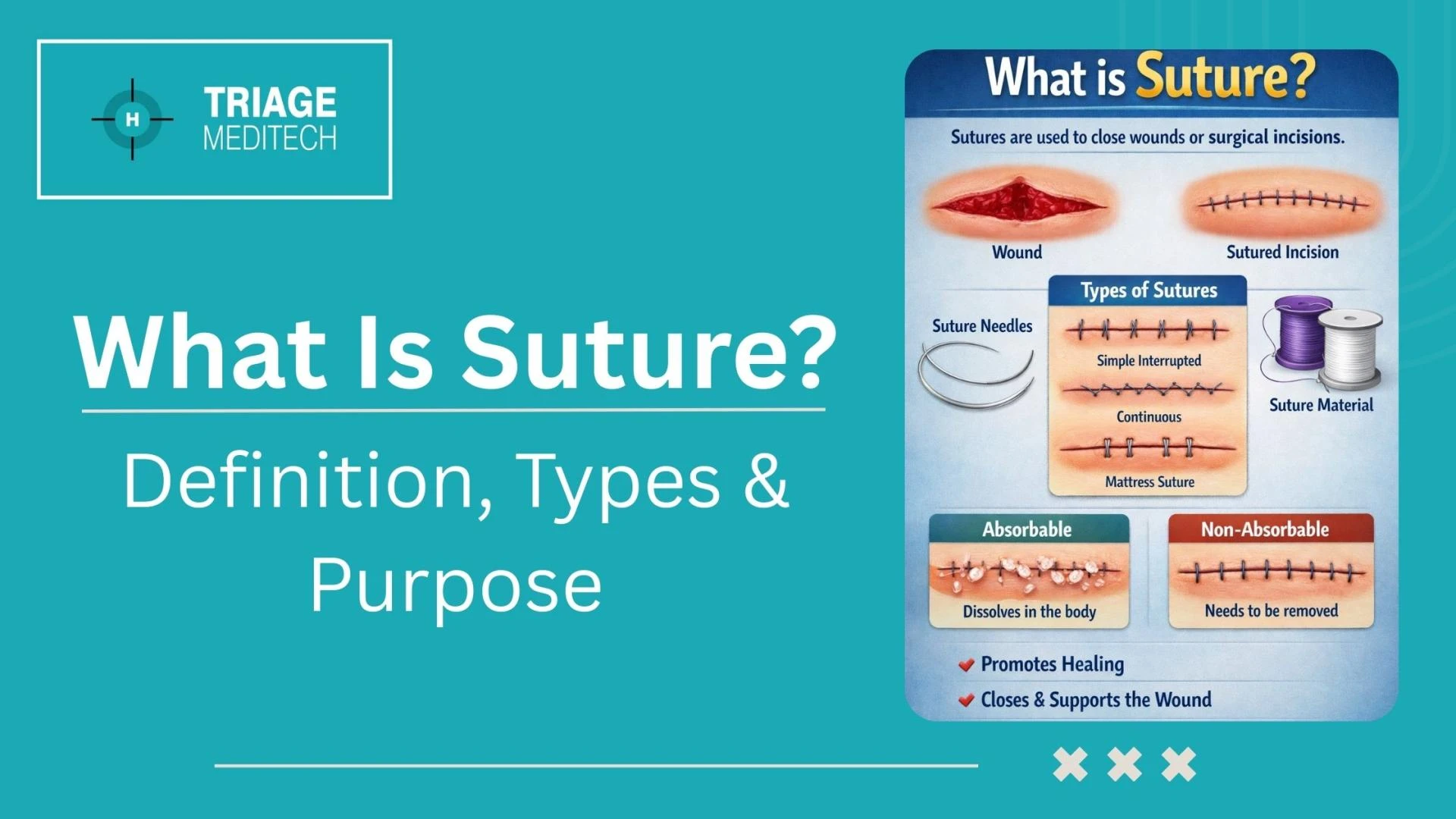
A suture is a medical device made of specialized thread that doctors use to stitch body tissues together. It is commonly known as a “stitch.” Sutures are used after surgeries, injuries, or trauma to close the wound edges and allow proper healing.
Sutures are applied using a needle attached to the thread. The healthcare professional carefully passes the needle through the tissue and ties the thread securely to hold the wound closed.
Why Are Sutures Used?
Sutures are used for several important reasons:
- To stop bleeding
- To close deep wounds
- To reduce infection risk
- To promote faster healing
- To minimize scarring
- To support internal tissue repair
Without sutures, many surgical procedures would not heal properly, and open wounds could lead to serious complications.
Types of Sutures
Sutures are categorized based on their ability to dissolve and their structure.
1. Absorbable Sutures
Absorbable sutures naturally break down inside the body over time. They do not need to be removed.
Common Examples:
- Vicryl
- Monocryl
- Polyglycolic Acid (PGA)
- Chromic Catgut
These sutures are commonly used in internal surgeries such as abdominal procedures or gynecological operations.
2. Non-Absorbable Sutures
Non-absorbable sutures do not dissolve in the body. They may be removed after healing or left permanently, depending on the surgical need.
Common Examples:
- Nylon
- Silk
- Polypropylene (Prolene)
- Polyester
They are often used in skin closure, cardiovascular surgery, and orthopedic procedures.
Classification Based on Structure
Sutures can also be classified based on their physical structure.
Monofilament Sutures
- Made from a single strand
- Less tissue reaction
- Lower infection risk
- Smooth passage through tissue
Multifilament Sutures
- Made from multiple braided strands
- Stronger knot security
- Slightly higher infection risk
- Better flexibility
Doctors choose the type depending on the surgical requirement.
Suture Materials
Suture materials are designed to be strong, sterile, and safe for human tissues.
Natural Materials
- Silk
- Catgut
These may cause more tissue reaction and are used less frequently today.
Synthetic Materials
- Polyglycolic acid
- Polyglactin
- Polypropylene
- Nylon
Synthetic sutures are widely preferred due to predictable strength and minimal tissue reaction.
Common Suture Techniques
Different wounds require different suturing techniques.
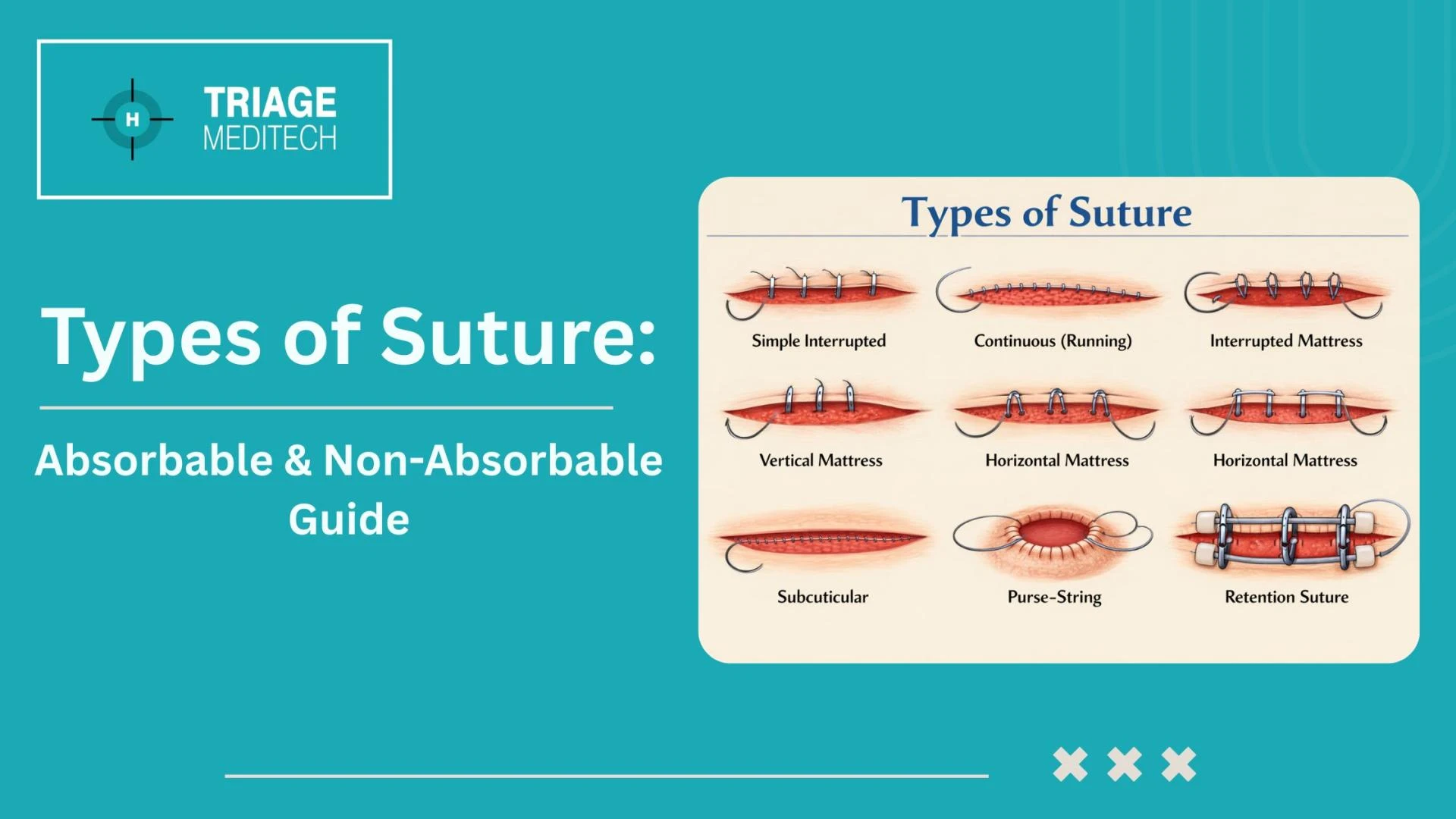
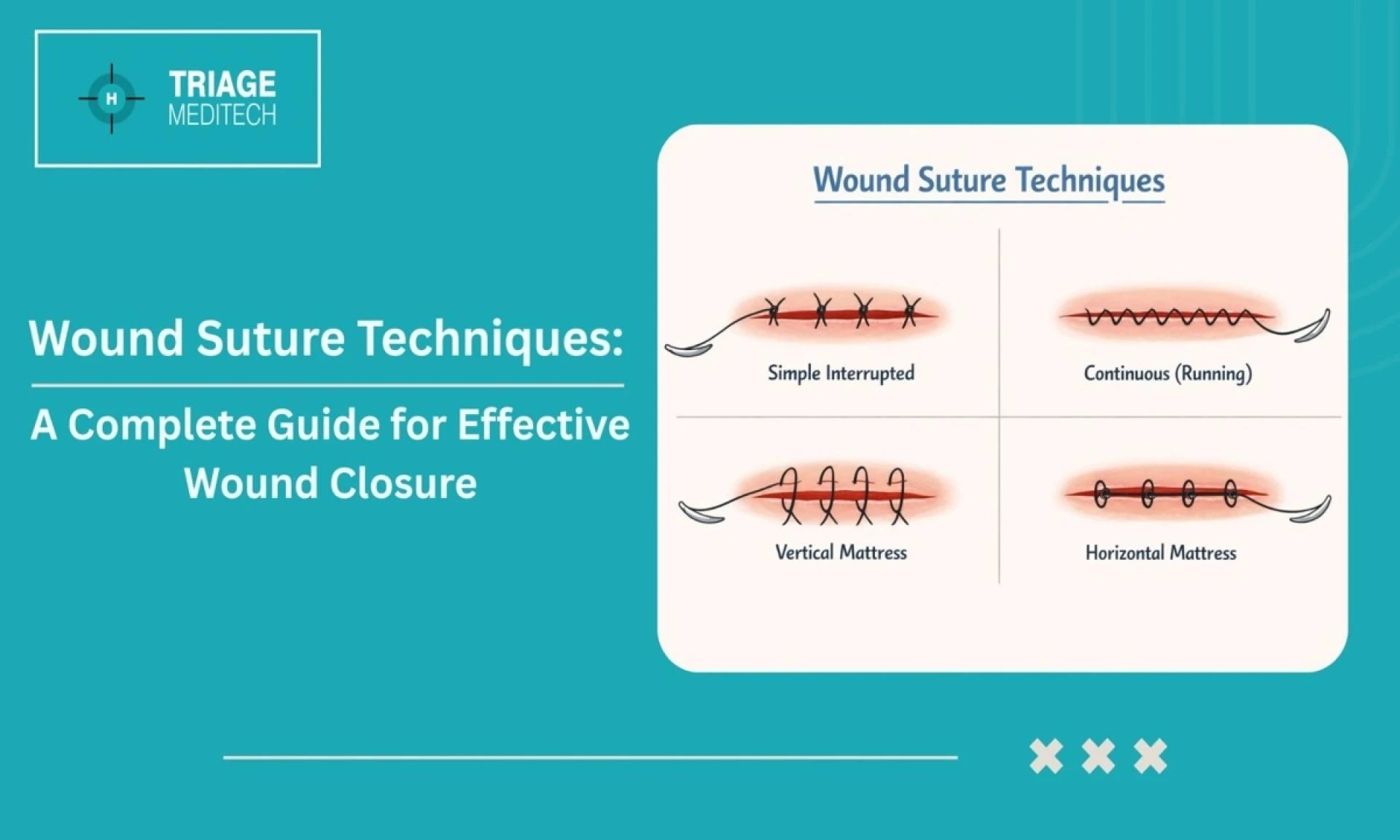
1. Simple Interrupted Suture
Each stitch is tied separately.
- Very secure
- Easy to remove
- Commonly used in skin wounds
2. Continuous Suture
A single thread runs across the wound.
- Faster to perform
- Even tension distribution
3. Mattress Sutures
Used for wounds under tension.
- Vertical mattress
- Horizontal mattress
- Provides strong wound support
4. Subcuticular Sutures
Placed beneath the skin surface.
- Better cosmetic results
- Common in plastic surgery
How Sutures Support Wound Healing
The wound healing process has three main phases:
1. Inflammatory Phase
The body stops bleeding and prevents infection.
2. Proliferative Phase
New tissue and collagen form to repair the wound.
3. Maturation Phase
The wound strengthens and scar tissue forms.
Sutures hold the wound edges together during these stages, allowing proper cell growth and reducing scar formation.
When Do You Need Sutures?
You may need sutures if:
- The wound is deep
- Bleeding continues after pressure
- The edges are widely separated
- Fat or muscle tissue is visible
- The cut is longer than 1–2 cm
Minor wounds may only require adhesive strips or medical glue.
Risks and Complications of Sutures
Although sutures are safe, possible complications include:
- Infection
- Scarring
- Suture rejection
- Wound reopening
- Allergic reaction
Proper wound care and following medical advice significantly reduce these risks.
Suture Removal and Care
Non-absorbable sutures must be removed by a healthcare professional.
Typical Removal Timeline:
- Face: 5–7 days
- Scalp: 7–10 days
- Arms and legs: 10–14 days
Aftercare Tips:
- Keep the area clean and dry
- Avoid scratching or pulling
- Monitor for redness or swelling
- Follow doctor’s instructions
Difference Between Sutures and Stitches
The terms “sutures” and “stitches” are often used interchangeably. Technically:
- Suture refers to the material (thread).
- Stitch refers to the technique of sewing tissue.
In everyday language, both mean the same thing.
Conclusion
Understanding what is suture helps patients feel more confident about medical treatments and wound care. A suture is a sterile medical thread used to close wounds and surgical incisions, ensuring proper healing and reducing complications.
Available in absorbable and non-absorbable types, sutures are essential in modern healthcare. From emergency injuries to complex surgeries, they play a critical role in saving lives and improving recovery outcomes.
If you ever need stitches, remember that sutures are carefully selected by medical professionals to provide safe, effective, and reliable wound closure.


























Sign in to leave a comment.