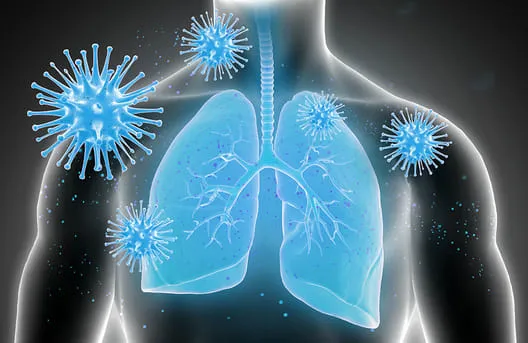

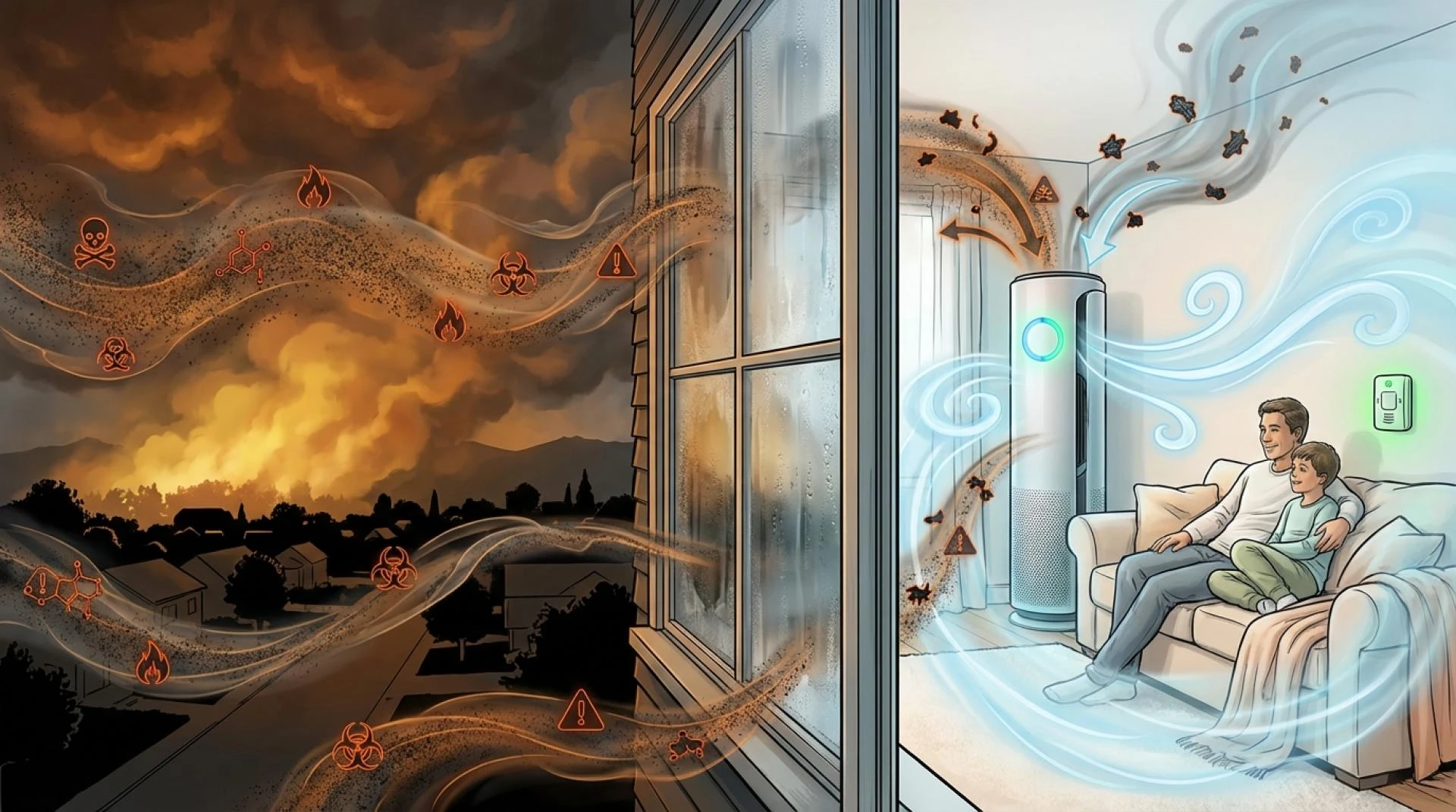
Wildfire smoke has become a growing concern in many regions, affecting not only outdoor air quality but also the air inside homes, schools, and workplaces. During wildfire events, smoke can travel hundreds or even thousands of miles, carrying microscopic particles and gases that easily enter buildings through doors, windows, ventilation systems, and small structural gaps.
As smoke events become more frequent, many people are searching for an effective air purifier for wildfire smoke to help improve indoor air quality. However, not all air purifiers are designed to handle the unique challenges created by wildfire smoke. Understanding the components of wildfire smoke and the filtration technologies that target them is essential when evaluating air purification solutions.
Understanding What Wildfire Smoke Contains
Wildfire smoke is far more complex than the visible haze that fills the sky during fire season. It consists of a mixture of airborne particles, gases, and chemical compounds produced when vegetation, buildings, plastics, and other materials burn.
Common wildfire smoke pollutants include:
- Fine particulate matter (PM2.5)
- Ultrafine particles
- Volatile organic compounds (VOCs)
- Carbon monoxide
- Nitrogen oxides
- Smoke odors
- Chemical byproducts of combustion
The smallest particles are often the greatest concern because they can remain suspended in the air for extended periods and easily penetrate indoor environments.
This combination of particles and gases means that an effective air purifier for wildfire smoke must be capable of addressing more than one type of pollutant.
Why Standard Air Purifiers May Struggle with Wildfire Smoke
Many air purifiers are designed primarily for dust, pollen, and common household allergens. While these units may improve general indoor air quality, they may not effectively address the full range of pollutants found in wildfire smoke.
A standard unit with minimal filtration often struggles to remove:
- Smoke odors
- Chemical fumes
- VOCs
- Combustion gases
This is why choosing the right filtration technology is critical during wildfire season.
The Importance of HEPA Filtration for Smoke Particles
One of the most important features of an effective smoke removal system is high-efficiency particle filtration.
Capturing Fine Smoke Particles
Wildfire smoke contains large quantities of PM2.5 particles, which are particles measuring 2.5 microns or smaller. These particles are significantly smaller than ordinary dust and can remain airborne for long periods.
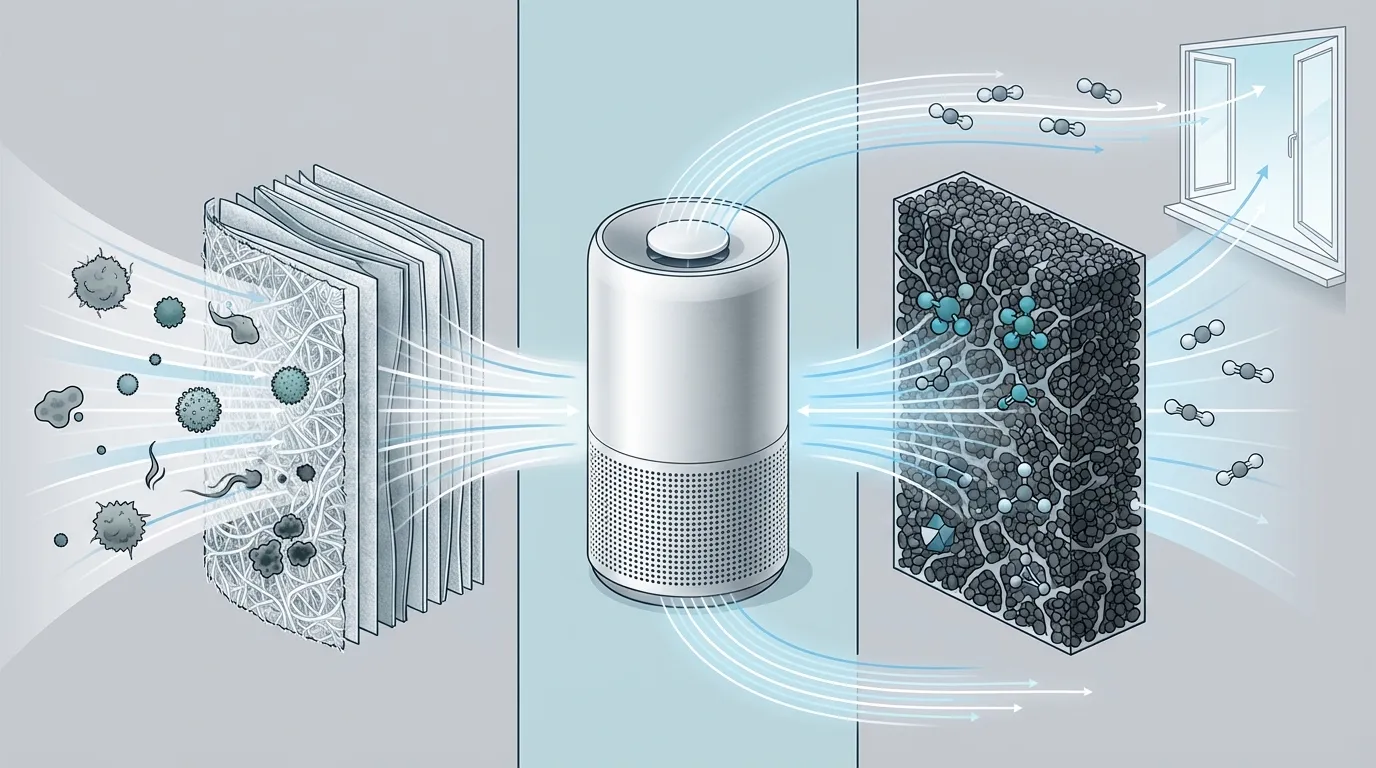
A True HEPA filter is specifically designed to capture these microscopic particles with a high level of efficiency.
HEPA filtration helps reduce:
- Smoke particles
- Ash particles
- Soot
- Airborne allergens
- Fine particulate pollution
For households dealing with wildfire smoke, HEPA filtration serves as the foundation of effective indoor air cleaning.
Why Higher Filtration Efficiency Matters
The concentration of airborne particles during wildfire events can increase dramatically. Higher-efficiency filtration systems can remove a greater percentage of these particles, helping maintain cleaner indoor air throughout prolonged smoke events.
Activated Carbon: The Key to Smoke Odor Removal
While HEPA filtration addresses particles, it does not remove gases or odors.
This is where activated carbon becomes essential.
How Activated Carbon Works
Activated carbon contains millions of microscopic pores that absorb gases, odors, and airborne chemical compounds.
Wildfire smoke contains a variety of gaseous pollutants that can remain present even after visible smoke particles are removed. Activated carbon helps reduce these contaminants by trapping them within its porous structure.
Benefits of Activated Carbon for Smoke
A quality smoke air filter with substantial activated carbon can help reduce:
- Smoke odors
- VOCs
- Combustion-related gases
- Chemical fumes
- Household odor contamination caused by smoke infiltration
Without adequate carbon filtration, indoor spaces may continue to smell like smoke even after particulate levels have decreased.
Why Carbon Quantity Matters
Not all activated carbon filters are created equally.
Many consumer-grade air purifiers contain only a thin carbon sheet designed primarily for light odor control. While these filters may help with minor household smells, they often become saturated quickly when exposed to wildfire smoke.
Larger carbon beds generally provide:
- Greater odor removal capacity
- Longer service life
- Better gas absorption
- Improved smoke control performance
This is an important factor when evaluating air filtration for smoke during extended wildfire events.
Air Changes Per Hour (ACH): A Critical Performance Metric
Filtration quality alone is not enough. An air purifier must also process a sufficient volume of air.
Air Changes Per Hour (ACH) refers to how many times the purifier can clean the entire volume of air within a room during one hour.
Why ACH Matters During Wildfire Season
Smoke particles continuously enter indoor environments whenever doors are opened or outdoor air infiltrates the building.
Higher ACH rates help ensure that smoke contaminants are removed more quickly and consistently.
Many indoor air quality specialists recommend multiple air changes per hour when wildfire smoke levels are elevated.
Proper Room Coverage Improves Effectiveness
An undersized air purifier may struggle to keep up with heavy smoke conditions.
When selecting an air purifier for wildfire smoke, it is important to match the unit's capacity with the size of the room.
Factors to consider include:
- Room square footage
- Ceiling height
- Occupancy levels
- Frequency of door openings
- Outdoor smoke intensity
Proper sizing helps maximize filtration efficiency and improve overall indoor air quality.
The Role of Pre-Filters in Smoke Filtration
Pre-filters are often overlooked, yet they play an important role in wildfire smoke filtration systems.
What Pre-Filters Do
Pre-filters capture larger airborne particles before they reach the main filtration stages.
Benefits include:
- Reduced strain on HEPA filters
- Longer filter lifespan
- Improved overall system efficiency
- Lower maintenance requirements
During wildfire events, pre-filters help manage larger ash and debris particles that may enter indoor spaces.
Continuous Operation Is Essential
Wildfire smoke conditions can persist for days or even weeks.
For this reason, air purifiers should be designed for continuous operation.
Running a purifier only occasionally may allow smoke particles and gases to accumulate indoors. Continuous filtration helps maintain cleaner air throughout the duration of a smoke event.
Many indoor air quality experts recommend operating air purification systems around the clock during periods of elevated smoke exposure.
Creating a Complete Smoke Protection Strategy
While a high-quality smoke air filter can significantly improve indoor air quality, it works best as part of a broader smoke management strategy.
Additional steps may include:
- Keeping windows and doors closed during smoke events
- Sealing air leaks where practical
- Monitoring local air quality reports
- Maintaining HVAC systems
- Replacing filters as recommended
- Creating a designated clean-air room during severe smoke conditions
Combining these practices with effective air filtration for smoke can help reduce indoor smoke exposure and improve comfort during wildfire season.
Conclusion
The effectiveness of an air purifier for wildfire smoke depends on several key factors, including HEPA filtration, activated carbon capacity, room coverage, ACH ratings, and continuous operation. Wildfire smoke contains both microscopic particles and gaseous pollutants, making a multi-stage filtration approach essential. A properly designed smoke air filter can help reduce airborne particles, smoke odors, and combustion-related contaminants, while effective air filtration for smoke supports cleaner indoor air during wildfire events. Understanding these features allows homeowners and building managers to make informed decisions when preparing for smoke season.































Sign in to leave a comment.