
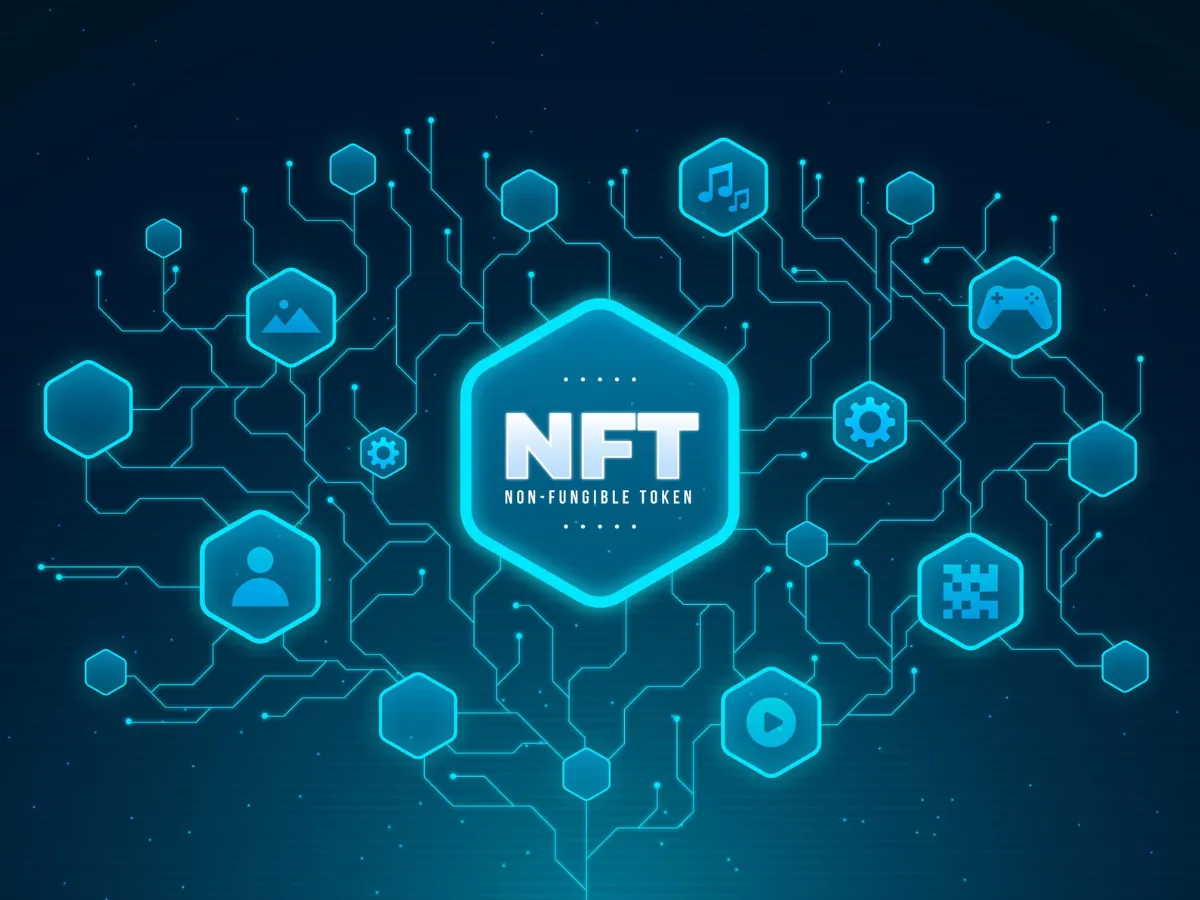
NFT marketplaces have quietly evolved into one of the most important building blocks of the digital economy. What began as a trend driven by digital art and collectibles has now matured into a full-fledged ecosystem powering ownership, creativity, and commerce on the blockchain. In simple terms, an NFT marketplace is a platform where users can mint, buy, sell, and trade non-fungible tokens that represent unique digital assets. These assets range from artwork and music to gaming items, virtual land, memberships, and even tokenized real-world goods. Just like Amazon transformed e-commerce and Shopify empowered online businesses, NFT marketplaces are shaping how digital value is created and exchanged.
The growth numbers explain why businesses are paying attention. The global NFT market is projected to generate hundreds of millions of dollars in annual revenue by 2026, with some forecasts estimating nearly US$479 million in specific NFT segments alone. While the market experienced a sharp surge in popularity after 2021, interest didn’t fade; it evolved. Instead of speculation-driven hype, today’s NFT adoption is fueled by real use cases. Brands are using NFTs for loyalty programs, gaming companies are enabling true ownership of in-game assets, and creators are monetizing directly without intermediaries. As Web3 adoption accelerates, NFT marketplaces are no longer optionalthey’re strategic digital infrastructure.
However, building an NFT marketplace from scratch can be expensive, time-consuming, and technically complex. That’s exactly why white-label NFT marketplace solutions have become the go-to choice in 2026. They offer a faster, more affordable, and less risky path to market without compromising on core functionality or scalability.
What Is a White Label NFT Marketplace?
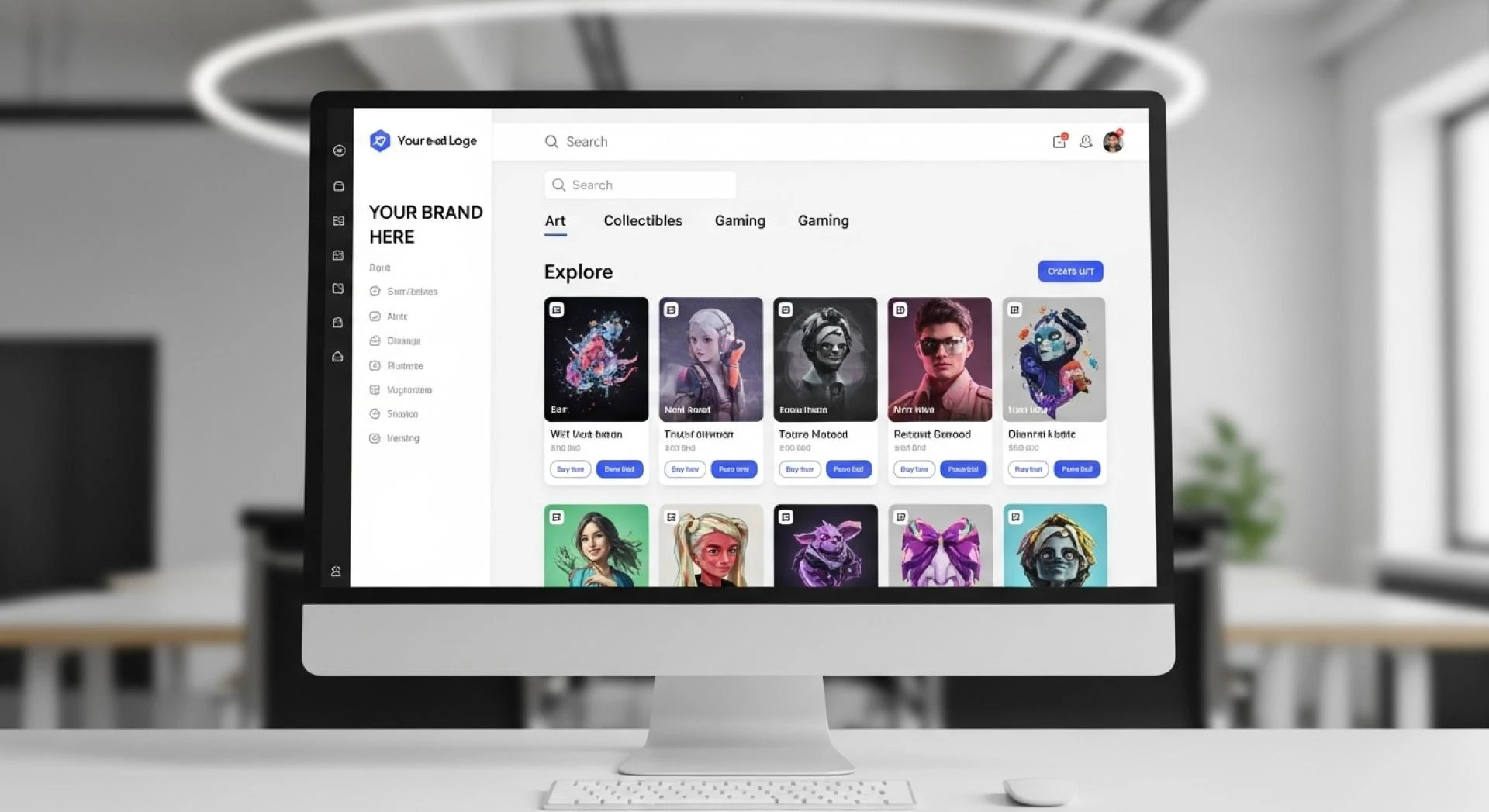
A white-label NFT marketplace is a pre-built, ready-to-launch platform that businesses can license, customize, and deploy under their own brand. Instead of spending months developing smart contracts, backend systems, and user interfaces from the ground up, companies start with a tested foundation. This foundation already includes essential components such as NFT minting, wallet integration, buying and selling functionality, royalty logic, and administrative controls. Businesses then rebrand the platform, adjust the design, and fine-tune features to match their business goals.
In simple terms, it’s the difference between building a house from raw materials and moving into a fully constructed home that you can customize. You save time, reduce risk, and focus on growth rather than infrastructure.
White Label vs Custom NFT Marketplace Development
The contrast between white label and custom development is clear once you look at timelines and investment. Custom NFT marketplaces are built entirely from scratch, offering complete architectural freedom but requiring extensive development effort, higher costs, and longer testing cycles. These projects often take several months to complete and demand large technical teams.
White-label NFT marketplaces, on the other hand, rely on proven frameworks that are already tested and optimized. This significantly shortens development cycles and lowers costs. While big architectural changes may be limited compared to custom builds, white label solutions provide more than enough flexibility for most business use casesespecially for startups, creators, and brands entering Web3 for the first time.
Why White Label NFT Marketplaces Are Ideal in 2026
Speed and efficiency define success in 2026. Markets move quickly, user expectations evolve fast, and early movers often dominate niche segments. White-label NFT marketplaces typically launch within two to six weeks, while custom solutions can take anywhere from four to nine months or more. That time difference can be the deciding factor between capturing market attention and missing the opportunity altogether.
Cost is another major driver. White-label solutions dramatically reduce development expenses by eliminating redundant work and leveraging reusable components. This allows businesses to allocate more budget toward marketing, partnerships, and community buildingareas that directly impact adoption and revenue.
How White Label NFT Marketplaces Are Growing in 2026
The rapid growth of white-label NFT marketplaces in 2026 reflects how businesses now approach Web3 adoption. Instead of relying entirely on large third-party platforms, brands want ownership over their digital ecosystems. They want control over user experience, transaction fees, data insights, and community engagement. White-label marketplaces offer this control without requiring deep blockchain engineering expertise.
Additionally, enterprises are increasingly launching niche NFT marketplaces tailored to specific audiences, such as gaming communities, music fans, sports collectors, or luxury buyers. White-label solutions make these niche launches feasible by removing technical barriers and reducing time to market.
Speed to Market as a Competitive Advantage
In today’s digital economy, timing is everything. A pre-built white-label NFT marketplace can be deployed up to ten times faster than a fully custom platform. In some cases, minimum viable products can go live in as little as 15 days. This rapid deployment allows businesses to validate ideas early, attract users quickly, and iterate based on real-world feedback instead of assumptions.
Launching fast doesn’t just save timeit creates momentum. Early adopters, liquidity, and brand recognition often snowball into long-term success.
Cost Efficiency and Return on Investment
From a financial perspective, white-label NFT marketplaces offer a compelling return on investment. In 2026, most white-label solutions fall within the $30,000 to $50,000+ range, depending on customization, blockchain selection, and feature depth. This is significantly lower than custom-built marketplaces, which often exceed six figures.
Lower upfront investment reduces financial risk and accelerates break-even timelines. For startups and enterprises alike, this makes white-label NFT marketplaces one of the most practical and scalable ways to enter the NFT economy while maintaining room for future expansion.
Types of White Label NFT Marketplaces
Open NFT Marketplaces
Open white-label NFT marketplaces are designed for maximum accessibility and scale. In this model, any user can mint, list, buy, or sell NFTs without heavy restrictions. These platforms thrive on volume and community participation, making them ideal for businesses aiming to attract a wide audience. Open marketplaces are commonly used for digital art, collectibles, and general NFT trading, where diversity of assets and high transaction flow drive revenue through marketplace fees.
Curated or Premium NFT Marketplaces
Curated or premium white-label NFT marketplaces operate with stricter controls over who can list NFTs and what kind of content appears on the platform. Marketplace owners manually approve creators, collections, or assets to maintain quality and exclusivity. This approach is especially popular among luxury brands, art galleries, music labels, and enterprises that want to protect brand value and offer a refined user experience. While transaction volume may be lower than open marketplaces, curated platforms often achieve higher average sale values and stronger brand trust.
Niche-Specific NFT Marketplaces
Niche NFT marketplaces focus on a specific industry or community, such as gaming, sports, fashion, real estate, or AI-generated content. By targeting a well-defined audience, these platforms deliver more relevant experiences and foster stronger engagement. In 2026, niche marketplaces are gaining traction because they reduce competition, create loyal communities, and allow businesses to position themselves as authorities within a particular domain.
Multi-Chain NFT Marketplaces
Multi-chain white-label NFT marketplaces support multiple blockchain networks instead of relying on a single one. This allows users to choose blockchains based on transaction fees, speed, or ecosystem preference. Although multi-chain platforms require more development effort, they offer greater flexibility and future-proofing. Businesses planning long-term growth often choose this model to adapt quickly as blockchain ecosystems evolve.
How a White Label NFT Marketplace Works
NFT Minting and Asset Creation
A white-label NFT marketplace begins its workflow when a creator uploads a digital asset to the platform. The minting engine converts this asset into an NFT by interacting with smart contracts deployed on the blockchain. During this process, metadata such as ownership details, royalties, and asset attributes are securely recorded, ensuring transparency and authenticity.
Buying, Selling, and Auctions
Once minted, NFTs can be listed for sale at a fixed price or placed into an auction, depending on the marketplace configuration. Buyers connect their crypto wallets, browse available listings, and complete purchases directly on the platform. Smart contracts automatically handle ownership transfer, royalty distribution to creators, and platform commissions, eliminating manual processes and reducing the risk of errors.
Wallet Connectivity and Transactions
Wallet integration plays a crucial role in enabling secure transactions. Users authenticate actions such as minting, purchasing, or bidding through their connected wallets. Every transaction is recorded on the blockchain, providing an immutable audit trail and building trust among users.
Admin Control and Platform Management
From the business perspective, the admin dashboard serves as the control center of the marketplace. Marketplace owners can manage users, approve listings, configure fees, monitor transactions, and analyze performance metrics. Because white-label solutions come with these tools pre-built, businesses can focus on scaling and marketing rather than technical maintenance.
Core Features of a White Label NFT Marketplace with Cost and Development Duration
Wallet Integration
Wallet integration allows users to connect crypto wallets and authorize transactions securely. This feature is essential for authentication and payments within the marketplace. In 2026, wallet integration typically costs between $3,000 and $6,000, with a development duration of one to three weeks, depending on the number of supported wallets.
NFT Minting Module
The NFT minting module enables creators to tokenize digital assets directly on the platform. It includes metadata handling, royalty configuration, and blockchain interaction. Development costs usually range from $5,000 to $8,000, with an estimated timeline of two to four weeks.
Buy and Sell Marketplace Engine
The marketplace engine manages NFT listings, purchases, ownership transfers, and fee calculations. As the backbone of the platform, it is one of the most critical components. This feature generally costs between $6,000 and $12,000 and requires approximately two to four weeks to develop.
Auction and Bidding System
Auction and bidding functionality introduces competitive pricing and higher user engagement. Users can place bids in real time, while smart contracts enforce auction rules automatically. This feature typically costs between $4,000 and $7,000 and can be implemented within one to two weeks.
Admin Dashboard
The admin dashboard allows marketplace owners to oversee platform operations, including user management, transaction tracking, and commission settings. Development costs usually fall between $4,000 and $7,000, with a timeline of one to three weeks.
Security and Smart Contract Audits
Security audits are critical to protecting user funds and platform integrity. Smart contract auditing and penetration testing help identify vulnerabilities before launch. These services generally cost between $5,000 and $12,000 and take one to three weeks to complete.
UI and UX Branding Customization
UI and UX customization ensure the marketplace reflects the brand’s identity and delivers a smooth user experience across devices. Depending on design complexity, this typically costs between $3,000 and $10,000, with a development duration of two to four weeks.
Overall Development Cost and Timeline for a White Label NFT Marketplace in 2026
Launching a white-label NFT marketplace in 2026 is significantly more predictable than building a custom platform from scratch. Because the core infrastructure is already developed, businesses can estimate both cost and timelines with greater confidence. For a standard white-label NFT marketplace with essential features such as wallet integration, minting, buying and selling, admin controls, security audits, and basic UI customization, the overall development cost typically ranges from $30,000 to $60,000. This range covers most startup and growth-stage requirements without unnecessary complexity.
In terms of time, the overall development duration usually falls between 4 and 10 weeks. Simpler platforms with minimal customization can launch closer to the four-week mark, while more refined marketplaces with enhanced branding and feature tuning may require additional weeks. Compared to custom development cycles that often stretch beyond six months, this accelerated timeline is one of the biggest advantages of choosing a white label solution in 2026.
Cost Breakdown by Business Size
Small-Scale or Startup NFT Marketplace
For startups, creators, or small businesses testing the NFT space, a lean white-label marketplace is often the best approach. These platforms focus on core functionality without advanced integrations or multi-chain support. In 2026, the development cost for a small-scale white-label NFT marketplace typically ranges from $20,000 to $35,000. The development timeline usually falls between 4 and 6 weeks, making it ideal for rapid market entry and MVP launches.
Mid-Range NFT Marketplace
Mid-range marketplaces are designed for businesses that want more customization, better branding, and additional engagement features such as auctions, analytics, or enhanced admin controls. These platforms strike a balance between flexibility and cost efficiency. The estimated development cost for a mid-range white-label NFT marketplace ranges from $35,000 to $60,000, with a development duration of 6 to 10 weeks. This tier is popular among growing brands and funded startups looking to scale quickly.
Enterprise-Level NFT Marketplace
Enterprise NFT marketplaces demand higher levels of scalability, security, customization, and performance. These platforms often include advanced analytics, compliance workflows, premium UI/UX, and deeper backend optimizations. In 2026, enterprise-level white label NFT marketplaces typically cost between $60,000 and $120,000 or more, depending on complexity. Development timelines range from 10 to 16 weeks, reflecting the additional testing, integrations, and customization required.
Optional Advanced Features and Modules for White Label NFT Marketplaces
While basic features are enough to launch, many businesses choose to enhance their marketplace with advanced modules to stand out and future-proof their platform. These features are optional and can be added during or after the initial launch.
Multi-Chain Blockchain Support
Multi-chain support allows users to mint and trade NFTs across multiple blockchain networks, offering flexibility in transaction fees and performance. This feature is increasingly popular in 2026 as users seek alternatives to high gas fees. Implementing multi-chain functionality typically costs between $10,000 and $20,000, with a development duration of 3 to 6 weeks.
AI-Powered Recommendation Engine
AI-based recommendation systems personalize the user experience by suggesting NFTs based on browsing behavior, purchase history, and trends. This feature improves engagement and conversion rates. In 2026, adding an AI recommendation engine generally costs between $8,000 and $15,000, with a development timeline of 4 to 8 weeks.
Advanced Analytics and Creator Dashboards
Advanced analytics provide insights into user behavior, sales performance, creator earnings, and marketplace growth. These dashboards help businesses make data-driven decisions and attract professional creators. Development costs typically range from $7,000 to $12,000, with a timeline of 3 to 6 weeks.
NFT Staking and DeFi Integrations
NFT staking and DeFi modules allow users to earn rewards by locking NFTs or participating in decentralized finance mechanisms. These features add strong utility and retention value to the platform. The cost for implementing staking and DeFi features usually falls between $8,000 and $18,000, with a development duration of 4 to 8 weeks.
KYC, Compliance, and Enterprise Security Modules
For regulated markets and enterprise use cases, KYC and compliance features are essential. These modules enable identity verification, regulatory adherence, and enhanced security controls. In 2026, implementing compliance workflows typically costs between $10,000 and $25,000, with a development timeline of 4 to 8 weeks.
Conclusion
Launching a white-label NFT marketplace in 2026 offers businesses a fast, cost-effective, and scalable entry into the rapidly evolving Web3 economy. With predictable development costs, shorter timelines, and the flexibility to start small and expand with advanced features, white-label solutions remove many of the traditional barriers associated with blockchain product development. Whether you are a startup testing a new idea or an enterprise building a branded digital ecosystem, partnering with the right white-label NFT marketplace development company can help you reduce risk, accelerate time to market, and build a future-ready platform that grows alongside your business goals.





















Sign in to leave a comment.