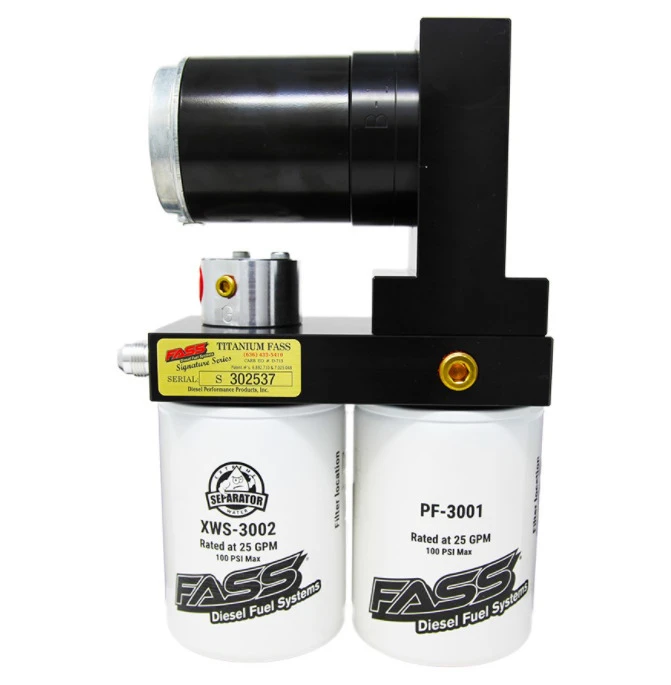

Fuel system failures on the 6.4L platform rarely happen without warning; they develop from contamination, aeration, and inconsistent fuel pressure over time. Owners who upgrade to a 6.4 PowerStroke FASS fuel system and follow the correct 6.4 PowerStroke torque specs during installation address those risks directly. Reliability-focused truck owners and fleet maintenance leads understand that injector life, pump durability, and downtime costs depend heavily on fuel quality within the first 60 seconds of engine operation and every mile after.
The 6.4 Powerstroke platform runs a high-pressure common-rail system that reacts aggressively to debris, water intrusion, and air entrainment. When fuel loses lubricity or carries microscopic contaminants, internal injector tolerances suffer. Once scoring begins inside the injection system, repair costs escalate quickly. That reality forces serious operators to prioritize filtration standards, not just flow numbers.
The Role of 2 Micron Filtration in the 6.4 Platform
A properly configured 6.4 Power Stroke FASS fuel system equipped with 2-micron filtration changes the contamination equation. Factory filtration often allows smaller particles to circulate through the system. Over time, those particles erode injector nozzles, damage high-pressure pump components, and accelerate internal wear.
Two-micron filtration captures significantly finer debris before it reaches critical components. That tighter filtration:
●Reduces abrasive wear on injector internals
●Protects high-pressure fuel pump surfaces from scoring
●Maintains consistent spray patterns under load
●Preserves fuel system tolerances over extended mileage
●Minimizes premature injector return flow failures
The 6.4 platform already carries a reputation for injector sensitivity. When fleets operate under heavy load cycles, contamination compounds quickly. By actively removing particles down to 2 microns, the system controls one of the primary causes of injector imbalance and fuel dilution.
Water Separation: The Overlooked Reliability Multiplier
Water contamination creates a different but equally destructive problem. Diesel fuel naturally attracts moisture through condensation and storage variability. Without aggressive separation, water travels directly into high-pressure components.
A system that integrates built-in water separation stops that cycle before damage begins. Effective water removal:
●Prevents corrosion inside injector bodies
●Reduces internal rust formation in high-pressure pumps
●Preserves lubricity within the fuel column
●Prevents micro-pitting on precision-machined surfaces
●Reduces cold-weather gelling complications
When water mixes with diesel, it strips lubrication from metal-on-metal surfaces. The 6.4 injection system depends on fuel as a lubricant. Remove that lubrication, and component life drops sharply. Long-term reliability demands aggressive water extraction, not occasional draining.
Air and Vapor Removal: Stabilizing Injection Events
Air intrusion often hides behind inconsistent performance complaints. Vapor and aerated fuel reduce injection consistency. That instability increases combustion irregularities and stresses injectors further.
Modern lift pump systems incorporate air and vapor removal processes that continuously “polish” fuel before delivery. By eliminating entrained air:
Fuel pressure stabilizes under load.
Injection timing remains more predictable.
Combustion smooths out across cylinders.
Carbon-related deposits decrease gradually.
Mass flow return technology also maintains positive fuel pressure while cycling unused fuel back through filtration. That continuous polishing process reinforces cleanliness and prevents cavitation, galling, and scoring.
Flow Rate Alone Does Not Equal Reliability
Many operators focus strictly on gallons per hour. While adequate flow supports performance upgrades, filtration quality ultimately determines longevity. A system rated at 100 GPH with 2 micron filtration and integrated water separation supports both stock and modified 6.4L applications.
Performance radius cuts within the pump housing further improve flow dynamics. Smooth internal transitions prevent eddy currents and eliminate sharp-angle turbulence that can reintroduce air. Instead of sacrificing flow to reduce noise, engineered whisper-level operation maintains both quiet performance and fuel volume.
That combination of flow stability, filtration precision, and water separation directly impacts injector lifespan. Over tens of thousands of miles, that difference translates into measurable reductions in downtime and component replacement.
Installation Discipline and Mechanical Integrity
Reliability also depends on proper installation practices. Technicians must adhere strictly to 6.4 powerstroke torque specs during mounting and fuel line routing. Improper torque creates vibration stress, bracket fatigue, and sealing inconsistencies.
A bolt-on bracket system that utilizes factory bed bolts simplifies installation while maintaining structural integrity. However, installers must verify:
●Proper torque application
●Correct fuel line routing
●Secure electrical connections
●Adequate clearance from heat sources
●Leak-free fittings under pressure
Fleets that document torque verification and follow manufacturer guidelines prevent secondary failures that often get blamed on components rather than installation errors.
Cold Weather Operations and Fuel Stability
Cold climates amplify contamination risks. Water presence accelerates gelling, and inconsistent flow strains injection systems during startup. Optional heater ports combined with mass flow return technology help maintain consistent fuel delivery in extreme conditions.
Improved cold starts reduce white smoke, limit incomplete combustion, and decrease carbon buildup. Over time, that stability supports smoother idle, more consistent throttle response, and measurable emission reductions.
For fleet maintenance leads, cold-weather reliability directly influences operational schedules. A properly filtered and separated fuel supply reduces unexpected morning failures and minimizes roadside service calls.
Strategic Sourcing and Professional-Grade Supply
Professional operators typically source components from experienced diesel-focused distributors that prioritize OEM-quality parts and strict policies. Suppliers such as Big Dawg Diesel and Surplus, for example, emphasize fuel system components from Tier 1 manufacturers and enforce clear warranty standards. That policy-driven approach aligns with reliability-focused buyers who value durability over convenience.
High-ticket components like fuel contamination kits and turbo assemblies demand strict accountability. Serious buyers accept structured return policies and installation discipline because they understand the cost of improper diagnosis.
Conclusion
Long-term reliability on the 6.4L platform depends on contamination control, water removal, air elimination, and disciplined installation practices. A properly configured 6.4 powerstroke fass fuel system with 2 micron filtration and integrated water separation directly protects injectors, high-pressure pumps, and internal tolerances. When technicians also follow correct 6.4 powerstroke torque specs, they eliminate installation-related variables that shorten component life.
For reliability-focused truck owners and fleet maintenance leads, the formula remains clear: combine strict filtration standards, aggressive water separation, continuous fuel polishing, and proper torque discipline. The result delivers measurable durability gains, reduced injector failure rates, stabilized pressure delivery, and extended service intervals on any 6.4 platform running a 6.4 PowerStroke FASS fuel system while adhering to factory 6.4 PowerStroke torque specs.




























Sign in to leave a comment.