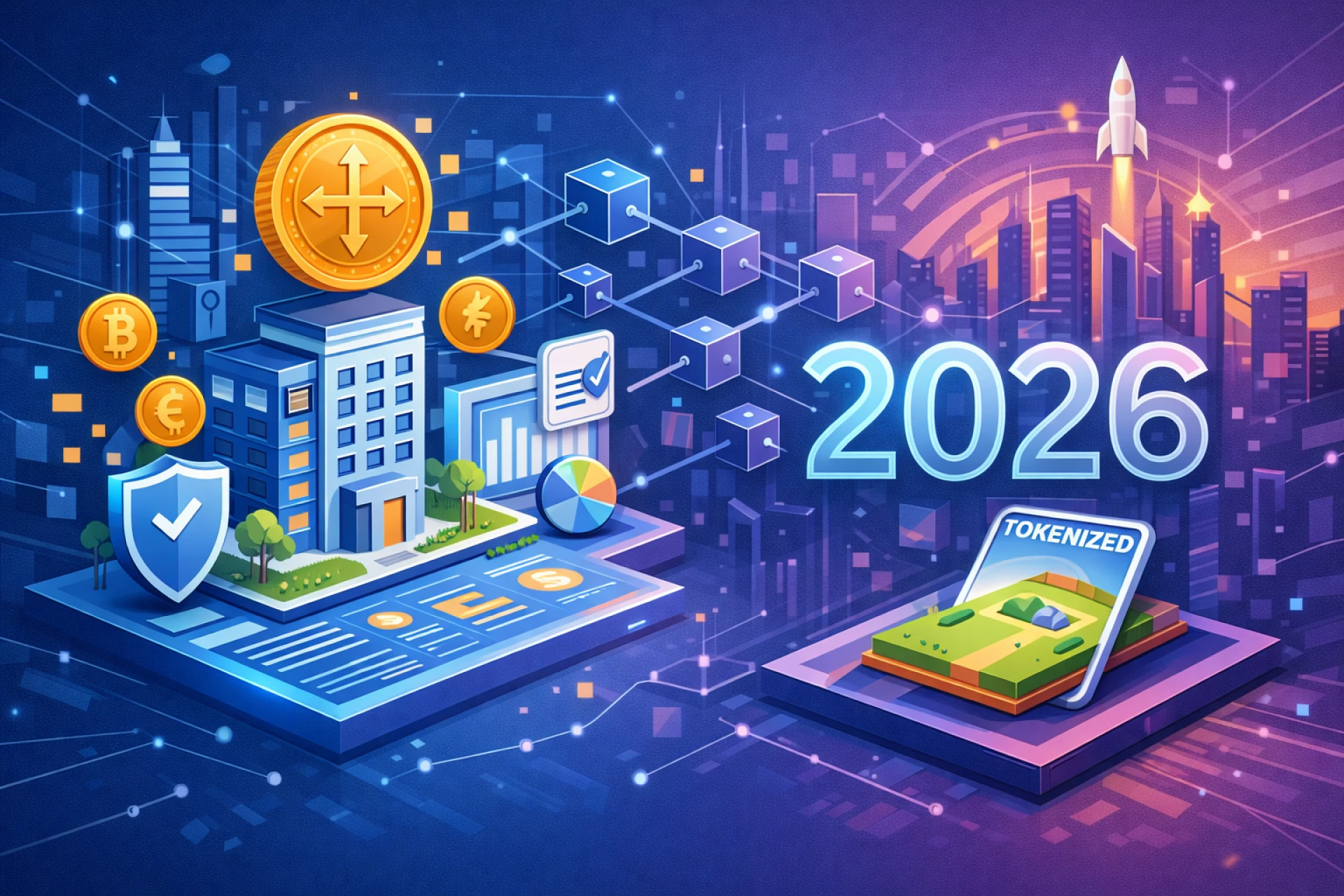

The global real estate industry is entering a structural transformation. For decades, property investment has been dominated by institutional capital, private equity firms, REITs, and high net worth individuals. Entry barriers have remained high due to capital requirements, legal complexity, cross border regulations, and operational inefficiencies. However, blockchain based asset digitization has gradually begun to reshape how ownership, liquidity, and capital formation operate in property markets.
By 2026, this gradual transformation is expected to accelerate into a breakout phase for the tokenized real estate platform market. The convergence of regulatory clarity, maturing infrastructure, institutional participation, and investor demand for fractional ownership is creating a powerful momentum shift. Real estate tokenization is no longer experimental. It is becoming a strategic investment model backed by technology, compliance frameworks, and scalable platform solutions.
This article explores why 2026 will mark a turning point for tokenized real estate platforms and how emerging business models such as White Label Real Estate Tokenization Platform solutions are accelerating market expansion globally.
The Evolution of Real Estate Ownership
Traditional real estate investment has always been capital intensive and illiquid. Buying a property requires significant upfront investment, long holding periods, and complex documentation. Even indirect exposure through REITs does not provide asset level transparency or customization for many investors.
Real estate tokenization changes the structure of ownership by converting property assets into blockchain based digital tokens that represent fractional ownership. These tokens can be bought, sold, or traded according to regulatory frameworks, enabling more flexible liquidity and broader investor access.
Over the past few years, pilot projects and limited scale offerings validated the concept. By 2026, the industry is moving beyond proof of concept into scalable deployment. Real Estate Tokenization Platforms are becoming enterprise grade infrastructures capable of handling compliance, investor onboarding, KYC, AML, smart contract issuance, dividend distribution, and secondary market trading.
The shift from experimentation to infrastructure maturity is one of the primary reasons 2026 is poised to be a breakout year.
Regulatory Clarity Is Unlocking Institutional Confidence
One of the biggest obstacles to tokenization growth in earlier years was regulatory uncertainty. Property ownership involves securities laws, real estate regulations, and cross border compliance issues. Governments and financial authorities have spent recent years defining digital asset frameworks and security token classifications.
By 2026, many jurisdictions have clarified how tokenized real estate offerings should be structured. This clarity reduces legal risk for developers and institutional investors. It also enables structured offerings under recognized compliance models.
Institutional players who previously observed the market from the sidelines are now participating in tokenized funds and property backed digital securities. Real Estate Tokenization Development Services are being adopted not just by startups but also by established real estate firms seeking to digitize portfolios.
As compliance frameworks stabilize, capital inflow accelerates. Institutional capital entering tokenized platforms signals maturity and encourages retail participation. This dynamic is expected to significantly expand platform adoption in 2026.
Liquidity Is Becoming a Strategic Advantage
Liquidity has always been the missing component in property investment. Traditional real estate transactions can take months to close. Selling a portion of an asset is nearly impossible without restructuring ownership.
Tokenization introduces fractional liquidity. Investors can buy smaller shares of properties and potentially trade them in regulated secondary markets. While liquidity mechanisms vary by jurisdiction, the structural flexibility alone transforms how investors perceive property allocation.
In 2026, investors are increasingly prioritizing flexibility and portfolio diversification. With economic volatility influencing asset allocation decisions, tokenized real estate offers a balance between stability and adaptability. Real estate tokenization enables portfolio exposure to commercial buildings, residential developments, hospitality assets, and industrial properties without full ownership risk.
This liquidity narrative is expected to drive mass adoption of tokenized real estate platforms as investors seek alternatives to traditional property lock in models.
Technology Infrastructure Has Reached Enterprise Readiness
Early blockchain platforms struggled with scalability, user experience, and integration challenges. By 2026, the technology stack has matured significantly. Advanced smart contract systems, secure digital custody solutions, and integrated compliance tools are becoming standardized components of tokenization platforms.
Modern White Label Tokenization Platform solutions now offer end to end infrastructure. They integrate investor dashboards, document management systems, compliance modules, asset management tools, and payment gateways into unified ecosystems.
Real estate developers no longer need to build custom blockchain systems from scratch. Instead, they can deploy a White Label Real Estate Tokenization Platform tailored to their branding and business model. This significantly reduces time to market and capital expenditure.
The availability of White Label Real Estate Tokenization Development solutions is one of the strongest accelerators of industry growth in 2026. Faster deployment cycles allow more companies to enter the tokenization market, increasing competition and expanding investor awareness.
Fractional Ownership Is Democratizing Investment Access
Historically, global real estate markets have been accessible primarily to affluent investors. Minimum ticket sizes limited participation. Cross border property ownership introduced additional legal and financial complexity.
Real estate tokenization addresses both challenges. Fractional ownership lowers investment thresholds, while digital onboarding simplifies participation processes. Investors can diversify across multiple properties and regions without managing physical assets directly.
By 2026, younger investors are increasingly attracted to digital asset models. They are comfortable with blockchain infrastructure and expect transparent, technology driven investment experiences. Tokenized real estate aligns with these expectations by combining asset backed stability with digital accessibility.
The democratization effect is expanding the total addressable market. Instead of serving only institutional and high net worth clients, tokenized platforms are onboarding a wider investor base. This expansion significantly contributes to the breakout trajectory expected in 2026.
The Rise of White Label Tokenization Solutions
One of the most transformative developments in the market is the growth of white label tokenization solutions. Instead of building proprietary blockchain infrastructure, real estate firms are leveraging White Label Real Estate Tokenization Services to digitize assets efficiently.
A White Label Real Estate Tokenization Platform allows companies to launch branded tokenization portals without deep technical expertise. These platforms typically include smart contract issuance, investor management tools, compliance automation, and reporting features.
White Label Real Estate Tokenization Development reduces barriers for mid sized developers and asset managers. It enables them to compete in digital capital markets without significant in house blockchain teams.
By 2026, white label tokenization is becoming a standard entry strategy for real estate companies seeking innovation. The scalability and cost efficiency of White Label Real Estate Tokenization Platform Development are fueling rapid market expansion.
As more service providers offer modular and customizable white label systems, competition drives innovation and performance improvements across the industry.
Institutional Portfolio Digitization
Large real estate funds are exploring tokenization not only for fundraising but also for operational efficiency. Digitized ownership records, automated dividend distribution, and transparent reporting reduce administrative overhead.
In 2026, portfolio digitization becomes a strategic initiative for many institutional asset managers. Real estate tokenization supports faster capital raising cycles and broader geographic investor outreach.
Institutional adoption legitimizes the market. It signals that tokenized assets are not speculative digital instruments but structured investment vehicles backed by tangible properties.
This institutional validation is likely to accelerate platform usage, increase transaction volumes, and attract regulatory support.
Cross Border Capital Flow Expansion
Traditional cross border property investment involves currency conversion, legal complexities, and administrative delays. Tokenized platforms streamline these processes by digitizing documentation and integrating automated compliance tools.
By 2026, investors are seeking global diversification due to macroeconomic uncertainty and currency fluctuations. Tokenized real estate platforms enable international participation with simplified onboarding.
White label tokenization solutions are enabling regional developers to access international investors without establishing complex global infrastructure. This cross border accessibility is significantly expanding market reach.
As global capital mobility increases, tokenized real estate platforms become bridges between investors and international property markets.
Enhanced Transparency and Trust
Transparency has often been a challenge in private real estate investments. Limited reporting and opaque fee structures can reduce investor confidence.
Blockchain based systems provide immutable transaction records and structured reporting frameworks. Investors can track ownership allocations and distribution schedules more efficiently.
In 2026, trust and transparency are critical competitive differentiators. Platforms that integrate compliance automation and transparent reporting through advanced Real Estate Tokenization Platform Development are attracting higher investor retention.
As trust increases, adoption accelerates. Transparency combined with regulatory compliance builds long term confidence in tokenized real estate ecosystems.
Economic Conditions Favor Alternative Asset Structures
Global economic uncertainty has encouraged investors to reconsider traditional portfolio allocations. Inflation, fluctuating interest rates, and stock market volatility have pushed many toward alternative asset classes.
Real estate has historically been a hedge against inflation. Tokenized real estate enhances this appeal by adding flexibility and accessibility.
By 2026, investors are increasingly seeking asset backed digital instruments that combine stability with liquidity. Tokenized real estate platforms meet this demand by offering structured exposure to property markets with digital efficiency.
The macroeconomic backdrop supports breakout growth for platforms that can deliver reliable, compliant, and scalable investment opportunities.
Developer and Investor Alignment
Tokenized platforms align developer and investor incentives more effectively. Developers gain access to diversified capital sources, while investors benefit from fractional ownership and potential liquidity options.
White Label Real Estate Tokenization Services streamline capital raising by digitizing offering documents, automating investor onboarding, and managing token issuance. This efficiency reduces fundraising timelines and operational costs.
By 2026, developers recognize tokenization as a competitive advantage rather than an experimental model. The ability to launch projects through a White Label Tokenization Platform enables faster scaling and stronger investor engagement.
As alignment improves between developers and investors, ecosystem growth accelerates.
Secondary Market Infrastructure Growth
Secondary market development is critical for liquidity. While still evolving, 2026 is expected to witness stronger infrastructure for regulated digital asset trading platforms supporting tokenized securities.
As secondary markets mature, investor confidence increases. Liquidity expectations become more realistic and structured rather than speculative.
Real Estate Tokenization Development Services are increasingly integrating features that prepare assets for secondary market compatibility. This forward planning strengthens long term adoption prospects.
The presence of viable exit mechanisms significantly enhances the attractiveness of tokenized property investments.
Competitive Differentiation Through Branding and Customization
In a rapidly expanding market, branding and user experience are becoming critical differentiators. A White Label Real Estate Tokenization Platform allows companies to create customized interfaces aligned with their corporate identity.
White Label Real Estate Tokenization Platform Development enables tailored features, localized compliance tools, and multilingual dashboards. This customization supports global expansion strategies.
As competition intensifies in 2026, platforms that offer seamless onboarding, intuitive design, and integrated reporting will stand out.
Customization through white label tokenization is enabling businesses to differentiate themselves while leveraging shared technological infrastructure.
Conclusion: A Defining Year for Market Expansion
The tokenized real estate platform market has progressed through experimentation, validation, and infrastructure building. In 2026, these foundational elements converge into accelerated growth.
Regulatory clarity is strengthening institutional participation. Technology infrastructure has matured into enterprise grade systems. Fractional ownership is expanding investor access. White Label Real Estate Tokenization Development is reducing barriers to entry for property firms worldwide.
Real estate tokenization is transitioning from niche innovation to mainstream financial strategy. As liquidity mechanisms improve and cross border participation increases, tokenized platforms are positioned to capture a significant share of global property investment flows.
The breakout year narrative is not driven by speculation but by structural readiness. Market demand, technological capability, and regulatory alignment are finally synchronized.
For developers, investors, and financial institutions, 2026 represents more than a trend cycle. It marks the beginning of a digitally enabled property investment era where tokenized platforms redefine ownership, access, and capital efficiency on a global scale.
































Sign in to leave a comment.