
In today's highly competitive retail environment, accuracy is more important than ever. Whether businesses are packaging food products, cosmetics, household goods, or industrial items, ensuring the correct quantity reaches consumers is essential for maintaining trust, complying with regulations, and protecting profitability. This is where accurate weighing systems, e weights, and the Average Quantity System (AQS) play a crucial role.
For Australian manufacturers, packers, and retailers, compliance with the average quantity system Australia framework is not just a legal obligation—it is also a valuable business practice that promotes efficiency, consistency, and customer confidence.
Understanding the Average Quantity System (AQS)
The Average Quantity System (AQS) is a quality control method used to ensure that packaged products contain the quantity stated on their labels. Rather than requiring every package to contain exactly the declared amount, the system evaluates batches of products to ensure the average quantity meets regulatory requirements.
The Australian framework is administered under the guidance of the NMI AQS program, which helps businesses comply with national trade measurement laws while maintaining fair trading practices.
Under AQS:
- The average content of a batch must be equal to or greater than the stated quantity.
- Only a limited number of packages can fall below specified tolerances.
- No package can contain an excessive deficiency.
This balanced approach allows manufacturers to account for normal production variations while ensuring consumers receive fair value.
Why Accurate Weighing Matters
Accurate weighing forms the foundation of every successful AQS program. Without precise measurement equipment, businesses risk underfilling or overfilling products, both of which can create significant problems.
Protecting Consumer Trust
Customers expect to receive exactly what they pay for. When product quantities consistently meet label claims, consumers develop confidence in a brand. However, repeated discrepancies can quickly damage reputation and lead to complaints.
Accurate weighing systems help ensure transparency and fairness, strengthening long-term customer relationships.
Reducing Product Giveaway
Many businesses intentionally overfill products to avoid the risk of underweight packages. While this may seem like a safe strategy, it often leads to substantial product giveaway over time.
For example, if a manufacturer adds just a few extra grams to thousands of packages daily, the cumulative cost can be significant. Precise weighing equipment enables businesses to hit target weights more accurately, reducing waste and improving profitability.
Supporting Regulatory Compliance
Trade measurement authorities closely monitor packaged goods to ensure compliance with quantity declarations. Businesses that fail to meet regulatory requirements may face investigations, penalties, product recalls, or reputational damage.
Reliable weighing systems help manufacturers maintain compliance with NMI AQS requirements and demonstrate due diligence during audits.
The Role of E Weights in Packaged Goods
The concept of e weights originates from international quantity control standards and is commonly recognised on packaged products sold in many global markets.
The "e" mark indicates that products have been packed according to approved quantity control procedures designed to ensure consistent compliance with average quantity requirements.
For businesses exporting products or operating across multiple markets, adopting systems that support e weights can offer several advantages:
- Improved consistency in production.
- Greater consumer confidence.
- Easier access to international markets.
- Streamlined quality assurance processes.
Although regulatory requirements may vary between countries, the underlying principle remains the same: ensuring that consumers receive the quantity stated on the package.
How an AQS Checkweigher Supports Compliance
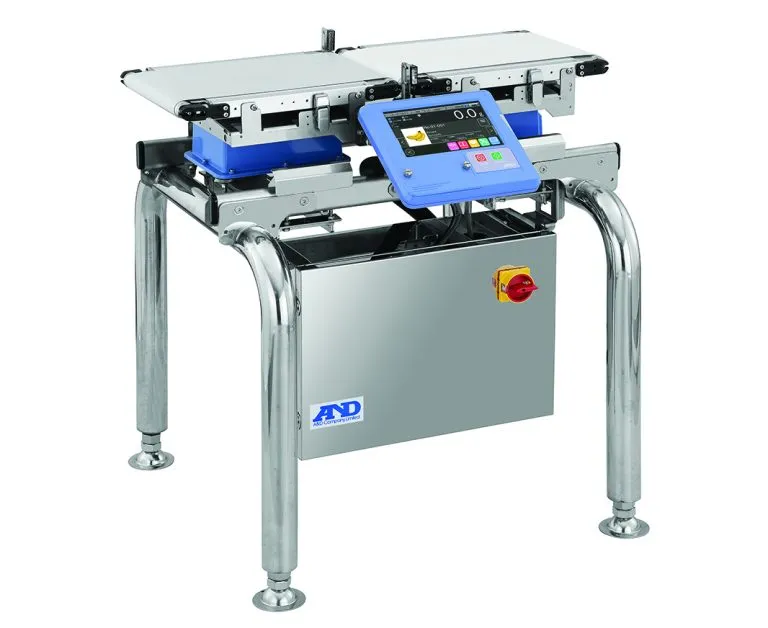
One of the most effective tools for maintaining compliance is an aqs checkweigher.
A checkweigher is an automated weighing system that verifies product weights during production. Modern AQS checkweighers can inspect every package on a production line in real time, helping businesses identify and correct issues before products reach the market.
Key Functions of an AQS Checkweigher
1. Continuous Weight Verification
An aqs checkweigher measures each package as it moves through production, ensuring products remain within acceptable tolerances.
2. Automatic Rejection of Non-Compliant Products
Packages that fall outside predetermined limits can be automatically removed from the production line, preventing non-compliant products from reaching customers.
3. Statistical Process Control
Advanced systems collect valuable production data that helps manufacturers monitor trends, identify process variations, and optimise filling operations.
4. AQS Reporting and Documentation
Many checkweighers generate detailed reports that support compliance with average quantity system Australia requirements and provide evidence during inspections or audits.
Benefits for Retailers
While manufacturers often focus on production compliance, retailers also benefit significantly from accurate weighing and AQS adherence.
Improved Supplier Accountability
Retailers can confidently source products from suppliers that follow recognised quantity control standards. This reduces the risk of customer complaints and regulatory issues.
Stronger Brand Reputation
Retailers are often the public face of a product. If consumers discover underfilled products, they may blame both the manufacturer and the retailer. Accurate quantities help protect brand credibility.
Reduced Returns and Complaints
Products that consistently meet declared quantities generate fewer disputes, resulting in improved customer satisfaction and lower operational costs.
Benefits for Regulators
Regulators play a critical role in ensuring fairness within the marketplace. The NMI AQS framework provides an effective mechanism for balancing consumer protection with practical manufacturing realities.
Consumer Protection
The primary objective of AQS is to ensure consumers receive the quantity they purchase. This supports confidence in retail transactions and promotes fair competition.
Efficient Enforcement
By focusing on batch averages rather than demanding exact weights for every package, regulators can implement practical and scientifically sound compliance standards.
Encouraging Best Practices
AQS encourages businesses to adopt robust quality control systems, advanced weighing technologies, and continuous process improvement.
Common Industries That Rely on AQS
Many sectors depend heavily on accurate weighing and AQS compliance, including:
- Food and beverage manufacturing
- Dairy processing
- Snack food production
- Pharmaceuticals
- Cosmetics and personal care products
- Household chemicals
- Agricultural products
- Pet food manufacturing
In each of these industries, even small weight inconsistencies can result in substantial financial losses or compliance risks.
Best Practices for Maintaining AQS Compliance
To ensure ongoing compliance with the average quantity system Australia, businesses should:
- Invest in high-quality weighing equipment.
- Use a reliable aqs checkweigher for production monitoring.
- Conduct regular equipment calibration.
- Train staff on AQS requirements.
- Maintain detailed production records.
- Perform routine internal audits.
- Monitor process performance using statistical analysis.
By implementing these practices, businesses can reduce risk while improving operational efficiency.
Conclusion
Accurate weighing is far more than a production requirement—it is a critical component of regulatory compliance, customer satisfaction, and business profitability. The principles behind e weights, the average quantity system Australia, and NMI AQS ensure that consumers receive fair value while allowing manufacturers to operate efficiently.
Modern technologies such as an aqs checkweigher provide businesses with the tools needed to maintain compliance, minimise product giveaway, and enhance quality control. For retailers and regulators alike, accurate weights contribute to a fair, transparent, and trustworthy marketplace where both businesses and consumers benefit.






























Sign in to leave a comment.