
The Evolution of Digital Discovery
From Keywords to Conversations
How User Behavior Has Fundamentally Changed
Not too long ago, the internet worked like a giant filing cabinet. You typed in a few keywords, hit search, and then sifted through results hoping something clicked. That model trained an entire generation of marketers to think in terms of keywords, rankings, and click-through rates. But here in 2026, that behavior is fading fast, replaced by something far more intuitive and, honestly, more demanding. People are no longer typing fragments. They are asking full questions, often layered with context, expectations, and even preferences.
This shift is not just cosmetic. It fundamentally changes what users expect from technology. Instead of acting like researchers, users now behave like decision-makers outsourcing the heavy lifting. When someone asks an AI tool for the best accounting software for freelancers who travel frequently, they are not looking for a list. They are expecting a refined, contextual answer that already considers trade-offs. That expectation removes multiple steps from the traditional discovery process.
The biggest consequence of this shift is invisibility risk. In search engines, even if you rank lower, there is still a chance someone might scroll and find you. In AI-generated responses, there is no scrolling. There is only selection. If your brand is not included in that selection, it simply does not exist in that moment. That creates a winner-takes-most dynamic where visibility is concentrated among a few recognized names.
There is also a subtle psychological shift happening. Users tend to trust AI-generated responses more than search results because they feel curated and synthesized. It feels like advice rather than data. That trust amplifies the importance of being included. You are no longer just competing for attention. You are competing for endorsement.
So the rules have changed. It is no longer enough to be searchable. You have to be understood, referenced, and recommended by systems that interpret the web rather than just index it.
The Decline of Traditional Search Dominance
Search engines are still powerful, but their monopoly on discovery is slipping in quiet but meaningful ways. The biggest change is not that people stopped using search. It is that search is no longer the first step in many journeys. AI tools have inserted themselves at the very beginning, acting as filters before users ever reach a search results page.
One of the main reasons for this shift is efficiency. Traditional search requires effort. You open multiple tabs, compare sources, evaluate credibility, and then form your own conclusion. AI collapses that entire process into a single interaction. It gathers, interprets, and presents information in a way that feels immediate and personalized. That convenience is incredibly hard to compete with.
Another factor is integration. AI is no longer a separate destination. It is embedded into browsers, operating systems, messaging apps, and workplace tools. Discovery becomes something that happens passively, almost without the user realizing it. When answers are available everywhere, the need to “go search” naturally decreases.
There is also a structural shift happening within search engines themselves. Many are incorporating AI-generated summaries directly into results, which reduces the visibility of traditional organic listings. Even if your page ranks well, it may sit below an AI-generated answer that captures most of the attention. That means the value of ranking is being diluted over time.
For businesses, this creates a new kind of pressure. SEO is still necessary, but it is no longer sufficient. Being on page one does not guarantee visibility in an AI-first environment. If your brand is not part of the datasets and signals that AI systems rely on, your chances of being recommended shrink dramatically.
This is where the concept of AI visibility starts to take center stage.
What Is AI Visibility?
Defining AI-Driven Discoverability
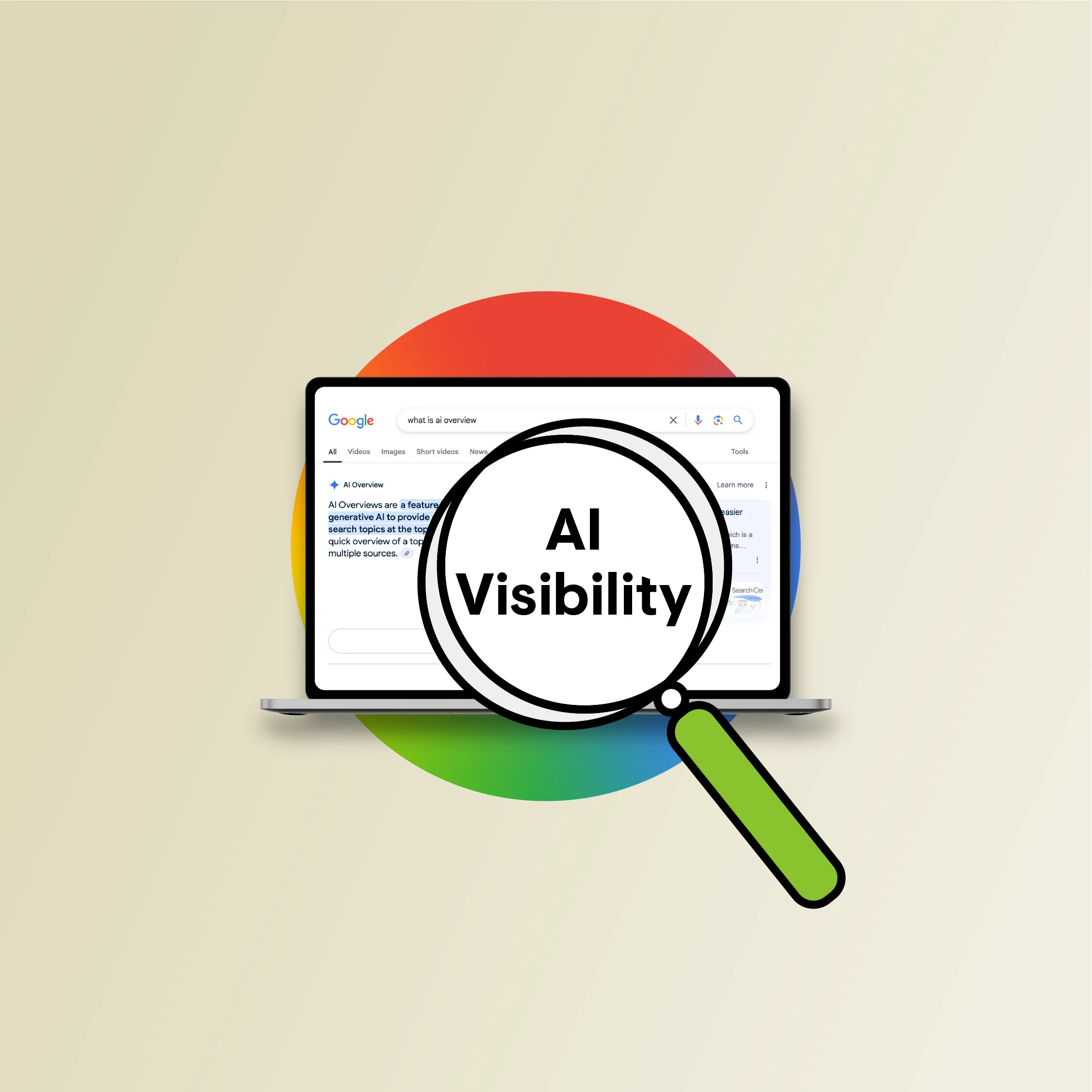
AI visibility refers to how often and how effectively a brand appears in AI-generated responses across platforms like ChatGPT, Gemini, and Perplexity. It is not about ranking web pages. It is about being included in answers. That distinction may seem small, but it completely changes the strategy behind digital presence.
In traditional SEO, visibility is measured by where you appear in a list. In AI systems, there is often no list. There are just answers. Sometimes those answers include a handful of recommendations, sometimes only one. That means the competition is not about climbing positions. It is about making the cut.
What makes AI visibility complex is that it relies on a broader set of signals. AI systems pull from training data, live web content, structured information, and contextual understanding. They are not just matching keywords. They are interpreting meaning, relevance, and authority. This requires brands to think beyond isolated pieces of content and focus on their overall digital footprint.
Consistency becomes critical. If your brand appears across multiple trusted sources, is associated with specific topics, and is mentioned in relevant contexts, it becomes easier for AI systems to recognize and recommend it. If your presence is scattered or shallow, the system may not have enough confidence to include you.
Another important aspect is clarity. AI models favor content that is well-structured, easy to interpret, and rich in context. Vague or overly optimized content designed only for search engines tends to perform poorly in AI-driven environments. The focus shifts toward genuinely useful information that can be easily understood and summarized.
In simple terms, AI visibility is about being part of the knowledge layer that powers modern discovery. And as that layer becomes more influential, being absent from it becomes a serious disadvantage.
Difference Between SEO and AI Visibility
SEO and AI visibility are closely related, but they operate on different principles. SEO is about optimizing for algorithms that rank pages. AI visibility is about influencing systems that generate answers. That difference changes everything from content strategy to performance metrics.
In SEO, success is measured through rankings, traffic, and clicks. In AI visibility, success is measured through inclusion, mentions, and recommendation frequency. You are no longer asking, “How do I rank higher?” but rather, “Why would an AI choose to mention my brand at all?”
Authority also works differently. SEO relies heavily on backlinks and domain strength. AI systems look at a wider range of signals, including brand mentions, contextual relevance, and consistency across sources. It is less about technical optimization and more about perceived credibility.
User behavior plays a role here as well. SEO assumes users will explore multiple results. AI assumes users want a single, reliable answer. That reduces the margin for error. If you are not included, there is often no fallback opportunity.
Content strategy shifts accordingly. Instead of creating dozens of keyword-focused pages, brands need to create comprehensive, authoritative content that clearly communicates expertise. The goal is not just to attract traffic but to train the system to recognize your brand as a reliable source.
The reality is that SEO is not disappearing. It is evolving into something broader. It still feeds the ecosystem, but it is no longer the endpoint. AI visibility builds on top of it, creating a new layer where discovery is shaped by intelligence rather than indexing.
The Rise of AI-Powered Platforms
ChatGPT, Gemini, and Perplexity as Discovery Engines
AI platforms have quickly transformed from experimental tools into primary discovery engines. What makes them powerful is not just their ability to retrieve information, but their ability to interpret and synthesize it. They do not just point users in a direction. They guide decisions.
These platforms act more like advisors than search engines. When a user asks a question, the AI evaluates multiple sources, identifies patterns, and delivers a response that feels cohesive. This changes the role of content. Instead of being a destination, it becomes a building block in a larger answer.
Another key advantage is adaptability. AI systems can refine responses based on follow-up questions, creating a dynamic interaction that traditional search cannot match. This makes discovery more fluid and personalized, which increases user reliance over time.
For brands, this means visibility is no longer tied to a single platform. It is distributed across multiple AI systems, each with its own way of interpreting data. That makes consistency and breadth of presence more important than ever.
Why Users Trust AI Recommendations More
Trust is the hidden driver behind the rise of AI visibility. Users perceive AI-generated answers as more objective and comprehensive, even though they are built on existing data. This perception gives AI recommendations a level of influence that traditional search results often lack.
Part of this trust comes from presentation. AI responses are structured, concise, and tailored to the user’s query. They feel intentional rather than random. This creates a sense of reliability that encourages users to act on the information.
Another factor is cognitive ease. Evaluating multiple sources requires effort. Accepting a single, well-structured answer does not. Humans naturally gravitate toward the path of least resistance, and AI provides exactly that.
For businesses, this trust dynamic raises the stakes. Being recommended by an AI system carries more weight than simply appearing in search results. It positions your brand as a vetted option rather than just another choice.
How AI Models Choose Which Brands to Recommend
Training Data and Knowledge Sources
AI models rely on vast amounts of data collected from across the web. This includes articles, reviews, forums, documentation, and structured datasets. The quality and diversity of this data influence which brands are recognized and recommended.
If your brand is frequently mentioned in credible contexts, it becomes part of the model’s understanding. If it is rarely mentioned, it may not exist in that understanding at all. This makes visibility a function of presence, not just optimization.
Authority Signals in AI Systems
Authority in AI systems is built through repetition, context, and credibility. Brands that appear consistently across trusted sources are more likely to be recommended. This includes media coverage, expert mentions, and strong content.
It also includes clarity. Brands that clearly define what they do and where they fit are easier for AI systems to categorize and recommend. Ambiguity reduces visibility.
Why Mid-Sized Businesses Are Falling Behind
Lack of AI Strategy and Infrastructure
Mid-sized businesses often sit in an awkward position. They are too large to ignore digital strategy but not large enough to invest heavily in emerging trends. As a result, many are still focused primarily on traditional SEO while larger competitors are already optimizing for AI visibility.
This gap is not just about resources. It is about awareness. Many businesses simply do not realize how quickly discovery is changing. Without a clear strategy, they risk becoming invisible in AI-driven environments.
Missed Opportunities in Digital PR and Mentions
AI visibility depends heavily on brand mentions across the web. Mid-sized businesses often underinvest in PR, partnerships, and thought leadership, which limits their presence in the data ecosystem.
This creates a compounding effect. Fewer mentions lead to lower recognition, which leads to fewer recommendations.
Practical Strategies to Improve AI Visibility
Building Brand Mentions Across the Web
Improving AI visibility starts with expanding your digital footprint. This means getting your brand mentioned in articles, interviews, industry reports, and trusted platforms. The goal is to create a network of references that reinforce your credibility.
Leveraging PR, Partnerships, and Platforms
Strategic partnerships and PR efforts play a major role in AI visibility. Collaborating with established brands, contributing to publications, and using platforms designed to enhance AI readiness can help bridge the gap. Some companies are already working with specialized partners like Konverge to align their digital presence with AI-driven discovery.
The Future: SEO vs AI Visibility
Will They Merge or Compete?
The relationship between SEO and AI visibility is not a simple competition. It is more like an evolution. SEO provides the foundation, while AI visibility builds on top of it. Over time, the two are likely to merge into a unified strategy focused on overall digital presence.
Preparing for the Next Era of Digital Presence
The businesses that succeed in 2026 and beyond will be the ones that adapt early. This means thinking beyond rankings and focusing on relevance, authority, and consistency across all digital channels.
Conclusion
AI visibility is not replacing SEO, but it is redefining what it means to be discoverable. As users shift toward AI-driven interactions, the importance of being included in generated answers continues to grow. Businesses that recognize this shift and adapt their strategies accordingly will have a significant advantage, while those that rely solely on traditional methods may find themselves fading into the background.





























Sign in to leave a comment.