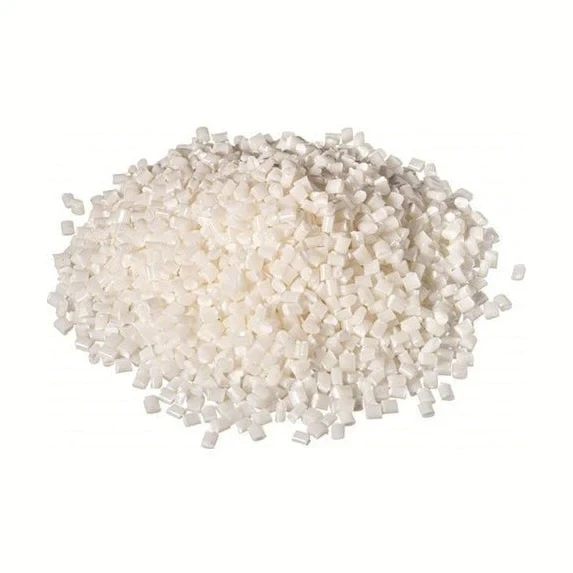

When performance, precision, and durability matter, GF30 PBT (30% Glass Fiber Reinforced PBT) stands out as a reliable and cost-effective engineering material. By reinforcing polybutylene terephthalate with 30% glass fiber, manufacturers achieve an optimal balance between strength, dimensional stability, heat resistance, and processing efficiency.
Why Add Glass Fiber to PBT?
Unfilled PBT already offers good electrical insulation, chemical resistance, and processability. However, for structural and precision applications, higher mechanical performance is often required. Adding glass fiber significantly enhances the material’s structural properties:
- Higher stiffness and rigidity – Glass fibers act as a reinforcing skeleton inside the polymer matrix, dramatically increasing flexural modulus.
- Improved dimensional stability – Reduced shrinkage and warpage ensure tight tolerances in precision components.
- Enhanced heat resistance – Glass fiber reinforcement raises the heat deflection temperature (HDT), allowing reliable performance under thermal stress.
- Better creep resistance – Long-term mechanical loads are less likely to cause deformation.
Glass fiber reinforced PBT from a general-purpose engineering plastic into a structural-grade material suitable for demanding applications.
Why 30% Glass Fiber?
The 30% reinforcement level is widely adopted in the industry because it provides the best overall balance between performance and processability.
1. Optimal Mechanical Strength
At 30% glass fiber content, GF30 PBT delivers substantial increases in tensile and flexural strength without making the material excessively brittle.
2. Controlled Warpage and Moldability
Higher glass fiber content (such as 40% or above) can improve stiffness further but may increase molding difficulty and surface defects. A 30% ratio maintains excellent injection molding flow while achieving strong structural performance.
3. Balanced Toughness
Too little reinforcement (e.g., 10–20%) may not provide sufficient stiffness for load-bearing applications. Too much can reduce impact resistance. GF30 PBT offers a well-balanced mechanical profile.
4. Cost Efficiency
30% glass fiber provides significant performance improvement while keeping material cost under control, making it a competitive choice for large-scale production.
Typical Applications of GF30 PBT
- Automotive connectors and sensor housings
- Electrical switches and socket components
- Relay housings and coil bobbins
- Precision industrial parts
- Structural components requiring dimensional accuracy
The Smart Choice for Precision and Durability
GF30 PBT is not simply a reinforced polymer — it is a carefully optimized engineering solution. With 30% glass fiber reinforcement, it delivers:
- Structural strength
- Thermal stability
- Dimensional precision
- Reliable long-term performance
For manufacturers seeking a material that combines mechanical integrity with efficient processing, GF30 PBT remains one of the most proven and widely adopted engineering plastics in the industry.






















Sign in to leave a comment.