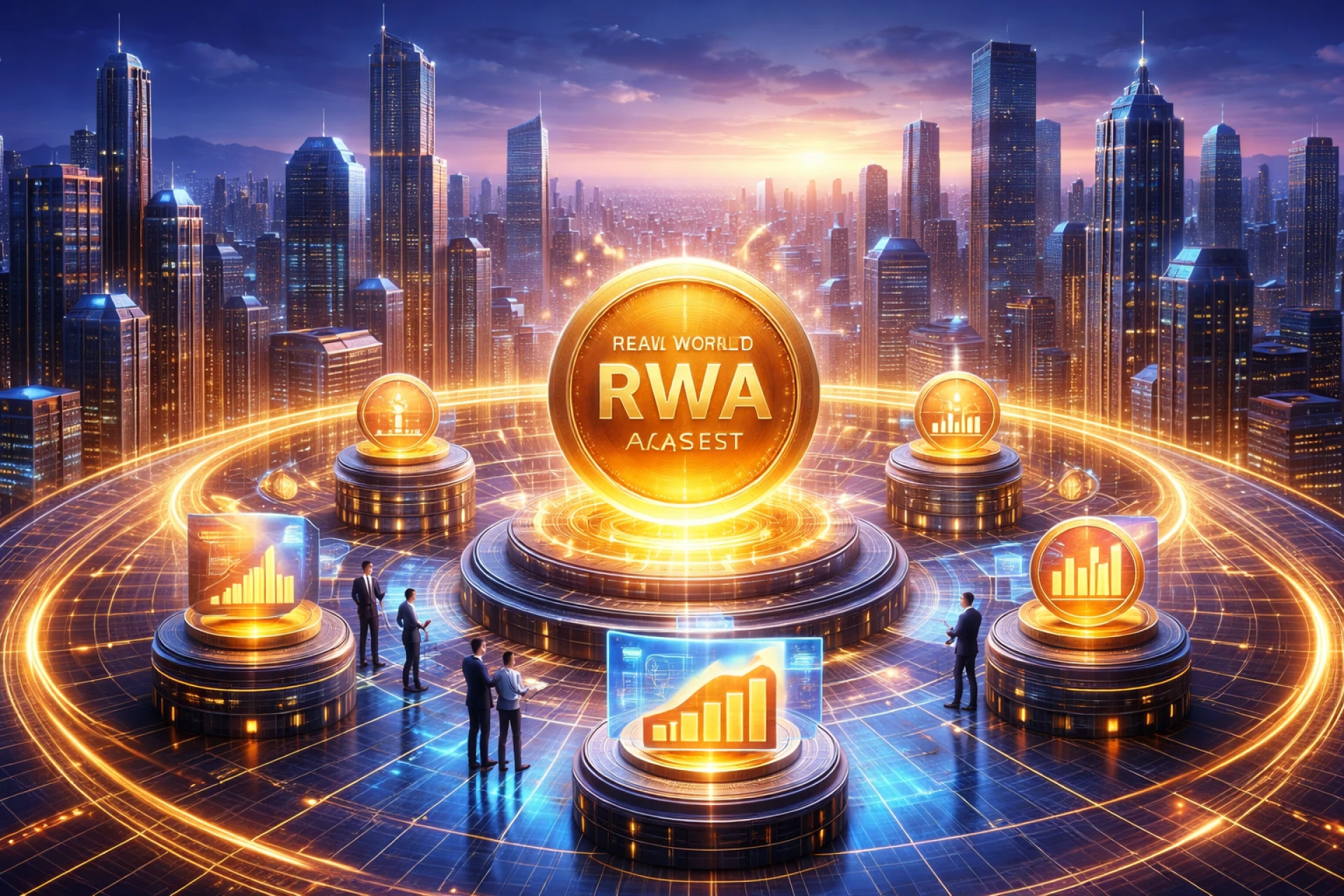

Institutional capital has always been a forward-looking force, moving quietly but decisively toward infrastructure that reshapes markets at scale. Over the past few years, a noticeable shift has been taking place beneath the surface of global finance. Large asset managers, banks, hedge funds, private equity firms, and sovereign investors are increasingly allocating resources toward RWA token development platforms. This movement is not driven by speculation or hype, but by structural inefficiencies in traditional financial systems and the growing maturity of tokenized asset infrastructure.
Real world assets have long been constrained by friction, opacity, illiquidity, and geographic limitations. Tokenization offers institutions a new operating layer where assets can be issued, managed, traded, and settled with greater precision and efficiency. As regulatory clarity improves and enterprise-grade platforms mature, institutional capital is aligning itself with RWA token development as a strategic long-term investment rather than a short-term experiment.
The following sections explore the fundamental reasons behind this capital shift, examining market forces, operational advantages, regulatory alignment, and the broader transformation of capital markets.
Understanding the Institutional Shift Toward RWA Token Development
Institutional investors do not chase trends. Their participation signals confidence in infrastructure that can support trillions in asset value over decades. RWA token development platforms are increasingly viewed as foundational technology rather than optional innovation.
Key drivers behind this shift include:
- The need to unlock liquidity from traditionally illiquid asset classes
- Demand for faster and more transparent settlement mechanisms
- Pressure to modernize asset issuance and lifecycle management
- The search for yield diversification in a low-margin environment
- Alignment with long-term digital transformation strategies
Rather than focusing solely on tokenized assets themselves, institutions are prioritizing the platforms that enable secure, compliant, and scalable tokenization. Ownership of infrastructure creates leverage across multiple asset classes and markets.
Structural Inefficiencies in Traditional Asset Markets
Traditional capital markets were not designed for real-time, global, and programmable asset movement. Many institutional portfolios are tied up in assets that are valuable but operationally rigid.
Common inefficiencies include:
- Lengthy settlement cycles
- Manual reconciliation processes
- High intermediary costs
- Limited access for secondary trading
- Fragmented data and ownership records
RWA token development platforms address these challenges by digitizing ownership and embedding rules directly into asset representations. For institutions managing billions in assets, even marginal efficiency gains translate into significant financial impact.
Liquidity Unlocking as a Primary Capital Magnet
Liquidity is a core concern for institutional investors. Assets such as real estate, infrastructure, private credit, commodities, and fine art often require long holding periods and lack efficient exit mechanisms.
RWA token development platforms enable:
- Fractional ownership of large-value assets
- Programmable transfer restrictions
- Secondary market readiness
- Faster capital redeployment
- Broader investor participation
By transforming illiquid assets into divisible digital representations, institutions gain flexibility without sacrificing asset quality. This liquidity optionality is one of the strongest incentives driving capital toward tokenization platforms.
Tokenization as a New Capital Formation Model
Traditional capital formation relies on complex issuance processes involving multiple intermediaries. These processes increase costs, slow down fundraising, and limit participation.
RWA token development platforms introduce a streamlined alternative:
- Digital issuance with automated compliance
- Embedded investor eligibility checks
- Transparent ownership tracking
- Real-time reporting capabilities
- Reduced reliance on intermediaries
Institutions recognize that platforms enabling tokenized issuance can dramatically shorten fundraising cycles and reduce operational overhead. This makes them attractive not only as users but also as strategic investors in the platform ecosystem itself.
Regulatory Alignment Is No Longer a Barrier
Earlier institutional hesitation stemmed largely from regulatory uncertainty. That landscape has evolved. While regulations continue to differ by jurisdiction, clearer frameworks around digital securities, custody, and compliance have emerged.
Institutional-grade RWA token development platforms now prioritize:
- Jurisdiction-specific compliance logic
- Identity verification and access controls
- Audit-ready transaction records
- Permissioned network architectures
- Integration with existing legal structures
This regulatory maturity has removed a major obstacle, allowing institutions to participate without compromising governance or risk management standards.
Operational Efficiency and Cost Reduction
Institutions operate at scale, and inefficiencies compound quickly. Tokenization platforms offer operational advantages that directly impact margins and productivity.
Key efficiency gains include:
- Automated settlement processes
- Reduced reconciliation workloads
- Real-time asset visibility
- Lower transaction and custody costs
- Streamlined corporate actions management
By investing in platforms that deliver these efficiencies, institutions position themselves to operate more competitively in a digitized financial environment.
Transparency and Data Integrity as Strategic Assets
Trust and data accuracy are critical in institutional finance. Traditional systems often rely on fragmented records maintained by multiple parties, increasing the risk of discrepancies and disputes.
RWA token development platforms provide:
- Immutable ownership records
- Real-time transaction history
- Unified asset data layers
- Enhanced auditability
- Reduced counterparty risk
For institutions managing complex portfolios across regions and asset classes, this level of transparency supports better decision-making and regulatory reporting.
Expansion of Investable Asset Classes
Tokenization is not limited to one asset category. Institutions see RWA token development platforms as gateways to a broader investment universe.
Assets increasingly being tokenized include:
- Commercial and residential real estate
- Private equity and venture capital interests
- Infrastructure and energy assets
- Trade finance and receivables
- Commodities and natural resources
Platforms that support multiple asset types offer diversification opportunities and allow institutions to deploy capital more strategically across market cycles.
Programmability and Smart Asset Logic
One of the most compelling aspects of RWA token development platforms is programmability. Assets are no longer static instruments but dynamic financial objects.
Programmable features include:
- Automated interest or dividend distribution
- Rule-based transfer restrictions
- Event-triggered actions
- Embedded governance mechanisms
- Lifecycle automation
Institutions value this because it reduces manual intervention while increasing control. The ability to encode asset behavior directly into the platform aligns with the broader automation trend in enterprise finance.
Interoperability With Existing Financial Systems
Institutions do not operate in isolation. New platforms must integrate seamlessly with legacy systems, custodians, accounting tools, and reporting frameworks.
Leading RWA token development platforms focus on:
- API-based integration capabilities
- Compatibility with existing custody models
- Support for traditional accounting standards
- Flexible deployment architectures
- Enterprise-grade security controls
This interoperability ensures that institutions can adopt tokenization without disrupting existing operations.
Strategic Infrastructure Investment Perspective
Institutional capital flowing into RWA token development platforms is not always about immediate usage. Many institutions view these platforms as critical financial infrastructure.
From this perspective:
- Platform ownership creates long-term strategic leverage
- Early participation offers influence over standards and governance
- Infrastructure investments hedge against market disruption
- Platforms enable future product innovation
- Network effects increase platform value over time
This infrastructure mindset explains why institutions are funding platform development even before mass adoption occurs.
Risk Mitigation and Control Advantages
Contrary to common misconceptions, institutions are not embracing tokenization to increase risk. They are doing so to better manage it.
RWA token development platforms support:
- Granular access controls
- Real-time monitoring
- Automated compliance enforcement
- Reduced settlement risk
- Enhanced fraud prevention
These controls align with institutional risk frameworks and support more resilient financial operations.
Competitive Pressure and Market Positioning
As more institutions adopt tokenization, competitive pressure increases. Early adopters gain operational advantages and access to new investment structures.
Institutions are investing in platforms to:
- Avoid falling behind technologically
- Influence emerging market standards
- Secure early access to tokenized assets
- Differentiate offerings to clients
- Future-proof their business models
Capital flows toward platforms that are perceived as category leaders capable of shaping the future of asset markets.
Long-Term Vision of a Tokenized Financial System
At a macro level, institutions recognize that capital markets are evolving toward greater digitization. RWA token development platforms represent a bridge between traditional finance and a more programmable, efficient future.
This vision includes:
- Always-on global markets
- Reduced settlement times
- Enhanced capital mobility
- Greater financial inclusion at scale
- Lower systemic friction
Institutions investing today are positioning themselves for this long-term transformation rather than reacting to it later.
Conclusion: Why Institutional Capital Is Moving With Conviction
Institutional capital does not move impulsively. Its growing allocation toward RWA token development platforms reflects deep analysis, strategic foresight, and alignment with long-term financial trends.
These platforms address core institutional priorities including liquidity, efficiency, transparency, compliance, and scalability. They enable new capital formation models, unlock dormant asset value, and modernize financial infrastructure without abandoning regulatory discipline.
As global markets continue to evolve, RWA token development platforms are emerging as foundational systems rather than experimental technologies. Institutional capital is flowing toward them not because of short-term opportunity, but because they represent the operating layer of the next generation of finance.





























Sign in to leave a comment.