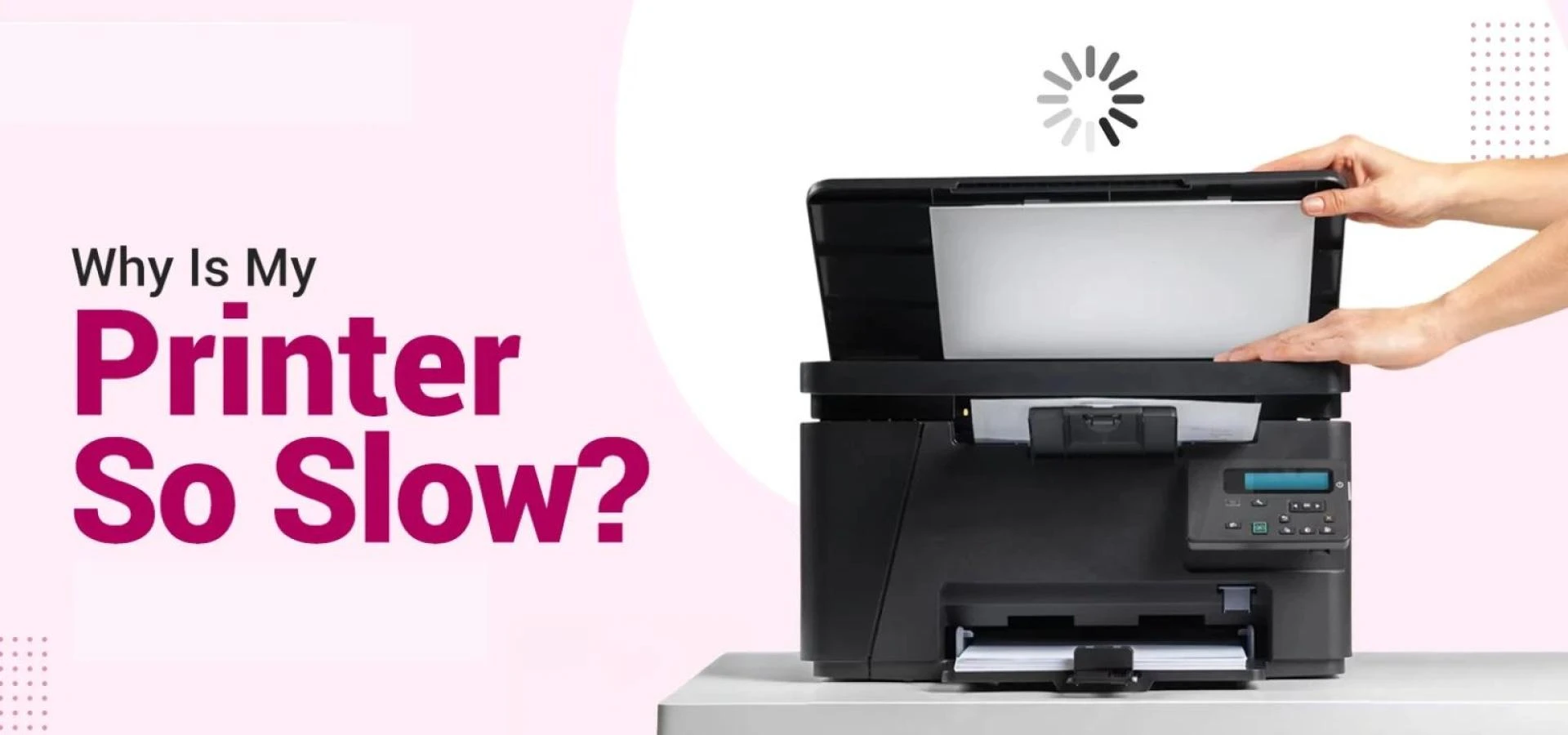

If you’ve ever sat impatiently watching your printer crawl through a job, you’ve probably asked yourself: why is my printer so slow? Whether you’re printing important business documents or school assignments, slow printing can be frustrating and time-consuming. The good news is that this problem is usually easy to diagnose and fix.
In this guide, we’ll uncover the 10 most common causes of slow printing and share proven fixes to help you restore fast, reliable performance, saving both time and toner.
1. Outdated Printer Drivers
One of the most common reasons why your printer is so slow is outdated or corrupted printer drivers. Printer drivers act as a communication bridge between your device and printer. When they’re outdated, performance lags.
Fix:
- Visit the manufacturer’s website (e.g., HP, Canon, Epson, Brother).
- Download and install the latest driver version for your model.
- Restart your printer and computer to apply updates.
2. High-Resolution Print Settings
If your printer is set to Best or High Quality mode, it prints at a much slower pace because it processes more data per page.
Fix:
- Go to your printer settings and switch from High Quality to Normal or Draft mode.
- Use high-quality mode only when printing photos or detailed graphics.
This small tweak can often double your print speed without noticeable quality loss for everyday documents.
3. Slow Wi-Fi or Network Connection
If you’re using a wireless printer, sluggish Wi-Fi can be a major bottleneck. The print job data travels over your network, and weak signals delay transmission.
Fix:
- Move your printer closer to the router.
- Use a wired Ethernet connection if possible.
- Restart your router to clear bandwidth issues.
- Ensure no large downloads or video streams are running during printing.
For offices, consider using a dedicated printer network for faster, uninterrupted performance.
4. Printer Memory Overload
Many printers come with limited onboard memory. When you print large files like high resolution PDFs or graphics-heavy documents, it takes time to process each page.
Fix:
- Print smaller batches of pages.
- Upgrade your printer’s RAM (check your model’s manual).
- Convert heavy images into compressed formats before printing.
5. Using the Wrong Print Driver
Using a universal print driver instead of your specific model driver can slow performance and reduce print quality.
Fix:
- Uninstall the generic driver.
- Reinstall the official driver from your printer manufacturer’s website.
6. Too Many Print Jobs in the Queue
A cluttered print queue can cause unnecessary delays, especially if older or stuck jobs are clogging the line.
Fix:
- Open Devices and Printers→ Right-click your printer → Select See what’s printing.
- Cancel all pending jobs and restart the printer.
- Print one document at a time to maintain efficiency.
7. Firmware or Software Glitches
Printers, like other smart devices, run on internal software called firmware. Outdated firmware can lead to performance issues and slow printing.
Fix:
- Check for firmware updates through your printer’s control panel or app.
- Follow the on-screen instructions carefully during installation.
Regular updates improve both speed and stability.
8. Printer Maintenance Neglect
Dust buildup, dried ink, or dirty rollers can affect your printer’s mechanical performance, causing pages to print slowly or unevenly.
Fix:
- Clean the print heads using your printer’s built-in cleaning cycle.
- Wipe down internal components gently with a lint-free cloth.
- Replace old or low-quality ink cartridges.
9. Large File Sizes or Complex Documents
Printing large PDFs, images, or presentations with complex graphics can slow your printer’s processing speed.
Fix:
- Compress large files before printing.
- Convert complex PowerPoint or image-heavy documents into simplified PDFs.
- Reduce resolution in the source document if high detail isn’t required.
10. Incorrect Print Spooler Settings
The print spooler manages and queues print jobs. Incorrect settings or a clogged spooler service can make your printer sluggish.
Fix:
- Press Windows + R, type
services.msc, and hit Enter. - Find “Print Spooler,” right-click, and select Restart.
- Clear old spool files from
C:\Windows\System32\spool\PRINTERS.
Speed Up Your Printer in Minutes
Here’s a recap of the top fixes to resolve why is my printer so slow:
- Update printer drivers and firmware regularly
- Use the correct print driver
- Reduce print resolution
- Improve Wi-Fi signal or use a wired connection
- Clear print queue and spooler files
- Perform regular printer maintenance
Final Thoughts
When you ask, Why is my printer so slow?, remember, the issue usually lies in settings, connectivity, or maintenance. By identifying the root cause and applying these proven fixes, you can transform your printer from painfully slow to lightning-fast.
Regular maintenance, software updates, and smart usage habits not only boost performance but also extend your printer’s lifespan, saving you money and frustration in the long run.

























Sign in to leave a comment.