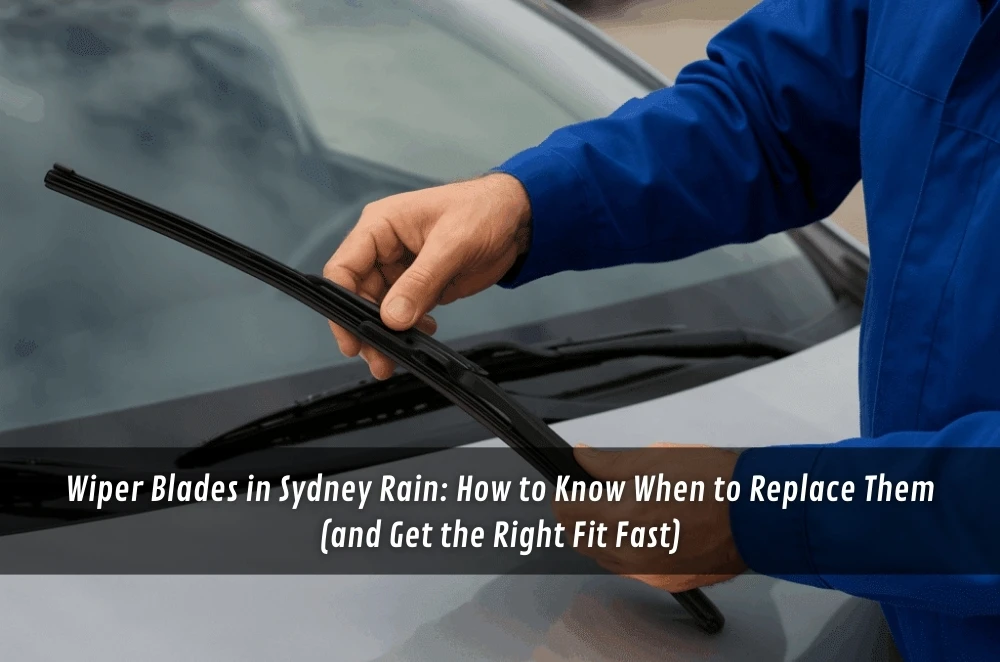

Wiper blades are one of those car parts you forget about right up until you can’t see.
Then you’re stuck peering through a smeary windscreen on Parramatta Road, or crawling along in a downpour, hoping the next set of lights doesn’t appear out of nowhere.
For drivers in the Inner West and across Greater Sydney, wipers wear out faster than people expect—heat, grime, parking in the sun, and stop-start traffic all take their toll.
That’s why professional wiper blade fitting for cars in Sydney can be a simple win: the right size and a proper fit, without the guesswork.
And if you drive beyond Sydney (Wollongong, the Central Coast, Newcastle), the mix of salt air, rain, and highway grit can push the rubber over the edge even quicker.
This guide is a practical way to tell when your blades are done, choose the right replacement, and avoid the most common fitting mistakes.
Why wipers fail when you need them most
Wipers don’t usually “break” in a dramatic way.
They slowly lose their edge, harden from heat and UV, and start skipping or leaving streaks that get worse with every wet drive.
The real problem is that the first time you notice the decline is often the first heavy rain.
In lighter drizzle, you can get away with a bit of smearing; in a proper Sydney storm, the same blades suddenly feel useless.
Dirt makes it worse.
Road film, dust, tree sap, and fine grit get dragged across the glass like sandpaper, which shortens blade life and makes chatter more likely.
Decision factors that change how long blades last
Not all wiper wear is about “cheap blades.”
How and where you drive can matter just as much.
Parking conditions: If your car sits in direct sun most days, the rubber dries and hardens faster.
Usage patterns: Short trips with lots of starts and stops tend to mean more wiping on partly dirty glass.
Windscreen condition: Small chips and pitting can chew up a blade edge and create streaking that never fully disappears.
Washer fluid habits: Using plain water or letting the reservoir run empty means more dry wiping, which accelerates wear.
Local environment: Coastal air and grime buildup can be rough on rubber and metal components over time.
The aim isn’t to obsess over every variable.
It’s to understand why your car might need blades more often than someone else’s.
Common mistakes drivers make
Mistake 1: Waiting until the blade is obviously dangerous.
By the time visibility is properly compromised, you’ve already spent weeks driving with subpar performance.
Mistake 2: Buying the wrong size and “making it work.”
A blade that’s slightly off can miss parts of the screen, knock against trims, or apply uneven pressure.
Mistake 3: Replacing only one blade.
If one is worn, the other is usually not far behind—and mismatched wiping can be distracting.
Mistake 4: Ignoring the rear wiper.
Rear blades are often forgotten until reversing in rain becomes a guess.
Mistake 5: Blaming the blades for everything.
Sometimes the issue is a dirty windscreen, worn arms, or a screen that’s pitted and hard to wipe clean.
A quick replace-or-wait checklist (and what to ask for when fitting)
You don’t need a mechanic’s eye to decide if it’s time.
Run this checklist the next time it rains—or with washer fluid in daylight.
Replace now if you notice any of these
- streaks that don’t clear after a couple of passes
- skipping or “juddering” across the glass
- a milky haze left behind (especially at night)
- split, cracked, or torn rubber edges
- sections of the screen were consistently missed
If you’re ticking two or more boxes, you’re not being fussy—you’re being realistic.
Before you buy, answer these three questions
1) What’s the exact blade size for both sides (and rear if needed)?
Don’t guess; the difference can be small but important.
2) What fitting type does your car use?
Most are straightforward, but mismatches waste time and can lead to a loose fit.
3) Do you want “good enough” or “set and forget for a while”?
City commuters and rideshare drivers often value consistent performance more than the cheapest option.
If you’d rather have someone match the right blades and fit them correctly, the local wiper blade fitting in Inner West Sydney is a practical starting point.
Local SMB mini-walkthrough
A small Inner West trade business runs two utes and a van that spend most days parked curbside.
The drivers do early starts, plenty of stop-start traffic, and the windscreens cope with grime from main roads.
Instead of waiting for a storm to expose the problem, they add a quick wiper check to their fortnightly vehicle tidy-up.
When blades start streaking, they replace both fronts together and keep one spare set in the workshop.
It’s a small habit, but it avoids those “can’t see a thing” mornings when work still needs to happen.
Operator experience moment
In practice, the biggest wiper complaints come down to two things: incorrect sizing and dirty glass.
People fit a blade that’s close enough, then wonder why it chatters or misses a corner.
And plenty of “worn blade” problems disappear after a proper clean of the windscreen and a fresh set matched to the car.
Next 7–14 days: a simple first-action plan
Days 1–2: Do a proper visibility check.
Clean the windscreen inside and out, then test the wipers with washer fluid in daylight.
Days 3–4: Inspect the rubber edge.
Look for splits, hard sections, or uneven wear—especially where streaking starts.
Days 5–7: Confirm sizes and rear blade needs.
Check both front blade sizes and whether your rear blade is overdue too.
Days 8–10: Decide your replacement approach.
Either buy the correctly matched blades and fit carefully, or organise local fitting so sizing and attachment are handled properly.
Days 11–14: Lock in a simple maintenance rhythm.
Add “wiper check” to your monthly car routine—quick glance, quick wipe test, done.
Practical Opinions
Replace before the big rain, not during it.
If the size isn’t confirmed, don’t buy “close enough.”
Clean glass makes new blades feel twice as good.
Key Takeaways
- Wipers usually fail gradually, then become a problem the first time it pours.
- Heat, grime, and parking in the sun can shorten blade life across Sydney and nearby regions.
- Most mistakes are simple: wrong size, replacing one blade only, and ignoring glass cleanliness.
- A quick checklist and a basic routine prevent the worst visibility moments.
Common questions we hear from businesses in Sydney, NSW, Australia
Q1) How often should I replace wiper blades?
Usually, it depends on exposure and driving habits, but if you’re seeing streaks, skipping, or missed sections, it’s time regardless of age.
A practical next step is to test them with washer fluid in daylight and inspect the rubber edge.
In most cases around Sydney, sun exposure and road grime make “wait another month” a bad gamble.
Q2) Why do my new wipers still streak?
It depends on whether the windscreen is clean, the blade size is correct, and the attachment is seated properly.
A practical next step is to deep-clean the glass and confirm both blade sizes match your vehicle’s requirements.
In most cases in Inner West driving, film from traffic can cause streaking even with new blades.
Q3) Should I replace both blades at the same time?
In most cases, yes, because wear tends to be similar and mismatched wiping can be distracting in rain.
A practical next step is to replace both fronts together and check the rear blade while you’re at it.
Usually, drivers across the Central Coast and Newcastle corridor notice uneven wiping sooner due to faster highway grime buildup.
Q4) Can I just buy a universal blade?
It depends on your vehicle and the connector type; “universal” can still mean compromise or imperfect fit.
A practical next step is to confirm the correct size and attachment style before purchasing.
In most cases across Greater Sydney, the time saved by a proper match is worth more than the small price difference.



























Sign in to leave a comment.