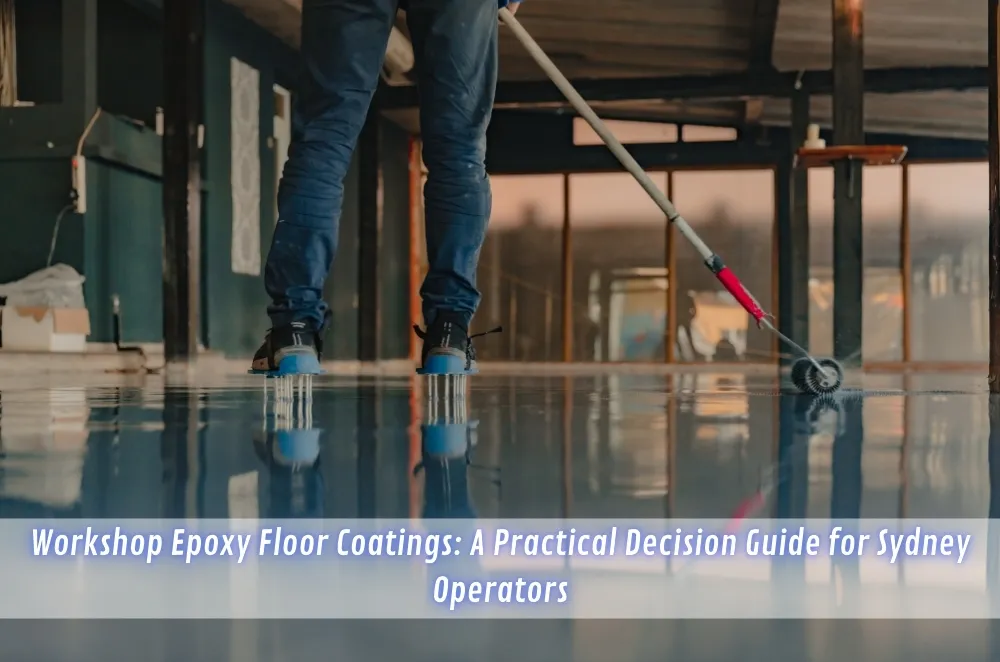

A workshop floor isn’t background scenery, it’s part of the job.
In a busy shop, the slab takes hot tyres, jack stands, dropped tools, rolling benches, and whatever chemicals happen to splash or drip on a chaotic Thursday afternoon.
That’s exactly why epoxy floor coatings for workshops keep coming up: done well, they reduce dust, improve clean-up, and make the space feel more controlled without turning it into a showroom.
But floors don’t fail all at once; they fail by a thousand small annoyances, dusting, stains that never come out, slick patches near wet work, and edges that start lifting where vehicles pivot.
Why workshop floors fail earlier than they should
Most workshop floor failures are predictable once you look at the causes in plain daylight.
Concrete is a substrate, not a blank canvas. Even slabs that look “dry” can have moisture vapour coming up through them, and older workshops often have contamination you can’t see until you start prepping: oils, degreasers, and fine residues that have been ground in over years.
Sydney conditions can add a twist. Humidity swings and wet weeks can narrow your safe curing windows, and if the space is regularly washed down, you’re placing extra demand on the coating and on the detailing around drains and thresholds.
Traffic patterns matter more than total size. One tight turning arc at the hoist bay can chew through a coating faster than the rest of the workshop combined, especially if vehicles are coming in warm and turning sharply.
Chemical exposure is also usually underestimated. Brake fluid, coolant, battery acid, petrol, and strong cleaners can all do damage if the surface isn’t specified for the reality of the work, and if spills sit for hours because the day got away from you.
What “good” looks like in a working workshop
A “good” workshop coating is one that supports your workflow and doesn’t become another thing you have to babysit.
Start with outcomes rather than product names:
- Grip where it’s genuinely needed: Wet zones and entry points may need more traction, but too much texture everywhere can make cleaning miserable.
- Cleanability you’ll actually keep up with: If it’s hard to sweep filings or squeegee water, housekeeping slips and the floor looks worse faster.
- Abrasion and impact tolerance: Jack stands, creepers, dropped tools, trolleys, pallet jacks, and the occasional metal edge dragged across the surface.
- Chemical tolerance for your specific risks: Not “chemical resistant” in general, resistant to the chemicals you use and spill.
- Heat and tyre reality: Entry lanes and turning points often need special consideration because they see the harshest combination of heat, friction, and load.
- Repairability: Workshops change; bays move; equipment gets upgraded. Being able to patch or refresh high-wear zones matters.
If you define these outcomes first, you’ll be comparing quotes based on what matters, not what sounds fancy.
Common mistakes that blow out cost and downtime
The same handful of mistakes show up again and again, especially in sites that can’t afford to close for long.
Mistake 1: Treating preparation like a line item, not the core of the job.
Surface prep (cleaning, grinding, profiling, and assessment) is where bond strength is earned.
Mistake 2: Skipping moisture risk checks because the slab “looks fine”.
Moisture-related failures often appear weeks or months later, when it’s most painful to fix.
Mistake 3: Choosing a gritty texture everywhere because “more grip is safer”.
Over-textured floors trap grime and metal filings; the shop gets harder to keep safe and presentable.
Mistake 4: Underestimating cure and re-entry timing.
Even fast-turnaround systems still need realistic access windows for vehicles, jacks, and heavy rolling loads.
Mistake 5: Forcing one solution across all zones.
Wash bays, detailing areas, fabrication zones, and customer walkways can have very different needs.
Mistake 6: Rushing the details.
Edges, door thresholds, drains, joints, and crack treatment are common failure points when they’re simplified or skipped.
A coating can be “right” on paper and still fail if the site is rushed into service before it’s ready.
Decision factors: choosing a system that suits your workflow
If you want fewer surprises, make decisions in the same order you run a workshop: define the constraints first, then choose the tool.
1) Zone the workshop like a map, not a rectangle
Split the floor into zones and write down what actually happens there:
- Vehicle bays (turning, hot tyres, jacks, stands)
- Wet areas (wash bay, mop sink, detailing)
- Chemical handling (batteries, degreasers, fuels, solvents)
- Heavy rolling lanes (tool chests, pallet jacks, forklifts)
- Staff/customer walk paths (slip risk + presentation)
This helps avoid “over-spec everything” while still protecting the spots that take the beating.
2) Be realistic about contamination history
If the slab has had years of oil drips and chemical use, you’re not starting from clean concrete. That doesn’t rule out coating, but it does mean the cleaning and mechanical prep have to be treated as essential, and expectations must be set for stubborn staining or deep contamination.
3) Decide downtime tolerance before you discuss finishes
Downtime dictates what’s feasible.
If you can close for several days, you have room for more comfortable curing margins and less risk. If you can’t, staged work becomes a logistics job: where do vehicles go, how do you keep access routes clean, and how do you stop “just one quick job” from ruining a curing area?
If you want a straightforward way to map traffic, spill risk, and downtime windows before requesting quotes, the Ultimate Epoxy Floors workshop coating guide can help you structure that information so the scope is clearer.
4) Balance slip resistance with cleaning reality
There’s a trade-off: more texture usually means more grip, but also more scrubbing and slower cleaning.
Many workshops get the best practical outcome by applying extra traction only where the floor is regularly wet or oily, while keeping the rest smoother so it’s faster to sweep, mop, and squeegee.
5) Treat edges, joints, and thresholds as first-class decisions
Ask how cracks and joints will be handled, what happens at expansion joints, and how vehicle entry points are detailed. Those are the spots where water, dirt, and tyre forces concentrate, and they’re often where problems begin if the work is rushed.
A tidy-looking floor can still be a headache if the details weren’t planned.
Practical opinions
Prioritise substrate prep over “premium” branding.
Choose texture based on cleaning reality, not showroom appearance.
Plan downtime like a project, not a hope.
Operator experience moment
I’ve noticed the best projects start when an operator sketches the workshop like a workflow diagram, not a floorplan. Once you mark the turning arcs, wet zones, and the one path every trolley takes, the “where it will wear” conversation gets very straightforward. The smoother installs are usually the ones where downtime and access are decided early, rather than being negotiated mid-job.
A simple 7–14 day first-actions plan
You don’t need a perfect plan; you need a usable one that stops rework and scheduling chaos.
Days 1–2: Define outcomes and constraints
Write down the top three problems you’re trying to solve (dust, staining, slip risk, presentation, chemical damage). Then list the constraints you can’t dodge: opening hours, noise limits, staged access, and anything that must remain operational.
Days 3–4: Make a zone map and take photos
Sketch the workshop and mark vehicle paths, turning points, wet work areas, chemical handling spots, and walkways. Photograph cracks, spalling, old coating patches, and any areas that always seem to stay damp.
Days 5–6: Build your staging and storage plan
Decide where benches, toolboxes, parts racks, and vehicles will go. Confirm power and water needs. If you’re staging, plan a clean access route that doesn’t force traffic across a curing area.
A staging plan is what keeps a “quick coating job” from turning into two weeks of frustration.
Days 7–10: Lock the key scope choices
Decide where you want extra traction, whether coving is needed in wet zones, and what visibility features matter (line marking, colour contrast, light reflection). Note any door clearance issues and drainage locations.
Days 11–14: Quote and schedule based on clarity, not just price
Ask for scope detail: prep method, crack/joint treatment, number of coats, and realistic cure windows for foot traffic and vehicle loads. Compare on what’s included, how staging is handled, and whether the timeline fits your real-world constraints.
Local SMB mini-walkthrough (Sydney, NSW)
Many Sydney workshops sit in light-industrial complexes where access and noise expectations are shared.
Align the noisiest prep work with allowed hours to avoid friction with neighbours.
If staging bays, plan vehicle movement around peak estate traffic so you’re not blocking driveways.
Treat humidity and wet weather as scheduling inputs, not afterthoughts.
If washdowns are part of routine, design the wet zone finish and drainage details together.
Set a first-month cleaning routine so early spills don’t become permanent marks.
Key Takeaways
- Workshop floors fail early mostly due to prep shortcuts, moisture risk, and rushed curing, not because the colour was wrong.
- The best coating choices start with zoning the workshop by traffic, wet work, and chemical exposure.
- Slip resistance and cleanability are a trade-off; targeted traction usually works better than heavy texture everywhere.
- Quote comparisons are easier when the scope is clear: prep method, joints, details, and re-entry timing.
Common questions we hear from businesses in Sydney, NSW, Australia
Q1) How long will a workshop epoxy coating last?
Usually it comes down to where the wear concentrates (turning zones, entry lanes, wet areas) and how quickly spills are cleaned. A practical next step is to mark the highest-wear spots on a quick sketch and ask how the system is designed for those zones specifically. In Sydney, humidity and washdowns can make curing windows and maintenance habits more important than people expect.
Q2) Can part of the workshop stay open during installation?
In most cases yes, but only if staging is planned properly and everyone respects the “no traffic” areas while sections cure. A practical next step is to decide what must remain operational (for example, one bay) and then plan an access route that avoids crossing curing zones. In Sydney industrial units, shared driveways and limited after-hours tolerance can also shape what staging is realistic.
Q3) What should we do before installers arrive to avoid delays?
Usually the biggest win is logistics: clear the floor properly, move what can be moved, and prevent fresh contamination right before prep begins. A practical next step is to set a firm “floor clear” deadline and temporarily tighten spill control for the week leading up. In many Sydney workshops where space is tight, this is the difference between a smooth schedule and a stop-start job.
Q4) Is a more textured finish always safer?
It depends on how wet the space gets and how you clean it day to day. A practical next step is to identify the genuinely wet/oily zones and apply higher traction there, while keeping other areas smoother for easier sweeping and mopping. In Sydney, where wet weather and wash bays are common, targeted grip often stays safer over time because it’s easier to keep clean.
If you’d like, I can also adapt this to a specific host niche (automotive vs fabrication vs facilities) while keeping the exact same single-link rules.































Sign in to leave a comment.