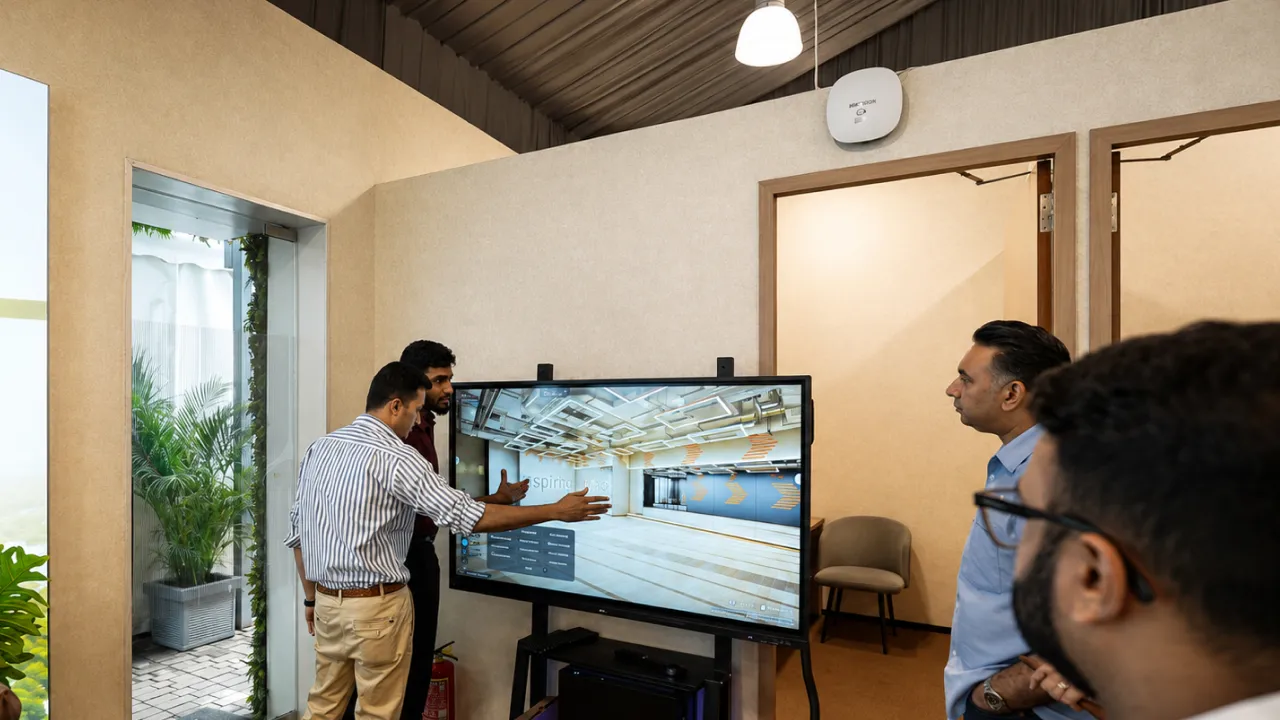

Selling an under-construction project means selling a promise. The buyer hands over booking money for a home that exists only as drawings, a construction schedule, and a developer's track record. That's a lot to ask, and it's exactly why sales ready properties software has become essential rather than optional for developers launching before completion.
The good news: the technology to make an unbuilt home feel real, explorable, and even personal to a buyer already exists — and it's being used across some of India's largest launches right now.
The Real Problem: The Trust Gap Before Possession
Every under-construction launch carries the same structural challenge — a trust gap between what the developer has designed and what the buyer can verify for themselves.
This shows up as a handful of recurring buyer objections:
- "I can't tell what the actual view from my floor will look like."
- "The brochure shows amenities, but I want to know how it'll actually feel to use them."
- "I want the layout customised, but I don't know what that would look like until it's built."
- "I'm not local — I can't keep visiting the site every time I have a question."
None of these objections are about price. They're about verification — the buyer wants proof, not promises, and traditional sales tools simply can't provide it before construction is complete.
What 3D Property Visualisation Solves for Under-Construction Sales
Good 3d property visualisation doesn't just show a rendered building — it turns the unbuilt property into something a buyer can genuinely evaluate and interact with, well before possession.
The most effective systems do three specific things for under-construction projects:
- Simulate the finished product accurately, including window views, material finishes, and lighting behaviour, based on architectural data rather than guesswork.
- Let buyers customise in real time, so "we can adjust the layout" becomes something they can actually see, not just hear.
- Remove geography as a barrier, so a buyer in another city can evaluate the property as thoroughly as someone standing in the sales office.
How the Deployment Process Works
For under-construction projects specifically, the deployment sequence usually looks like this:
Step 1 — Convert drawings into a live digital twin. Architectural plans and material specifications become a photorealistic, explorable 3D model.
Step 2 — Build in customisation logic. Rather than a fixed walkthrough, the software allows real-time changes — moving walls, adjusting layouts, switching finishes — so buyers can test configurations during the sales conversation itself.
Step 3 — Layer in vicinity and infrastructure data. Especially important pre-construction, since the surrounding infrastructure may also still be developing.
Step 4 — Deploy across sales touchpoints. In-gallery, and where possible, remotely for buyers who can't visit in person.
This full-stack approach is what's covered under V-Estate's PropTech solutions for real estate sales — digital twins, customisation software, and IoT-linked hardware built specifically for pre-completion sales environments.
Which Projects Benefit Most
Under-construction visualization earns its investment fastest on:
- Premium and luxury developments, where customisation is often promised but rarely proven before this kind of tool exists.
- Large-scale launches where construction will take years, meaning buyers need a long-term reason to stay convinced.
- Projects targeting NRI and remote buyers who can't do repeat physical site visits.
- Developers competing against nearby launches, where the ability to "prove" quality before completion is a real differentiator.
The Buyer Journey for an Under-Construction Purchase
A well-designed pre-construction sales journey typically moves through:
- An overview of the masterplan and vicinity, establishing scale and location value first.
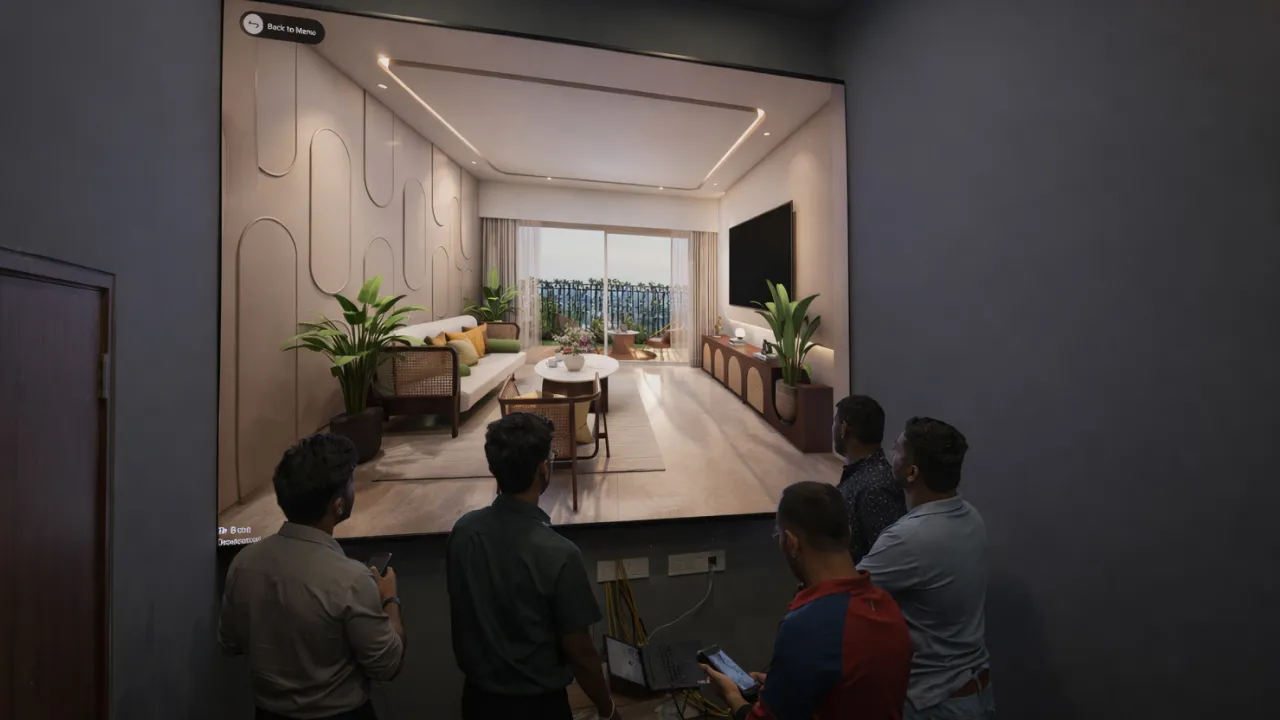
- A walkthrough of the buyer's actual unit type — floor, orientation, and view — rendered as it will actually look.
- A live customisation session, where the buyer sees layout or finish changes reflected instantly.
- A closing conversation grounded in what the buyer has just seen and interacted with, not just what they've been told.
What Changes for the Sales Team
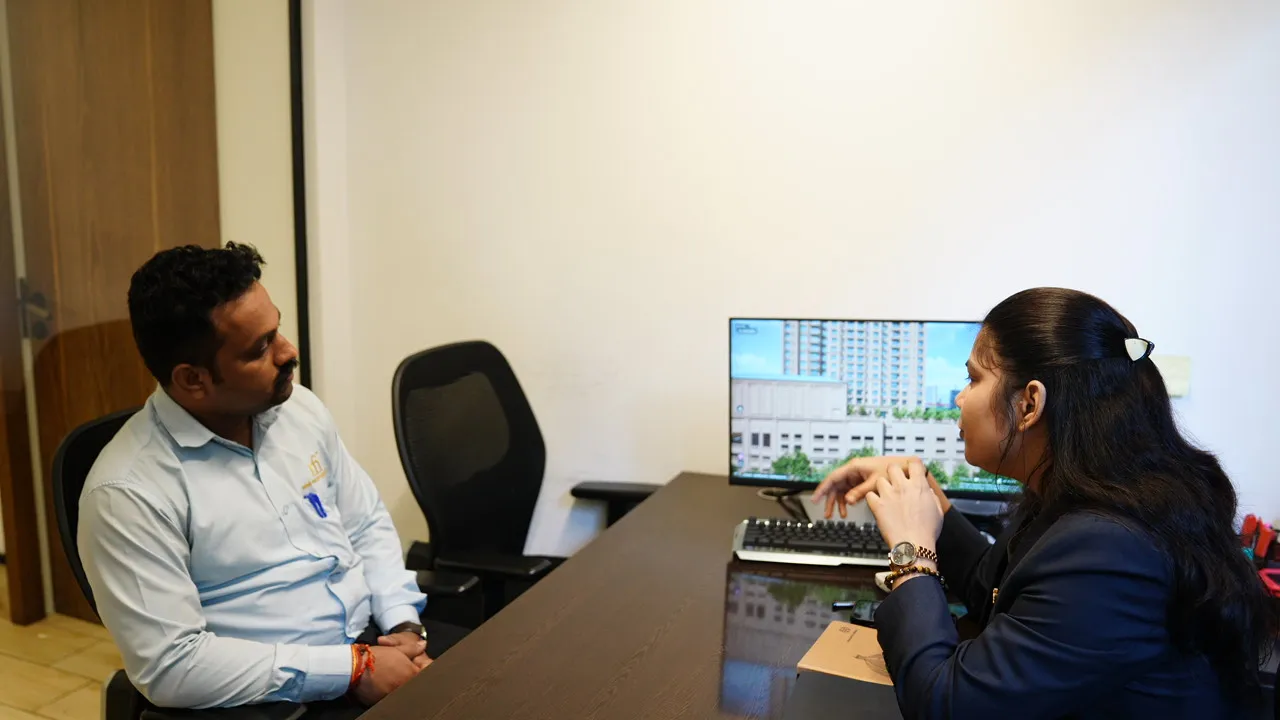
Sales conversations shift from persuasion to demonstration. Instead of promising that customisation is possible, executives show it happening in real time. Instead of describing amenities that don't exist yet, they walk buyers through them. This also shortens the sales cycle meaningfully, because fewer follow-up visits are needed to resolve doubts that visualization already answered on the first visit.
A Real Example: Kalpataru Worli One
Kalpataru Worli One is a strong example of how far this can go. Customisation is a common promise in premium real estate — but it's rarely proven before the unit exists. At Worli One, V-Estate moved beyond a standard walkthrough into live design interaction through its Build Your Dream Home software.
Inside a single sales conversation, buyers were able to:
- Move or remove internal walls and furniture in real time.
- Adjust room proportions instantly and see the layout update live.
- Watch lighting and spatial flow change dynamically as the layout changed.
- Save custom configurations during the same session, rather than waiting for a follow-up.
What typically requires weeks of back-and-forth coordination with architects happened inside one sales interaction — turning customisation from a post-sale assurance into an actual decision enabler.
The Technology Stack
The under-construction sales-ready stack generally includes:
- Real-time 3D rendering engines capable of live layout and material changes.
- Interactive customisation software (like V-Estate's Build Your Dream Home) for live design interaction.
- Vicinity and infrastructure mapping tools for pre-completion context.
- Remote-access options so off-site buyers can join the same walkthrough.
Verified Results
Across V-Estate's under-construction deployments, the pattern has been consistent: interactive proptech systems replace imagination with visibility, letting buyers reach informed decisions faster and with fewer follow-up visits. At Rustomjee's Urban Woods project — sold while the site was still empty land, with footfall exceeding 200 families a day — traditional sales tools failed immediately, while interactive visualization kept pace with genuine buyer volume.
Limitations and Planning Considerations
Under-construction visualization comes with a few honest trade-offs to plan around:
- Design changes during construction need to be reflected in the model, or the digital twin risks drifting from the actual building — this requires an update process, not a one-time build.
- Customisation software needs structural guardrails, so buyers can explore options within what's actually feasible to build, not unlimited possibilities.
- Remote deployment needs a stable process, since off-site buyers rely entirely on the sales executive's ability to guide the tool clearly over a call.
- It's a sales tool, not a construction guarantee — clear communication is still needed about what's customisable versus fixed.
FAQs
Can buyers really customise a layout before the unit is built? Yes, with tools like V-Estate's Build Your Dream Home software, buyers can move walls, adjust room proportions, and see lighting changes in real time during the sales conversation itself.
How accurate is the visualization compared to the final built unit? When built from finalised architectural drawings and material specifications, the digital twin closely matches the completed unit — though ongoing design changes need to be updated in the model to stay accurate.
Does this work for buyers who can't visit the site? Yes — remote and NRI buyers can be guided through the same digital twin and customisation tools over a video call, without losing the interactive quality of the experience.
Is this only relevant for premium developments? It delivers the strongest ROI in premium segments where customisation is a key selling point, but the core benefits — reduced hesitation, fewer follow-up visits — apply to under-construction projects generally.
Make the Unbuilt Feel Real
Buyers shouldn't have to take a leap of faith on the biggest purchase of their life. If your under-construction project is still asking them to imagine their way to a booking, that's a gap your competitors are already closing.
Book a demo with V-Estate and turn your pre-completion project into sales-ready properties software your buyers can actually trust.




















Sign in to leave a comment.