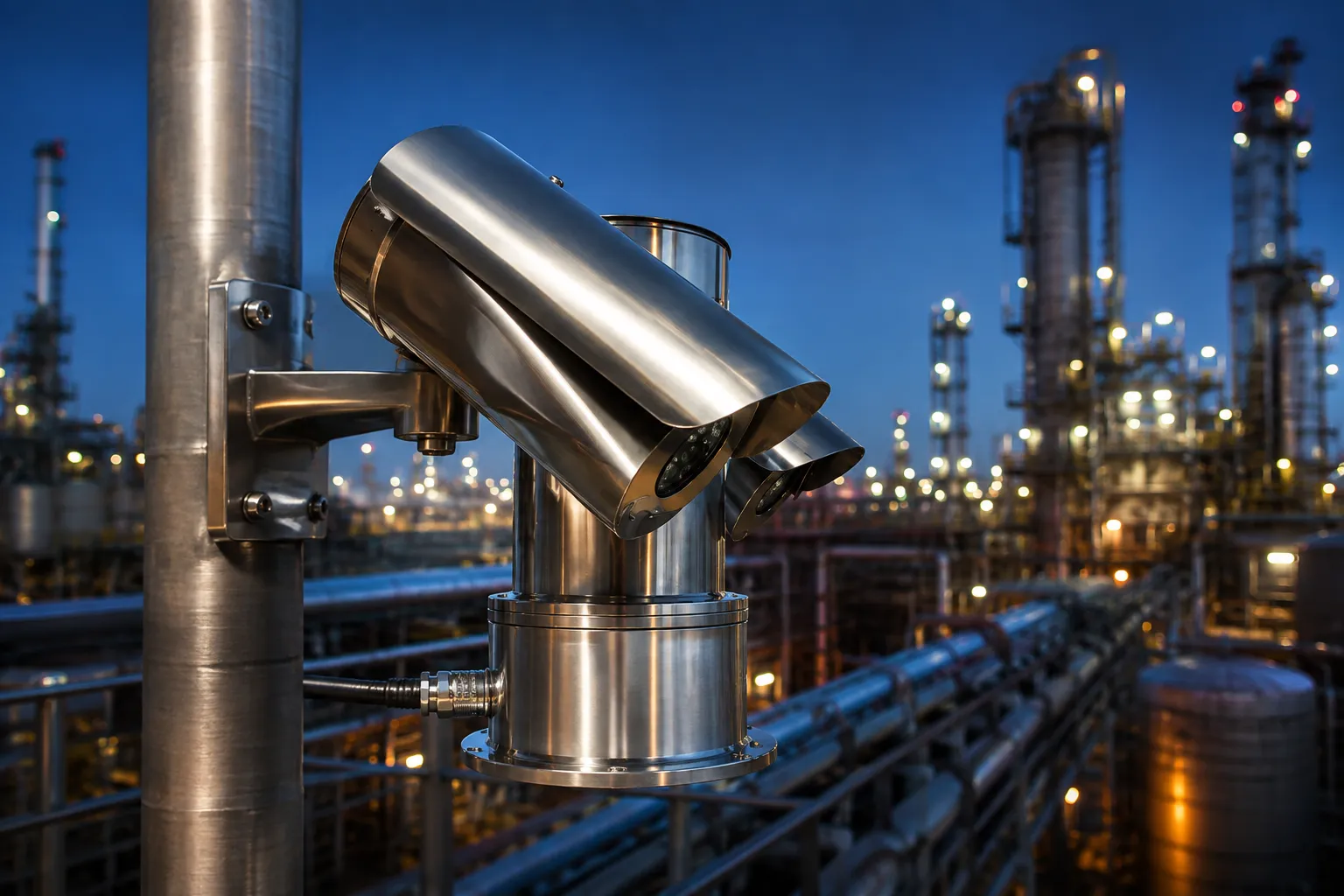

Explosion Proof ATEX PTZ Camera With IR for UK LNG Terminals and Gas Storage Sites
A tanker unloading arm sits idle for barely an hour during transfer, yet that single hour carries more concentrated risk than most other activities on an LNG terminal combined. Fog rolling in off the estuary, darkness settling over a storage field, restricted-access zones nobody can physically patrol every few minutes — your terminal's safety case depends on seeing clearly through all of it. Standard surveillance, built for retail units and office car parks, simply wasn't designed for the scale or the atmosphere your site actually operates in.
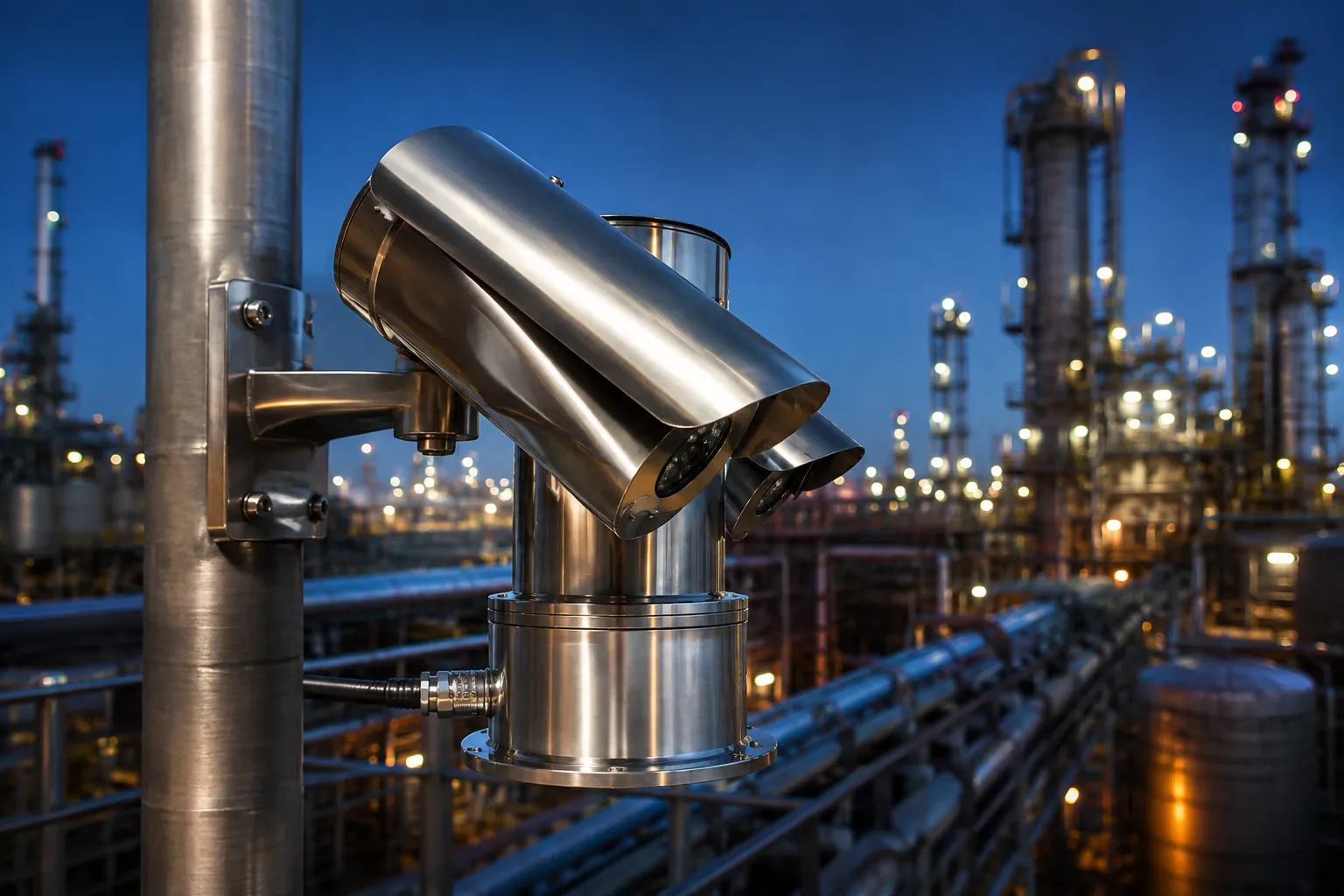
Monitoring the Critical Points: Unloading, Transfer and Storage
An LNG or gas storage site has several points where risk concentrates sharply. Tanker unloading points see the highest-consequence activity on site, with cryogenic transfer creating both thermal and pressure risks during every delivery. Transfer stations and compressor areas run continuously, generating vibration, noise and process risk that never really pauses. Storage infrastructure, meanwhile, needs constant passive monitoring for signs of leaks, frost patterns or unauthorised access along perimeter fencing.
Covering ground this large with fixed cameras alone means installing dozens of units, each needing its own cable run through classified zones. Many UK terminal operators are instead standardising on a single Explosion Proof ATEX PTZ Camera With IR per critical zone, giving control room staff live coverage that moves with the activity rather than sitting fixed on empty tarmac between deliveries.
Why Darkness, Fog and Restricted Access Demand Reliable Surveillance
Gas terminals rarely get the luxury of good visibility on demand. Estuary and coastal sites — common locations for UK LNG infrastructure — see fog roll in with little warning, and much of the site's highest-risk activity happens overnight when ambient light is at its lowest. Restricted-access zones around cryogenic storage compound the problem further: physical patrols are deliberately limited, which means camera coverage often becomes the only real-time visibility your control room has.
An explosion proof ir ptz camera for Hazardous Areas with genuine long-range infrared performance keeps this coverage usable regardless of conditions, rather than degrading to a grainy, unusable feed the moment natural light drops or fog thickens across the estuary.
Selecting a Camera for Wide-Area and Long-Distance Viewing
Terminal layouts stretch across significant distances, and a camera with weak optical performance simply can't resolve detail at the ranges your site requires. When your team is trying to confirm a valve position on a tank several hundred metres away, digital zoom that degrades into pixelation isn't good enough — you need genuine optical reach paired with a stable, vibration-resistant mounting platform.
A hazardous area ex-proof PTZ IR camera built for long-distance viewing should hold clear detail at extended range without losing stability in coastal wind conditions, giving your control room the same confidence in a distant tank reading as they'd have standing next to it.
Network Redundancy and Control-Room Integration
A camera is only as useful as the system carrying its feed. Your terminal's control room almost certainly runs an established video management system, and any new camera needs to integrate cleanly rather than requiring a parallel monitoring setup. Confirm compatibility, redundant network pathing so a single cable fault doesn't blind a critical zone, and failover behaviour that keeps recording even during a connectivity interruption.
What Procurement Should Assess Before Purchase
Specification sheets rarely tell the full story on their own. Before shortlisting a ex proof PTZ IR camera supplier UK terminal operators can rely on, confirm the following against your site's actual requirements:
- Optical zoom range tested against your longest realistic viewing distance
- Infrared range matched to your darkest, foggiest operating conditions
- Latency figures for live control-room response during time-critical events
Image retention capacity and compatibility with your existing storage infrastructure
One PTZ Camera Versus Multiple Fixed Units
The maths favours PTZ coverage clearly at terminal scale. A single well-positioned pan-tilt-zoom unit with preset patrol routes can replace three or four fixed cameras covering the same stretch of tank farm or compressor area, cutting installation cost, cable runs through hazardous zones, and long-term maintenance points all at once. Fixed cameras still suit narrow, single-purpose views — a gate, a doorway — but for open terminal infrastructure, PTZ coverage delivers more usable visibility per pound spent.

SharpEagle ATEX certified Explosion Proof ATEX PTZ Camera With IR UK
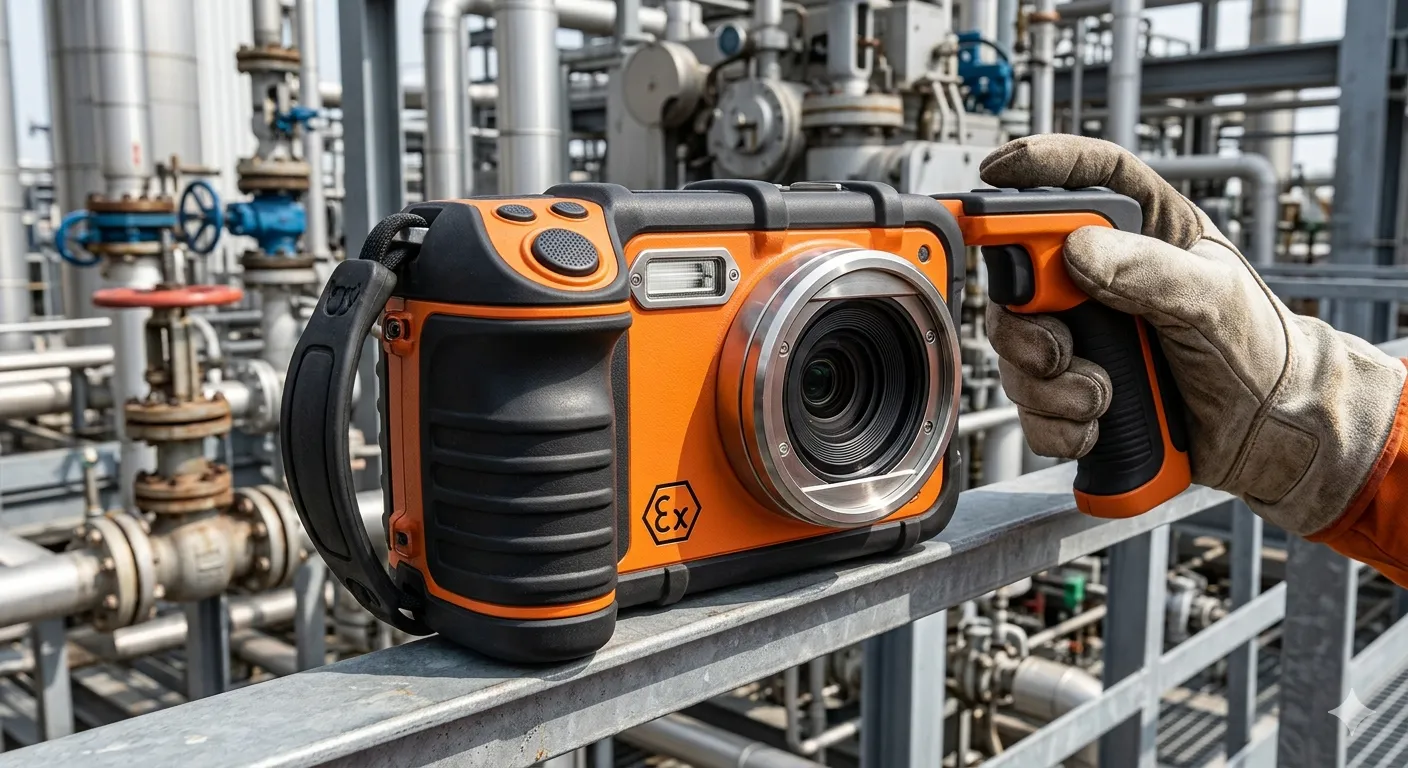
SharpEagle Technology's ATEX certified Explosion Proof ATEX PTZ Camera With IR UK is built for terminal-scale coverage. It combines long-range optical zoom with genuine infrared performance suited to coastal fog and overnight operations, full Zone 1 and Zone 2 certification, and a corrosion-resistant housing rated for sustained estuary and coastal exposure. Preset patrol programming and stable, low-latency streaming make it straightforward to integrate into existing video management systems, giving LNG and gas storage operators an IR PTZ camera hazardous area oil and gas teams can build terminal-wide coverage around with confidence.
Looking Ahead
As UK gas infrastructure faces growing scrutiny under HSE and DSEAR frameworks, terminals that invest in wide-area, weather-resilient surveillance will be better placed to demonstrate robust process safety during inspection and incident review alike. A properly specified explosion proof PTZ camera oil and gas UK sites already depend on scales naturally to LNG terminal operations with the right infrastructure behind it. If your terminal needs a supplier of hazardous area PTZ cameras UK operators trust, contact SharpEagle Technology today.

























Sign in to leave a comment.