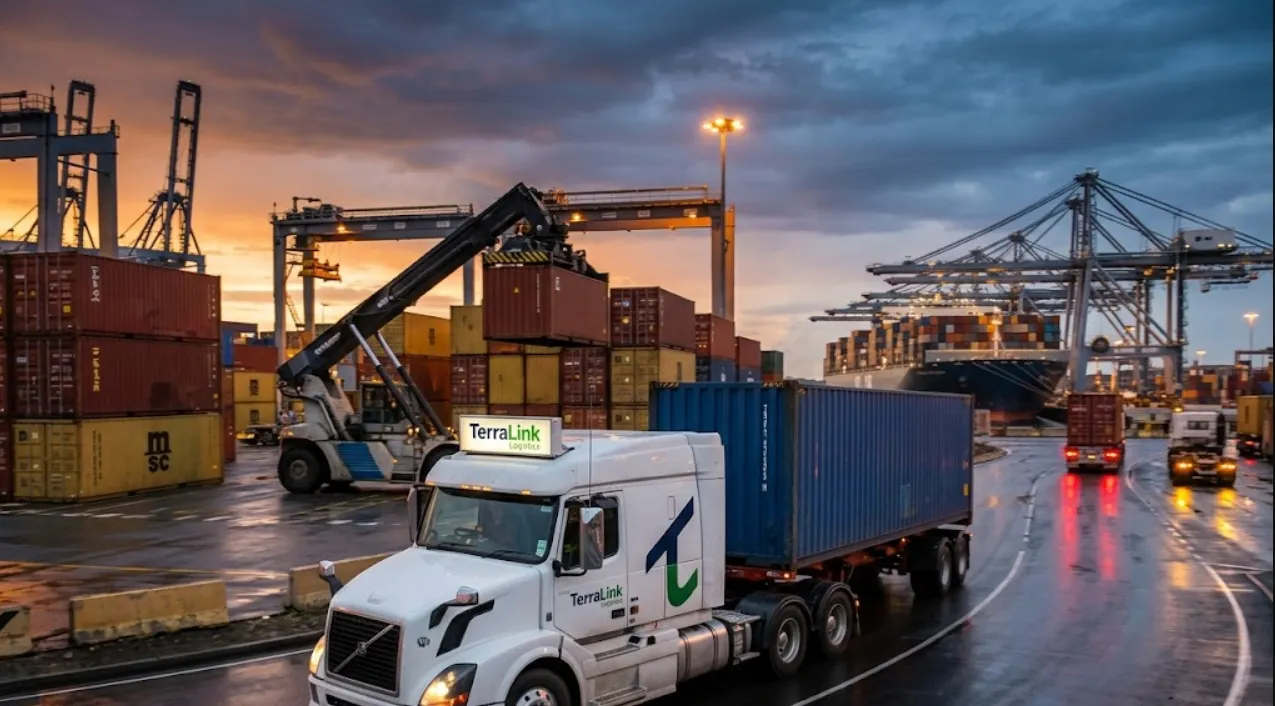

Intermodal freight transportation is widely recognized across global supply chain networks as one of the most efficient, reliable, and environmentally sustainable methods for moving commercial goods over long distances. By seamlessly combining the long-haul capacity of rail transport with the flexible maneuverability of motor carriers, shippers achieve substantial fuel savings, lower greenhouse gas emissions, and enjoy relative immunity from long-haul highway congestion. However, despite representing only a tiny fraction of the total physical distance a container travels, short-haul drayage often accounts for upwards of 20 to 40 percent of total intermodal shipping expenditures.
Drayage is the specialized, short-distance transport of freight, typically serving as the critical link bridging ocean ports, inland rail terminals, consolidated logistics hubs, and customer warehouses. Because drayage operates directly at the complex intersection of municipal traffic congestion, strict port terminal appointment systems, customs processing procedures, and time-sensitive equipment management, operational expenses can spiral out of control rapidly if left unmonitored.
To preserve healthy operating margins, prevent revenue leakage, and build resilient supply chain networks, logistics leaders must actively manage these short-haul moves. Optimizing drayage requires a disciplined approach to end-to-end operational visibility, rigorous accessorial charge prevention, and deliberate strategic carrier alignment. Utilizing modern drayage shipping services alongside experienced freight forwarding services provides the overarching structural framework needed to eliminate procedural bottlenecks, control variable expenditures, and maintain predictable delivery schedules across every lane.
1. Eliminate Accessorial Fees: Demurrage, Detention, and Storage
Accessorial charges represent one of the single largest sources of budget waste in short-haul freight shipping. These punitive fees are automatically incurred when shipping equipment or terminal real estate is occupied beyond contractually agreed-upon free time allowances. Because intermodal rail terminals and ocean ports operate under severe physical space constraints, terminal operators enforce strict financial penalties on shippers who fail to move their containers promptly.
Distinguish Between Penalty Types
To systematically eliminate these unexpected expenses, logistics managers must first understand the structural distinctions between the three primary penalty categories:
- Demurrage: Financial penalties assessed directly by ocean port authorities or rail terminal operators when an import container sits on the terminal floor past the designated free time. This fee compensates the facility for lost yard space and operational slowdowns.
- Detention (Per Diem): Charges levied by equipment owners, such as ocean shipping lines or container leasing firms, when a container is removed from the terminal premises but is not returned to the designated equipment depot within the allowable timeframe.
- Storage Fees: Daily compounding costs charged by off-site storage yards, ocean docks, or inland rail ramps for holding containers that cannot be moved due to warehouse dock congestion, late customs clearances, or incomplete shipping documentation.
Comprehensive Strategies to Prevent Accessorial Penalties
- Implement Predictive Real-Time Tracking: Relying on static carrier daily spreadsheets or manual web tracking regularly leads to missed pickup windows. Supply chain teams must deploy automated tracking software that interfaces directly with terminal operating systems to monitor container discharge status, customs release flags, and live availability windows.
- Synchronize Warehouse Operations with Inbound Flow: Ensure destination facilities and distribution centers maintain fluid communication with transport teams. Inefficiencies at the receiving dock, such as understaffed unloading shifts or cluttered staging areas, translate directly into driver detention charges and extended per diem fees.
- Establish Secure Off-Dock Buffer Capacity: Establish clear operational protocols with providers of drayage shipping services for off-dock storage solutions. Transporting containers to secure intermediate staging yards near the port is substantially less expensive than incurring daily compounding port demurrage rates.
2. Leverage Advanced Route Optimization and Street-Turning
Drayage operations are inherently hyper-local, exposing transport drivers to severe urban traffic congestion, prolonged port gate queues, and rigid terminal gate hours daily. Extended driver wait times directly erode profitability, as short-haul freight pricing structure reflects driver time, engine idling fuel burn, and turnaround efficiency. Optimizing physical transit routes, appointment schedules, and equipment utilization drastically cuts down on billable hours and non-productive mileage.
| Optimization Strategy | Operational Mechanism | Financial & Strategic Benefit |
|---|---|---|
| Dynamic Route Dispatch | Utilizes live GPS data and predictive traffic algorithms to route drivers around gate bottlenecks, accidents, and highway construction. | Eliminates unnecessary driver idle time, lowers total fuel consumption, and prevents late appointment penalties. |
| Street-Turns / Triangulation | Reallocates an incoming empty container directly to an outbound export client without returning the empty box to the port yard first. | Eliminates two complete transit legs, reducing fuel surcharges, road tolls, and chassis rental expenses by up to 50 percent. |
| Off-Peak Night Gating | Schedules container collection and drop-off appointments during night shifts or early morning off-peak terminal operating hours. | Avoids metropolitan traffic jams, cuts gate wait times, and maximizes total driver turns completed within daily service limits. |
The Detailed Mechanics of Container Triangulation
Container triangulation, commonly known in the freight industry as a street-turn, offers one of the most substantial cost-saving opportunities available in modern intermodal logistics. Under a traditional ocean freight workflow, after a driver delivers an imported container to a warehouse and it is fully unloaded, the driver hauls the empty box all the way back to the congested port or rail ramp. The driver then picks up another chassis or container for the next assignment.
By executing a street-turn, the empty container is inspected, cleared, and reallocated immediately to a nearby exporter who requires equipment for outbound transit. This practice completely removes two full, unnecessary trips from the shipping cycle. Consequently, shippers eliminate excess fuel surcharges, highway tolls, and chassis rental days while dramatically reducing carbon emissions. Achieving this operational efficiency requires seamless coordination between ocean carriers, local dispatchers, and robust drayage shipping services.
3. Integrate Freight Forwarding Services for End-to-End Visibility
A leading cause of ballooning intermodal costs is fragmented, siloed logistics management. When ocean vessel transit, inland rail transport, and local short-haul drayage are handled by separate, disconnected service providers, critical communication breakdowns occur frequently. A minor delay on the rail line might go unnoticed by an independent drayage trucker, resulting in missed terminal appointments, dry-run penalty fees, or lost container loading slots.
Partnering with full-service freight forwarding services resolves these complex operational hand off issues by centralizing supply chain management under a single, accountable operational structure.
Advanced Benefits of Unified Supply Chain Management
- Proactive Exception Management: An integrated freight forwarder monitors the entire journey from international origin to the final warehouse destination. If an ocean vessel encounters bad weather or port congestion, the forwarder automatically resets the downstream drayage pickup schedule, completely avoiding dry-run penalties.
- Aggregated Volume Rate Negotiations: Established freight forwarders manage massive container volumes across diverse client portfolios. This volume aggregation enables them to negotiate highly competitive contract rates for both long-haul transit and local drayage legs that individual shippers could rarely secure independently.
- Single-Source Operational Accountability: When administrative disputes arise at the port terminal gate or rail head, dealing with a single logistics provider reduces organizational friction, speeds up dispute resolution, and eliminates cross-vendor blame-shifting.
4. Master Equipment and Chassis Management
Chassis rental fees represent a major secondary expense in intermodal drayage operations. A chassis is the heavy-duty specialized steel frame used to transport intermodal containers safely over public roads. Shippers frequently treat chassis rental fees as fixed, unavoidable costs, but improper equipment management and poor yard oversight lead to severe ongoing cost overruns.
Strategic Operational Adjustments for Chassis Management
- Understand Pool Agreement Structures: Marine and rail terminals operate under varying chassis pool arrangements, including co-op pools, neutral equipment pools, or dedicated fleet pools. Mounting a container onto a chassis outside the terminal's designated pool can trigger severe daily split-choice penalties, double usage fees, or extra repositioning costs.
- Enforce Daily Physical Yard Audits: Daily chassis rental charges accumulate continuously when containers sit idle in warehouse yards or staging facilities. Logistics teams must implement daily yard inventory audits to ensure empty containers are unmounted swiftly and chassis frames are returned to the pool depot immediately after unloading.
- Evaluate Private Fleet vs. Pool Chassis Leasing: High-volume shippers should regularly analyze whether leasing dedicated private chassis fleets yields a lower per-day cost compared to relying on public terminal pool rentals. Dedicated private chassis fleets also guarantee equipment availability during peak shipping seasons when public terminal pools routinely run dry.
5. Implement Data-Driven Procurement and Carrier Performance Audits
Optimizing short-haul drayage costs requires continuous data collection and forensic financial analysis. Freight rates should never be evaluated solely on the initial base line-haul quote; the true total cost of ownership must account for historical accessorial track records, fuel surcharge formulas, and carrier reliability metrics.
Essential Drayage Key Performance Indicators (KPIs) to Track
- On-Time Pickup and Delivery Percentage: Consistently late pickups cause missed rail cut-off times, leading directly to expensive storage penalties and delayed final customer deliveries.
- Average Port and Terminal Turn Time: Measure precisely how quickly a carrier enters the terminal gate, loads or unloads the container, and exits the facility. Drivers achieving shorter turn times drastically lower total billable wait-time surcharges.
- Accessorial Fee Spend Ratio: Calculate total accessorial fee expenditures as a percentage of overall drayage spend. If accessorials account for more than 5 to 10 percent of total drayage invoices, immediate operational adjustments are necessary.
- Invoice Billing Accuracy Audits: Systematically audit incoming drayage invoices against contractually agreed-upon rate sheets. Discrepancies regarding fuel surcharge calculations, driver wait time charges, and chassis split fees occur frequently in short-haul freight billing and must be disputed promptly.
Drayage service providers that offer low upfront line-haul quotes often prove far more expensive in the long run if poor operational execution regularly generates gate delays, missed appointments, and unexpected accessorial penalties.
Strategic Checklist: Intermodal Drayage Cost Optimization
To systematically review, refine, and optimize your organization's drayage shipping operations, utilize this comprehensive operational checklist:
- [ ] Audit Terminal Free Time Policies: Document and catalog the exact free time allowances across every ocean port and inland rail terminal in your active supply chain network.
- [ ] Establish Real-Time Tracking Integration: Connect your transportation management software directly to terminal operating systems to monitor container discharge and release status automatically.
- [ ] Enforce Strict Yard Management Rules: Mandate that warehouse dock teams unload inbound containers within 24 hours of arrival to minimize chassis per diem costs and driver waiting fees.
- [ ] Identify Street-Turn Opportunities: Collaborate closely with logistics partners to map out matching import and export shipping lanes that can be paired for container triangulation.
- [ ] Review Surcharge Structure Transparency: Ensure all fuel surcharges, chassis usage fees, and accessorial rate schedules are explicitly defined and capped in vendor contracts.
- [ ] Consolidate Freight Vendor Management: Align short-haul operations with experienced drayage shipping services and comprehensive freight forwarding services to streamline administrative handoffs and maximize volume leverage.
Conclusion: Securing Long-Term Logistics Efficiency and Strategic Advantage
Intermodal drayage may cover a short physical distance relative to the thousands of miles involved in international trade, but its financial impact on total supply chain expenditure is immense. Unmanaged driver wait times, preventable accessorial penalties, inefficient chassis management, and fragmented vendor communication can quickly erode the cost advantages gained from long-haul rail or ocean transport. Controlling these costs requires moving away from reactive freight management and adopting a proactive, data-driven operational strategy.
By implementing real-time container tracking, optimizing local transit routes through street-turning, maintaining strict yard and chassis discipline, and auditing carrier billing accuracy, logistics leaders can transform short-haul drayage from an unpredictable cost center into a streamlined, competitive asset. Every operational adjustment, whether shortening terminal turn times or eliminating a single per diem fee, delivers immediate improvements to bottom-line profitability.



























Sign in to leave a comment.