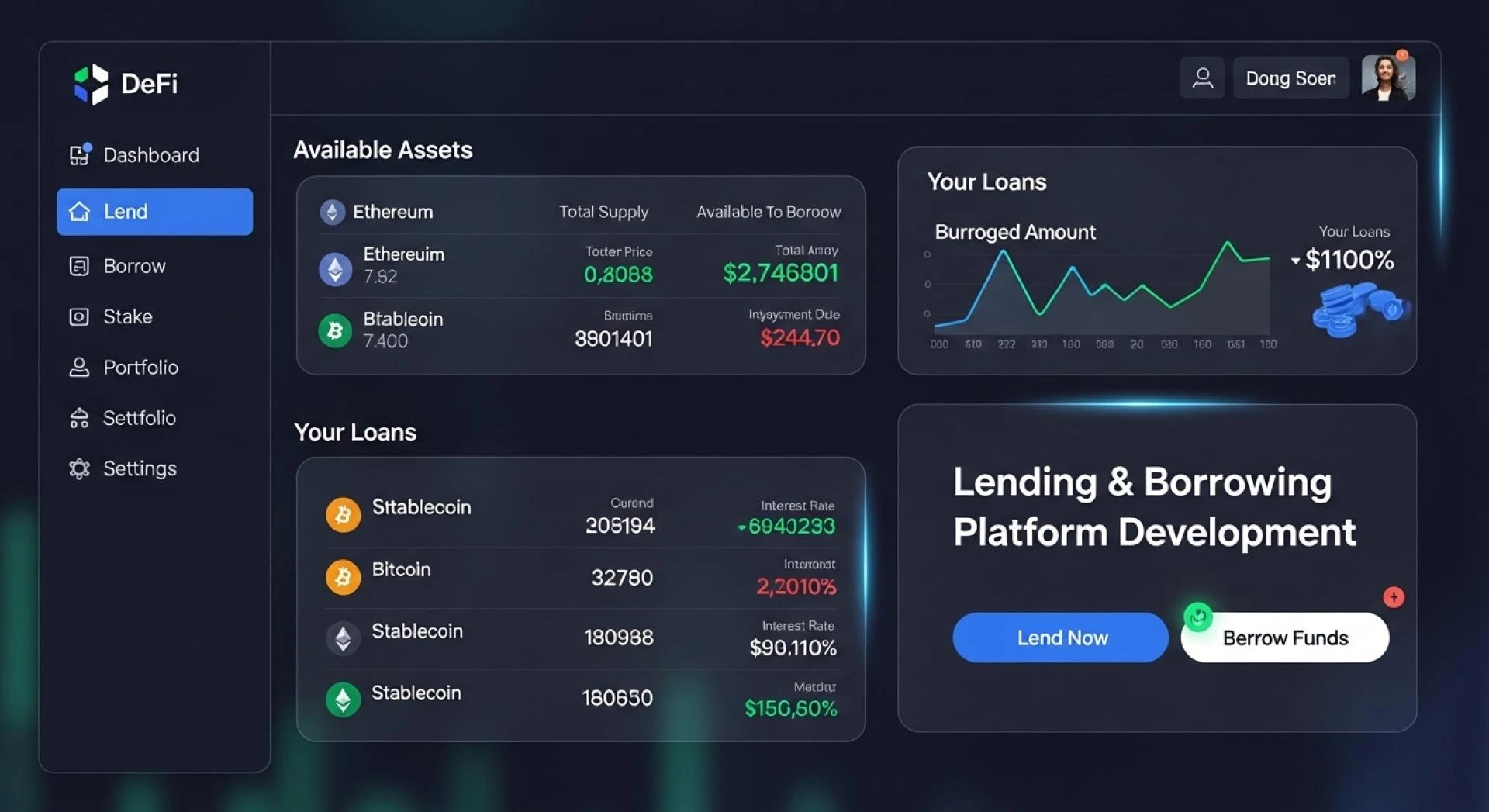

Decentralized finance has emerged as a powerful alternative to traditional financial systems, offering open access to lending and borrowing services powered by blockchain technology. Over the past few years, decentralized lending platforms have attracted significant user participation, institutional capital, and technological innovation. As the ecosystem matures, defi lending and borrowing platform development is shifting toward sustainable business strategies that support long-term growth, scalability, and regulatory adaptability. By 2026, successful platforms will not only rely on smart contracts for automation but also on diversified revenue models, advanced risk management frameworks, enterprise partnerships, and cross-chain infrastructure to maintain profitability and user trust. Understanding these business models provides valuable insight into how decentralized lending platforms are evolving into reliable financial ecosystems capable of supporting global financial activity.
Understanding DeFi Lending and Borrowing Platform Development From a Business Perspective
DeFi lending platforms are more than technical solutions; they represent decentralized financial marketplaces built to operate efficiently while generating consistent revenue. From a business perspective, these platforms focus on optimizing capital flow between lenders and borrowers using automation, transparency, and global accessibility. By eliminating intermediaries, they reduce operational costs while increasing transaction speed and reliability. This model allows platforms to scale rapidly and serve a diverse user base, creating a strong foundation for sustainable financial ecosystems.
- Decentralized Financial Intermediation
These platforms replace traditional banks with smart contracts that automate loan creation, interest calculations, collateral management, and repayments. This structure reduces overhead costs while improving transparency, enabling platforms to operate efficiently and profitably. - Liquidity Pool-Based Capital Systems
Assets from lenders are pooled together to create continuous liquidity for borrowers. This system ensures high availability of funds, supports scalable transaction volumes, and allows platforms to earn income from constant lending activity. - Global User Participation
Permissionless access allows users worldwide to engage in lending and borrowing without geographic barriers. This large user base drives transaction growth and strengthens platform revenue streams. - Programmable Financial Products
Smart contracts enable the creation of advanced lending services such as variable-rate loans, flash loans, and automated portfolio strategies, expanding monetization opportunities.
Key Drivers and Trends in the DeFi Lending Market Toward 2026
The DeFi lending market is rapidly evolving due to increasing demand for decentralized financial services, technological advancements, and broader market participation. Growth is being driven by both retail users seeking alternative investment opportunities and institutional players looking for transparent, efficient capital management tools. As the ecosystem matures, platforms are focusing on improving scalability, security, and compliance frameworks. These trends are shaping how business models are structured and positioning DeFi lending as a mainstream financial solution by 2026.
- Market Growth Across Digital Economies
Decentralized lending platforms continue to experience rising asset inflows as users seek alternative investment opportunities and faster access to capital. Expansion into new geographic regions is further accelerating adoption and transaction volumes. - Institutional Adoption Strengthening Ecosystems
Banks, investment firms, and fintech companies are incorporating DeFi lending into their financial operations. Institutional involvement increases liquidity depth, enhances credibility, and supports more stable long-term platform performance. - Technical Advancements Improving Efficiency
Blockchain scalability solutions, improved smart contract frameworks, and enhanced security protocols are making DeFi lending faster and more reliable. These innovations reduce transaction costs and improve overall user experience. - Key Features Driving User Engagement
Modern platforms offer dynamic interest rates, real-time risk monitoring, automated liquidations, and customizable lending products. These features provide flexibility while increasing operational efficiency. - Benefits Over Traditional Banking Systems
DeFi lending eliminates intermediaries, offers global accessibility, provides transparent interest structures, and enables faster loan processing. Lower costs and automation allow platforms to deliver competitive financial services.
Interest-Based Revenue Models and Dynamic Rate Structures
Interest-driven income forms the backbone of most decentralized lending business models. By leveraging automated interest rate mechanisms, platforms can balance liquidity supply and borrowing demand in real time. These systems ensure continuous capital flow while optimizing revenue generation. As platforms scale toward 2026, advanced rate algorithms and asset diversification are improving profitability and user returns, making interest-based models more resilient to market fluctuations.
- Supply and Demand Driven Interest Rates
Smart contracts automatically adjust interest rates based on liquidity availability and borrowing demand. This keeps markets balanced while maximizing platform profitability. - Stable Asset Lending Markets
Stablecoins are widely used to provide predictable returns and consistent borrowing activity, supporting steady revenue flow. - Risk-Based Pricing Systems
Borrowers with higher risk profiles pay increased interest rates, compensating lenders and boosting platform income. - Capital Optimization Strategies
Idle funds are sometimes invested into other decentralized protocols to generate additional yield, increasing overall platform revenue.
Fee-Driven Monetization Strategies in DeFi Lending Platforms
While interest income remains central, fee-based revenue provides essential financial stability for DeFi lending platforms. These fees cover operational costs, fund platform upgrades, and support ecosystem expansion. As transaction volumes increase, small charges across various activities collectively generate substantial revenue. This diversified monetization approach reduces reliance on interest spreads alone and strengthens long-term sustainability.
- Loan Origination Charges
Small fees applied when loans are created generate immediate revenue. - Processing and Transfer Fees
Fees collected during repayments and asset movements provide steady cash flow. - Liquidation Management Fees
When collateral thresholds are breached, platforms retain a portion of liquidation proceeds. - Premium Tools and Services
Advanced analytics and automation features are offered through paid subscriptions.
Tokenomics as a Growth and Revenue Engine
Token-based economic systems have become powerful tools for driving platform adoption and financial sustainability. By aligning user incentives with platform performance, tokenomics encourages long-term participation and liquidity provision. These digital assets not only support governance but also unlock new monetization opportunities. Toward 2026, increasingly sophisticated token models are shaping how decentralized platforms grow and retain their communities.
- Governance Incentives
Tokens allow users to participate in platform decision-making, strengthening community involvement. - Liquidity Mining Programs
Rewards encourage asset contributions to liquidity pools, increasing capital availability. - Deflationary Token Structures
Token burn mechanisms reduce supply over time, supporting value growth. - Revenue Distribution Models
Some platforms share profits with token holders, aligning incentives.
Institutional and Enterprise-Focused Business Models
As decentralized finance gains credibility, platforms are expanding services to meet enterprise needs. Institutional participation brings higher capital volumes, longer-term liquidity commitments, and greater regulatory scrutiny. To capture this growing market, DeFi lending platforms are developing tailored solutions such as white-label systems, API integrations, and professional analytics tools. These business models are creating stable revenue streams beyond retail users.
- White-Label Lending Infrastructure
Businesses deploy customized DeFi lending solutions without developing technology internally. - API-Based Financial Integrations
Institutions integrate lending features into existing platforms. - Cross-Border Financing Solutions
Decentralized liquidity supports global lending operations. - Professional Risk Analytics
Advanced tools provide enterprise-grade monitoring and compliance services.
Risk Management Solutions as Profit Centers
Effective risk management has become a core business advantage for DeFi lending platforms, helping protect liquidity while generating new revenue streams. Platforms that invest in proactive risk frameworks are gaining higher user trust and attracting institutional capital.
- Decentralized Insurance Coverage
Platforms offer optional insurance pools that protect users against smart contract vulnerabilities and unexpected liquidation events. Premiums collected contribute directly to platform revenue while improving overall user confidence. - Automated Collateral Monitoring Systems
Real-time monitoring tools track collateral ratios continuously and trigger protective actions when thresholds are approached. These systems reduce losses and can be offered as premium services to professional users. - Blockchain-Based Credit Assessment Models
Transaction histories and wallet behaviors are analyzed to create decentralized credit profiles. This allows more flexible lending options while supporting advanced risk analytics subscriptions. - Risk Advisory and Strategy Services
Some platforms provide consulting solutions for enterprises entering DeFi markets, helping them manage exposure and compliance challenges while creating service-based income.
Cross-Chain Expansion for Market Scalability
Cross-chain functionality enables DeFi lending platforms to scale beyond single blockchain limitations, increasing liquidity access and market reach. This approach supports faster growth and improved capital efficiency.
- Multi-Blockchain Collateral Support
Platforms accept assets from various blockchain networks, allowing users to leverage a wider range of digital holdings. This increases liquidity diversity and enhances borrowing capacity. - Cross-Chain Bridge Transaction Services
Asset transfers between networks are facilitated through integrated bridge solutions. Small transaction fees collected from these services contribute to additional revenue streams. - Unified Cross-Chain User Interfaces
Single dashboards allow users to manage assets and loans across multiple blockchains seamlessly. Improved usability leads to higher engagement and platform retention. - Global Liquidity Expansion
Interoperability removes regional and network barriers, enabling platforms to attract users from diverse markets and scale internationally.
Data and Analytics Monetization in DeFi Lending Ecosystems
As transaction volumes grow, DeFi platforms are leveraging financial data to create valuable analytical services. These offerings help users make informed decisions while generating consistent income.
- Real-Time Market Intelligence Dashboards
Platforms provide detailed insights into lending rates, liquidity flows, and asset performance. Subscription-based access supports recurring revenue. - Predictive Risk and Yield Analytics Tools
Advanced algorithms forecast interest rate trends and potential market risks. These tools assist traders and institutions in optimizing strategies. - Automated Compliance and Financial Reporting
Professional users gain access to structured reports for regulatory and portfolio management purposes, creating premium service offerings. - Behavioral and Market Trend Analysis
Aggregated user activity data is transformed into market research insights that inform strategic decision-making and product development.
Community Governance and Decentralized Growth Models
Decentralized governance structures allow users to actively shape platform direction while supporting organic growth. This shared ownership model builds loyalty and long-term sustainability.
- DAO-Based Voting Systems
Token holders participate in decisions related to protocol upgrades, fee adjustments, and expansion plans. This increases transparency and community trust. - Developer Grant and Incentive Programs
Platforms fund third-party developers to build new tools and integrations, accelerating ecosystem innovation. - Community-Led Marketing Initiatives
Referral programs and ambassador networks encourage organic user growth without heavy advertising costs. - Shared Revenue and Ownership Models
Token-based profit sharing aligns user incentives with platform success, strengthening long-term engagement.
Regulatory-Aligned Business Strategies for Global Expansion
Regulatory adaptability is essential for scaling DeFi lending platforms across regions. Flexible compliance frameworks enable platforms to attract institutional clients while maintaining decentralized principles.
- Hybrid Compliance Infrastructure
Optional identity verification layers allow enterprise users to meet regulatory requirements while keeping the platform accessible for decentralized participants. - Jurisdiction-Specific Feature Customization
Platforms adapt services to local financial regulations, ensuring smooth market entry in multiple regions. - Continuous Smart Contract Auditing Programs
Regular security assessments enhance trust and minimize vulnerabilities, often offered as services to partner protocols. - Automated Regulatory Reporting Tools
Built-in compliance systems generate required reports for institutions, simplifying legal obligations and adding premium value.
Conclusion
The future of defi lending and borrowing platform development in 2026 is being shaped by innovative and diversified business models that extend beyond basic lending services. Successful platforms are combining interest-based revenue, fee structures, token economies, institutional partnerships, advanced risk management solutions, cross-chain scalability, and data monetization to build sustainable financial ecosystems. Market growth, institutional adoption, and technical advancements are accelerating mainstream acceptance of decentralized lending as a reliable alternative to traditional banking. As the industry continues to mature, platforms that prioritize transparency, security, and scalable business strategies will lead the transformation of global financial services and define the next generation of decentralized finance.

























Sign in to leave a comment.